


The hallway outside the counsellor’s office has a strange economy.
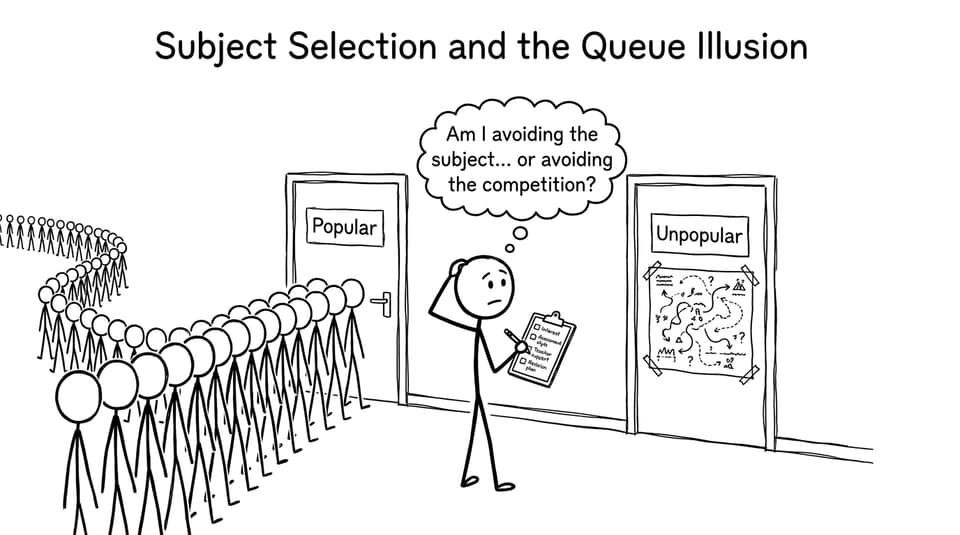
Some subjects feel like crowded train platforms. Everyone’s there, adjusting their bags, trying not to look nervous. Other subjects feel like quiet side doors: no line, no chatter, and a faint sense that you’re about to do something either brilliant or reckless.
That’s why Subject Selection often turns into a popularity contest. But popularity isn’t difficulty. It’s availability, familiarity, and social proof. If you’re an IB student preparing for exams, the smarter question is this: What does popularity change about expectations, practice, and how you stand out? That’s what this guide will unpack, so your Subject Selection feels intentional instead of inherited.
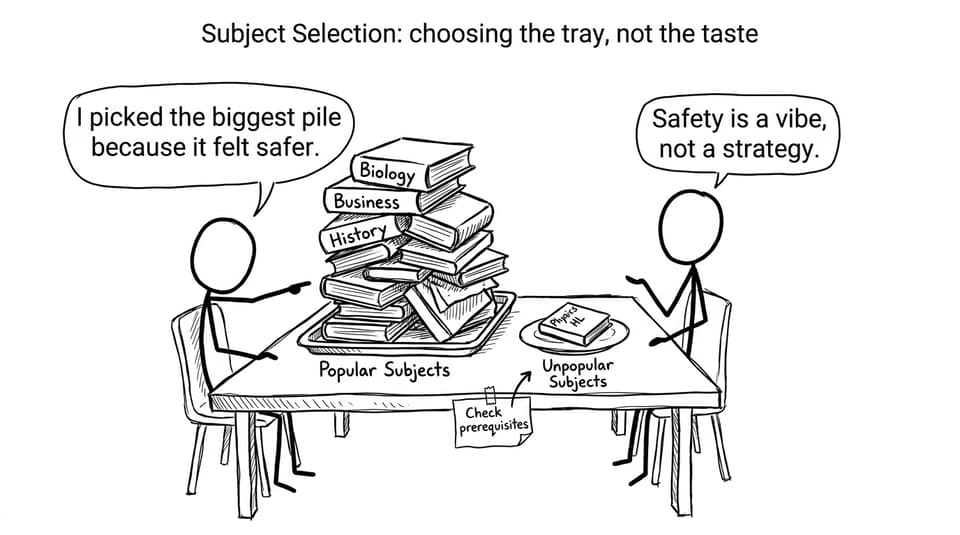
Quick checklist for Subject Selection
Use this before you lock in your Subject Selection (or before you start revising with regret):
-
Do I meet university prerequisites for my likely pathways?
-
Do I enjoy the assessment style (essays, data response, problem-solving, analysis)?
-
Am I choosing this because it fits me, or because it calms other people down?
-
What will help me stand out: precision, originality, consistent practice, or depth?
-
Do I have a system for revision (notes + questions + feedback + spaced repetition)?
If you want a big-picture map first, start with The Complete IB Revision Guide: From Subject Selection to Final Exams.
What makes an IB subject “popular” (and why it matters)
Popular IB subjects usually become popular for practical reasons, not because they hand out easy 7s.
They tend to be:
-
Offered reliably at more schools
-
Familiar from pre-IB curricula
-
Flexible for common university routes
-
Easier to imagine yourself studying (because you’ve seen other students do it)
That’s why you often see large cohorts in subjects like English A, History, Business Management, Psychology, and Biology.
Here’s the hidden twist for exam students: in popular subjects, “good” is common. The average answer is often competent, structured, and full of the same safe points. So Subject Selection into a popular subject doesn’t create an advantage by itself. It simply changes what “standing out” looks like.
For more context on trends, read Most Popular IB Subjects in 2025: What Students Are Choosing and Why.
Why some IB subjects are “unpopular” (and why that isn’t a warning label)
Unpopular subjects are usually smaller because of constraints, not because they’re broken.
Common reasons include:
-
Fewer schools offer them (timetabling and staffing matter)
-
Stronger prerequisites are assumed (math confidence, abstract reasoning, prior skill)
-
They feel niche, so fewer students can picture choosing them
Physics HL, higher-level mathematics routes, some Group 6 arts, and niche languages often sit here. In other words: low enrolment is a signal about access and confidence, not about whether the subject is “unsafe.”
If you’re weighing this right now, Subject Selection: Least Popular IB Subjects in 2025 is a useful companion.
How popularity changes your classroom experience
Popularity changes the learning environment in ways students feel immediately.
In popular subjects
-
Larger classes can mean less individualized feedback
-
More shared resources and peer discussion
-
Competition feels louder, even when nobody says it out loud
-
Teachers may use efficient, standardized routines to manage big groups
In unpopular subjects
-
Smaller classes often mean more targeted feedback
-
You can ask “weird” questions and actually get time to explore them
-
Your strengths (or gaps) become visible quickly
-
You may need more independence if external resources are harder to find
Neither is better. Your Subject Selection should match how you learn: do you thrive in a busy room with lots of comparison points, or in a small room where you can’t hide from the work?
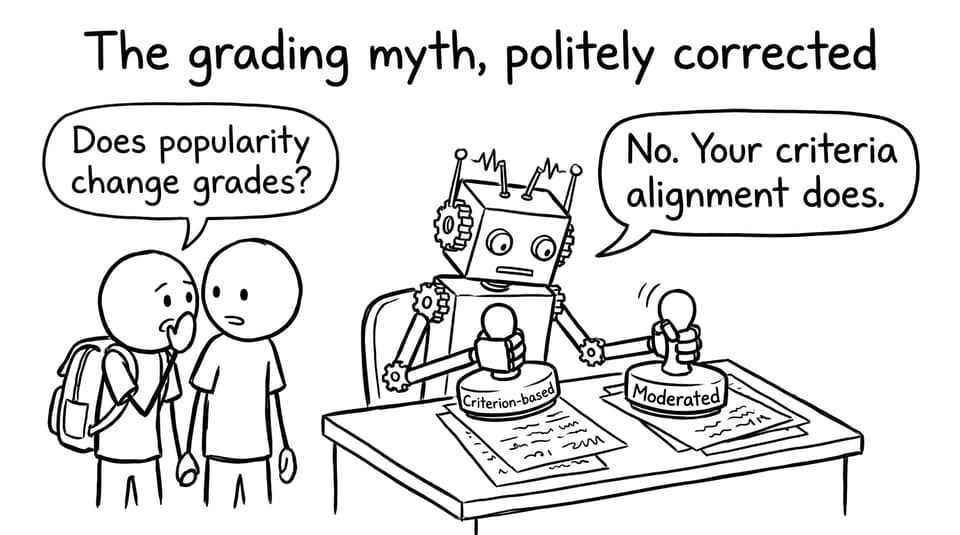
Does popularity affect IB grading?
This myth survives because it sounds plausible: “If more people take a subject, it must be harder to score well.”
But IB grading is criterion-based and moderated. You’re evaluated against assessment criteria and markbands, not against how many students sat next to you.
What popularity can change is what examiners see frequently. In big cohorts, generic phrasing and half-specific examples show up more often, which means they’re less impressive. The solution isn’t to avoid popular subjects. It’s to write with clarity, specificity, and command-term accuracy.
The real trade-off in Subject Selection (for exam prep)
When students say “popular vs unpopular,” they’re often really describing risk management.
Popular subjects often give you:
-
Plenty of classmates to compare notes with
-
Lots of teacher experience and established resources
-
Familiar content and formats
But they demand:
-
Cleaner structure
-
More precise evidence
-
Better differentiation (because many answers sound the same)
Unpopular subjects often give you:
-
More visibility (strong work stands out)
-
More individualized support
-
A tighter feedback loop
But they demand:
-
More self-directed revision
-
A stronger personal system for practice
If you want a subject-by-subject starting point for revision, bookmark The Ultimate IB Subject Guide: Specific Revision Tips for Every Course.
How to succeed in any Subject Selection: the repeatable system
The students who do well tend to be boring in the best way. They don’t wait for motivation. They build a loop.
-
Learn the content with structured resources (so you don’t revise randomly)
-
Practice exam-style questions (so knowledge becomes performance)
-
Get feedback (so mistakes become data)
-
Repeat with spacing (so recall survives exam pressure)
RevisionDojo is designed around that loop. Use RevisionDojo for IB as your hub, then lean on the Questionbank to convert understanding into marks. Pair it with IB Flashcards with Spaced Repetition (SRS) so your memory doesn’t rely on last-minute adrenaline.
If you want a practical how-to on practice, see IB Question Bank | How to Use It Effectively. And if your notes keep turning into a pile of highlights, Use RevisionDojo Notes to Boost IB Retention will help you build something more durable.
RevisionDojo also supports the moments that usually feel private: asking “stupid” questions (AI Chat), checking whether your response actually hits the criteria (Grading tools), and building exam realism (Mock Exams and Predicted Papers) without guessing what matters.
Closing: make Subject Selection a strategy, not a story
The most tempting stories in IB are the ones that reduce uncertainty: “Pick the popular subject and you’ll be fine,” or “Pick the unpopular subject and you’ll stand out.” Real life is quieter. Your results come from alignment: between you and the assessment, you and the workload, you and the habits you repeat.
So let your Subject Selection be honest. Then let your revision be consistent. And if you want one place that supports both popular and niche subjects with Study Notes, Flashcards, AI Chat, Grading tools, Mock Exams, Predicted Papers, a Coursework Library, and Tutors, make RevisionDojo your basecamp for the run-up to exams.