

When it comes to Subject Selection, most students pretend they are choosing subjects. In reality, they are choosing a future version of themselves.
Not the fantasy version who studies six hours a day, never forgets deadlines, and somehow enjoys writing reflections about their reflections. The real version: the one who will sit in a quiet exam hall months from now, tired but hoping the choices they made still feel like their choices.
That is why the “least popular IB subjects” question matters. It is not really about popularity. It is about risk, support, and the quiet fear of being the only one in the class who does not know what is going on.
This guide breaks down the least popular IB subjects in 2025, what low enrolment actually means, and how to make Subject Selection decisions that hold up under exam pressure.
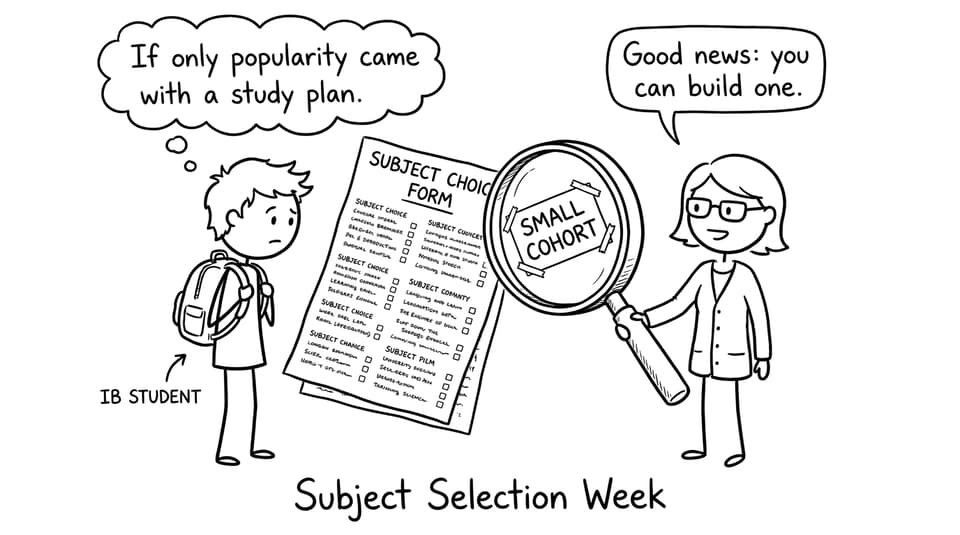
Quick checklist for Subject Selection (read this before you panic)
Use this fast filter before you decide a subject is “too niche”:
-
Does your school actually offer the subject with stable teaching and resources?
-
Do you like the skills it tests (problem-solving, analysis, creation, lab work), not just the topic?
-
Can you see a realistic weekly routine for it?
-
Is there enough practice material and feedback available?
-
Would you still choose it if you stopped caring what others think?
If those answers are solid, your Subject Selection is already more strategic than following trends.
Least popular IB subjects in 2025 (and why they stay niche)
Exact enrolment varies by region and school availability, but the least popular IB subjects in 2025 tend to cluster in four areas:
Physics (especially at Higher Level)
Physics HL often has small cohorts because it demands sustained multi-step reasoning and comfort with abstraction. It is not “impossible,” but it is uncompromising. If your algebra habits are shaky, Physics will find out.
If you are deciding between levels, read How Does IB Physics HL Differ from SL in Difficulty? and explore the full resource hub at IB Physics Resources.
Higher Level Mathematics courses
HL Maths options can be less popular because they reward precision and consistency. Miss two weeks, and you feel it. Many students avoid that pressure, even if they are capable.
If Maths HL is on your list, use IB Mathematics Analysis and Approaches Resources and the strategy guide How to Master IB Math AA HL Topics Efficiently.
Group 6 Arts subjects
Group 6 can be niche because the workload is different, not lighter. You build a process over months: drafts, rehearsal, reflection, revision, documentation. Some schools also cannot offer the full range due to staffing or facilities.
If you are considering arts, start with Choosing Your Group 6 Subject: A Comprehensive Guide and sanity-check your schedule with How Many Hours a Week Should You Study for IB Group 6?.
Niche language options with small cohorts
Some Language B or ab initio choices have low enrolment simply because not many students have the same language background in one school, or the timetable cannot support it.
None of the above are “bad subjects.” They are simply subjects with a narrower pipeline.
Why enrolment is lower (and what it does to your experience)
Low popularity usually comes from practical constraints, not from the IB quietly admitting a subject is a trap.
-
Availability: Many schools cannot staff HL Physics, niche languages, or multiple arts pathways.
-
Perceived difficulty: Students confuse “requires training” with “not for me.”
-
Career myths: Some students assume universities only respect subjects with big cohorts. Most universities care about performance and relevance, not popularity.
A small class can even be an advantage: more direct teacher feedback, clearer expectations, and fewer distractions. The trade-off is that you must be proactive about resources and practice.
The myth that breaks Subject Selection: “If it’s unpopular, it’s harder to score well”
This belief sticks because it feels intuitive. But it is incomplete.
IB grading is criterion-based, and grade boundaries adjust. Examiners are not allowed to mark “harshly” just because a cohort is small. What changes is not the marking. What changes is the student experience.
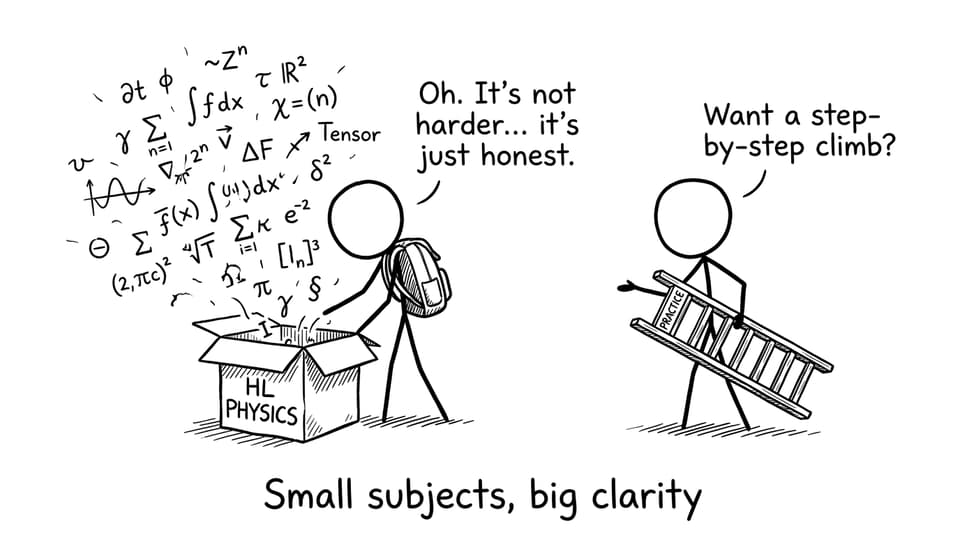
In small subjects, you cannot hide behind the noise of a big cohort. Your habits show faster: whether you practice consistently, whether you understand command terms, whether you can explain your thinking.
That is why unpopular subjects feel scarier. They are not harder by default. They are simply more honest about preparation.
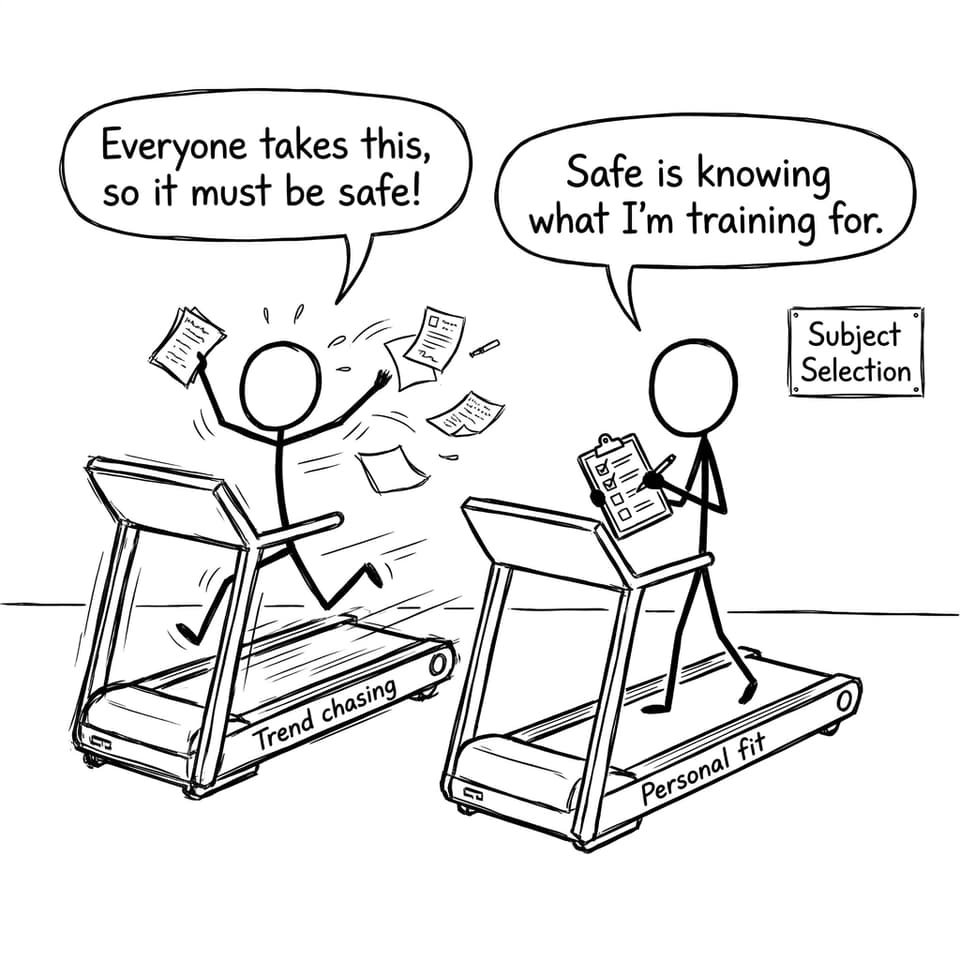
When choosing a less popular subject is the smartest Subject Selection you can make
Choosing a niche subject is usually wise when:
-
You genuinely enjoy the material (not just the idea of being “good at it”)
-
You have the prerequisites or are willing to build them early
-
Your school support is reliable
-
The subject aligns with your degree goals or strengthens your profile meaningfully
For example: a student aiming for engineering who avoids Physics HL out of fear is not reducing risk. They are delaying it. Another student who loves studio work might thrive in Group 6 because long projects suit how they think.
The best Subject Selection choices are not the ones that impress people. They are the ones you can sustain on a random Tuesday.
How RevisionDojo makes niche subjects feel less risky
Less popular subjects can feel lonely because it is harder to find structured support. RevisionDojo is built to remove that gap.
A practical workflow looks like this:
-
Use the Study Notes to build clean understanding before you grind practice
-
Drill weak points using the RevisionDojo Questionbank
-
Lock daily recall with Flashcards
-
Get unstuck fast with AI Chat (Jojo) instead of losing an hour to confusion
-
Use Grading tools to learn what earns marks in written responses and explanations
-
Build realism with IB Predicted Papers and Mock Exams
-
Reduce coursework stress using the Coursework Library
-
Bring in Tutors when you need targeted diagnosis, not generic advice
If you want a clear guide on how to combine full-paper practice with targeted drilling, read IB Predicted vs Specimen Papers: What They Mean.
Conclusion: Subject Selection is not about popularity, it is about ownership
The least popular IB subjects in 2025 are not traps. They are simply less common, often because fewer schools offer them and fewer students want the specific kind of challenge they bring.
If you treat Subject Selection as a popularity contest, you will end up rehearsing someone else’s life. If you treat it as a fit between skills, assessment style, and support, even a niche subject can become your scoring advantage.
If you want that support system in one place, RevisionDojo is built for it: Questionbank, Study Notes, Flashcards, AI Chat, Grading tools, Predicted Papers, Mock Exams, Coursework Library, and Tutors. Make your Subject Selection. Then train for it like it matters.