Sometimes you only notice “identity” when it gets tested.
A teacher asks for a creative response. A classmate shares a tradition you’ve never heard of. You write a reflection and suddenly realize you’ve been moving through school on autopilot.
That moment is exactly what MYP is trying to create on purpose.
The global context Personal and Cultural Expression isn’t only for artists or “creative kids.” In MYP, it’s a lens that turns everyday learning into something more personal: how you make meaning, how your culture shapes your choices, and how your voice changes when you speak to different audiences. And if you’re preparing for assessments, it matters because it trains the same exam skills you’ll need later: clarity, evidence, and reflection.
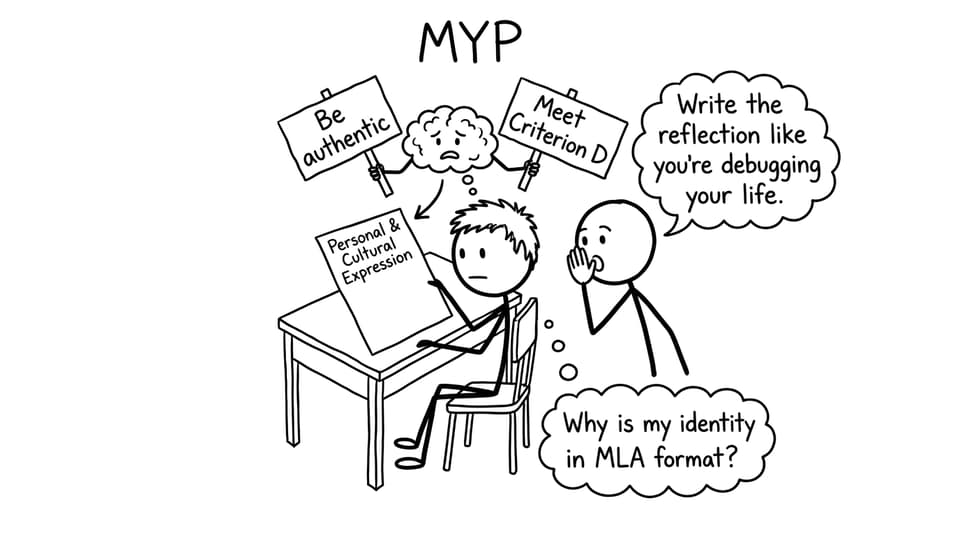
Quick MYP checklist: Personal and Cultural Expression (save this)
Use this before any task, unit, or project connected to this global context in MYP:
-
Can I explain what my “expression” is (story, design, argument, performance, product)?
-
What cultural influences are present (family, language, community, media, heritage, beliefs)?
-
What is my purpose and audience (who is this for, and what should they feel/learn/do)?
-
Where is my evidence (drafts, annotations, quotes, user feedback, process journal entries)?
-
Where is the reflection (what changed in my thinking and why)?
When your work feels vague, this checklist pulls it back into exam-ready shape.
What “Personal and Cultural Expression” means in MYP
Personal and Cultural Expression is one of the six MYP global contexts. It focuses on how people discover and express ideas, emotions, values, and identity through creativity, communication, and culture.
A simple way to remember it is this: in MYP, this context asks how humans turn experience into meaning. That could be through art, language, design, rituals, storytelling, music, fashion, architecture, film, social media, or even the way communities preserve history.
The guiding question that often sits underneath is:
What is the nature and purpose of creative expression?
And the practical exam-season version is:
How do I show my thinking clearly, with evidence, while staying true to a real voice?
If you want a wider map of how contexts work across subjects, see Integrating Global Contexts Across Multiple Subjects in the MYP and How Teachers Use Global Contexts in MYP Lessons.
Why MYP Personal and Cultural Expression matters for exams
In exam prep, students often separate “creative tasks” from “serious revision.” But MYP doesn’t work like that. The programme rewards your ability to:
-
communicate for purpose and audience,
-
connect ideas to context,
-
justify choices with evidence,
-
reflect on process and improvement.
Those are performance skills. They show up in essays, source analysis, projects, portfolios, and on-screen assessments.
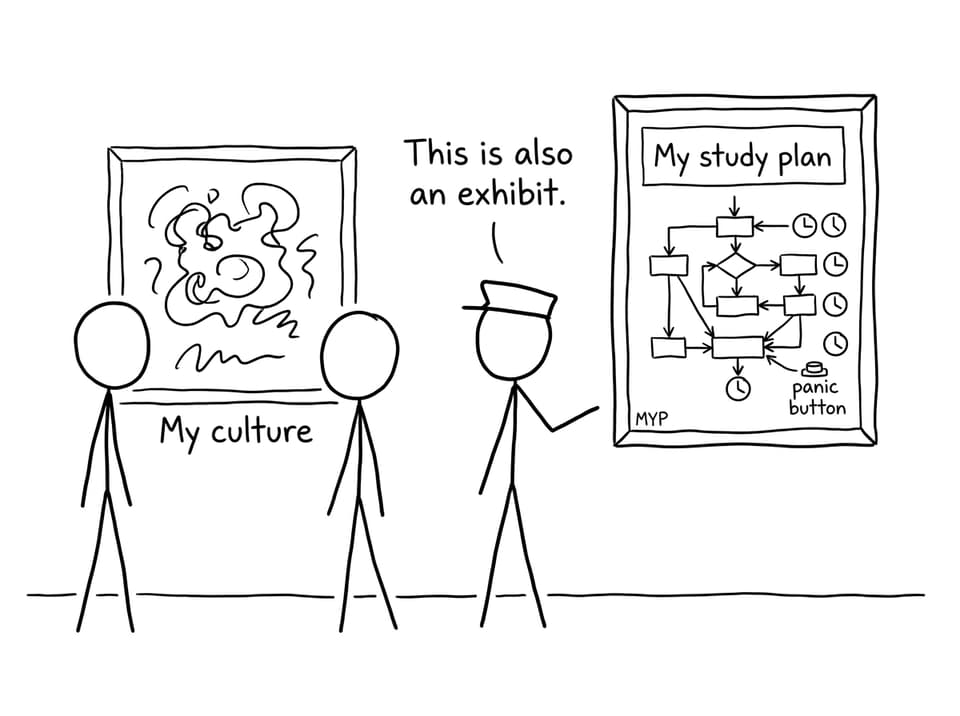
If your marks stall, it’s rarely because you lacked personality. It’s usually because your ideas weren’t made visible to the assessor. That’s why criteria and reflection matter. For a criteria-first overview, read How Are IB MYP Students Graded? Criteria Explained and Sample MYP Assessment Tasks for Every Subject Group.
How Personal and Cultural Expression shows up across MYP subjects
Arts: identity becomes a process, not a talent
Arts is the obvious home for Personal and Cultural Expression in MYP, but the hidden skill is documentation. High-scoring work usually shows experimentation, influences, and iteration.
Try unit ideas like:
-
creating a piece inspired by cultural symbolism (then explaining the choices),
-
producing an “art and activism” response to an issue you care about,
-
composing or performing something that blends styles across cultures.
Exam-season move: treat your process journal like an evidence bank. Save drafts. Label changes. Write one sentence on why you changed it.
Language and Literature: stories as cultural technology
In MYP, language tasks often reward how well you connect authorial choices to context and purpose. Personal and Cultural Expression fits naturally when you:
-
write autobiographical or heritage-informed narratives,
-
analyze poetry or speeches that explore belonging,
-
compare voices across time, place, or community.
If Language and Literature is a big focus for you, use MYP Language and Literature Assessment Criteria Explained to translate “good writing” into what your rubric actually rewards.
Design: creativity with constraints
Design is where Personal and Cultural Expression becomes practical. You’re not only expressing an identity, you’re solving a problem with a point of view.
Strong project directions include:
-
designing a logo or brand identity for a community initiative,
-
creating an app or site that preserves local stories,
-
prototyping fashion or product ideas influenced by tradition (with ethical discussion).
A useful companion is Embedding Global Contexts in MYP Design Projects.
Individuals and Societies: expression as power
Culture isn’t neutral. Symbols, festivals, monuments, and media shape what people believe is “normal.” In MYP, this context can frame excellent work on representation, propaganda, national identity, and stakeholder perspectives.
If you want criteria clarity for this subject group, MYP Individuals and Societies Criteria Explained is an efficient revision anchor.
A practical MYP routine: build identity, then build marks
Here’s a calm routine you can run weekly while revising:
Use one “expression session” per week
-
Pick one artifact: a paragraph, sketch, storyboard, prototype, or speech plan.
-
State the cultural influence in one sentence (specific, not generic).
-
Add one improvement cycle: draft, feedback, revise.
Use two “exam sessions” per week
-
Do timed practice using RevisionDojo’s Questionbank.
-
Review mistakes with criteria language using Grading tools.
-
Turn repeats into Flashcards (definitions, command terms, sentence stems).
Use one “reflection session” per week
-
Ask RevisionDojo AI Chat: “What is unclear in my reasoning?”
-
Write a 6-line reflection: what I did, what worked, what didn’t, why, what I’ll change, when I’ll test it.
If you need a structured schedule, MYP eAssessments: 30-Day Study Plan That Works gives a blueprint.
Project ideas that fit Personal and Cultural Expression in MYP
If you’re choosing a task direction, keep it simple and evidence-friendly:
-
Micro-documentary: record a short film about a local tradition, with narration explaining meaning.
-
Creative writing set: three short pieces from different cultural perspectives, with a commentary.
-
Mini-exhibition: curate 5 artifacts (photos, objects, songs) and write interpretive labels.
-
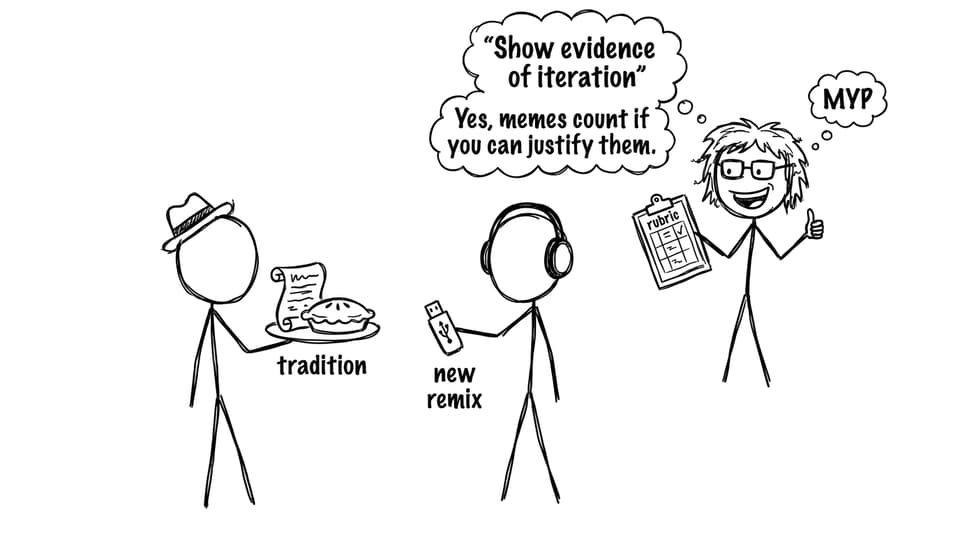
Remix project: blend two cultural styles (music/design/visuals) and justify decisions.
-
Community guide: a bilingual welcome guide for new students, showing register and audience control.
If you’re doing the Personal Project, the context choice matters a lot. Start with MYP Personal Project Global Contexts Explained and then tighten execution with MYP Personal Project: The Ultimate Student Guide.
Closing: the quiet point of MYP
The best part of MYP Personal and Cultural Expression is that it doesn’t demand a dramatic identity reveal. It asks for something more realistic: notice what shaped you, choose what you want to carry forward, and learn to communicate it with clarity.
If you want that clarity to translate into marks, build a routine where creativity produces evidence and reflection produces improvement. Start at the Middle Years Program (MYP) Hub, then use RevisionDojo’s Questionbank, Study Notes, Flashcards, AI Chat, and Grading tools to make your voice stronger and your exam performance steadier, oneone iteration at a time.


