
There's a moment in the MYP when a task sheet lands on your desk and you can feel your brain doing math it didn't sign up for.
Not the equations kind. The silent calculation of: How many pages is this? What does "analyze" mean here? Which criterion is this actually testing? You're not alone if your first reaction is to treat every MYP assessment task like a mystery novel with missing chapters.
The good news is that MYP assessment tasks aren't random. They're built to reveal how you think, not just what you remember. Once you start seeing the patterns across each subject group, the tasks become predictable in a comforting way. Like realizing your teacher's "surprise" quiz always has the same kind of questions.
Below you'll find sample MYP assessment tasks for each subject group, plus a simple method to practice them like exam prep: criteria-first, timed, and review-driven.
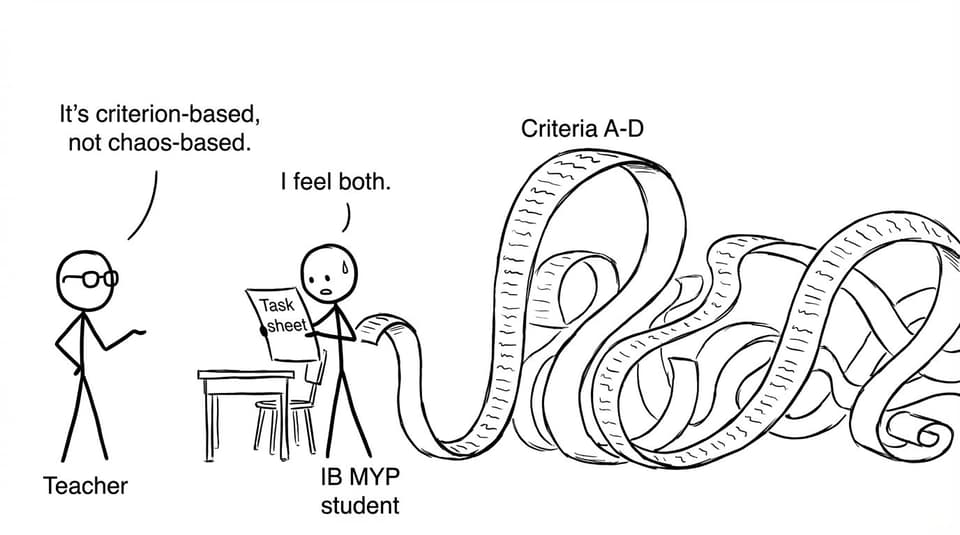
A quick MYP assessment checklist (save this)
Before you start any MYP task, run this checklist. It's the difference between "busy" and "strategic."
- Identify the MYP subject group and the likely criteria being assessed (often A-D).
- Highlight the command terms (explain, analyze, evaluate, create).
- Write a one-sentence success definition using criteria language.
- Gather two proof types: content knowledge + skill evidence (data, quotes, models, process journal).
- Draft with structure first (headings that map to criteria), then fill in.
- Do one timed practice version, then one improvement version.
To make that practice loop easier, start from the Middle Years Program (MYP) hub and keep your tools in one place.
Sample MYP assessment tasks by subject group
The MYP has eight subject groups. Not every school offers every one, but the task patterns are remarkably consistent.
Language and Literature: meaning, craft, and viewpoint
Sample MYP task:
You are given a short story and a non-fiction opinion piece on the theme of "belonging." Write a comparative analysis that explains how each text constructs meaning through authorial choices (tone, imagery, structure) and how context shapes viewpoint.
What this MYP task is really testing:
- Can you support claims with precise textual evidence?
- Can you analyze techniques (not summarize plot)?
- Can you organize a response so the reader can follow your thinking?
How to practice:
Build a "micro-essay" template: claim -> evidence -> analysis -> link back to question. Then drill with short extracts and a timer. If you want a steady routine, pair quick reading notes with targeted practice using Questionbank and rubric-aligned feedback via RevisionDojo's AI Chat.
Language Acquisition: communication under constraints
Sample MYP task:
Create a bilingual guide for new students joining your school. Include an email invitation, a short blog-style post, and a short recorded speaking segment. You must adapt register for each audience and justify your language choices.
What this MYP task is really testing:
- Message clarity (purpose, audience, context)
- Range and accuracy of vocabulary and structures
- Cultural appropriateness and register control
How to practice:
Instead of rewriting the same paragraph ten times, do short cycles: 10 minutes planning, 15 minutes producing, 10 minutes improving based on errors. Use RevisionDojo Flashcards to keep high-frequency phrases alive, and use AI Chat to generate targeted speaking prompts for your weak themes.
Individuals and Societies: evidence, perspectives, and consequences
Sample MYP task:
You are given a set of sources about urban redevelopment (map, photo, short article, and data table). Write a report evaluating the impacts on two stakeholder groups. Propose a policy recommendation and justify it using evidence.
What this MYP task is really testing:
- Source analysis (origin, purpose, value, limitation)
- Perspective awareness (stakeholders rarely agree)
- Argumentation with evidence, not opinion
How to practice:
Practice building "evidence sandwiches": claim -> source detail -> explanation of what it proves. Then do a 5-minute stakeholder brainstorm before writing. On RevisionDojo, combine fast content refreshers via Study Notes with timed drills and review notes so your mistakes become reusable rules.
Sciences: method, data, and scientific explanation
Sample MYP task:
Design and conduct an investigation on how light intensity affects photosynthesis in an aquatic plant. Submit a lab report including a hypothesis, variables, method, risk assessment, processed data, and a conclusion evaluating reliability and improvements.
What this MYP task is really testing:
- Experimental design logic (controls, measurement, repeatability)
- Data processing and graphing choices
- Explanation that connects data to scientific concepts
How to practice:
Don't just memorize definitions. Practice writing conclusions that explicitly link: trend -> concept -> limitation -> improvement. Use RevisionDojo's Grading tools to get fast feedback on criteria-style lab writing, and keep a mini "methods library" in your notes so you're not reinventing your structure each time.
Mathematics: reasoning that survives pressure
Sample MYP task:
A school is planning a charity event. Model expected revenue using linear functions and constraints, then test how changes in ticket price affect outcomes. Present a solution with calculations, a graph, and a short explanation of assumptions.
What this MYP task is really testing:
- Correct math, yes, but also communication and reasoning
- Choosing appropriate representations (table, graph, equation)
- Interpreting results in context (units, practicality, limitations)
How to practice:
One of the fastest ways to improve in MYP math is to practice explaining your thinking in short sentences. Use a two-pass method: first pass for accuracy, second pass for explanation and presentation. Then simulate pressure with timed sets and reflection.
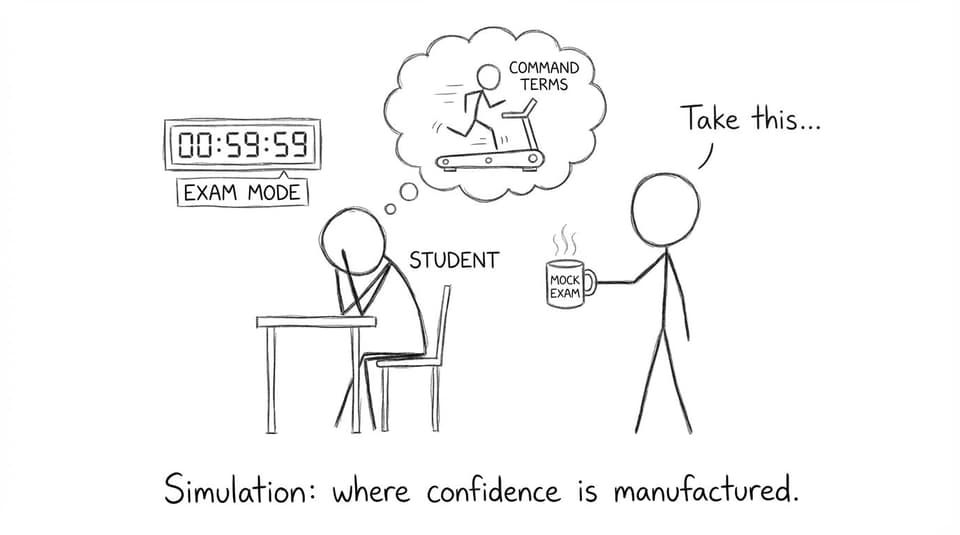
If you want a structured simulation loop, use RevisionDojo's practice ecosystem: Questionbank, Study Notes, and Flashcards, plus timed sessions inspired by mock routines like How to Run Timed IB Mock Exams in RevisionDojo (Exam Mode + Test Builder).
Arts: process is part of the grade
Sample MYP task:
Create a final artwork responding to the theme "identity in transition." Submit a process journal documenting research, experimentation, iterative drafts, peer feedback, and a final artist statement evaluating how your choices communicate meaning.
What this MYP task is really testing:
- Creative intention (not just "it looks good")
- Evidence of iteration and decision-making
- Reflection: what you changed, why, and what you'd do next
How to practice:
Treat the process journal like a science lab book: short entries, dated decisions, and reasons. Build a habit of photographing drafts and writing two sentences: what I tried, what I learned. RevisionDojo's Coursework Library can help you calibrate what "strong" looks like across criteria, so your reflection becomes specific instead of vague.
Physical and Health Education: application and reflection
Sample MYP task:
Design a four-week training plan to improve cardiovascular endurance for a chosen sport. Collect baseline and endline data, analyze progress, and evaluate limitations. Include an explanation of fitness principles and safe practice.
What this MYP task is really testing:
- Applying theory (principles of training) to a real plan
- Data interpretation and realistic evaluation
- Reflection and adjustment, not perfection
How to practice:
Make your plan measurable. Practice writing evaluations that separate effort from evidence: What does the data show? What might explain it? What should change? This is a classic MYP move: rewarding reasoning over swagger.
Design: solving the right problem, not just any problem
Sample MYP task:
Identify a user problem in your school community (organization, accessibility, sustainability). Develop a design brief, success criteria, and multiple prototypes. Test with users and iterate. Submit a final solution and evaluation.
What this MYP task is really testing:
- Clear success criteria linked to user needs
- Iterative prototyping (improvement cycles)
- Evaluation with evidence (user testing results)
How to practice:
Write success criteria that can be tested. "Easy to use" becomes "a new user completes the task in under 60 seconds without help." Then your evaluation writes itself.
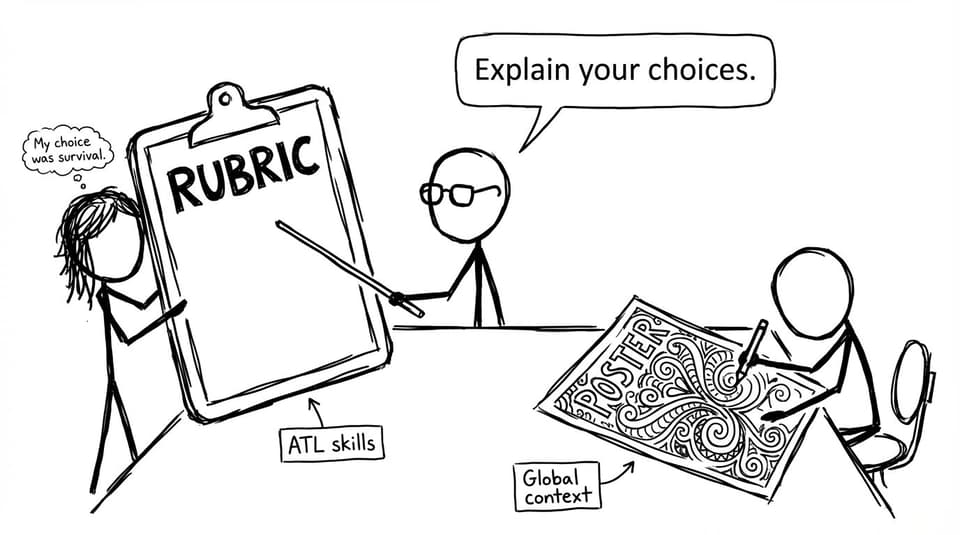
How to turn MYP assessment tasks into exam prep
A quiet truth about MYP is that tasks are already exam training. They teach the habits exams reward: clear structure, command terms, evidence, and reflection.
Build a weekly MYP task routine
- One skill session: rewrite a criterion descriptor in your own words.
- Two practice sessions: 25-40 minutes each, timed.
- One review session: correct and write three "error rules."
If you need a ready-made plan, adapt a structured approach like the MYP eAssessments: 30-Day Study Plan That Works and plug in your subject-group tasks.
Use RevisionDojo as your MYP practice loop
RevisionDojo works best when you use it like a loop, not a library:
- Study Notes to rebuild understanding fast: Study Notes
- Questionbank to practice often and track gaps: Questionbank
- Flashcards for active recall: IB Flashcard System: Active Recall for Better Memory
- AI Chat when you're stuck and need a clear explanation or a harder follow-up question
- Grading tools to get rubric-aligned feedback on written work
- Mock Exams and Predicted Papers to rehearse pressure and pacing (where available)
- Coursework Library to see what strong work looks like
- Tutors when you need a human to diagnose your pattern and reset your plan
To strengthen your foundation, it's also worth reading MYP Revision Guide: Study Tips for Success and keeping the MYP grading scale explainer nearby when you self-assess.
Closing: MYP tasks feel lighter when you see the pattern
A MYP assessment task can feel heavy when you treat it like a one-off performance. It gets lighter when you treat it like practice for a skill you can repeat.
Once you learn to read the criteria first, the subject group second, and the scenario last, you stop guessing. You start building.
If you want one place to run that whole MYP loop: practice questions, Study Notes, Flashcards, AI Chat support, Grading tools, Mock Exams, Predicted Papers, a Coursework Library, and Tutors when you want real human strategy; start at the Middle Years Program (MYP) hub and build your next task like it's training for the exam version of you.