
Design projects usually fail in a quiet way.
Not because the idea is bad, or because you can’t build it, or because you didn’t try hard enough.
They fail because the project never answers the most exam-relevant question in MYP: Why does this matter beyond my desk?
In MYP Design, that “why” isn’t decoration. It’s the difference between a product that looks impressive and a process that earns marks. The secret is using Design Thinking with the six Global Contexts, so your investigation, ideation, prototyping, and evaluation all point in the same direction.
This guide shows you how to embed Global Contexts in MYP Design projects without sounding generic, and how to turn that clarity into stronger Criterion A--D evidence.
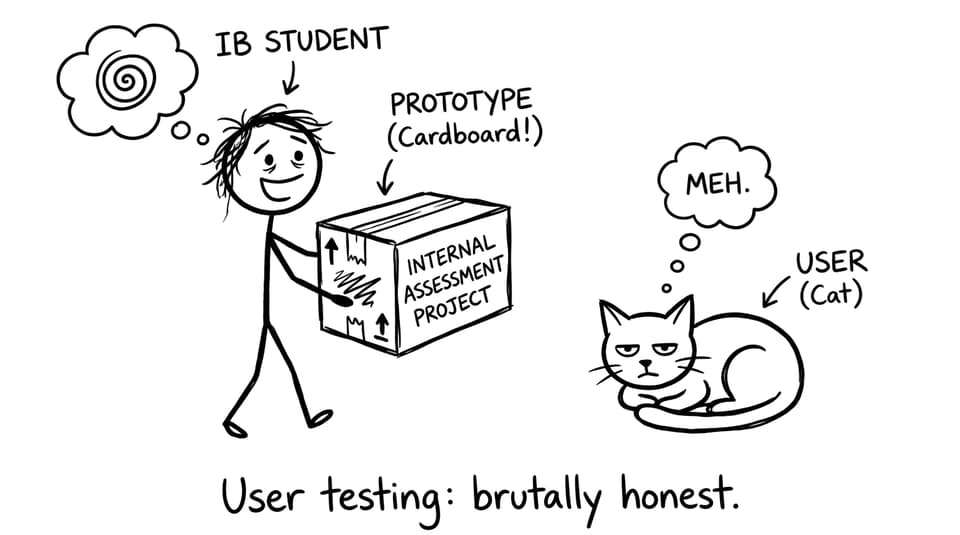
Quick checklist: embed Global Contexts (the exam-friendly way)
Use this as a fast MYP self-check before you commit to a project direction:
-
Pick one Global Context you can explain in two specific sentences.
-
Write a user need that matches the context (not just the product).
-
Draft success criteria early so evaluation is easy later.
-
Build a feedback loop: research -- idea -- prototype -- test -- improve.
-
Keep evidence weekly (photos, screenshots, test results, short reflections).
If you want a broader exam routine alongside project work, pair this with the MYP Revision Guide: Study Tips for Success so you’re not “project busy” but exam unprepared.
What Design Thinking looks like in MYP Design
Design Thinking is a human-centered way to solve problems. In MYP, it lines up neatly with the design cycle:
-
Inquiring and Analyzing: define the problem, identify a user, research needs.
-
Developing Ideas: generate options, justify choices, plan realistically.
-
Creating the Solution: prototype, test, iterate.
-
Evaluating: judge against criteria, reflect, propose improvements.
That sounds simple until you notice what MYP assessors actually reward: a visible chain of reasoning. Your report and portfolio should read like a story where every decision has a cause.
If you need a clean summary of the four stages (with practical classroom-style examples), use IB MYP Design: Creativity and Problem-Solving Activities.
Why Global Contexts raise the quality of MYP Design projects
A Global Context isn’t a label you add at the end. In MYP, it’s the lens that shapes:
-
what you research,
-
who you test with,
-
what success looks like,
-
and how you evaluate impact.
Students often choose a context because it sounds impressive, then write vague lines like “This links to sustainability.” Examiners and teachers can feel that instantly.
A better approach is to treat the Global Context as your project’s “gravity.” Once you pick it, everything else should naturally orbit it.
If you want a quick refresher on the six lenses with realistic applications, read Six Global Contexts in IB MYP: Real-World Applications.
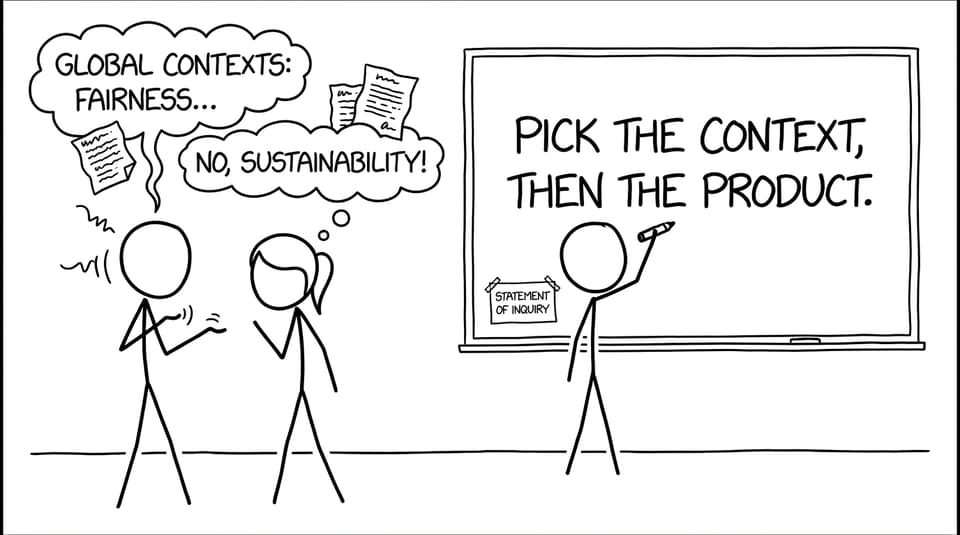
Matching each Global Context to a strong MYP Design project
Below are high-scoring patterns you can adapt. Notice how each example connects user, need, and evidence.
Identities and Relationships in MYP Design
This context shines when your project is about well-being, habits, belonging, or how people interact.
Project direction: design a study organization system that reduces stress for students in your year group.
High-value evidence: short interviews, a baseline stress/organization survey, usability testing, iteration notes.
Personal and Cultural Expression in MYP Design
This context works when design carries meaning: identity, culture, voice, aesthetics, storytelling.
Project direction: create a visual campaign or product packaging that communicates a local cultural story to a younger audience.
High-value evidence: audience feedback, design drafts, justification of symbols/choices, reflection on communication impact.
Orientation in Space and Time in MYP Design
This is where history, place, change, and heritage become design constraints.
Project direction: redesign a historical object for modern use while preserving its core function or symbolism.
High-value evidence: research notes (sources, comparisons), justification of what you preserved vs changed, evaluation against user needs.
If you need help making this context feel specific rather than “just history,” see Orientation in Space and Time: Making History Relevant in MYP.
Scientific and Technical Innovation in MYP Design
This context is perfect when you’re improving systems, using technology responsibly, or testing performance.
Project direction: prototype an energy-saving solution for a common household or classroom problem.
High-value evidence: measurable testing, performance data, iterative prototypes, clear constraints.
Fairness and Development in MYP Design
This context demands ethical thinking and inclusive design: access, equity, affordability, rights.
Project direction: develop an assistive tool that supports accessibility for a specific user group.
High-value evidence: empathy-driven user research, inclusive design choices, cost/material justification, feedback from target users.
Globalization and Sustainability in MYP Design
This context works when you design for systems: environmental impact, consumption, circular economy, long-term trade-offs.
Project direction: design packaging that reduces waste while still meeting user needs (protection, convenience, cost).
High-value evidence: lifecycle thinking, material comparisons, user testing that includes real behavior (“Would you actually reuse it?”).
For more project prompts and angles, use Globalisation and Sustainability Projects for MYP Students.
A simple process for embedding Global Contexts in MYP Design Thinking
Choose the Global Context first (then narrow the product)
If you start with “I want to build an app,” you’ll often force a weak context later. In MYP, reversing the order makes your writing cleaner.
A practical resource for making that decision quickly is MYP Personal Project Global Contexts Explained. Even if you’re working on Design class projects (not the Personal Project), the logic carries over.
Write a Statement of Inquiry that actually guides decisions
A strong MYP statement of inquiry should:
-
name a Key Concept and Related Concept implicitly or explicitly,
-
connect them to your Global Context,
-
and hint at what you will do (not just what you will discuss).
Example:
Sustainable design choices can reshape everyday habits by reducing waste without removing convenience.
Now your research, success criteria, and evaluation have a direction.
Build three layers of inquiry questions
To keep the project from becoming surface-level, plan:
-
Factual: What materials or methods exist right now?
-
Conceptual: How do design choices influence behavior or outcomes?
-
Debatable: What should matter most when values conflict?
Those debatable questions are where Global Contexts come alive in MYP writing.
Align evidence to Criteria A--D early
Many students only think about Criteria A--D at the end, then panic-write reflections. Instead, set up your evidence system upfront.
If you’re unsure how rubrics connect to performance, read Creating Rubrics Aligned with IB Criteria in the MYP. It helps you translate “descriptors” into actions you can document.
Keep reflections tied to impact, not feelings
Reflection in MYP is strongest when it sounds like:
-
“Because I learned X from research/testing, I changed Y in my design.”
-
“This change improved Z, which matters in this Global Context because…”
That style is calm, specific, and gradeable.
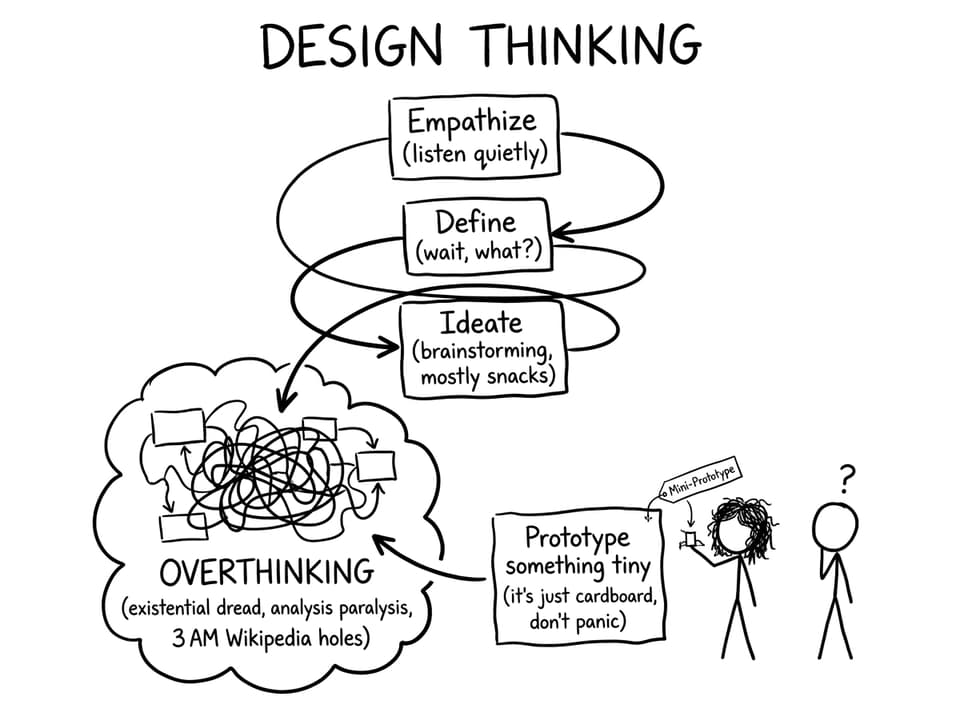
How RevisionDojo helps you turn a good MYP project into a high-scoring one
At some point, every MYP student hits the same wall: you’ve done the work, but you’re not sure if it reads like strong evidence.
RevisionDojo is built for that moment.
-
Use Study Notes to model what concise explanation sounds like when you describe research and decisions.
-
Use Flashcards to memorize Global Context language, ATL phrasing, and key definitions so your writing stays precise under time pressure.
-
Use AI Chat to tighten inquiry questions, refine success criteria, and spot gaps in your logic.
-
Use Grading tools to check rubric alignment before you submit.
-
Keep your exam readiness steady with the Questionbank, Mock Exams, and Predicted Papers, so your project doesn’t quietly replace revision.
-
If you need targeted help, the Tutors feature is there when deadlines close in.
If you’re new to how MYP fits into the wider IB pathway, start at the Middle Years Program (MYP) hub.
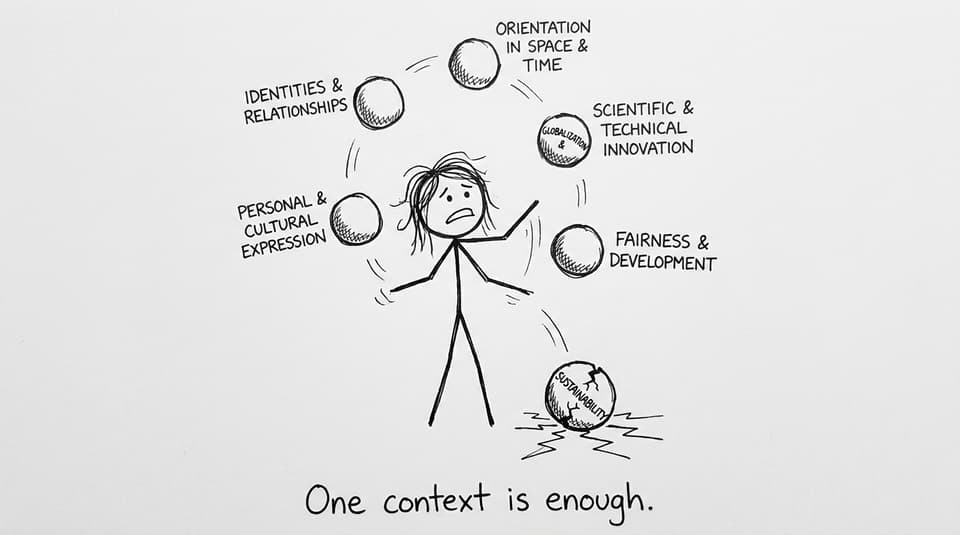
Conclusion: the real purpose of MYP Design Thinking
The best MYP Design projects don’t feel like school assignments. They feel like small, serious attempts to improve something real.
That shift happens when you stop asking, “What should I make?” and start asking, “Which Global Context makes this problem worth solving?” From there, Design Thinking becomes less like a checklist and more like a storyline: empathy leads to research, research narrows ideas, prototypes invite feedback, and evaluation becomes honest.
If you want your next MYP Design project to be clearer, more meaningful, and easier to score highly, build it with RevisionDojo beside you: tighten your research with Study Notes, stress-test your writing with Grading tools, and keep exam prep steady with the Questionbank, Mock Exams, and Predicted Papers.
