
A good MYP lesson doesn’t start with content. It starts with a reason.
Think about the classes you remember best. Not the ones with the neatest slides. The ones where, halfway through, you caught yourself thinking: Oh. This is actually about the world I live in.
That moment is rarely an accident. In the MYP, teachers design it on purpose using Global Contexts. And if you’re an IB student preparing for exams, understanding how teachers build that relevance is a quiet advantage. It helps you predict what your teacher is really assessing, write sharper explanations, and make connections that earn marks.
Along the way, you’ll see how RevisionDojo supports the same planning logic with tools like the Questionbank, Study Notes, Flashcards, AI Chat, Grading tools, Predicted Papers, Mock Exams, Coursework Library, and Tutors.
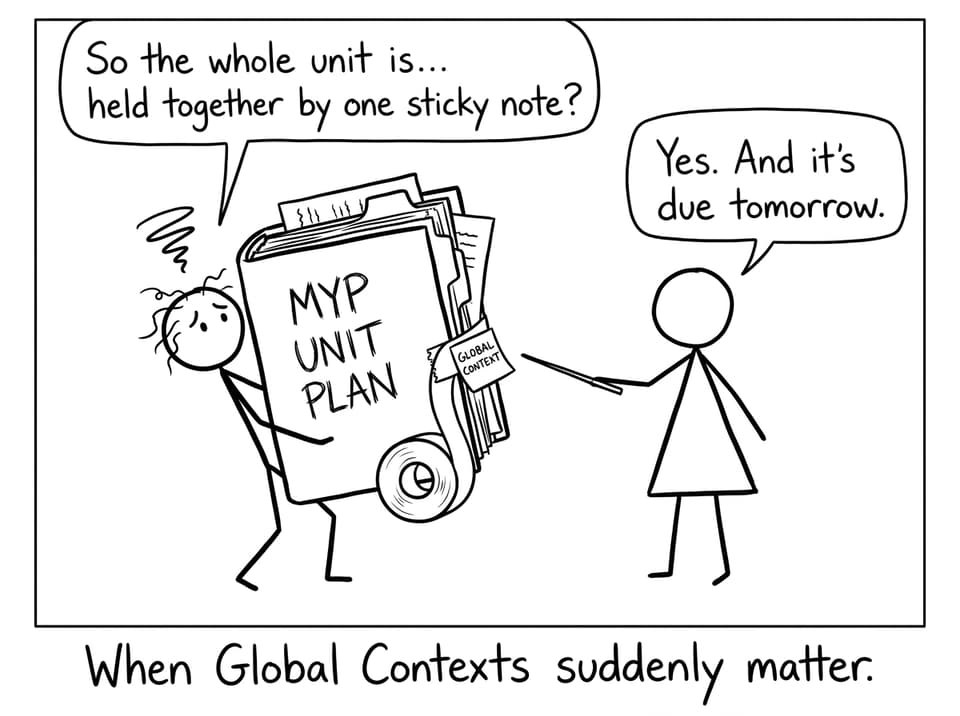
Quick checklist: how Global Contexts show up in a strong MYP unit
When teachers integrate Global Contexts well in MYP lesson plans, you’ll usually notice:
-
A clear Statement of Inquiry that links concepts to a real-world lens
-
Inquiry questions that move from factual to conceptual to debatable
-
Activities that feel “authentic” (not just school tasks in disguise)
-
Reflection prompts that ask what changed in your thinking
-
Assessments that reward transfer and relevance, not memory alone
If you want extra background before you dive in, the RevisionDojo overview of the six contexts is a helpful anchor: Six Global Contexts in IB MYP: Real-World Applications.
The six Global Contexts: the lenses behind the MYP
In MYP, Global Contexts work like camera lenses. Same topic, different meaning depending on what you focus on.
The six Global Contexts are:
-
Identities and Relationships
-
Personal and Cultural Expression
-
Orientation in Space and Time
-
Scientific and Technical Innovation
-
Fairness and Development
-
Globalization and Sustainability
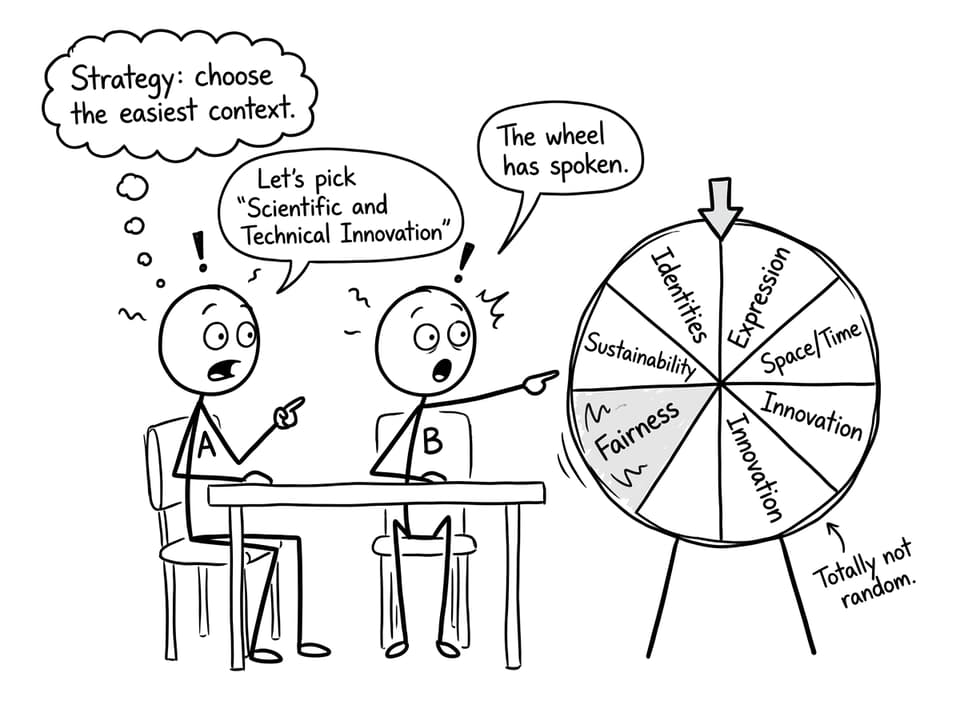
You’ll see teachers choose one lens per unit, then commit. That commitment matters because the best MYP units don’t mention the context once. They return to it again and again, so your learning feels like it’s building toward a bigger idea.
If you’re also doing the Personal Project, the same logic applies: MYP Personal Project Global Contexts Explained.
How teachers integrate Global Contexts in MYP lesson plans
They start with a Statement of Inquiry, not a topic list
A common misconception is that MYP planning begins with “We’re doing cells” or “We’re doing propaganda.” In reality, strong planning begins with a conceptual spine.
That spine is the Statement of Inquiry (SOI), which connects:
-
a key concept (big, transferable)
-
a related concept (subject-specific)
-
a Global Context (real-world meaning)
Teachers use the SOI as a filter: if an activity doesn’t help students explore the statement, it gets revised or removed.
To see how this is built step-by-step, use: Creating Meaningful Statements of Inquiry in the MYP.
Exam advantage for students: When you revise, use the SOI as your “master sentence.” Ask yourself: Can I explain this SOI using evidence from this unit? If yes, your revision is conceptual. If no, you’re probably collecting facts without a purpose.
They translate the Global Context into “real” learning experiences
In the MYP, Global Contexts aren’t decoration. Teachers make them visible by choosing tasks that mirror real situations.
A science unit under Globalization and Sustainability might include:
-
interpreting energy-use data
-
evaluating trade-offs in design choices
-
communicating findings to a defined audience
A language unit under Personal and Cultural Expression might include:
-
analyzing how voice and identity shape a text
-
writing for a community purpose (not just “an essay for school”)
Exam advantage: When tasks have authentic purpose, your explanations get better. You stop writing “because it is important” and start writing important for whom, in what context, with what consequences.
This is where RevisionDojo’s practice loop helps. Build understanding fast with RevisionDojo Questionbank, then use mistakes to guide what you revisit in notes. It’s the same iterative logic teachers plan for in MYP.
They design inquiry questions that “climb” in depth
In MYP lesson planning, teachers usually build three layers of inquiry:
-
Factual: What is it?
-
Conceptual: Why does it matter?
-
Debatable: What should we do about it?
This matters because exams rarely reward only the factual layer. The higher marks come when you can generalize, evaluate, and justify.
If you want to understand the mechanics behind this style of teaching, see: Inquiry-Based Learning in the MYP: A Teacher's Guide.
Student move: Turn your revision notes into questions. Then push each question up one level. If your flashcard says “Define urbanization,” add a second card: “How does urbanization reshape systems?” That’s how MYP thinking becomes exam writing.
They build interdisciplinary connections (when it actually helps)
The MYP encourages interdisciplinary learning, but good teachers don’t mash subjects together just to tick a box. They connect subjects when the Global Context naturally demands multiple perspectives.
Example: a sustainability challenge might combine science (environmental impact), individuals and societies (policy and equity), and design (prototyping solutions).
If you want models you can recognize in class, read: Sample MYP Unit Plans for Interdisciplinary Activities.
Exam advantage: Interdisciplinary thinking often shows up as better examples. Instead of repeating textbook cases, you bring in economic, ethical, or technological angles that make your argument feel mature.
They align assessments to criteria and reflection, not surprises
In MYP, assessment is supposed to reflect the unit’s conceptual goals and Global Context. Teachers plan backwards from the criteria so the summative task matches what you practiced.
Strong units also include reflection checkpoints (early, mid, late) so students can articulate how their understanding is changing.
If you’ve ever wondered why teachers care so much about formative tasks, this explains the logic: Balancing Formative and Summative Assessment in the MYP.
How RevisionDojo fits: Use Grading tools to check whether your responses actually meet criteria language, not just “sound good.” Then build targeted practice sets in the Questionbank and simulate pressure with Mock Exams and Predicted Papers.
How to use this as an MYP student preparing for exams
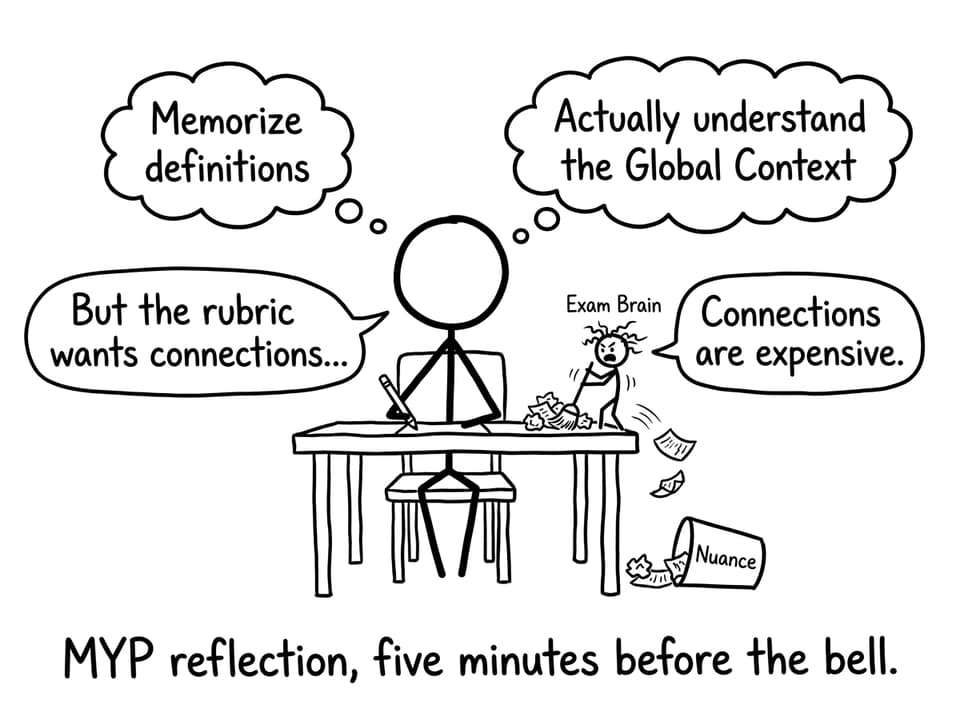
Teachers integrate Global Contexts to make learning transferable. Your job in exams is to show transfer.
Try this simple MYP revision routine:
-
Pick one unit and write the Global Context at the top of the page.
-
List 3 concepts and 3 examples from the unit.
-
Write one paragraph answering: “Why does this matter beyond school?”
-
Do 10 practice questions and log the mistakes.
-
Ask RevisionDojo AI Chat to challenge your reasoning: “Give me a debatable question for this Global Context and critique my answer.”
If you want a full schedule built around practice and feedback, use: MYP eAssessments: 30-Day Study Plan That Works.
For subject-specific practice hubs, start here:
Conclusion: learn the MYP pattern, then use it to win marks
Teachers integrate Global Contexts in MYP lesson plans to make learning feel honest: connected to people, systems, change, and consequence. For you, that integration is also a blueprint for revision. Follow the pattern teachers use--concepts, context, inquiry questions, reflection, criteria--and your exam answers start sounding like they were built for the rubric.
When you want that whole MYP loop in one place, RevisionDojo is designed for it: practice in the Questionbank, rebuild understanding with Study Notes, lock in definitions with Flashcards, test your thinking with AI Chat, and sharpen final performance with Grading tools, Mock Exams, Predicted Papers, the Coursework Library, and Tutors.
If you do one thing today, make it this: pick your next unit’s Global Context and write one paragraph about why it matters. That single habit turns the MYP from schoolwork into understanding.
