
Introduction: why MYP grading feels “weird” (until it clicks)
The first time someone tells you that your work is judged on “Criterion B” instead of a percentage, it can feel like you’ve walked into the wrong classroom.
But the MYP isn’t trying to be mysterious. It’s trying to be precise.
In the MYP, your grade is meant to describe what you can do with your knowledge: how you investigate, communicate, apply concepts, and reflect. That shift matters for exam prep because it changes the smartest way to revise. You don’t just collect facts. You train skills that earn marks.
This guide breaks down how MYP students are graded, what the criteria (A to D) actually mean, how the 0-8 levels become a 1-7 final grade, and how to use that system to improve quickly.
MYP grading at a glance (quick checklist)
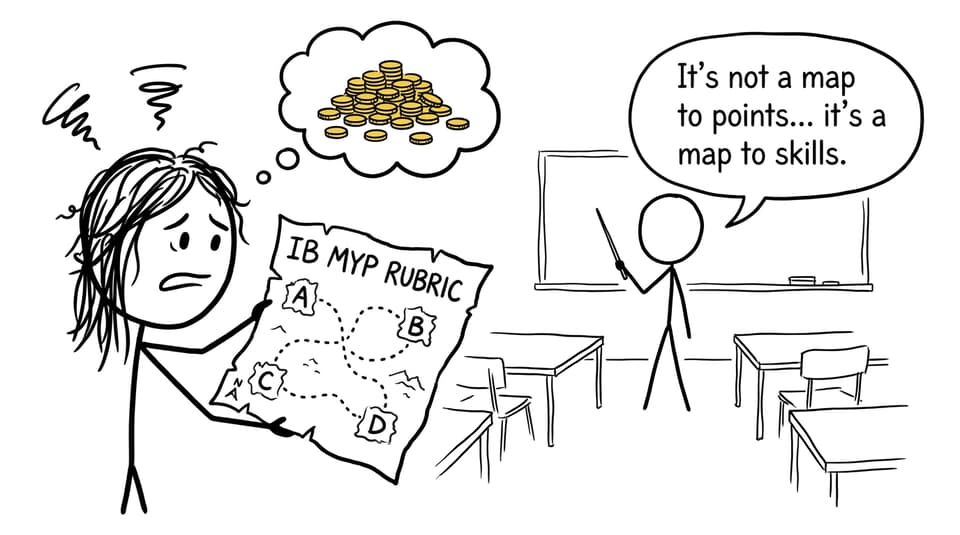
If you want the whole MYP grading model in one view, use this checklist:
-
Every subject uses four criteria (A, B, C, D)
-
Each criterion is scored on a 0-8 achievement level
-
The four criteria are equally weighted
-
Your total is out of 32 (8+8+8+8)
-
The total is converted into a final grade from 1-7 using grade boundaries
-
Teachers use multiple tasks across a unit to decide the best-fit level per criterion
For broader context, start with the Middle Years Programme (MYP) hub and explore the MYP tag archive to see how grading connects to real tasks.
The philosophy behind MYP assessment (and why it’s fair)
Traditional grading often answers a blunt question: “How many points did you get?”
The MYP asks a more useful one: “Which learning objectives did you actually meet, and how well?”
That’s why MYP assessment is criterion-related rather than competitive. You aren’t ranked against classmates. You’re assessed against published descriptors. When you understand those descriptors, you can be strategic: you can build evidence that you meet the top bands.
If rubrics still feel foggy, this guide on creating rubrics aligned with IB criteria in the MYP helps you see what teachers are looking for and how descriptors translate into student-friendly actions.
The MYP criteria A to D (what they usually measure)
Every subject in the MYP uses four criteria, labeled A to D. The names change by subject group, but the underlying idea stays consistent: each criterion targets a different skill.
A simple way to remember it:
-
Criterion A usually rewards knowledge and understanding (concepts, terminology, accurate use)
-
Criterion B usually rewards application or process (method, investigation, organization, technique)
-
Criterion C usually rewards communication or analysis (structure, clarity, interpretation, creation)
-
Criterion D usually rewards reflection, evaluation, or impact (judgment, improvement, implications)
Want concrete examples? See how criteria work in specific subjects like MYP Individuals & Societies criteria explained or MYP Language and Literature assessment criteria explained. Those breakdowns make the abstract labels feel real.
How 0-8 scores become a 1-7 MYP grade
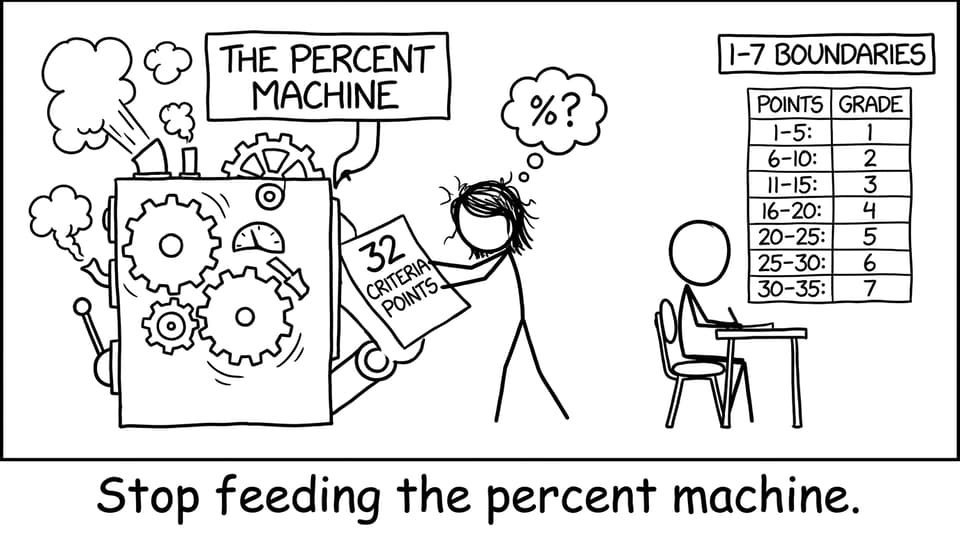
Here’s the mechanical part of MYP grading:
-
You receive a level (0-8) for each criterion A, B, C, D.
-
Those levels are added for a total out of 32.
-
The total is converted to a final grade out of 7 using grade boundaries.
Many schools use boundaries like these (ranges can vary slightly by school policy):
-
1 (0-5): minimal achievement
-
2 (6-9): basic understanding with frequent support
-
3 (10-14): developing achievement
-
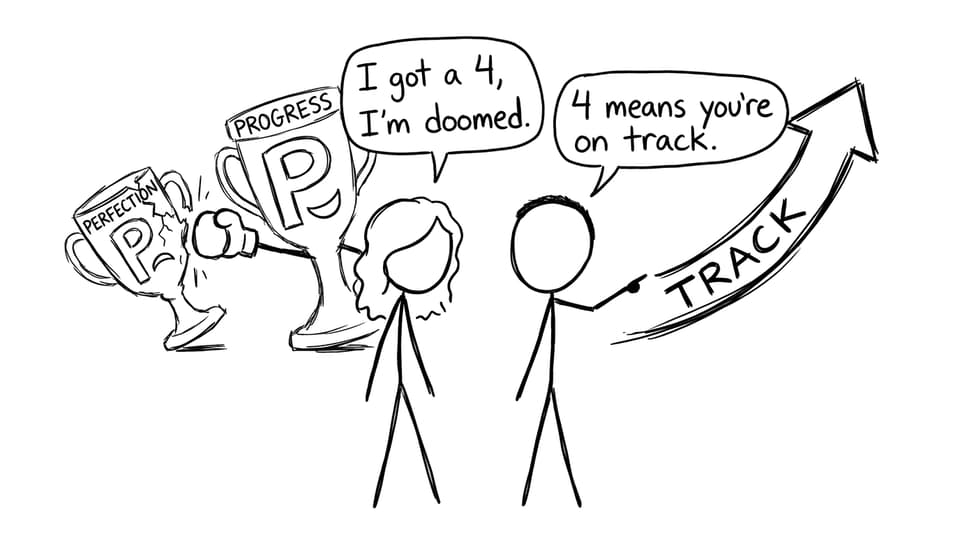
4 (15-18): satisfactory achievement (a solid pass)
-
5 (19-23): strong, consistent achievement
-
6 (24-27): high-quality, sophisticated achievement
-
7 (28-32): excellent, independent achievement
The most important takeaway for exams: a higher MYP grade usually requires improvement across multiple criteria, not just “knowing more content.”
How teachers actually decide your criterion levels
In the MYP, teachers don’t average everything into one number and call it a day. Instead, they gather evidence across a unit.
You’ll usually see two broad categories of assessment:
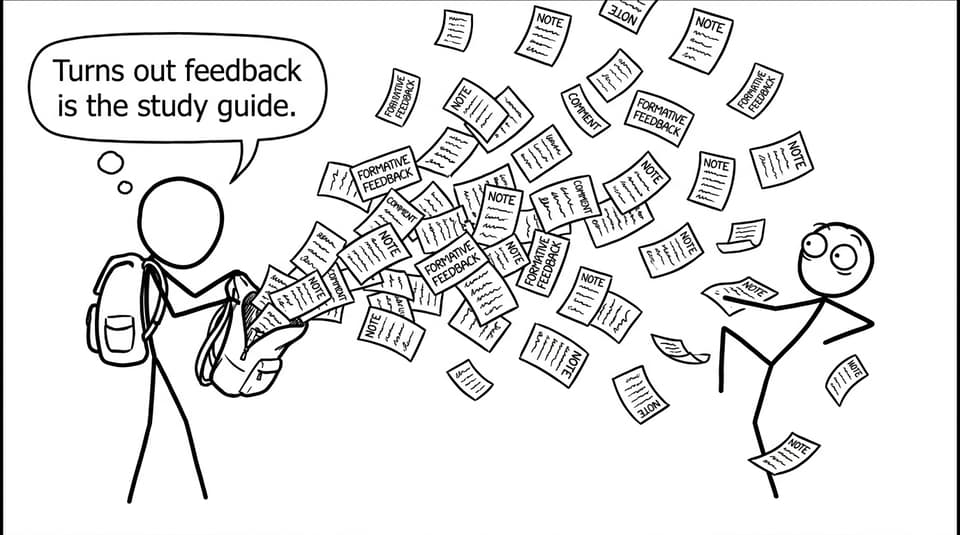
Formative assessment (feedback that guides improvement)
Formative work is practice with coaching: quizzes, short responses, drafts, reflections, class discussions, skills drills. It helps you learn how to hit the criteria before the bigger tasks.
Summative assessment (evidence at the end of a unit)
Summatives are the larger tasks: tests, investigations, essays, projects, performances. These are designed to show what you can do at the end of a learning cycle.
A key MYP pattern: many tasks assess only one or two criteria. So if you try to cram every criterion into every task, you often make the work worse. A smarter move is to identify the target criteria, then build proof for those.
If you want examples of what that looks like across subjects, use sample MYP assessment tasks for each subject group.
What a “good” MYP grade really means for exam prep
A MYP grade is less like a scoreboard and more like a diagnostic.
-
If Criterion A is low: you likely need clearer concepts and more precise terminology.
-
If Criterion B is low: your method, process, or application steps may be shaky.
-
If Criterion C is low: your structure, explanation, or communication is costing you.
-
If Criterion D is low: you may be describing instead of evaluating, or reflecting without evidence.
This is why students who revise only by rereading notes can plateau: they’re training Criterion A while neglecting the others.
To calibrate what “good” looks like overall, read what is a good MYP score? alongside your own criterion breakdown.
How to improve your MYP grades faster (practical, criteria-first)
Here’s a simple routine that respects how MYP grading works:
-
Start every task by circling the criteria being assessed (A to D)
-
Translate each criterion into a “proof plan” (What will I show?)
-
Practice under time constraints weekly, even if it’s short
-
After feedback, rewrite one section using the rubric language
RevisionDojo is built for that criteria-first loop. Students typically combine:
-
Study Notes to rebuild shaky understanding quickly
-
Flashcards for daily recall and command-term language
-
Questionbank for targeted practice aligned to skills
-
AI Chat to get unstuck on “why is this wrong?”
-
Grading tools for rubric-aligned feedback on written work
-
Mock Exams to train timing and calm under pressure
-
Predicted Papers to rehearse realistic exam structure (without guessing blindly)
-
Coursework Library to see what strong exemplars look like
-
Tutors when you need a human to diagnose your bottleneck
For a complete schedule, use MYP eAssessments: a 30-day study plan that works and the MYP revision guide.
Conclusion: treat MYP grading like a training plan
The MYP grading system is designed to make learning visible. Once you stop hunting for a percent and start hunting for evidence aligned to criteria, your preparation becomes calmer and more efficient.
Use the criteria A to D as your weekly checklist. Practice the skills, not just the content. And when you want everything in one place: Questionbank, Study Notes, Flashcards, AI Chat, Grading tools, Predicted Papers, Mock Exams, Coursework Library, and Tutors, start with the RevisionDojo MYP hub and build a routine that matches how the MYP actually grades you.