
If you have ever opened the Extended Essay guide and felt your brain do that quiet thing it does when it realizes a task is both important and long, you are not alone. The EE has a special kind of gravity in the IB: it is not just work, it is a season of life. And now, with the 2027 guide reshaping assessment, the quiet panic has a new flavor: Wait… which version am I being graded on?
This is the calm, side-by-side comparison you have been looking for. We will keep the core truth in view: the EE is still a 4,000-word research essay, still about 40 hours, still built around three mandatory reflection sessions, still graded AtoE, and still contributes up to 3 bonus points with TOK. But the scoring logic and the paperwork ritual shift in ways that change how you should plan, write, and reflect.
Along the way, you will see how RevisionDojo can make your EE feel less like guessing and more like engineering.
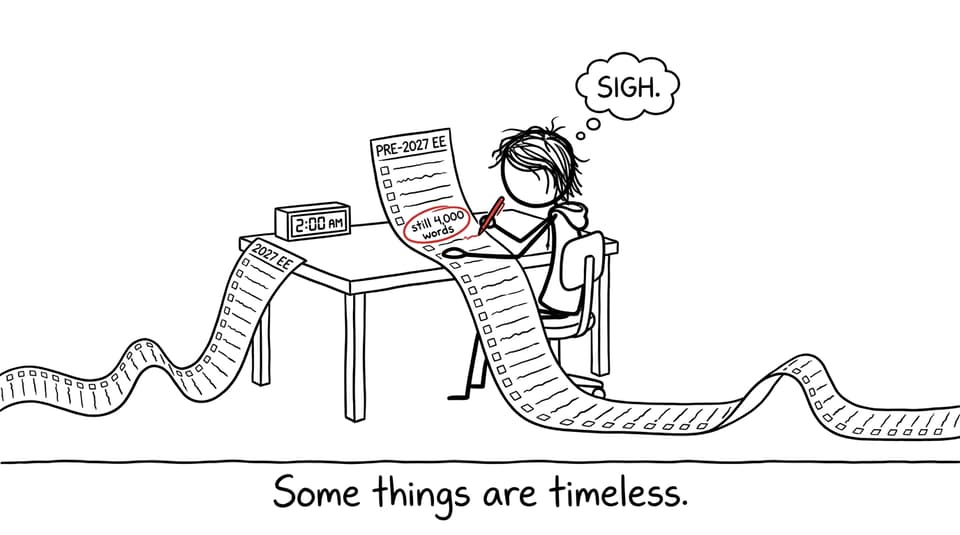
EE changes at a glance (save this checklist)
Use this as your quick mental map when someone says, “The EE is changing in 2027.”
- Total marks: pre-2027 = 34; 2027 = 30
- Presentation criterion: pre-2027 has a standalone Presentation criterion; 2027 removes it as a standalone scoring criterion
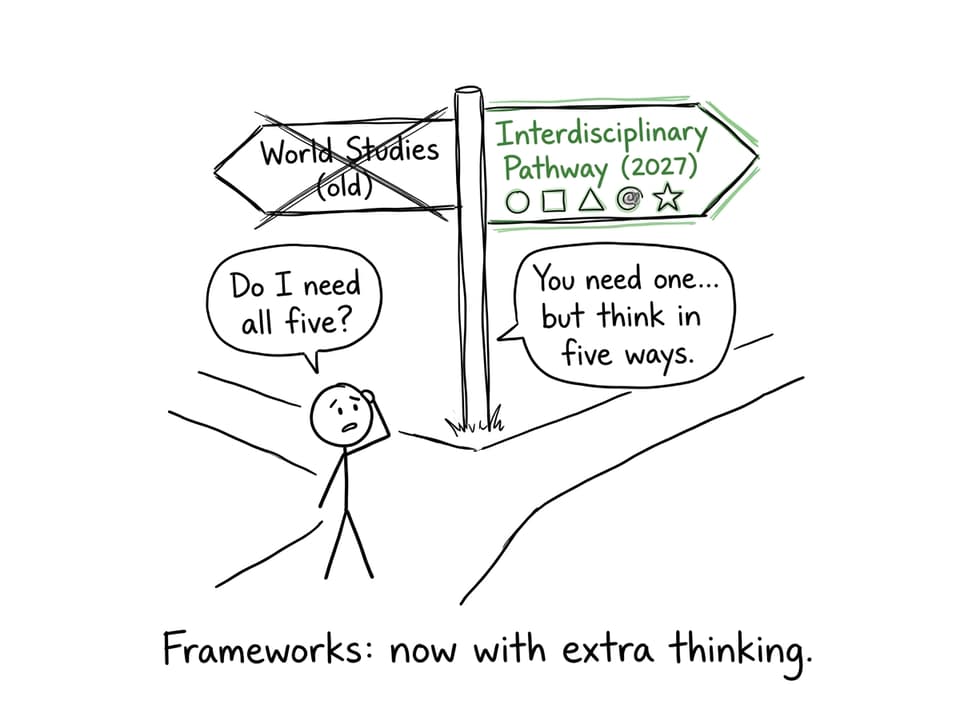
- World Studies: pre-2027 includes World Studies; 2027 replaces it with a formal Interdisciplinary Pathway using five prescribed frameworks
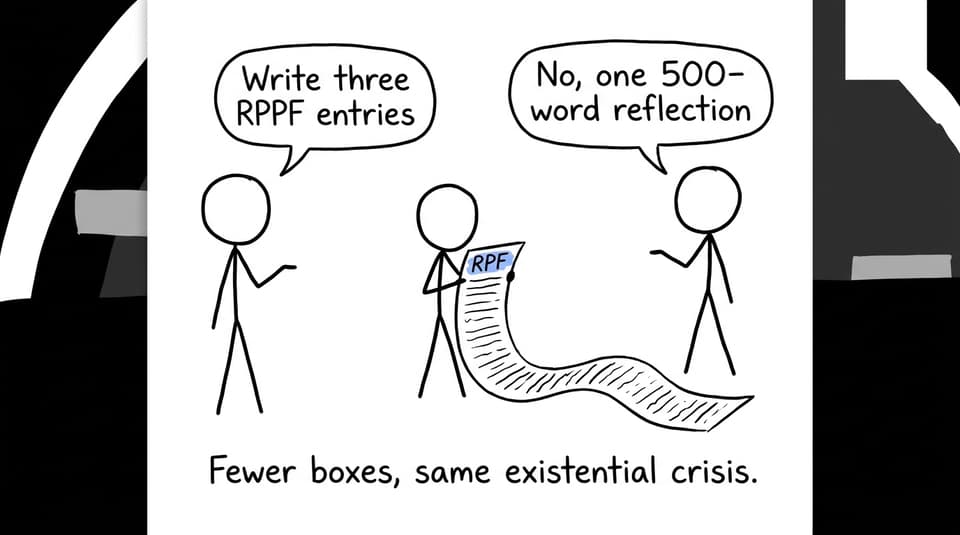
- Reflection paperwork: pre-2027 uses three RPPF entries; 2027 uses one 500-word reflective statement on a renamed RPF
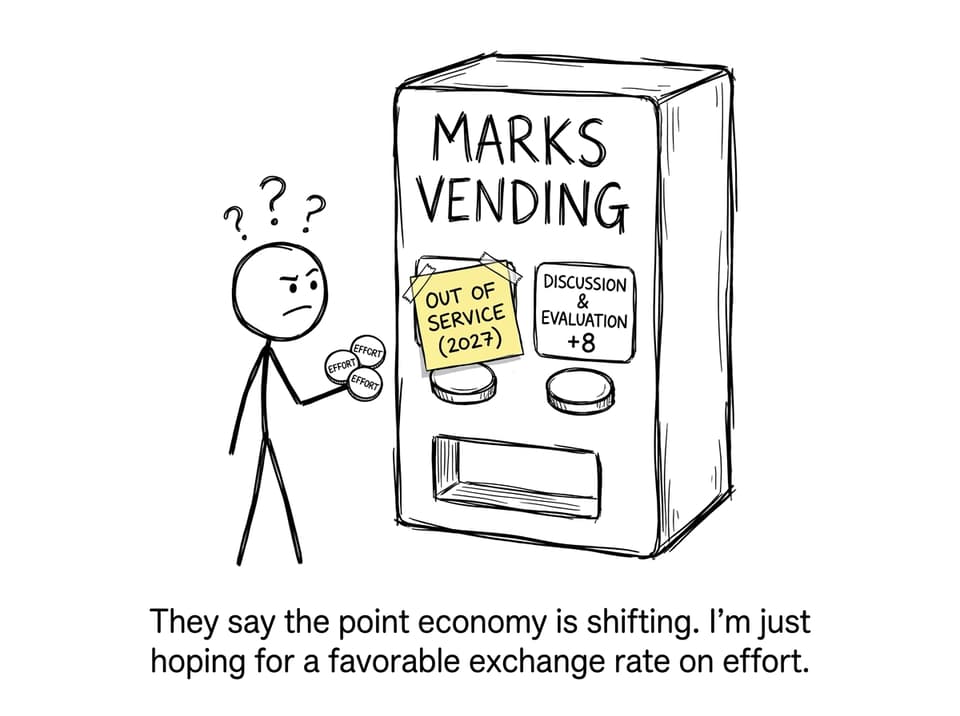
- Highest-weight criterion: in 2027, Discussion and evaluation (Criterion D) becomes the top-weighted criterion at 8 marks
- Unchanged core: 4,000 words; ~40 hours; three mandatory reflection sessions; AtoE grade; contributes up to 3 bonus points with TOK
If you want background and broader strategies for doing the EE well, start with All IB Extended Essay Posts and keep it bookmarked.
Old vs new EE: what stays the same (and why that matters)
Before we chase differences, anchor yourself in what remains stable. The EE is still a long-form argument, not a long-form summary. It still rewards the same quiet skills: choosing a research question you can actually answer, building a method that matches your subject, and writing with discipline.
The practical consequences:
- You still cannot “save it for later.” A 4,000-word EE is not hard because any one paragraph is impossible; it is hard because it is relentless.
- The three mandatory reflection sessions still exist, which means the process is still supervised and still documented.
- You still want the same workflow: question clarity first, then research system, then drafting, then ruthless revision.
RevisionDojo is built for that workflow. Students often start with the big picture guide Mastering IB Extended Essays: How to Research, Write, and Revise, then tighten their plan using tools like AI Chat for rapid clarification and Flashcards to lock in key concepts they keep re-reading.
The real side-by-side comparison (Pre-2027 vs 2027 EE)
Think of the EE like a game with rules that shape behavior. The 2027 guide changes the incentives.
Total marks: 34 becomes 30
This is not just arithmetic. When total marks change, the “cost” of a weak area shifts. In the pre-2027 EE, it was possible to lose marks in one place and make them up elsewhere. In the 2027 EE, each mark carries slightly more weight because there are fewer of them.
What to do:
- Treat each criterion like an investment. You are not “doing tasks,” you are buying marks.
- Build a draft checklist that maps each paragraph to a criterion purpose.
If you want a rubric-aware feedback loop, the IB Coursework Grader is designed for criterion-level commentary. It is especially useful when you need to understand which part of the EE is underperforming: the argument, the evaluation, the subject knowledge, or the reflection.
Presentation criterion removed (but presentation still matters)
The 2027 guide removes the standalone Presentation criterion. Students will misread this as “formatting no longer matters.” That is the kind of misunderstanding that quietly lowers grades.
Even without a standalone Presentation score, poor structure and messy referencing still damage the EE because they weaken your argument and credibility. Examiners are human. If your navigation is confusing, your thinking feels confusing.
Practical approach:
- Keep your structure clean: signposted introduction, logical sections, disciplined conclusion.
- Make citations consistent early, not the night before.
- Use headings as an argument map, not decoration.
Reflection paperwork changes: RPPF becomes one 500-word statement on the renamed RPF
Pre-2027: many students treated the three RPPF entries like three small chores. They would write something “reasonable,” then return to the essay.
2027: one 500-word reflective statement changes the psychology. You have fewer boxes, but you need a stronger narrative. Your reflection has to read like a coherent story of thinking: what you tried, what failed, what changed, what you learned about research.
What to do:
- Keep a running reflection log (your Researcher’s Reflection Space in spirit, even if your school calls it something else).
- Save specific moments: a source that changed your direction, a method that produced unclear data, a conceptual breakthrough.
- Write the final 500 words like a compact case study of your own thinking.
For reflection tactics that actually score well, read How Reflection Strengthens Your IB Extended Essay and pair it with How to Prepare for the IB Extended Essay Viva Voce. Even with the RPF rename and format shift, the underlying expectation remains: show genuine engagement, not vague positivity.
World Studies replaced by the Interdisciplinary Pathway (five prescribed frameworks)
The pre-2027 World Studies option attracted students who wanted to connect disciplines, often with good intentions and messy execution. The 2027 EE formalizes interdisciplinarity through an Interdisciplinary Pathway, structured around five prescribed frameworks.
This matters because structure is a double-edged sword:
- It protects you from being vague (“I used two subjects somehow”).
- It also forces you to be explicit about how disciplines interact.
How to handle this well:
- Choose a research question that genuinely requires two lenses.
- Make the frameworks visible in your planning stage, not retrofitted.
- Use the frameworks to justify decisions in your Discussion and evaluation.
Criterion D becomes the highest-weighted criterion at 8 marks
This is the most important behavioral change in the 2027 EE.
When Discussion and evaluation becomes the highest-weighted criterion, the message is clear: it is not enough to present findings. You must interpret them, question them, and judge their strength.
A useful mental model:
- Analysis says: “Here is what the evidence shows.”
- Evaluation says: “Here is how much we should trust it, and why.”
How to build evaluation that earns marks:
- Name limitations precisely (sample size, bias, narrow time window, translation issues, theoretical assumptions).
- Explain impact: how does the limitation change your conclusion?
- Offer realistic improvements: what would you do differently with the same time and resources?
If you keep repeating the same writing weaknesses, turn them into a system: draft, run feedback, extract patterns, then create Flashcards of your “evaluation moves” so they become automatic.
How to plan your EE under the 2027 rules (without panic)
Here is a simple workflow that respects both versions of the EE, but especially the 2027 weighting.
Choose an argument you can evaluate
Students often pick a topic they can describe. The 2027 EE pushes you toward a topic you can judge. Before committing, ask:
- Will my evidence be contestable?
- Can I compare approaches, interpretations, or explanations?
- Can I explain why one interpretation is stronger?
If you are unsure, read Mistakes to Avoid in IB Extended Essays. Most “bad EEs” are not weak because the student is incapable. They are weak because the question choice makes high marks mathematically unlikely.
Build a criterion-first outline
Instead of outlining by content only, outline by purpose:
- Where do I establish the focus and method?
- Where do I prove knowledge and understanding?
- Where do I build analysis and a line of argument?
- Where do I explicitly discuss and evaluate?
- Where do I show reflection and growth?
This is also where RevisionDojo’s Study Notes and Questionbank help indirectly: they train you to recognize what “analysis” looks like in IB language, which improves your writing habits across the EE.
Use feedback like a loop, not an event
Most students treat feedback as something they “get” once. High-scoring EE students treat feedback as a repeated cycle.
A practical loop:
- Draft one section.
- Run rubric-aligned feedback using the IB Coursework Grader.
- Ask AI Chat one specific question: “What is missing for top-band evaluation here?”
- Revise with a single aim: add marks, not words.
For more on building a full IB routine around this loop, see RevisionDojo App: The Smarter Way to Prep for IB Exams. Yes, the EE is coursework, but your exam mindset helps: targeted practice, measurable improvement, fewer emotions.
EE and exams: why this comparison still matters during exam prep
It can feel odd to think about the EE while preparing for exams. But the skill transfer is real. When you learn to evaluate sources, admit limitations, and build a disciplined argument, you become better at:
- writing stronger Paper 2 essays
- explaining methodology in sciences
- justifying assumptions in math
- answering extended-response questions with structure
Also, the EE still contributes up to 3 bonus points with TOK. If you want the clearest explanation of how those points work, read What Are Bonus Points in IB and How Are They Earned? and then How to Incorporate TOK Ideas into Your EE. The best EE students do not add TOK language randomly. They use TOK thinking to sharpen evaluation.
Closing: choose the version, then build the system
The most stressful part of the EE is rarely the writing. It is the uncertainty: not knowing what the rubric wants, not knowing whether your reflection is “enough,” not knowing whether your evaluation sounds like evaluation.
The 2027 shift makes that uncertainty more expensive, because Discussion and evaluation becomes the highest-weighted criterion and the reflection format becomes more concentrated. But it also makes the path clearer: build an arguable research question, design a method you can defend, and practice judging your own evidence.
If you want the fastest way to turn your EE into a predictable set of improvement steps, use RevisionDojo as your control panel: the Coursework Library to see what strong work looks like, Grading tools for rubric-aligned feedback, AI Chat to unblock decisions, and Tutors when you want a human to raise the standard. Then return to exams with a calmer mind, because you are no longer guessing. You are building marks.