


If you’re like most students, the moment your IB Extended Essay is submitted, your brain tries to delete the entire experience like a corrupted file. Then your supervisor mentions the viva voce, and suddenly you’re expected to remember not just what you wrote, but why you made every decision along the way.
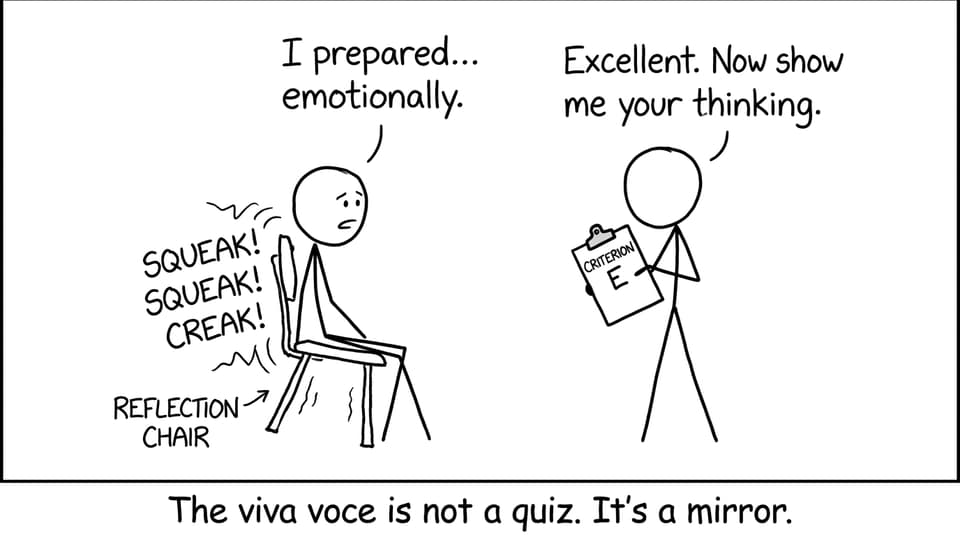
That’s the real challenge of the IB Extended Essay viva voce: it isn’t a memory test. It’s a short conversation where you prove you thought like a researcher.
What the IB Extended Essay viva voce actually is
The viva voce is your final reflective interview with your EE supervisor after submission. It’s usually 10 to 30 minutes, and it matters because it:
-
Helps you reflect on what changed (and why)
-
Supports academic honesty by confirming authenticity
-
Feeds into Criterion E: Engagement, worth up to 6 marks
If you want a deeper walkthrough, use EE Viva Voce: What It Is and How to Prepare and keep it open while you plan.
A quick checklist for IB Extended Essay viva voce readiness
Before you walk in, prepare a one-page set of bullets:
-
2 turning points (research question shift + method shift)
-
1 challenge you handled well, 1 you’d handle differently
-
3 pieces of evidence you’re proud of using
-
1 limitation you can explain without sounding defensive
-
1 sentence: “The biggest change in my thinking was…”
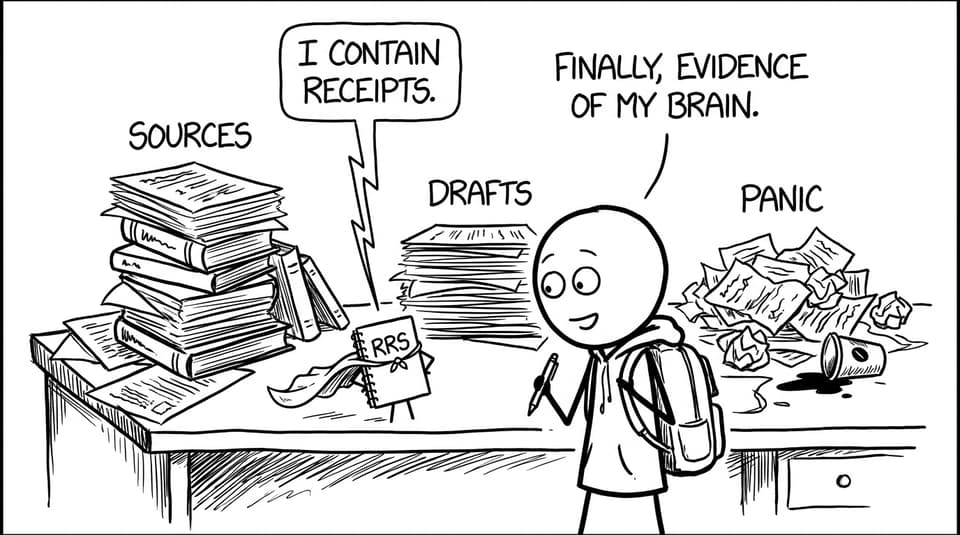
This is much easier if you’ve kept an RRS. If you haven’t, you can still reconstruct it calmly using EE RRS Explained: The Researcher’s Reflection Space.
How to prepare for the IB Extended Essay viva voce (without scripting)
Re-read with a “decision lens”
Skim your introduction, conclusion, and the 2 most important analysis sections. Don’t rewrite anything. Just mark where you made choices: what you included, what you cut, and what you prioritized.
To understand what those choices are worth, review EE Assessment Criteria Explained (2027 Guide). It turns vague markbands into practical targets.
Practice the questions that reveal engagement
Most viva voce questions are variants of:
-
What surprised you?
-
What was hard, and what did you do about it?
-
What changed in your research question or method?
-
If you had two extra weeks, what would you improve?
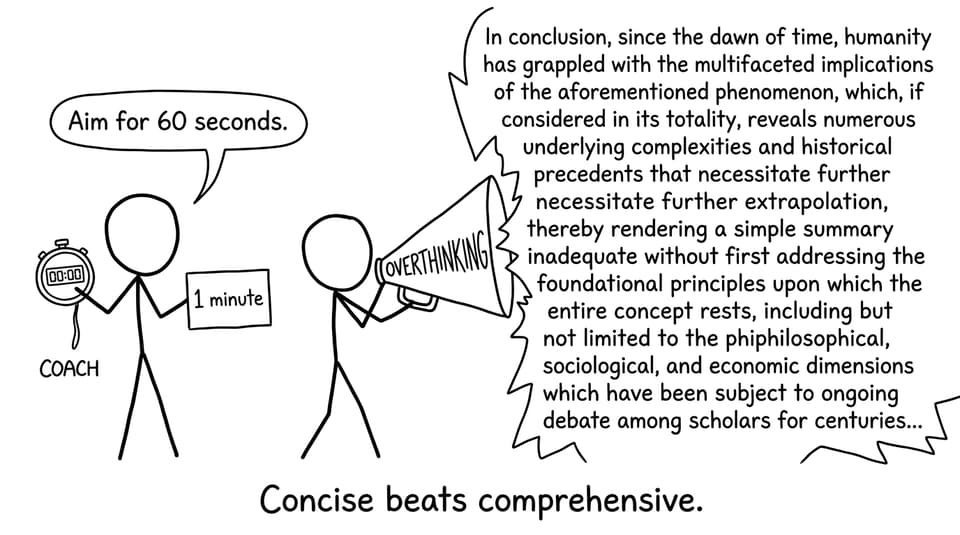
Aim for 60-90 seconds per answer: specific, reflective, and linked to your process.
Connect reflection to real skills (not just feelings)
The strongest IB Extended Essay viva voce reflections sound like this:
-
“I realized my early sources were descriptive, so I built a comparison framework.”
-
“My method didn’t produce usable data, so I changed the scope and justified the trade-off.”
-
“I learned to evaluate bias, not just collect quotes.”
That’s Criterion E in plain language. For more on reflection depth, read How Reflection Strengthens Your IB Extended Essay.
Use RevisionDojo to turn preparation into confidence
RevisionDojo is built for the full IB workload, which matters because the IB Extended Essay doesn’t happen in a vacuum. While you prepare for the viva voce, you can keep your subjects moving with Questionbank, Study Notes, Flashcards, Predicted Papers, and Mock Exams.
For EE-specific support, start with All IB Extended Essay Posts and the structured IB Extended Essay Guides. If you want rubric-aligned feedback, use IB EE Feedback Tool: Improve Your Extended Essay Score alongside AI Chat and the Grading tools to rehearse clear explanations of your decisions.
Closing: treat the IB Extended Essay viva voce like a debrief
The best mindset for the IB Extended Essay viva voce is simple: you’re not being interrogated, you’re being asked to explain how your thinking evolved. Bring your turning points, speak in specifics, and let your process show.
If you want a streamlined path, use RevisionDojo to rehearse with AI Chat, check your reflections with Grading tools, and stay consistent with Flashcards and Study Notes while exams approach. Your viva voce is short. But done well, it becomes the clean finish your IB Extended Essay deserves.