


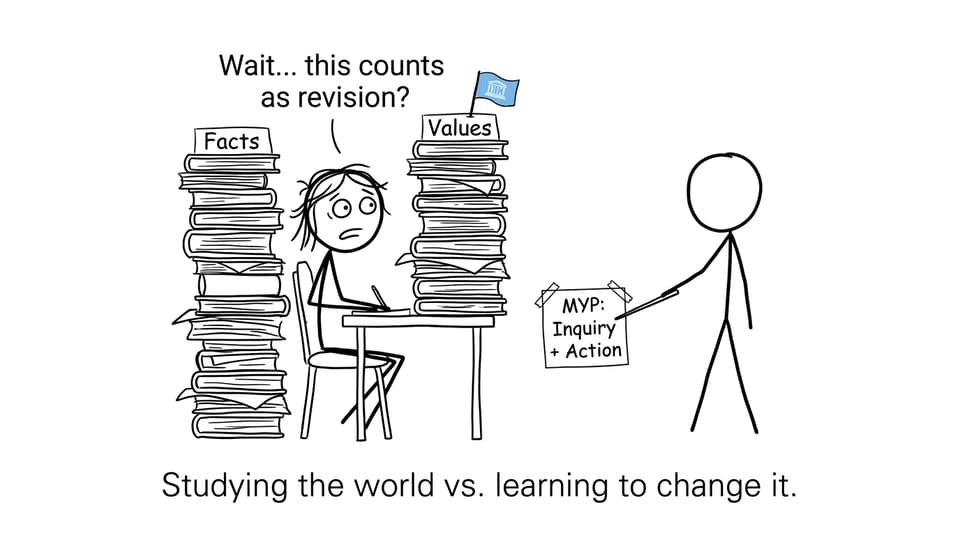
In the last week before exams, it’s easy to treat school like a vending machine: insert hours, receive grades. But the MYP keeps interrupting that mindset. It asks uncomfortable questions: Why does this matter? Who does it affect? What should we do with what we know? That’s not a distraction from exam preparation. Done well, it’s the fastest route to the kind of answers examiners reward: clear, connected, and grounded in real-world meaning.
This is exactly where the MYP and UNESCO quietly meet. UNESCO’s education work often centers on two big ideas: Education for Sustainable Development (ESD) and Global Citizenship Education (GCED). The MYP turns those ideas into classroom habits: inquiry, reflection, action, and responsibility. And when you’re an IB student preparing for exams, those habits become something very practical: better analysis, better evaluation, and more convincing evidence.
Quick checklist: what to notice for exams
Use this as a fast lens while revising any MYP unit or assessment:
-
Can you explain the real-world purpose of the unit (Global Context + Statement of Inquiry)?
-
Can you connect your examples to sustainability, equity, or intercultural understanding (UNESCO-style thinking)?
-
Can you name the ATL skill you used (research, critical thinking, communication, self-management)?
-
Can you write one sentence about impact (on people, systems, environment) and one about trade-offs?
-
Can you practise this under time pressure with feedback?
For structured revision routines that keep this tight, see the MYP Revision Guide: Study Tips for Success and the more intense MYP eAssessments: 30-Day Study Plan That Works.
Why the MYP and UNESCO fit together
UNESCO’s vision of education isn’t only about producing high scores. It’s about producing humans who can live responsibly in a complicated world: people who understand systems, respect differences, and can choose long-term wellbeing over short-term convenience.
The MYP is built with the same underlying assumption: knowledge matters most when it transfers. That’s why your learning is often organized around concepts and contexts rather than isolated chapters. In exam terms, this trains you for the moment when the question looks unfamiliar, but the thinking behind it is something you’ve rehearsed.
If you want a simple starting point to understand what the MYP is actually designed to do, the Middle Years Programme (MYP) Hub is the clean overview. And for a bigger explanation of the purpose and structure, read What Is the IB Middle Years Programme? Explained for Parents and Students.
MYP and UNESCO through ESD: sustainability you can actually practise
UNESCO’s Education for Sustainable Development (ESD) is about building the knowledge, skills, and values that help people make responsible choices. The important word is choices. Sustainability isn’t a poster. It’s a decision-making framework.
In the MYP, you practise ESD most clearly when learning is tied to systems and consequences. Two places this becomes very visible:
Global Contexts that force you to think in systems
The Global Context Globalization and Sustainability is an obvious match, but ESD thinking can also show up in Scientific and Technical Innovation (progress with responsibility) and Fairness and Development (who benefits, who pays).
If you need a refresher, use Six Global Contexts in IB MYP: Real-World Applications. If your class uses contexts well and you want to understand the logic behind it (so you can revise smarter), read How Teachers Use Global Contexts in MYP Lessons.
Service as Action that trains evaluation
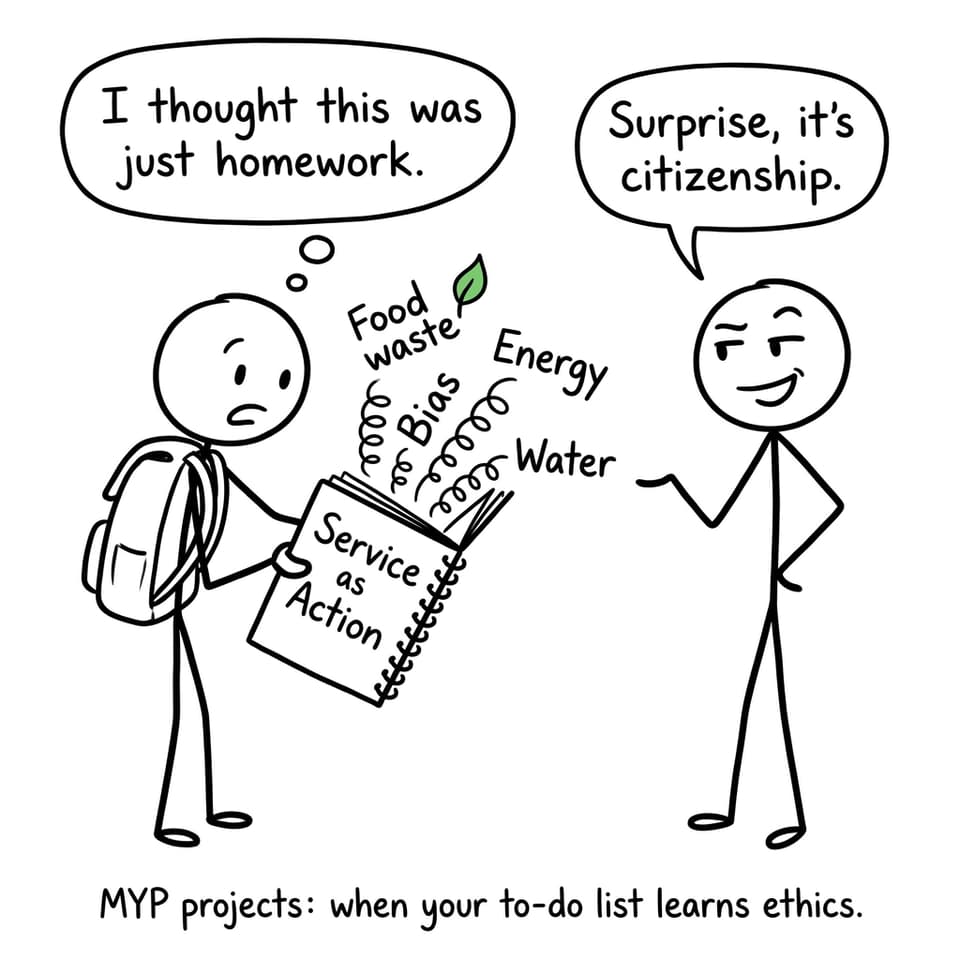
ESD isn’t only “learn about climate change.” It’s also “evaluate solutions.” That’s why Service as Action matters: you learn to define a problem, test an intervention, collect feedback, and reflect on impact. Those are exam skills in disguise.
A student who has learned to write “This worked because… but it also caused…” is a student who can handle higher-mark evaluation questions.
MYP and UNESCO through GCED: citizenship as an exam advantage
UNESCO’s Global Citizenship Education (GCED) focuses on human rights, cultural diversity, and the ability to participate thoughtfully in the world. The MYP doesn’t teach this as a single topic. It spreads it across how you read texts, how you choose examples, and how you discuss perspectives.
You see GCED values most clearly in three recurring MYP patterns:
Interdisciplinary thinking (the exam loves this)
A strong response often connects more than one lens: economic incentives, historical context, ethical implications, and scientific evidence. That’s GCED in action: multiple perspectives, grounded reasoning, and careful claims.
If Individuals and Societies is where this clicks for you, Individuals and Societies: Interdisciplinary Learning Explained is a helpful anchor.
Learner Profile traits that become writing tone
When you write like you are open-minded and principled, your argument naturally becomes more balanced. You stop oversimplifying. You start acknowledging limits. That is how top answers sound.
Language learning as intercultural skill
In many MYP schools, language acquisition is where GCED becomes personal. You learn that communication is never only about vocabulary. It’s about context, assumptions, and respect.
The MYP structures that make UNESCO goals practical
Here’s the underrated truth: UNESCO ideals stay abstract unless a program builds routines that force students to practise them. The MYP does this through a few repeatable structures.
Global Contexts and statements of inquiry
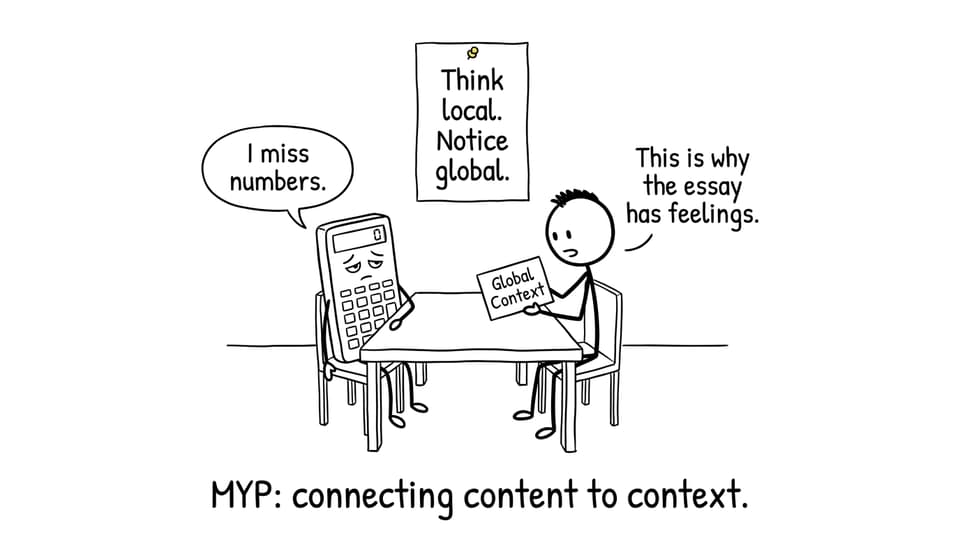
These stop learning from floating. They answer: Why should anyone care? If you revise using that question, you remember faster and apply better.
For a deeper explanation of that architecture, MYP Global Contexts: Concept-Driven Teaching That Sticks makes the framework feel usable.
ATL skills (Approaches to Learning)
UNESCO wants learners who can think critically and act responsibly. ATL is the MYP mechanism for that: research skills, critical thinking, communication, collaboration, and self-management.
If you want to strengthen ATL in a way that improves exam performance quickly, How to Teach Transferable Skills Through MYP Units is worth skimming and turning into a revision checklist.
Projects that require evidence, not vibes
The MYP Personal Project is where many students realize the point: you don’t get rewarded for caring. You get rewarded for planning, evidence, reflection, and clear justification.
If you’re in that stage, use MYP Personal Project: The Ultimate Student Guide and MYP Personal Project Global Contexts Explained.
How to turn MYP + UNESCO into an exam strategy (with RevisionDojo)
When exam stress rises, students often drop the “big picture” and cling to facts. The better move is to keep both.
A simple loop for MYP exam preparation on RevisionDojo looks like this:
-
Build understanding with Study Notes, then compress into 10 high-utility takeaways.
-
Lock recall with Flashcards (short daily sessions).
-
Prove application with the Questionbank, focusing on command terms and unfamiliar contexts.
-
Use AI Chat to diagnose why an answer misses the mark, and to practise better phrasing.
-
Use Grading tools to sharpen criteria-based writing and reflection.
-
Rehearse pressure with Mock Exams and Predicted Papers.
-
If you need human accountability, use Tutors.
-
For project and written work support, lean on the Coursework Library.
If you want to see how the whole ecosystem is designed as a routine, not a pile of resources, read RevisionDojo App: The Smarter Way to Prep for IB Exams and explore the Questionbank feature and Flashcards feature.
Conclusion: the MYP is bigger than exams, and that helps you in exams
The MYP and UNESCO share a simple belief: education should build capability and character at the same time. Not as a slogan, but as a daily practice: asking better questions, noticing consequences, and learning how to act responsibly.
If you’re preparing for assessments, use that alignment as an advantage. Revise content, yes. But revise meaning too: contexts, perspectives, impact, and evidence. Then practise it under exam conditions with RevisionDojo’s Study Notes, Flashcards, Questionbank, AI Chat, Grading tools, Mock Exams, Predicted Papers, Coursework Library, and Tutors.
Because the goal isn’t to become a different person after exams. It’s to become the kind of thinker the MYP was training all along.