
If you have ever watched an IB student revise, you know the expression: half focus, half quiet panic. It usually starts with a simple question from a parent: “So what is the MYP, exactly?”
The honest answer is that MYP is not just “middle school with an IB logo.” It is a training ground for how the IB thinks: concept-driven learning, criteria-based assessment, reflection, and applying knowledge in unfamiliar situations. For students preparing for exams, understanding the MYP early is like finding the map before the hike gets steep.
What is the MYP (and why it matters for exam students)
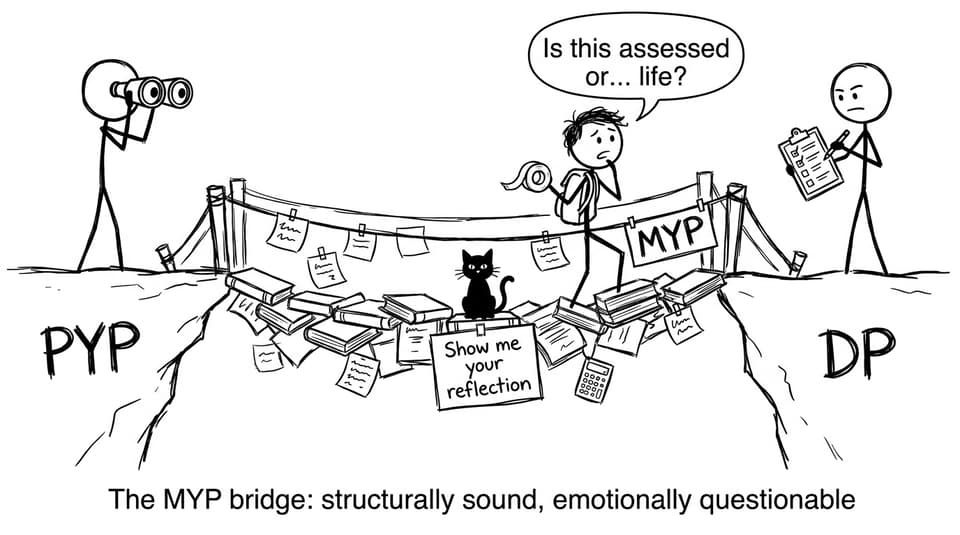
The IB Middle Years Programme, usually called the MYP, is designed for students aged 11 to 16. Think of it as the bridge between the Primary Years Programme (PYP) and the Diploma Programme (DP). The purpose is not only academic knowledge; it is building the habits that make later IB exams feel less shocking.
A useful way to picture MYP is “skills plus meaning.” You still learn content (math, sciences, languages), but you are also trained to explain, justify, connect, and reflect. Those are exam skills, even when they show up inside a project.
If you want the most direct overview of how RevisionDojo supports MYP learners, start here: Middle Years Programme (MYP) Hub.
A quick MYP checklist (parents love this, students need it)
Before you go deeper, here is a clean checklist of what defines MYP in practice:
-
You study across broad subject groups each year.
-
Units are built around concepts and real-world contexts.
-
Assessment is criteria-based (rubrics), not class ranking.
-
You are expected to reflect on how you learn, not just what you learn.
-
In MYP 5, many schools offer eAssessments and the Personal Project.
For exam prep later, the rubric piece is the most important. Rubrics train you to write answers that match what the marker is looking for.
How the MYP is structured: subject groups and interdisciplinary learning
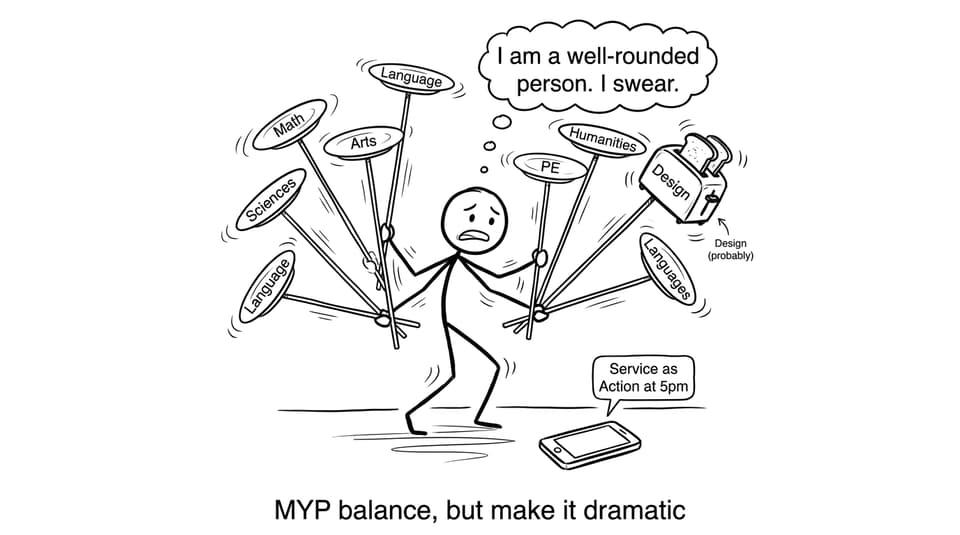
The MYP framework includes eight subject groups:
-
Language and Literature
-
Language Acquisition
-
Individuals and Societies
-
Sciences
-
Mathematics
-
Arts
-
Physical and Health Education
-
Design
Schools typically teach all eight each year, with at least 50 hours per subject annually. In later years (often MYP 4 and 5), schools may allow more focus by reducing the number of groups.
What makes MYP feel different is interdisciplinary learning: you are encouraged to combine tools from multiple subjects to solve one problem. In exams, this shows up as unfamiliar contexts. The IB loves to test whether you can transfer understanding, not repeat a memorized paragraph.
If you are already thinking, “I need practice that feels like that,” RevisionDojo’s Questionbank is built around application, not just recall.
The core of MYP: learner profile and global contexts
At the heart of MYP is the IB Learner Profile: qualities like being an inquirer, thinker, communicator, principled, open-minded, caring, risk-taker, balanced, knowledgeable, and reflective.
That sounds like a poster until exam season hits. Then you realize why it matters: the learner profile is the mindset behind exam performance. The “reflective” student improves faster because they can name what went wrong and fix it.
The MYP also uses six Global Contexts to connect learning to real life:
-
Identities and relationships
-
Personal and cultural expression
-
Orientation in space and time
-
Scientific and technical innovation
-
Fairness and development
-
Globalization and sustainability
These contexts are a quiet form of exam prep. They make you comfortable with big, unfamiliar themes, so you do not panic when a question wraps your topic in a new scenario.
How assessment works in the MYP (the part that decides your grade)
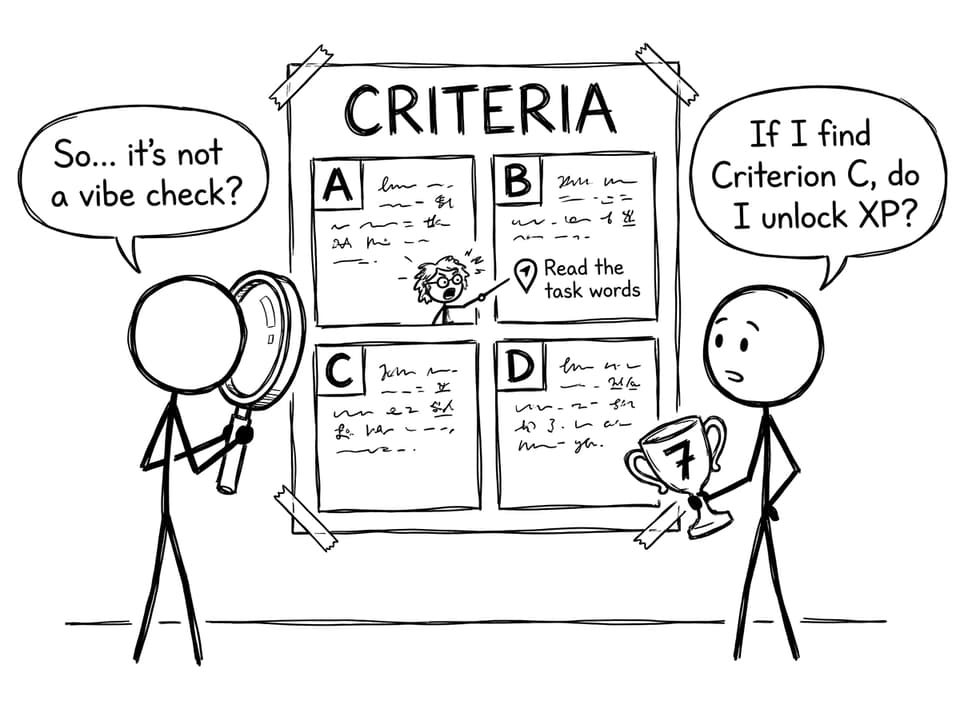
In MYP, assessment is criteria-based. Each subject uses four criteria (often labeled A, B, C, D). Teachers score performance on strands within each criterion from 0 to 8, based on the rubric. Scores are combined to produce a final grade from 1 to 7.
This changes how you should study. In many systems, students revise by rereading. In MYP, rereading is not enough because your grade is tied to performance descriptions like “analyzes effectively” or “applies knowledge in unfamiliar situations.”
So the smart study question becomes: “What does a top-band response look like for Criterion B?” not “Did I highlight the chapter?”
RevisionDojo supports that shift by pairing Study Notes with practice and feedback loops. If you have not explored it yet, Study Notes are designed to be quick to review and easy to convert into practice.
Personal Project and Service as Action: why they are not “extra”
Two signature pieces of MYP shape how students grow:
The Personal Project
In the final year, students complete an independent Personal Project. You choose a goal, investigate, plan, take action, and reflect. It is a long assignment, but it trains something rare: sustained thinking.
If your school is doing this, RevisionDojo’s guides can help you make it feel structured instead of overwhelming: MYP Personal Project: The Ultimate Student Guide and IB Personal Project (MYP) Examples.
Service as Action
Service as Action pushes you to connect learning to impact. It is also a rehearsal for balancing commitments, which is basically the hidden curriculum of IB success.
How the MYP prepares you for exams (and how to use it strategically)
Here is the reflective truth: MYP helps students who treat it like training. If you wait until DP to practice criteria language, timed responses, and self-review, you will feel behind.
A practical approach:
-
Use criteria to plan your answers.
-
Practice under time limits, even in MYP.
-
Track mistakes and rewrite one response each week.
-
Build recall with Flashcards, but prove it with questions.
RevisionDojo ties this together in one place: Questionbank for practice, Study Notes for understanding, Flashcards for memory, AI Chat for explanations, Grading tools for feedback, Predicted Papers and Mock Exams for stamina, Coursework Library for models, and Tutors when you want human strategy.
For a student-focused study routine, see MYP Revision Guide: Study Tips for Success and the more intensive MYP eAssessments: 30-Day Study Plan That Works.
Closing: make the MYP your advantage
The students who thrive in MYP are not magically more motivated. They simply learn earlier that assessment is a skill, and skills can be trained.
If you are an IB student preparing for exams, treat the MYP as your rehearsal: learn the criteria language, practice consistently, reflect honestly, and build confidence through repetition. Then use RevisionDojo to keep everything in one calm loop: targeted Questionbank practice, fast Study Notes, daily Flashcards, AI Chat explanations, Grading tools feedback, Mock Exams for stamina, and the Coursework Library for models.
Start with the MYP Hub, then pick one subject resource page (for example, MYP Biology Resources or MYP Standard Mathematics Resources) and begin building your momentum. Your future DP self will notice.