

If you have ever stared at a unit plan and thought, “This is interesting… but why are we doing it?”, you are already standing at the doorway of the MYP.
In the Middle Years Programme, the difference between schoolwork and learning that sticks is often one quiet sentence: the Global Context. It is the lens that turns a topic into something you can transfer, argue about, and apply under exam pressure. When you revise with that lens, you stop collecting facts like souvenirs and start building understanding you can actually use.
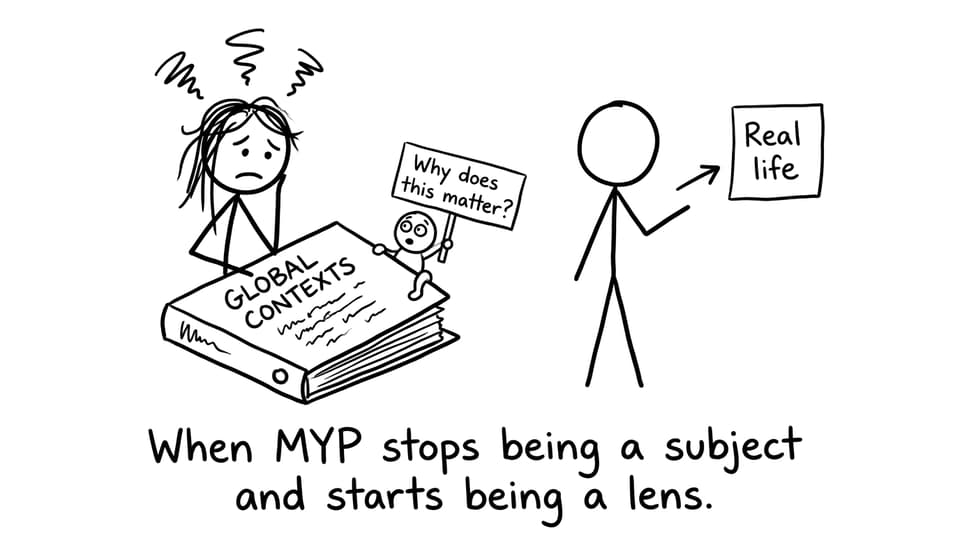
What the Global Contexts do in MYP (and why exams care)
Global Contexts in MYP are not decorative. They are how the IB nudges every subject toward real-world application: you learn a concept, you test it in a human setting, and you explain what changes because of it.
Here is the exam-friendly way to think about it:
-
Content is what you know.
-
Concepts are the transferable ideas underneath.
-
Global Contexts are why it matters beyond the classroom.
If you want extra background before diving into each context, anchor yourself with RevisionDojo’s broader guidance on concept-driven learning in MYP: Global Contexts and Concept-Driven Teaching in MYP.
Quick checklist: picking the right MYP Global Context fast
Use this when you are revising a unit or planning a response:
-
Can I write a one-sentence “This matters because…” explanation?
-
Does my example involve people, culture, history, technology, justice, or systems?
-
Can I name a real situation (school, local community, global issue) where this shows up?
-
Can I connect it to a subject criterion or command term (explain, analyse, evaluate)?
When your answers feel vague, it is usually not a knowledge problem. It is a lens problem.
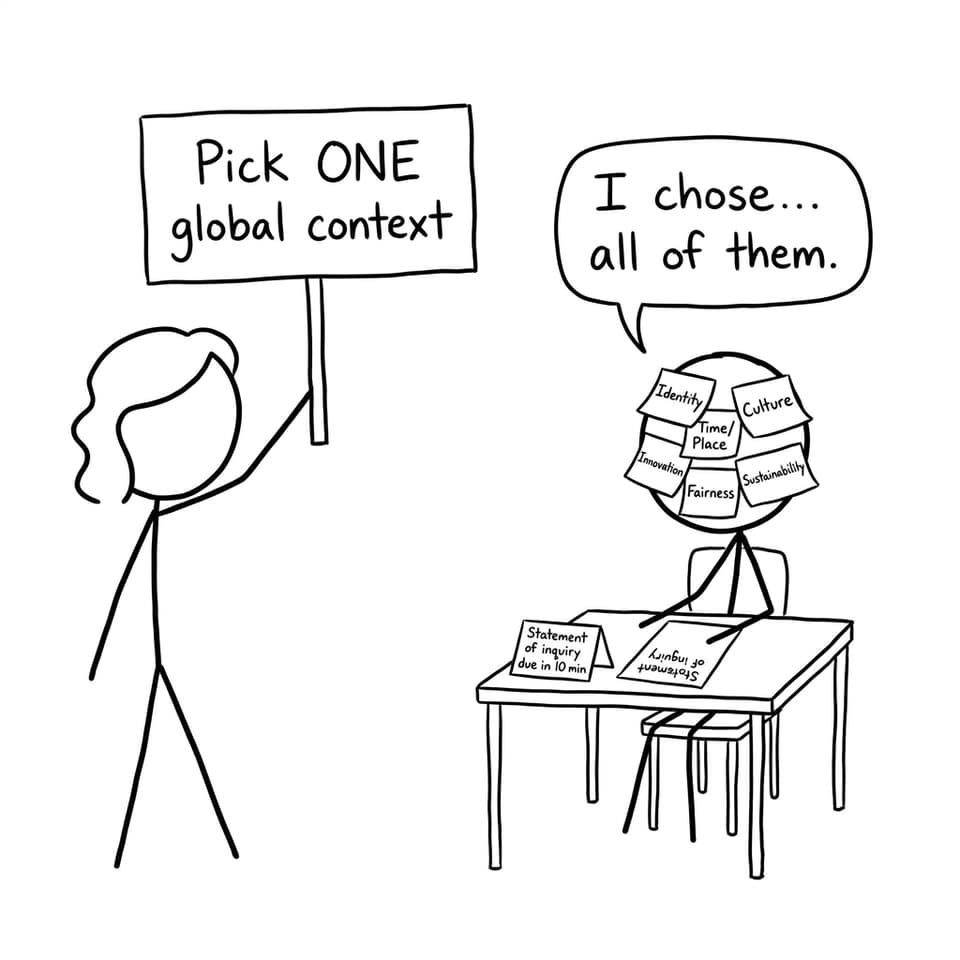
Identities and Relationships (Who am I? Who are we?)
This Global Context in MYP explores how people understand themselves and each other: belonging, well-being, friendships, family roles, group dynamics, and personal development.
Real-world applications students can write about:
-
Language and Literature: How a character’s choices are shaped by identity, peer pressure, or belonging.
-
Individuals and Societies: How institutions (schools, laws, media) shape identity and social roles.
-
PE/Health: Sleep, stress, and mental health as factors that change performance and decision-making.
A practical revision move: take a definition-based topic and attach a living example. RevisionDojo’s MYP notes on identity are a strong starting point for precise vocabulary and analysis: Notes for Identity Formation - MYP.
Personal and Cultural Expression (How do we express meaning?)
This context is about creativity, communication, and the ways people express values and identity through language, art, design, and performance.
Real-world applications that feel authentic:
-
Arts: A visual response to cultural identity, protest art, or how media influences taste.
-
Language Acquisition: How idioms, tone, and cultural references change meaning.
-
Design: Creating a product that communicates a message, not just a function.
In exams and assessed tasks, this context helps you avoid generic commentary. Instead of saying “this shows culture,” you can explain how culture is communicated, who it is for, and what values it carries.
Orientation in Space and Time (Where and when shape what we see)
Orientation in Space and Time is the MYP lens for history, geography, heritage, and change over time. It is how you show that events do not float in isolation. They sit in timelines, places, and perspectives.
Real-world applications:
-
Individuals and Societies: Migration patterns, conflicts, borders, or how narratives differ by viewpoint.
-
Sciences: How environments change over decades and how we infer change from evidence.
-
Interdisciplinary tasks: Using sources to build a coherent account rather than a list of facts.
If you want to make this context exam-useful, focus on cause and consequence language. Train yourself to write: “Because X happened in this place and time, Y changed.”
Scientific and Technical Innovation (What does innovation change? What does it cost?)
This Global Context asks you to explore how science and technology reshape lives, and how responsibility follows invention.
Real-world applications:
-
Sciences: Renewable energy, biotechnology, medical ethics, or risk vs benefit.
-
Mathematics: Modelling data to support decisions (traffic, health trends, resource allocation).
-
Design: Building and testing a solution, then improving it with feedback.
For students preparing for assessments, this context is gold because it invites evaluation: not just “what is this technology,” but “who benefits,” “who is excluded,” and “what trade-offs appear.”
Fairness and Development (What does justice look like in real systems?)
Fairness and Development in MYP examines equity, access, rights, and how societies distribute opportunities and burdens.
Real-world applications:
-
Individuals and Societies: Education access, income inequality, healthcare availability, or policy impacts.
-
Service as Action: Action that responds to an identified need, supported by evidence and reflection.
-
Language and Literature: Power, representation, and voice in texts.
This context strengthens your writing because it pushes you toward criteria-style reasoning: clear claims, relevant evidence, and justified conclusions.
Globalization and Sustainability (Everything is connected, and nothing is free)
This context focuses on interconnected systems: environmental, economic, cultural, and political. It is where students learn to see the chain reaction behind everyday choices.
Real-world applications:
-
Sciences: Climate patterns, ecosystems, and long-term environmental consequences.
-
Mathematics: Interpreting graphs about emissions, consumption, or population trends.
-
Design: Sustainable materials, lifecycle thinking, and user behaviour.
When you revise this context, practice writing about systems. Use words like “feedback loop,” “trade-off,” “unintended consequence,” and “long-term impact.” That language is often what separates a summary from analysis in MYP tasks.
How to use Global Contexts for MYP exam revision (not just projects)
Students often meet Global Contexts through projects, but they matter just as much in exam prep because they help you transfer knowledge into unfamiliar scenarios.
Try this routine once per unit:
-
Pick one topic you know well.
-
Choose one Global Context and write a 4-sentence “real-world angle.”
-
Create two possible exam questions that force application, not recall.
-
Answer one question under time pressure.
RevisionDojo is built for that loop. Start broad at the MYP blog tag hub, then move into practice:
-
Use the Questionbank to drill exam-style application.
-
Use subject hubs like MYP Individuals and Societies Resources to connect contexts to actual topics.
-
When your structure is the problem, borrow the writing frameworks from How to Structure High-Scoring MYP Individuals and Societies Essays.
And if you are in full exam season, build a schedule that actually holds up under real life using: MYP eAssessments: 30-Day Study Plan That Works.
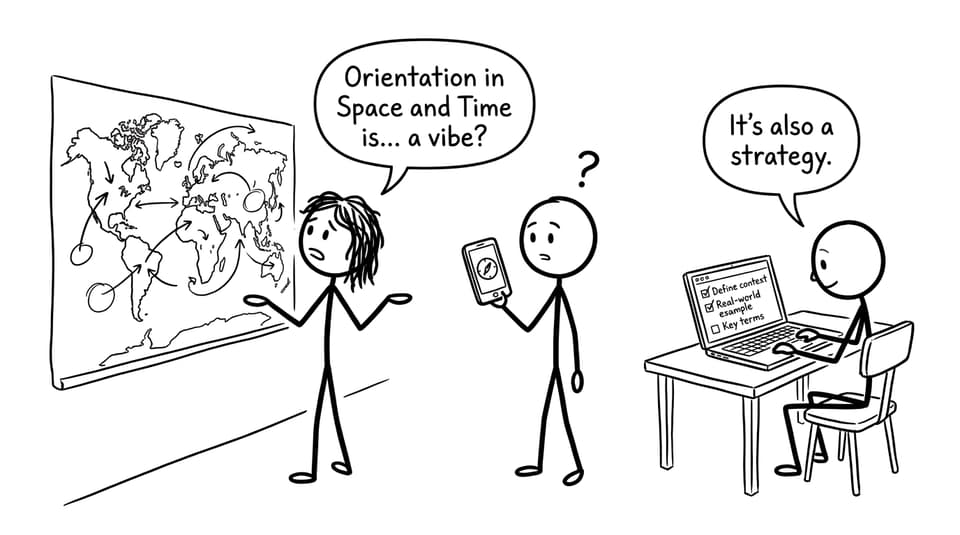
Closing: use MYP Global Contexts like a lens, not a label
The six Global Contexts are the quiet engine of the MYP. They turn units into stories about people, time, creativity, innovation, justice, and systems. And when you revise through those lenses, you prepare for the kind of tasks exams actually demand: applying knowledge in unfamiliar situations.
If you want to make that process simpler, build your routine inside RevisionDojo: practise with the Questionbank, tighten understanding with Study Notes, lock in key language with Flashcards, pressure-test yourself with Mock Exams and Predicted Papers, and use AI Chat plus Grading tools when you need fast feedback on how your thinking reads. When you need extra support, the Coursework Library and Tutors are there too.
Pick one unit this week. Choose one Global Context. Then answer the question you were always meant to ask in MYP: “Why does this matter, in the real world?”