

If you have ever revised for an exam and thought, “I know the topic… but I don’t know what the question wants,” you have already met the real challenge of the MYP.
In the MYP, success is rarely about collecting more facts. It is about seeing the pattern behind the facts. That is why Global Contexts and concept-driven teaching matter so much: they are the quiet architecture underneath your lessons. When you understand that architecture, you stop revising chapter by chapter and start revising with purpose.
And yes, this helps with exams. Because the MYP exams reward students who can transfer ideas to unfamiliar situations, not students who can recite definitions on command.
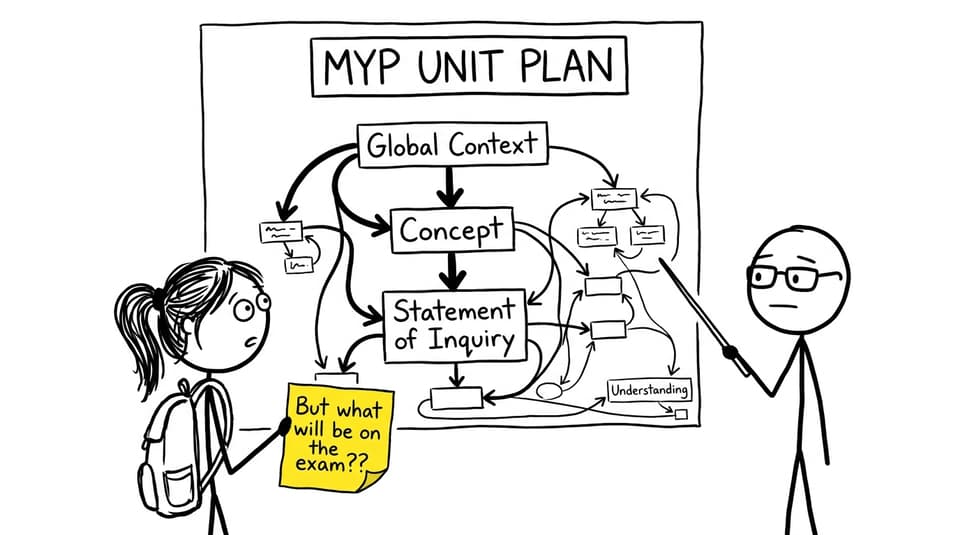
Quick checklist: how to spot what your MYP unit is really doing
Use this quick scan any time a unit feels confusing. In the MYP, most units reduce to five parts:
-
Global Context (the lens, or the “why does this matter?”)
-
Key concept (the big transferable idea)
-
Related concept (the subject-specific focus)
-
Statement of Inquiry (the unit’s main claim)
-
Inquiry questions (factual, conceptual, debatable)
If you want a broader refresher on how the MYP works overall, start at the RevisionDojo MYP hub and then jump into your subject pages.
Concept-driven teaching in MYP: the shift from “content” to “transfer”
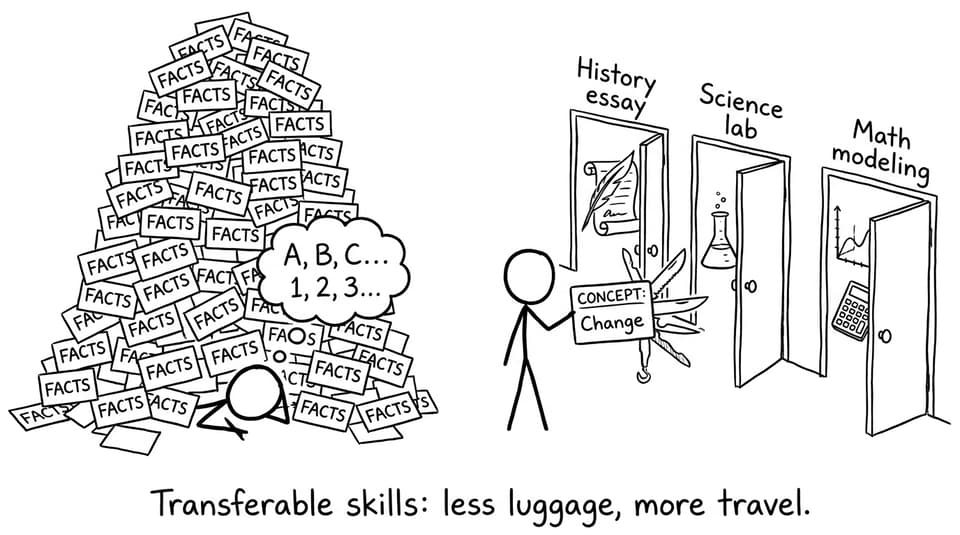
Traditional revision often works like packing a suitcase: you try to fit every fact you might need, just in case. The MYP tries to teach you how to travel lighter.
Concept-driven teaching in the MYP centers on ideas that show up across disciplines. Think of concepts like Change, Systems, Relationships, Communication, or Global interactions. The point is not that details do not matter. The point is that details become useful only when you can use them to explain a bigger idea.
Here is the practical exam benefit: when a question gives you an unfamiliar case study, concept-driven thinking gives you something stable to hold onto. You can ask:
-
What concept is this situation really about?
-
What relationships or systems are at play?
-
What is changing, and why?
To train that skill actively (instead of just reading notes), build short practice sets using RevisionDojo’s Questionbank and then ask AI Chat to explain what concept each question is assessing. That loop is the fastest way to turn “I studied it” into “I can apply it.”
Global Contexts in MYP: the lens that makes questions feel real
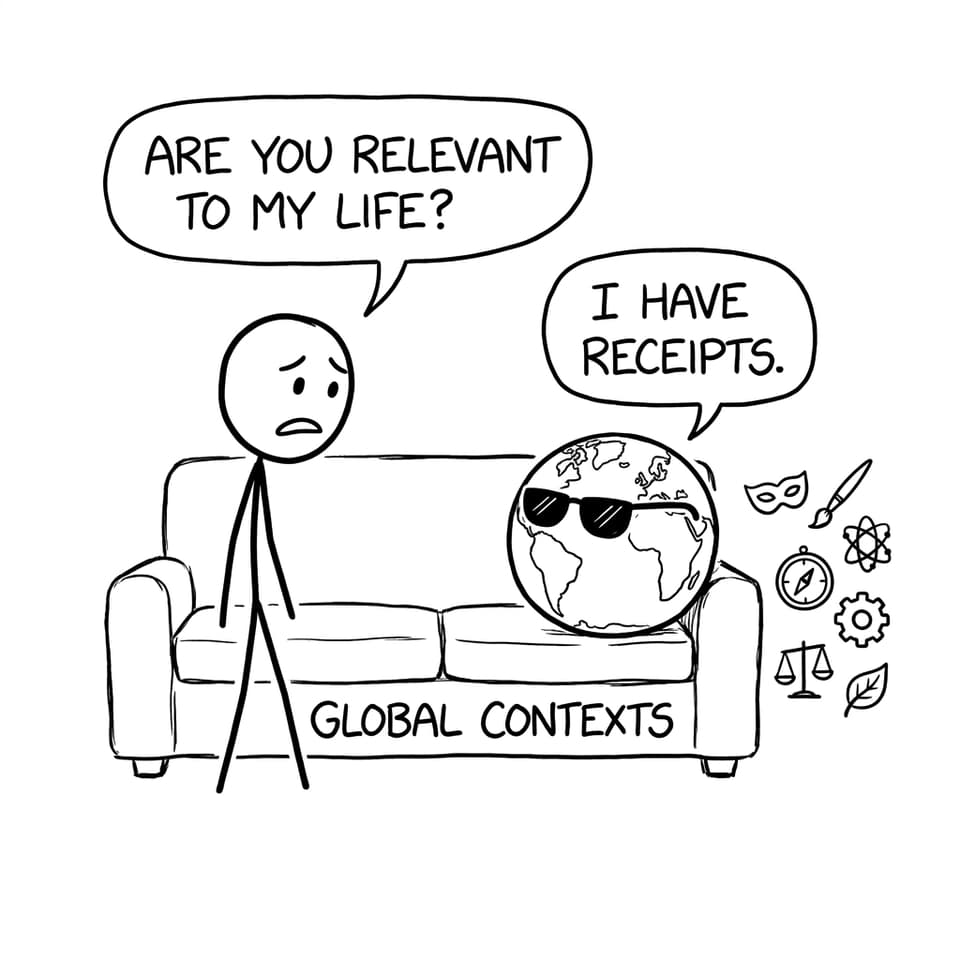
If concepts are the “what,” Global Contexts are the “why now?” In the MYP, every unit is framed through one of six Global Contexts:
-
Identities and relationships
-
Personal and cultural expression
-
Orientation in space and time
-
Scientific and technical innovation
-
Fairness and development
-
Globalization and sustainability
Global Contexts are not decoration. They shape the examples your teacher chooses, the scenarios in tasks, and the type of thinking your assessment expects.
If you want to see them in action, RevisionDojo has clear breakdowns and examples in:
Where the magic happens: MYP concepts + Global Contexts = Statement of Inquiry
The Statement of Inquiry (SOI) is the heart of an MYP unit. It is essentially the unit’s thesis: a claim about how the world works, written in a way that students can test, challenge, and apply.
A common mental model is:
Key concept + Related concept + Global Context = Statement of Inquiry
Example (Individuals and Societies):
-
Key concept: Change
-
Related concept: Innovation
-
Global Context: Scientific and technical innovation
-
SOI: Technological innovation drives social and economic change across communities.
For exams, the SOI is useful because it predicts the kind of writing and explaining you will be asked to do. Many tasks are secretly asking: “Can you support (or critique) the SOI using evidence?”
To practice this the MYP way, take one SOI from class and do a 10-minute drill:
-
Write it from memory.
-
List 3 pieces of evidence from the unit.
-
Create 1 counterexample.
-
Rewrite the SOI with a nuance word: often, tends to, can, in some contexts.
That is concept-driven revision, and it makes timed writing feel less random.
Exam-focused examples: how MYP context and concepts show up across subjects
You do not need to memorize these specific combinations. You need to recognize the pattern.
Language and Literature
In an MYP unit on dystopian fiction, the Global Context might be Fairness and development. The key concept could be Communication. Suddenly your essay is not just “themes in the novel.” It is “how language and power shape fairness.”
Sciences
A unit on ecosystems often uses Systems as a key concept and Globalization and sustainability as the context. In exams, that shows up as transfer: interpreting data, predicting impacts, and explaining interactions.
Arts
With Expression + Personal and cultural expression, your task becomes more than analyzing technique. It becomes interpreting how creative choices communicate identity and values.
Design
If you are in Design, you will see how naturally Scientific and technical innovation fits. For more context-rich examples, read Design Thinking: Embedding Global Contexts in MYP Design Projects.
How to revise MYP units using concept-driven strategies (not panic)
Here is a calm, exam-relevant routine for MYP students:
Build a “concept map,” not a topic list
For each unit, write:
-
Global Context
-
Key concept
-
Related concepts
-
SOI
-
5 keywords you keep seeing
Then connect them with arrows. You are training the same linking skill the MYP assesses.
Practice like the assessment, then review like a detective
Use RevisionDojo’s Questionbank to practice under light timing. Then review mistakes with the rubric language your teachers use. This is where RevisionDojo’s Grading tools and AI Chat help: they can tell you what your explanation is missing, not just whether it is right.
If you need a full revision structure, borrow the routines in:
Keep memory alive with Flashcards, but tie them to concepts
Flashcards work best in the MYP when they are not random. Build decks where every card answers:
-
“What is this?” and
-
“Which concept does it connect to?”
RevisionDojo Flashcards make that easier, and you can use Study Notes as the clean source of definitions and examples.
Closing: make MYP revision feel connected, not crowded
The MYP can feel overwhelming when you treat every lesson like a separate island. Global Contexts and concept-driven teaching are the bridges. They show you what your learning is about, what it connects to, and why it transfers.
If you want that same connected feeling during exam season, build your routine on RevisionDojo: use Study Notes to clarify concepts, Flashcards to keep key language active, the Questionbank to practice under pressure, and AI Chat plus Grading tools to tighten your explanations. Add Mock Exams, Predicted Papers, the Coursework Library, and Tutors when you need structure, feedback, and calm.
The goal is not to “cover the MYP.” The goal is to understand it well enough that any unfamiliar question feels like a familiar concept in disguise.