

In the week before exams, most students do something very human: they go hunting for certainty.
They rewrite notes. They highlight. They reorganize folders like they’re building a fortress.
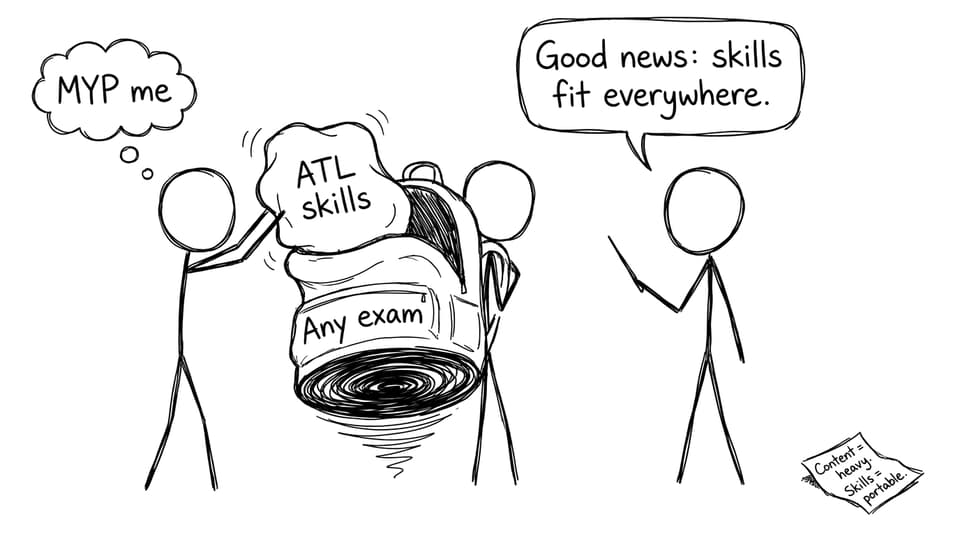
And then the exam arrives and asks a different question than expected. Not unfairly. Just differently. That’s when a quiet truth shows up: content helps, but skills travel.
That’s the real advantage of the MYP. When an MYP unit is built well, it doesn’t only teach a topic. It teaches portable habits you can carry into any paper, any subject, and eventually the Diploma Programme.
This guide shows how to teach (and study) transferable skills through MYP units, with an exam-focused lens for IB students who want outcomes, not extra work.
Quick checklist: building transferable skills in MYP units
Use this as a fast planning/revision filter. If your MYP unit (or your study plan) hits most of these, you’re training transfer.
-
Choose 2--3 ATL skills to prioritize (not all of them)
-
Make the skill visible: name it, model it, and show what “good” looks like
-
Use a global context to force real-world application
-
Include at least one inquiry task with more than one plausible answer
-
Build one cross-subject bridge (math to science, language to humanities, etc.)
-
Assess the process (planning, drafting, reflecting) as well as the product
-
End with reflection that answers: “Where else can I use this?”
If you want a hub to orient your whole approach, start with the MYP overview on RevisionDojo.
What “transferable skills” really means in the MYP
Transferable skills are the thinking, communication, research, collaboration, and self-management moves that work even when the topic changes.
In MYP, those moves live inside ATL (Approaches to Learning). The categories matter because they map to what exams quietly reward:
-
Thinking: analyzing unfamiliar prompts, making inferences, evaluating claims
-
Communication: writing with structure, using evidence, explaining steps
-
Research: selecting credible sources, synthesizing, citing with purpose
-
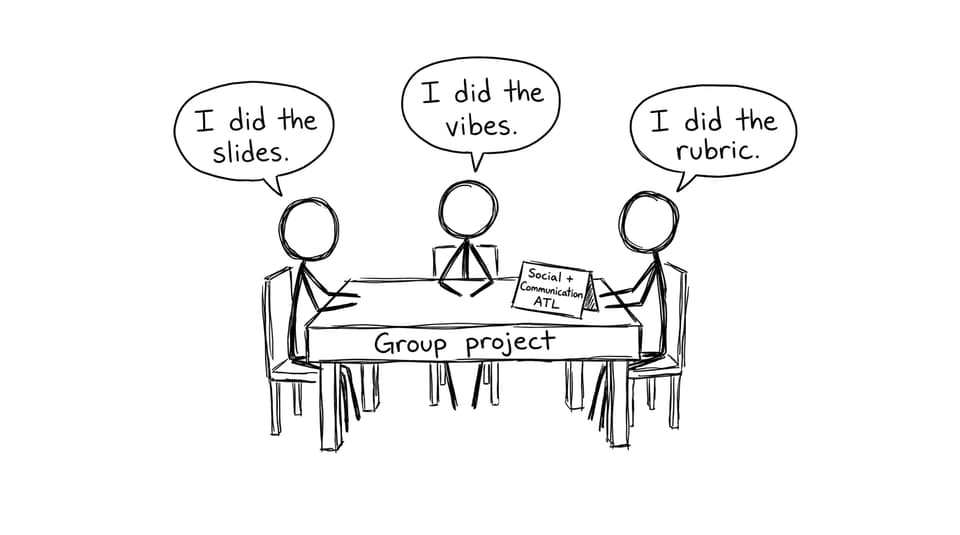
Social: collaborating without chaos, using feedback, negotiating roles
-
Self-management: planning, focus, revision routines, emotional regulation under time
If you want to see how ATL is tracked and made practical, read How RevisionDojo Simplifies IB Approaches to Teaching and Learning (ATL) Tracking.
Designing MYP units for transfer (so your exam brain recognizes patterns)
A good MYP unit feels like a story: a big idea, a real-world lens, a sequence of challenges, and a moment where you realize you can do something now that you couldn’t do before.
Here’s how to design that on purpose.
Choose the “transfer target” before the activity
Most units fail at transfer for a simple reason: the skill is accidental.
Instead, pick the skill early and build toward it. Ask:
-
Which ATL skill would still matter if the topic changed tomorrow?
-
Which skill shows up in timed tasks and exam marking?
Example:
-
A science ecosystems unit might target research (source evaluation) and thinking (systems reasoning).
-
A language unit might target communication (argument structure) and reflection (metacognition).
Students revising can copy this: choose one skill focus for the week, not just one topic. RevisionDojo’s MYP Revision Guide: Study Tips for Success pairs well with that mindset.
Use global contexts to make knowledge usable
Global contexts aren’t decoration. In MYP, they’re the bridge that forces transfer.
When you place a concept inside a context, you’re training your brain to move from “I know this” to “I can use this.” That is basically what exam questions demand.
Try:
-
Globalization and sustainability: apply data interpretation to resource decisions.
-
Identities and relationships: use literary analysis to evaluate how relationships shape choices.
Inquiry becomes sharper when the context is real. For a deeper unit-planning frame, see Inquiry-Based Learning in the MYP: A Teacher's Guide.
Build one interdisciplinary “bridge task” per unit
Transfer strengthens when students feel the same mental move in two different rooms.
A simple rule: one bridge task is enough. Examples:
-
Math to Design: measurement, tolerances, and data display
-
Sciences to Individuals and Societies: “systems” thinking in ecology and economics
-
Language and Literature to Arts: symbolism across text and image
-
PE to self-management: goal-setting, reflection, recovery habits
If you want strategies explicitly built around cross-subject connection, use Helping Students Connect Ideas Across Subjects.
Model, scaffold, then remove the training wheels
The most exam-relevant part of MYP transfer is this: students learn to do the skill without prompts.
Teachers can build that independence in three steps:
Model it like a think-aloud
Say the invisible part out loud.
-
“I’m choosing this source because it’s recent and has data, not just opinion.”
-
“I’m planning this answer using the command term first.”
This aligns naturally with metacognition routines from Encouraging Metacognitive Awareness in Daily Lessons.
Scaffold it with tools students can reuse
Give students templates that survive the unit:
-
A research checklist (credibility, bias, relevance)
-
A paragraph structure (claim, evidence, explanation)
-
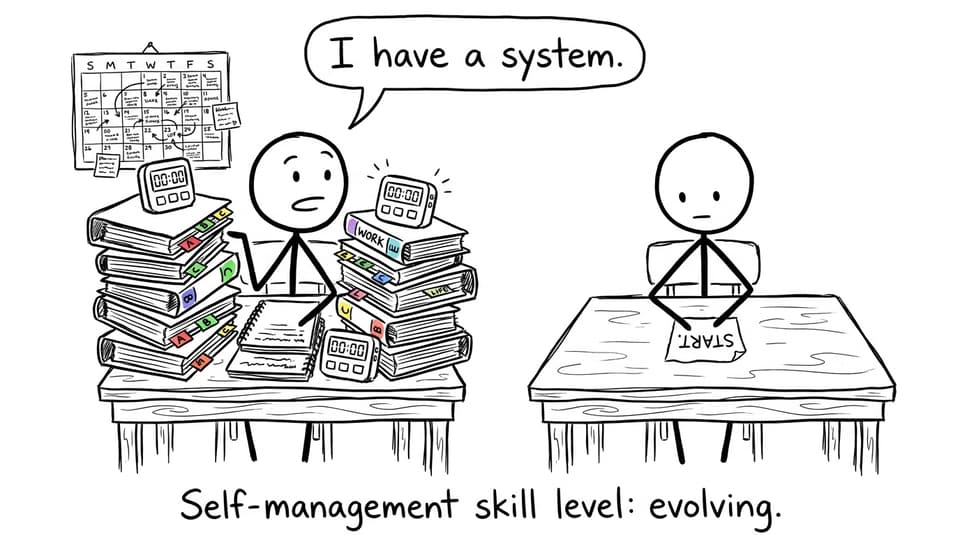
A planning routine (time blocks, milestones, review loop)
Students can build the same scaffolds inside RevisionDojo using Study Notes and Flashcards, then pressure-test them with the Questionbank. Start with the Questionbank feature page to see how targeted practice sets work.
Remove support deliberately
By the end of the unit, stop giving reminders. Ask students to choose the strategy, justify it, and reflect on the result. That’s transfer.
Reflection: the part of MYP most students underuse
Reflection is where learning turns into a tool you can carry.
After any task (especially a timed one), ask three questions:
-
What did I do that worked?
-
What did I misunderstand or misread?
-
Where else will I use this strategy?
This matters in exam prep too. The students who improve fastest treat every mistake like data.
For a structured exam-season routine that keeps reflection practical, see MYP eAssessments: 30-Day Study Plan That Works.
Assessing transferable skills without making it vague
In MYP, “process as well as product” isn’t a slogan. It’s a grading advantage.
Ways to assess transfer cleanly:
-
Process journals with dated decisions (“I changed X because evidence Y…”)
-
Self/peer assessment tied to a specific ATL descriptor
-
Short reflections after drafts: what improved and why
-
Observation notes during collaboration (roles, listening, conflict resolution)
Students can practice this same evidence-based mindset using RevisionDojo’s Grading tools and AI Chat: draft an answer, get feedback, rewrite, and track improvement like a system.
Conclusion: the quiet power of MYP units
A good MYP unit doesn’t just end with a finished product. It ends with a student who can carry a method into the next challenge.
That’s what transferable skills are: the ability to walk into an exam, meet a new question, and still know what to do first.
If you want to make that repeatable, build your revision around one ecosystem: RevisionDojo for Study Notes, Flashcards, the Questionbank, AI Chat, Grading tools, Mock Exams, Predicted Papers, a Coursework Library, and Tutors when you need human-level feedback. Start from the MYP tag hub and choose one unit skill you want to make portable this week.
Because in the end, the point of MYP isn’t that you covered everything.
It’s that what you learned can travel.