

If you have ever walked out of a MYP exam thinking, “I knew this… just not in that format,” you already understand the real challenge. MYP assessment rarely rewards last-minute memory. It rewards students who can apply ideas, follow command terms, and show evidence against criteria.
This MYP revision guide is built for that reality. It is not about studying longer. It is about building a calm system that turns what you learn into marks.
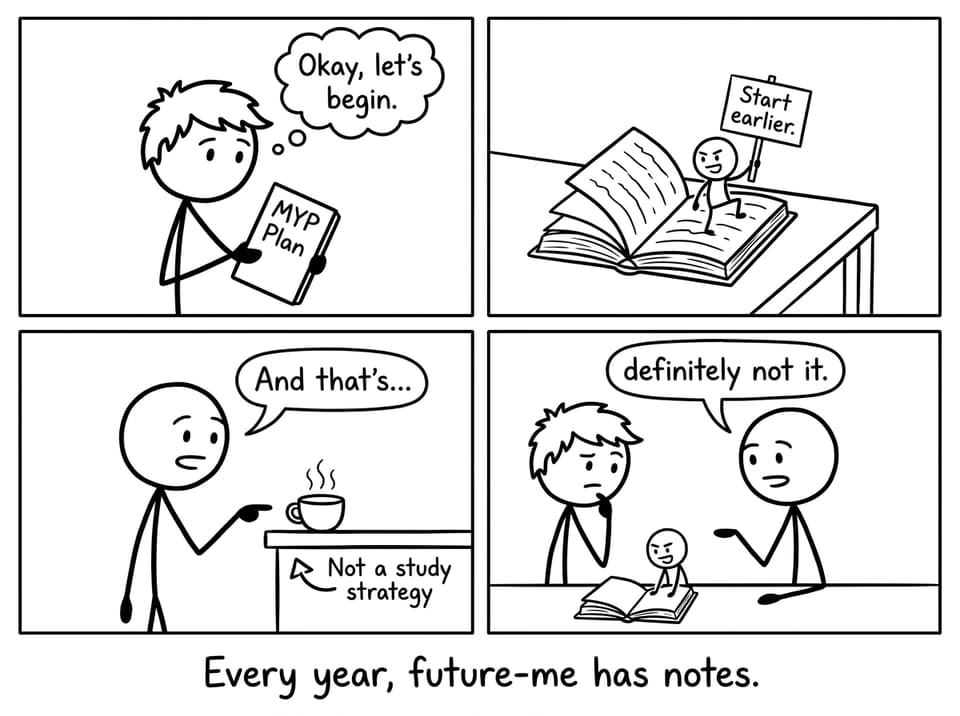
A quick MYP revision checklist
Use this checklist to keep your MYP prep focused:
-
Know your subject criteria and what top-band work looks like
-
Learn the most common command terms (and practice answering them)
-
Build a weekly timetable with small, repeatable sessions
-
Study concepts and global contexts, not isolated facts
-
Practice with exam-style questions and review mistakes
-
Reflect briefly after every session so your plan evolves
A helpful starting point is the Middle Years Program (MYP) hub, where RevisionDojo organizes MYP resources by subject and skill.
Understand what MYP is actually testing
The MYP is concept-driven, which means you are expected to connect content to bigger ideas and real situations. That is why revisiting statements of inquiry and global contexts matters. They are not decoration; they are a map for how questions can be framed.
Before you revise a unit, ask:
-
What key concept is this unit really about?
-
Which global context keeps showing up?
-
How would I explain this concept in a new situation?
If you want a broader overview of how the programme thinks, read What Is the IB Middle Years Programme?. It makes the logic of MYP assessment feel much less random.
Build your MYP study timetable (small beats perfect)
Most students plan revision like they are designing a “perfect week.” Then life happens. The better approach is to design a MYP timetable that survives imperfect days.
Try this rhythm:
-
20-30 minutes most days: Flashcards or short practice questions
-
2-4 longer sessions per week: deeper practice by criterion
-
1 timed session weekly: stamina and pacing
RevisionDojo makes this easier because your workflow can stay in one place: Study Notes to clarify, Flashcards for active recall, and the Questionbank to practice skills under exam-like conditions. Start exploring the tools through Study Notes and Flashcards.
Use command terms and criteria as your compass
In MYP, strong students do not just “answer the question.” They answer it in the way the rubric rewards.
That is why you should revise with criteria language:
-
Identify which criterion the task is assessing
-
Write using the wording of the descriptors (where appropriate)
-
Improve by rewriting one response after feedback
For a deeper breakdown of what goes wrong (and how to fix it), see Why Most Students Struggle in MYP (And Fix It). It is a reminder that improvement in MYP is usually a system problem, not a talent problem.
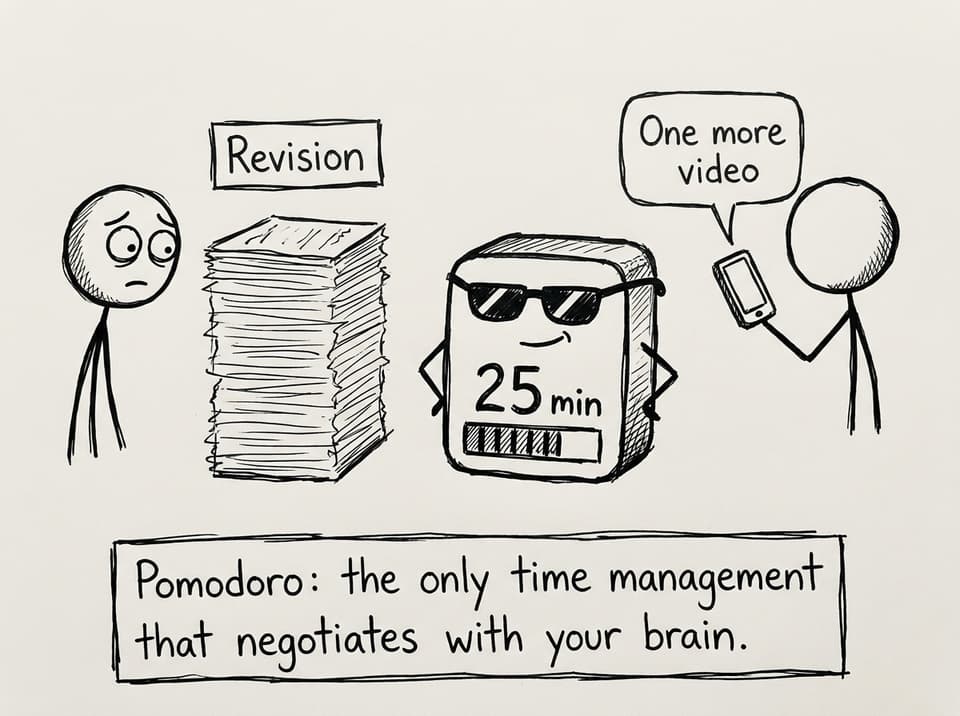
Practice like it is MYP: apply, then review
Reading notes feels productive because it is calm. MYP exams are not calm. They ask you to do things: interpret sources, justify steps, evaluate outcomes, and communicate clearly.
A high-impact MYP session looks like this:
-
10 min: skim one targeted section in RevisionDojo Study Notes
-
25 min: do a small Questionbank set
-
15 min: review errors and write one “error rule” (what to do next time)
-
10 min: flashcard review (especially for mistakes)
If you are preparing for on-screen formats, this is especially valuable. For a structured approach, use Tips for Success in MYP eAssessments and the longer framework in MYP eAssessments: 30-Day Study Plan That Works.
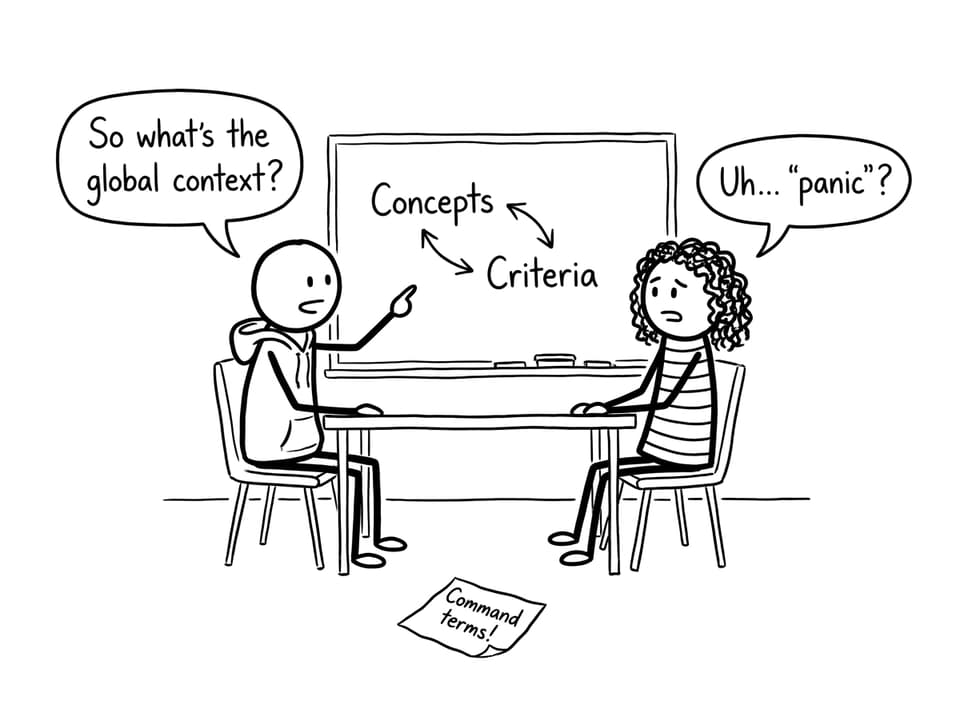
Reflect briefly so your MYP revision gets smarter
Reflection is not extra work in MYP; it is how you stop repeating the same mistakes.
After each session, write 3 lines:
-
What did I improve?
-
What still confuses me?
-
What is the next smallest task?
That kind of reflection pairs well with RevisionDojo features like AI Chat (to clarify misconceptions fast), Grading tools (to see rubric alignment), Mock Exams (for timed rehearsal), Predicted Papers (to sharpen readiness without guessing), the Coursework Library (to model strong structure), and Tutors (when you need strategy and accountability).
If you are juggling multiple subject groups, you may also like Best Practices for Balancing Eight Subject Groups in IB MYP.
Conclusion: make MYP feel predictable
The goal of MYP revision is not to know everything. It is to make the exam feel familiar: same command terms, same criteria thinking, same practice-and-feedback loop.
If you want that predictability, build your routine with RevisionDojo: start from the MYP hub, use Study Notes to stay focused, drill skills with the Questionbank, lock memory with Flashcards, and finish with timed practice using Mock Exams and grader feedback. Do that consistently, and MYP stops being intimidating and starts being trainable.