
For IB students sitting exams in May 2028 after starting DP1 in August 2026.
The best May 2028 IB English Lang and Lit study advice is to build analytical habits now: make argument-based notes, practise short responses weekly, and gradually progress toward complete timed tasks. Match each activity to Paper 1, Paper 2, the Individual Oral, or, at HL, the Higher Level Essay rather than simply rereading texts.
English rewards accumulated judgment. A weekend can teach you terminology, but it cannot easily teach you to notice how a writer guides an audience, select significant evidence, and turn observations into a controlled argument. Those abilities grow through frequent, deliberate practice.
The RevisionDojo English A: Language and Literature hub brings that practice together through Questionbank tasks, Study Notes, Flashcards, AI Chat, Grading tools, Predicted Papers, Mock Exams, a Coursework Library, and Tutors.
Your May 2028 study checklist
- Build notes around authorial choices, effects, contexts, and arguments.
- Complete two focused English practice sessions each week in DP1.
- Practise unseen non-literary analysis for Paper 1.
- Create comparative maps for the literary works used in Paper 2.
- Maintain an extract and global-issue bank for the Individual Oral.
- At HL, develop possible lines of inquiry for the Higher Level Essay.
- Use criteria-based feedback to identify one improvement after each task.
- Confirm school deadlines and later IB updates with your teacher.
What is confirmed for IB English Lang and Lit 2028?
As of October 2026, official IB examiner documentation refers to the Language A: Language and Literature guide with first assessment in 2026. This is the current guide for students expecting to sit the May 2028 session unless the IB announces a change.
The course remains organized through three areas of exploration and seven central concepts. Language and Literature includes literary works and non-literary bodies of work. SL students study at least four literary works, while HL students study at least six, alongside non-literary study selected by the school.
The confirmed assessment structure should shape your revision:
| Component | SL | HL |
|---|---|---|
| Paper 1 | One guided analysis selected from two unseen non-literary texts, 1 hour 15 minutes, 35% | Two guided analyses of two unseen non-literary texts, 2 hours 15 minutes, 35% |
| Paper 2 | One comparative literary essay, 1 hour 45 minutes, 35% | One comparative literary essay, 1 hour 45 minutes, 25% |
| Individual Oral | Literary work and non-literary body of work connected through a global issue, 30% | Literary work and non-literary body of work connected through a global issue, 20% |
| Higher Level Essay | Not required | A 1,200-1,500 word essay, 20% |
Paper 2 presents four questions based on central course concerns. Students answer one by comparing two literary works. The Individual Oral includes a 10-minute prepared analysis followed by 5 minutes of teacher questions. Your teacher remains the final authority on approved works, extracts, deadlines, and procedures.
Several May 2028 details are not yet published, including the final examination timetable, session-specific content, grade boundaries, and 2028 RevisionDojo Predicted Papers or Mock Exams. Treat claims of certainty cautiously. Resources can reflect the current guide, but nobody can know the final questions in advance.
Make notes that produce analysis
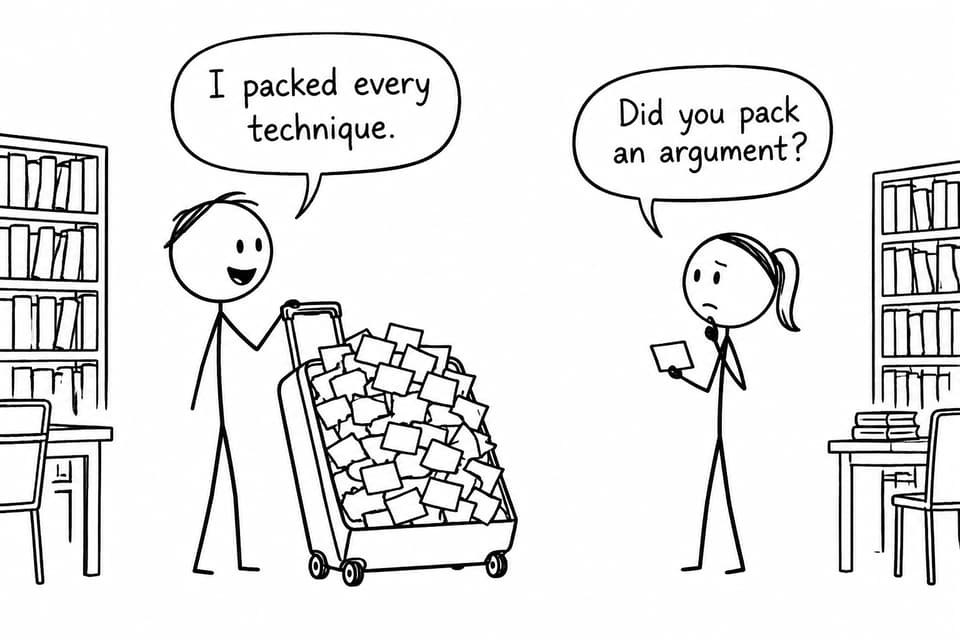
Many English notebooks become museums of information: technique definitions, character summaries, and long quotations preserved but rarely used. Better notes behave like workshops. They help you build an interpretation.
For every literary chapter, scene, poem, or non-literary text, record five things:
- A significant choice: diction, structure, framing, typography, imagery, perspective, sound, juxtaposition, or another precise feature.
- Evidence: a short quotation or accurately described visual detail.
- Immediate effect: what the choice emphasizes, withholds, complicates, or invites the audience to feel.
- Larger significance: how it contributes to an idea, representation, purpose, or argument.
- Alternative reading: another plausible interpretation or a limitation in your first reading.
Avoid writing that an author “uses imagery to engage the reader.” That identifies neither the image nor its significance. Ask what the image associates, whose values it reflects, and why it appears at that point.
For literary works, add a one-page map covering form, structure, recurring patterns, pivotal moments, context, and five adaptable arguments. For a non-literary body of work, track repeated choices across several texts. A body of work is not one convenient advertisement or article viewed alone.
Use Flashcards for compact retrieval, including terminology, brief evidence, and text-type conventions. Keep complex interpretation in Study Notes, where uncertainty and connections have room to breathe.
What to practise and how often
A sustainable routine is more valuable than occasional heroic effort. In DP1, complete two 30-45 minute sessions each week. One should develop Paper 1 analysis; the other should rotate between literary comparison, oral explanation, and reviewing class texts.
In DP2, move toward three weekly sessions: one for Paper 1, one for Paper 2, and one for the Individual Oral or HL Essay until that component is complete. During the final 8-10 weeks, introduce complete timed responses while retaining shorter drills.
A useful cycle looks like this:
| Session | Practical task |
|---|---|
| Paper 1 | Annotate an unseen text, write a thesis, and develop one analytical paragraph |
| Paper 2 | Plan one question using two works and write one integrated comparative paragraph |
| Individual Oral | Record 3-5 minutes of analysis and identify where description replaces analysis |
| HL Essay | Test a line of inquiry, group evidence, or revise one paragraph against the criteria |
| Review | Retrieve quotations, choices, and comparisons without looking at notes |
Do not write a complete essay every time. Planning, thesis revision, paragraph reconstruction, and oral recording isolate skills efficiently. Complete responses matter, but they become useful only when followed by feedback and a specific correction.
RevisionDojo’s guide to studying differently for Paper 1 and Paper 2 helps keep those practice modes distinct.
Use materials that match each assessment
For Paper 1, use unseen non-literary material from varied text types, such as advertisements, opinion pieces, infographics, speeches, campaigns, magazine covers, and digital media. Prompts should invite analysis of how choices create meaning, not simple device identification. Start with sample Paper 1 essay questions, then apply seven Paper 1 analysis strategies.
For Paper 2, use broad questions that permit genuine comparison of two works studied in class. Practise adapting the same works to ideas such as perspective, conflict, transformation, power, identity, or representation. The goal is not to memorize one essay but to build flexible comparative arguments. The IB English Paper 2 structure guide explains how to sustain comparison.
For the Individual Oral, practise with extracts from an eligible literary work and non-literary body of work studied in your course. Connect both to a focused global issue, moving between close analysis and the significance of the wider work or body of work. Use the RevisionDojo Individual Oral guide to rehearse that balance.
HL students should use studied literary works or non-literary bodies of work when exploring a Higher Level Essay line of inquiry. The question must support sustained analysis rather than plot summary or a catalogue of techniques. Consult the calm guide to the English HL Essay before committing to a narrow question.
HL and SL need different strategies
Both levels require interpretation, analysis, organization, and accurate language. HL is not simply SL with longer answers.
HL students face two Paper 1 analyses, study more literary works, and complete the Higher Level Essay. They need greater endurance and faster decision-making. Practise dividing Paper 1 time between reading, planning, writing, and checking while giving the second response equal intellectual attention.
SL students analyse one selected Paper 1 text. Spend a few minutes comparing the options before choosing. Select the text whose purpose, audience, structure, and significant choices you can explain most convincingly, not the one that merely looks easiest.
Paper 2 lasts the same amount of time at both levels. At either level, a concise comparative argument is stronger than two separate summaries placed beside each other.
Common habits that quietly lose marks
Technique spotting: Naming metaphor, color, or repetition without explaining its contribution produces shallow analysis.
Paraphrasing content: Retelling what a text says is not the same as showing how meaning is constructed.
Ignoring the whole text: Close analysis must still recognize structure, progression, purpose, and audience.
Treating Paper 2 as two essays: Compare within each paragraph rather than discussing Work A for half the response and Work B for the other half.
Memorizing rigid introductions: A prepared template can produce a vague thesis that does not answer the actual question.
Using context as decoration: Context matters when it changes or sharpens interpretation. A detached historical paragraph rarely helps.
Forgetting the wider work in the oral: Extract analysis must connect to patterns across the literary work and non-literary body of work.
Replacing judgment with AI output: AI Chat can challenge an interpretation, while Grading tools can reveal patterns in your writing. Neither should replace your reading, drafting, or compliance with school and IB academic-integrity rules.
Build a feedback loop, not a pile of essays
After every task, identify one recurring weakness and turn it into the next drill. If your evidence is relevant but your explanation is general, rewrite the analytical sentences. If Paper 2 comparison arrives late, practise comparative topic sentences. If your oral sounds memorized, answer unfamiliar follow-up questions with a teacher, Tutor, or study partner.
RevisionDojo works best as an integrated system. Use the Coursework Library to examine developed academic writing, Study Notes to close knowledge gaps, Flashcards for retrieval, and AI Chat to test whether an interpretation survives questioning. Later, use Predicted Papers and Mock Exams only when available for the relevant guide and clearly labeled for your cohort.
English preparation becomes manageable when every session has a visible purpose. You do not need every possible interpretation by May 2028. You need to notice important choices, form a defensible reading, support it precisely, and adapt under timed conditions.
Your next step is specific: open the IB English A: Language and Literature Questionbank, choose one Paper 1 task, and spend 30 minutes producing an annotated text, a one-sentence thesis, and one analytical paragraph.