
When people talk about the EE, they often talk about it like it’s a personality test.
“You’re a History EE person.”
“You’re definitely an interdisciplinary EE person.”
But the truth is quieter than that: most strong EEs aren’t born from identity. They’re born from fit.
Fit between your curiosity and the IB criteria. Fit between your question and your method. Fit between your time and your ambition.
And if you’re an IB student preparing for exams, there’s another kind of fit that matters: the kind that doesn’t quietly steal your revision season.
This guide helps you choose between an interdisciplinary vs subject-focused EE pathway without the usual vague advice. You’ll get a checklist, decision rules, examples, and a practical workflow you can actually follow.
The quick EE decision checklist
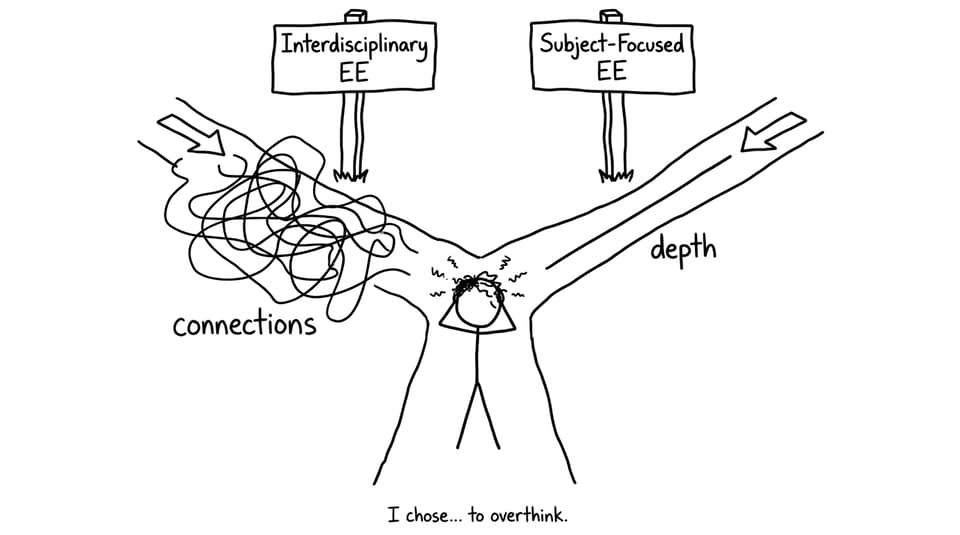
If you want the fast answer, use this EE checklist. Whichever column gets more “yes” responses is usually your better pathway.
Subject-focused EE is usually right if you...
- Can name a specific IB subject method you’ll use (textual analysis, lab-style data analysis, economic evaluation, historical source analysis).
- Have access to subject-specific sources/data without begging 12 different people for help.
- Prefer depth over breadth.
- Want a cleaner alignment to the rubric and examiner expectations.
Interdisciplinary EE is usually right if you...
- Have a problem that genuinely needs two lenses to be answered well (not just “I like two subjects”).
- Can explain what each discipline contributes and why one alone would be incomplete.
- Are confident you can keep the research question narrow.
- Can stay organized when the research gets messy.
If you’re still unsure, spend 10 minutes with RevisionDojo’s overview resources: start at the EE Guides hub and scan the expectations for your intended subject.
What “subject-focused EE” really means (and why it’s often safer)
A subject-focused EE is not “basic.” It’s disciplined.
It means you choose one IB subject and commit to doing the thinking the way that subject rewards thinking. You’re telling the examiner: I understand what counts as evidence here, what counts as analysis here, and what counts as a defensible conclusion here.
That clarity is a huge advantage.
Why subject-focused EE tends to score well
A strong EE is usually boring in the best way: it stays on the rails.
Subject-focused pathways often make it easier to:
- Define a research question that is measurable/arguable.
- Choose a method that matches the subject.
- Avoid drifting into description.
- Build a coherent line of argument.
If you want an anchor for what “on the rails” looks like, this is a useful reference while drafting: How to Create an Effective EE Outline for a Logical Flow.
The hidden benefit for IB students preparing for exams
A subject-focused EE often overlaps with your syllabus thinking (without overlapping your writing). You build deeper understanding in one subject, then you can convert that understanding into exam performance.
This is where RevisionDojo becomes a practical system rather than just “a website”:
- Use Study Notes to tighten conceptual understanding.
- Use the Questionbank to translate knowledge into marks.
- Use Flashcards to keep key definitions and frameworks alive while you draft.
In other words: your EE can support your exam prep instead of quietly competing with it.
What “interdisciplinary EE” really means (and when it’s worth it)
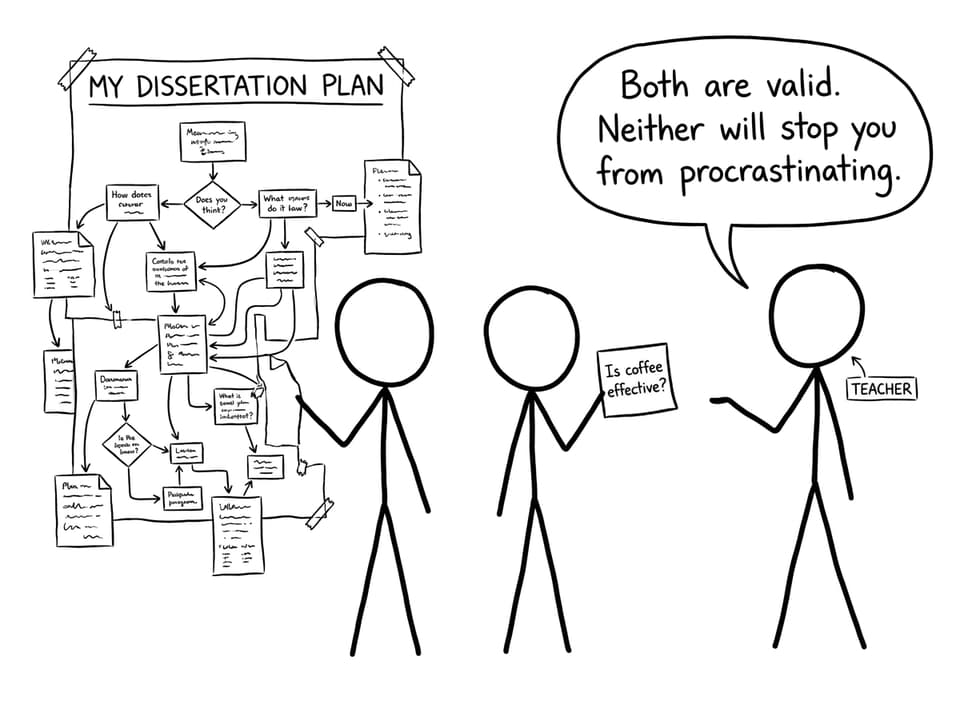
An interdisciplinary EE can be brilliant. It can also become a slow-motion scope disaster.
The difference usually comes down to whether the disciplines are truly integrated.
Integration vs decoration
A weak interdisciplinary EE looks like this:
- You do mostly Subject A.
- You sprinkle a paragraph of Subject B.
- You call it “interdisciplinary.”
A strong interdisciplinary EE looks like this:
- Your research question requires two methods.
- You use each method intentionally.
- You explicitly show what each lens reveals, and what it cannot.
When interdisciplinary EE is a great idea
Choose an interdisciplinary EE when:
- The question is inherently cross-boundary (for example, a policy problem that needs both economic reasoning and ethical evaluation).
- Your access to sources is excellent (databases, primary materials, local data, clear texts).
- You’re the kind of student who enjoys building a framework before writing.
If you want to see how examiners tend to punish scope creep and reward clarity, read: Mistakes to Avoid in IB Extended Essays.
The most useful way to choose: “failure modes”
Most students choose their EE pathway by interest. That’s understandable. But a better way is to choose by how you’re likely to fail.
Because your likely failure mode is predictable.
Common failure mode of interdisciplinary EE
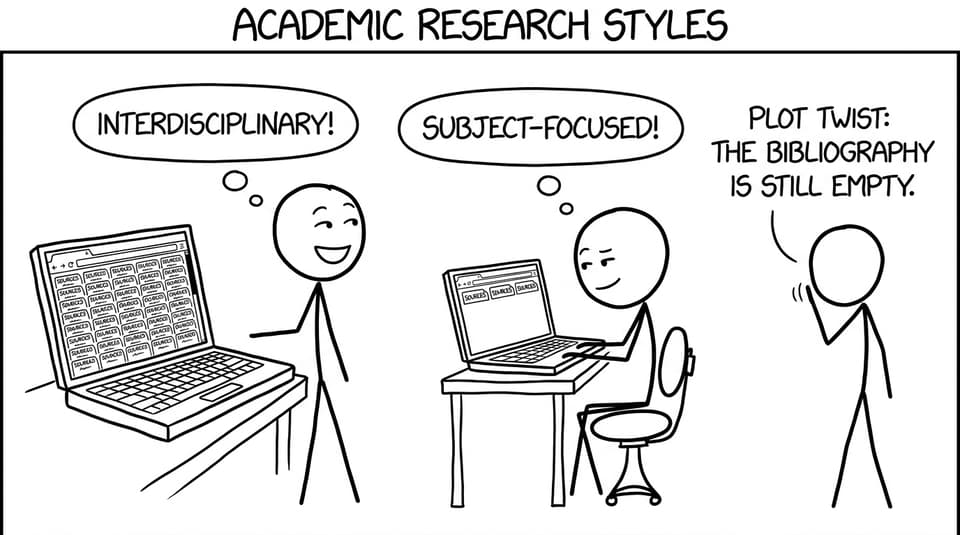
You collect too much.
You build a beautiful bibliography.
Then your essay becomes a museum tour: lots of facts, little argument.
Common failure mode of subject-focused EE
You choose a topic that’s technically within the subject but too generic.
Then you write 4,000 words and realize you’ve said very little.
A simple decision rule
- If you tend to over-research and overthink: subject-focused EE is usually safer.
- If you tend to under-explain and rush: interdisciplinary can work, but only if you commit to structure early.
And whichever pathway you pick, keep your process aligned with IB requirements from the beginning. This formatting reference reduces last-minute chaos: How to Format Your EE According to IB Guidelines.
Build your EE research question like a laser
The research question is where pathway decisions become real.
A good EE question is narrow enough to answer, but deep enough to analyze.
Subject-focused EE questions tend to succeed when they...
- Use a clear subject concept or framework.
- Define a manageable case study or dataset.
- Allow evaluation, not just narration.
Interdisciplinary EE questions tend to succeed when they...
- Name the two lenses clearly.
- Specify how the lenses will be used (not just mentioned).
- Avoid being a “world problem” with a 4,000-word limit.
If you need a grounded start-to-finish model, keep this open while planning: Mastering IB Extended Essays: How to Research, Write, and Revise.
How to protect exam prep while doing your EE
The EE is not an exam paper, but it can affect your exam outcomes if it consumes your best revision weeks.
Here’s a practical way to keep both moving.
A sustainable weekly structure (during exam season)
- 3 x 30-minute EE blocks: one for reading, one for outlining, one for rewriting.
- 4 x 60-minute exam-prep blocks: run the RevisionDojo loop.
That loop is simple:
- Understand with notes.
- Recall with flashcards.
- Apply with questions.
- Review mistakes.
If you need a calm plan that doesn’t demand 6-hour study days, this is helpful: How to Study for IB Exams Without Burning Out.
Use RevisionDojo like a real EE support system
Most students don’t struggle because they’re not smart. They struggle because feedback arrives late.
RevisionDojo closes that gap:
- The IB Coursework Grader gives rubric-aligned feedback on your EE draft so you know what to fix.
- The Coursework Library feature and the Coursework Exemplars hub help you see what strong structure and academic tone actually look like.
- The AI Chat (inside RevisionDojo) helps you stress-test a research question, tighten a paragraph, or sanity-check whether your scope is realistic.
- Tutors can step in when your supervisor feedback is minimal and you need targeted guidance on method and argument.
A practical pathway map: pick, plan, prove
Whatever you choose, a high-scoring EE usually follows the same internal rhythm.
Pick
- Choose the pathway (interdisciplinary or subject-focused).
- Choose one sentence that explains why it fits the rubric.
Plan
- Draft an outline before you draft paragraphs.
- Decide what evidence will prove each section’s claim.
Prove
- Every body section must do analysis.
- Every paragraph must link back to the research question.
If you want more topic ideas and drafting support, browse: All IB Extended Essay Posts.
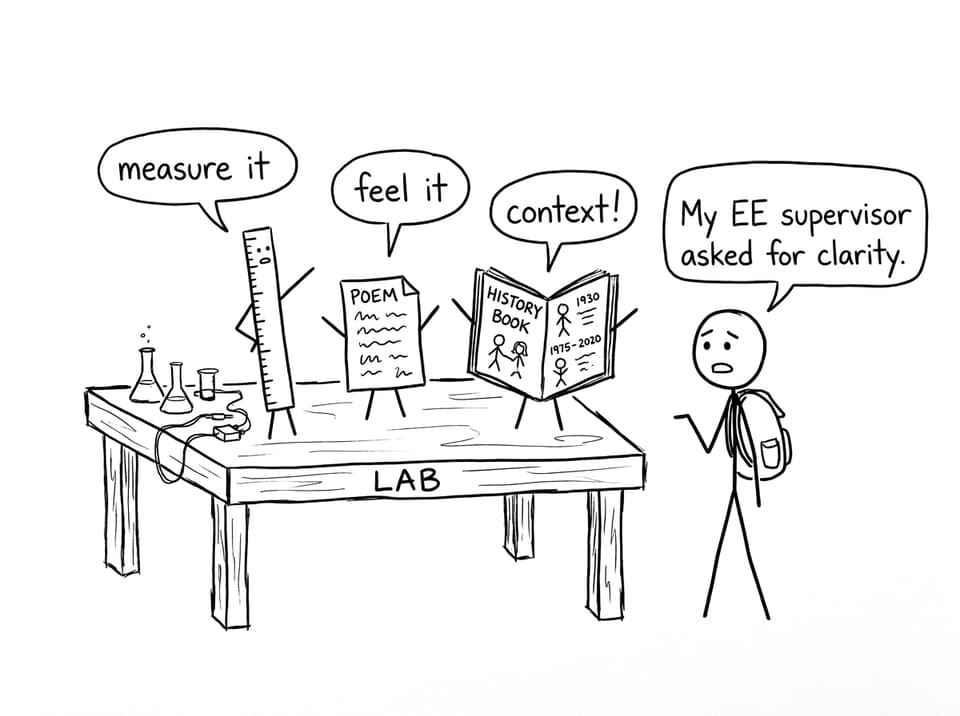
Choosing your EE pathway: a calm conclusion
The best EE pathway is the one that makes strong thinking inevitable.
If you want a cleaner route to rubric alignment, pick a subject-focused EE and go deep. If your question truly needs two lenses, pick an interdisciplinary EE, but build structure early and protect your scope like it’s part of the word count.
Either way, don’t do it alone or blind. Use RevisionDojo to keep your EE moving with feedback and exemplars, and keep your exam prep moving with the Questionbank, Study Notes, Flashcards, Predicted Papers, Mock Exams, AI Chat, Grading tools, Coursework Library, and Tutors.
Your EE is one project. Your diploma is the whole story. RevisionDojo helps you write both well.