

Introduction: The moment the mask slips
Two weeks before an IB Theatre deadline, a student watches a recording of a professional production and feels the most tempting thought in the course: If I copy this exact staging, I’ll look confident.
That thought is normal. It’s also where your IB Theatre work quietly becomes either art or imitation.
Integrity in IB Theatre isn’t a moral speech delivered by a teacher when everyone’s tired. It’s a craft skill. It’s the habit of making choices you can explain, sources you can credit, and collaborations you can stand behind without flinching. And when exam pressure hits, integrity becomes a practical advantage: it gives you clear process evidence, stronger reflection, and a portfolio that sounds like a real theatre-maker.
If you want a quick overview of assessments and how the course is built, keep this open alongside the IB Theatre syllabus overview.
Integrity in IB Theatre: A quick checklist you can use today
Use this as a fast self-audit before any rehearsal, write-up, or submission in IB Theatre:
-
Can I explain why I made each major performance or design choice?
-
Did I credit every play, practitioner, image, exercise, or idea that shaped my work?
-
Do my notes show development (tests, failures, revisions), not just a final result?
-
Is collaboration visible as roles + contributions, not a blurry “we did it together”?
-
Have I considered cultural context and avoided appropriation or stereotype?
-
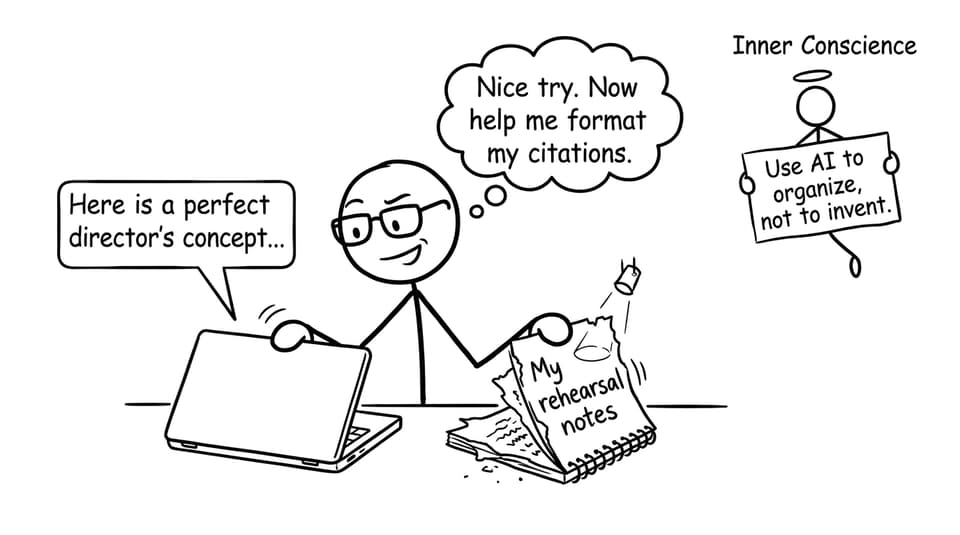
If I used AI or templates, did I use them to organize, not to invent or author my work?
For a broader framework across subjects, the IB-wide principles in Why Academic Integrity Matters in the IB apply perfectly to IB Theatre too.
What integrity actually means in IB Theatre (in human terms)
In IB Theatre, integrity sits on three legs:
Artistic authenticity
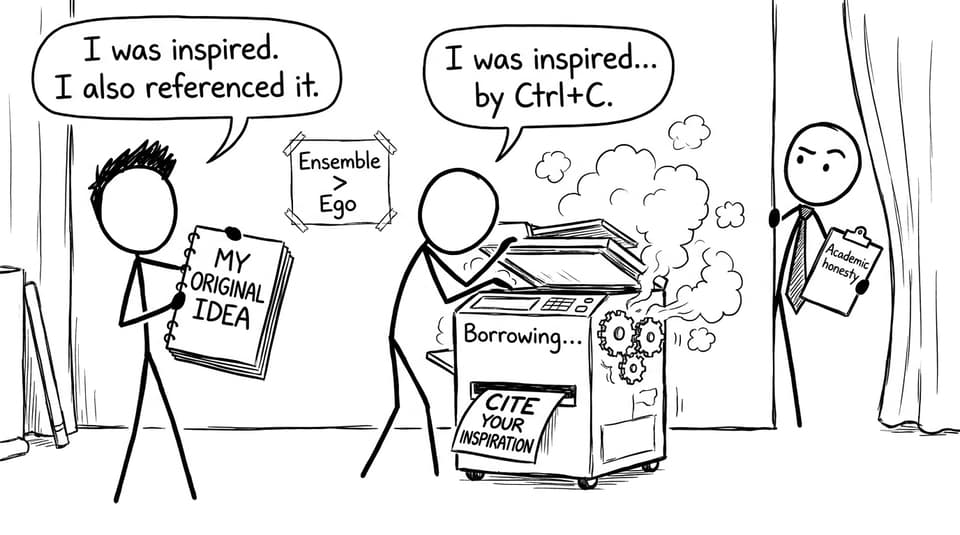
You can be inspired by anything, but your performance and direction must become your interpretation. Inspiration is allowed. Replication is the trap.
Collaborative ethics
Theatre is ensemble work, but assessed components often demand individual ownership. Integrity means your group process stays real, and your individual writing stays yours.
Academic honesty
Your words, your analysis, your documentation, your citations. If it isn’t yours, you label it.
If you’re trying to balance practical exploration with IB-style writing, RevisionDojo’s guide on balancing creativity and academic rigor in IB Theatre is a helpful compass.
Authentic performance: how to be original without pretending you invented theatre
The smartest IB Theatre students don’t try to be “never influenced.” They become traceable. Their process shows a clear chain:
-
What you encountered (a practitioner, a tradition, a play, a stimulus)
-
What you tested (a rehearsal experiment)
-
What changed (your next version)
-
What you learned (reflection tied to intention and audience impact)
Here are integrity-safe ways to build originality:
-
Start with intention, not aesthetics. Write one sentence: What should the audience feel, think, or notice?
-
Test multiple options on purpose. Try three different openings. Keep brief notes on why two failed.
-
Document your edits. A cut paragraph in your notes is evidence you made choices.
-
Credit influences like a professional. If a moment was inspired by a production photo, name it.
When it’s time to write, this matters because examiners reward cause-and-effect thinking. If you need a structure, use the analytical chain in IB Theatre: write analytically about your Solo piece.
Ethical collaboration: ensemble trust that survives assessment season
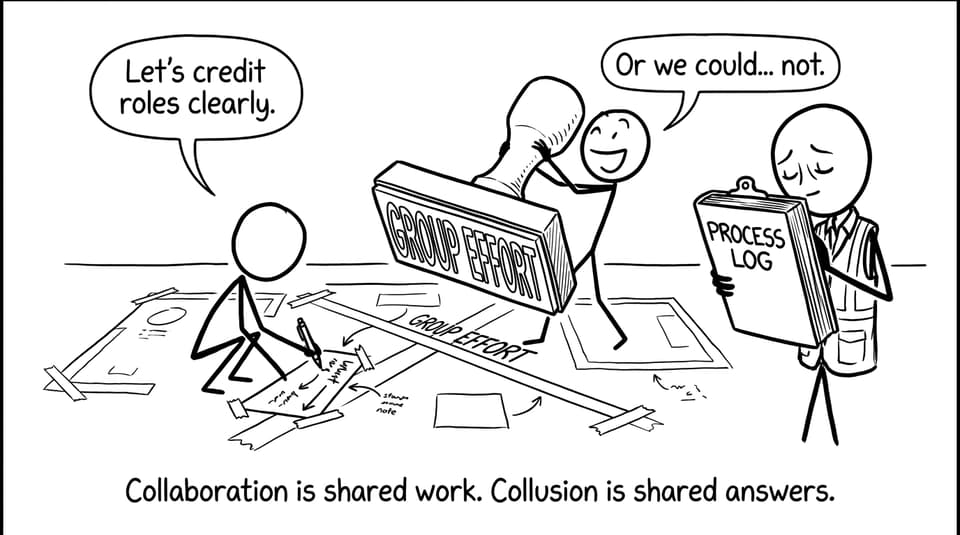
A group can be supportive and still accidentally drift into collusion. In IB Theatre, the difference is simple: collaboration is shared exploration; collusion is shared authorship where the course requires individual work.
Build ethical collaboration with three routines:
Define roles early (and revisit them)
Write down who is responsible for what: performance choices, design tests, rehearsal scheduling, research tasks, documentation. Roles can overlap, but ownership must be visible.
Credit contributions plainly
In theatre, crediting isn’t awkward. It’s respectful. Do it in your write-ups the same way a program credits a team.
Keep your own process log
Even if you rehearse together, your reflective writing should come from your personal notes. A clean habit is to do a 10-minute solo write-up immediately after rehearsal.
For practical routines that make this sustainable, borrow the weekly structure from Best study strategies for IB Theatre students (SL & HL).
Plagiarism in IB Theatre: what it looks like (and how to avoid it)
Plagiarism in IB Theatre isn’t only copying text. It can show up as:
-
Lifting a director’s concept from a review and presenting it as your own
-
Recreating choreography or staging from a filmed production without acknowledging it
-
Using a practitioner exercise sequence from a book or website without credit
-
Submitting reflection writing that sounds like a shared group document
Avoiding this is less about fear and more about systems:
-
Keep a running “sources log” (links, book pages, rehearsal dates).
-
Label in your notes: QUOTE, PARAPHRASE, MY IDEA.
-
When in doubt, cite. Citing never lowers marks. Hiding sources can.
If you want an IB-wide checklist that applies directly to IB Theatre, use How to uphold academic integrity in IB assessments.
Cultural integrity: research is respect made visible
IB Theatre invites you into global performance traditions. That’s a privilege, not a costume box.
Ethical cultural practice usually comes down to depth:
-
Research the tradition’s context, not just its surface features.
-
Be cautious with accents, gestures, sacred elements, and symbols.
-
Ask: Am I representing a community, or using it as aesthetic decoration?
-
Reflect on your own perspective and limitations.
A good test is whether your work shows understanding of meaning, function, and audience relationship, not only “look.” If you’re preparing a research-focused task, the structure in Revision tips for the IB Theatre Research Presentation helps keep integrity practical.
Technology and AI: use tools without losing authorship
There’s a calm rule that keeps IB Theatre ethical in a tech-heavy year:
-
Use digital tools to record, organize, edit, and clarify your own work.
-
Don’t use them to author the creative or reflective thinking you’re being assessed on.
That means it’s fine to:
-
Edit rehearsal videos
-
Organize citations
-
Create rehearsal schedules
-
Ask AI to explain a practitioner concept so you can understand it
But it’s not fine to submit AI-generated reflection as if it’s your voice.
If you feel the pull of “easy output,” read What are the risks of relying too heavily on AI in education? and reset your approach.
How RevisionDojo helps you keep IB Theatre honest (and higher scoring)
Integrity gets easier when your study system is built for ownership.
RevisionDojo supports IB Theatre students with:
-
Study Notes for clear, syllabus-aligned understanding: Study Notes
-
Flashcards to lock in practitioners, conventions, and terminology without cramming: Flashcards
-
A Questionbank to practise exam-style thinking and terminology under pressure: Questionbank
-
AI Chat to clarify concepts and plan practice (so you can write in your own voice afterward)
-
Grading tools to get rubric-aligned feedback on your writing and structure
-
Predicted Papers and Mock Exams to rehearse exam conditions ethically
-
A Coursework Library to learn patterns and standards (without copying)
-
Tutors when you need human guidance on interpretation, analysis, and process evidence
For a calm system that protects both marks and integrity, pair Theatre work with an exam routine like How to study for IB exams without burning out.
FAQ: Integrity in IB Theatre
What counts as plagiarism in IB Theatre if my work is practical?
Plagiarism in IB Theatre can happen through movement, staging, concepts, and documentation, not just written paragraphs. If you replicate a professional performance choice closely and present it as your own invention, that’s misrepresentation even if you “did it on stage.” The safest approach is to treat theatre-making like research: track what influenced you and cite it. This doesn’t reduce your creativity; it actually strengthens your reflection because you can explain how influence became transformation. Keep a rehearsal log that shows your tests and changes, and you’ll have process evidence that is clearly yours. When you write, use your own voice and refer to sources as sources, not as secret helpers.
How do I collaborate ethically without being accused of collusion?
In IB Theatre, ethical collaboration means rehearsing together while protecting individual authorship where required. Start by making roles explicit: who led which exploration, who designed what test, who documented which rehearsal. Then keep individual process notes so your reflection is rooted in what you personally did, noticed, and changed. Avoid shared reflection documents or writing “templates” that everyone copies, even if the intention is just to save time. If you receive feedback from peers, credit it as feedback and describe what you did with it next. Finally, keep drafts and version history so you can show your development if questions ever arise.
Can I use AI tools at all in IB Theatre work?
Yes, you can use AI in IB Theatre as a support tool, but not as the author of assessed thinking. AI can help you understand practitioner terminology, generate a rehearsal schedule, or remind you of citation formats. The risk begins when AI starts producing your director’s concept, reflective paragraphs, or analysis in a way you then submit as your own voice. A good rule is: if you can’t explain it aloud and defend why you wrote it, you don’t own it. If AI meaningfully shaped your structure or phrasing, be transparent with your teacher and follow school guidance. Use RevisionDojo’s tools to practise and refine your own thinking, especially the Questionbank and Grading tools, so you improve ethically.
How do I show integrity in my reflection when my process was messy?
A messy process is normal theatre-making. Integrity in IB Theatre means you describe the mess clearly and then extract learning from it. Write about what failed, what feedback revealed, and what you changed in response, using specific evidence from rehearsals. Examiners don’t need perfection; they need believable decision-making linked to intention and audience impact. Keep your reflection anchored to choices you can point to: a staging shift, a vocal adjustment, a design change, a re-ordered sequence. The more specific you are, the more authentic you sound. And authenticity is the point.
Conclusion: The performance is temporary, but integrity is what stays
In IB Theatre, the easiest way to lose marks is to chase certainty by borrowing it. The better path is quieter: build a traceable process, credit what shaped you, protect individual authorship, and collaborate in ways that strengthen trust.
Your examiner can’t reward what they can’t see. Integrity makes your thinking visible.
If you want an exam-ready system that keeps your IB Theatre work authentic from first rehearsal to final write-up, start building your loop in RevisionDojo: Study Notes to understand, Flashcards to remember, Questionbank to apply, AI Chat and Grading tools to improve, then Mock Exams and Predicted Papers to perform under pressure, ethically and confidently.