

Introduction
The moment your group says, “So… what’s our idea?” you can almost hear the clock start ticking.
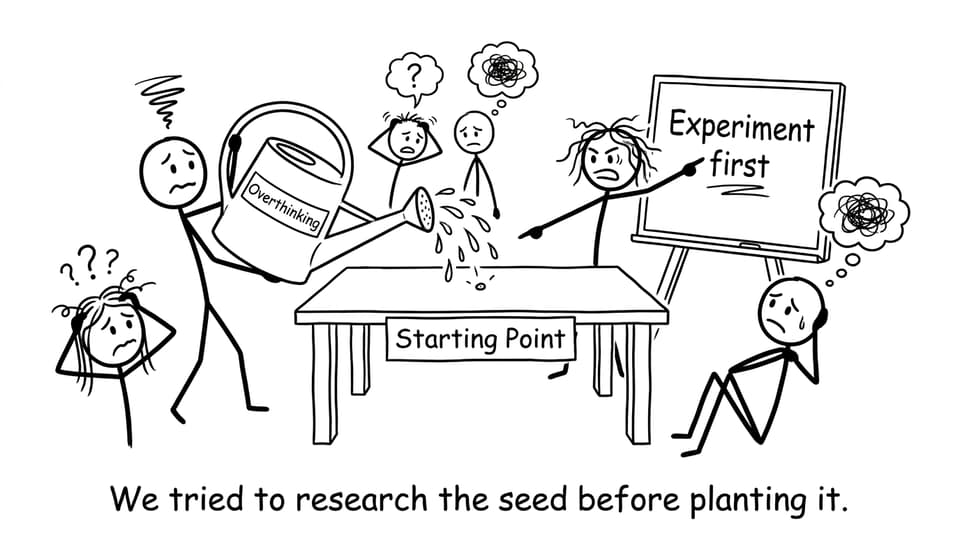
In IB Theatre, the Collaborative Project rarely fails because students lack talent. It fails because the ensemble chooses a starting point that is either too vague to explore or too fixed to evolve. A strong starting point isn’t a “theme” you declare once and decorate forever. It’s a stimulus you can push, pull, test, and argue with until it starts giving you theatrical answers.
This guide shows how to use starting points effectively in the Collaborative Project, so your process stays creative, focused, and easy to document for examiners.
Quick checklist: a starting point that earns marks
Use this quick scan in your next rehearsal.
-
Can we turn the starting point into three practical experiments this week?
-
Do we all understand it the same way (or can we articulate the disagreement)?
-
Can we connect it to research (practitioners and/or world theatre traditions) without forcing it?
-
Are we collecting evidence as we go (photos, rehearsal notes, mini-reflections)?
-
Can we explain how the starting point changed our choices over time?
If you need the bigger structure of the assessment, pair this with Understanding the Collaborative Project in IB Theatre.
Why starting points matter in IB Theatre
A starting point is the first proof that your ensemble can think like theatre-makers.
In IB Theatre, examiners are drawn to groups that treat the starting point as an engine for experimentation. That means you don’t just pick something “deep.” You show what you did with it: how it generated rehearsal tasks, how it shaped audience impact, and how it evolved through feedback.
The most effective ensembles also document this clearly. If your reflections are fuzzy, your marks tend to be fuzzy too. For a documentation system that stays calm under deadline pressure, see How to Document Your Process in the Collaborative Project.
What counts as a strong starting point?
In IB Theatre, almost anything can be a starting point, but not everything becomes good theatre. A strong starting point has two qualities: it creates action, and it invites interpretation.
Starting points that usually work well
-
An image with tension (contradictions, status, isolation, ritual, repetition)
-
A short text (poem, testimony, news fragment) with a clear voice or conflict
-
Sound that suggests rhythm, disruption, or atmosphere
-
A convention from a world theatre tradition that you can test physically
-
A social issue framed as a question, not a slogan
If your group is still deciding which tradition to anchor research in, build confidence with How to Apply Physical Exploration in World Theatre Studies.
Starting points that look good but collapse later
-
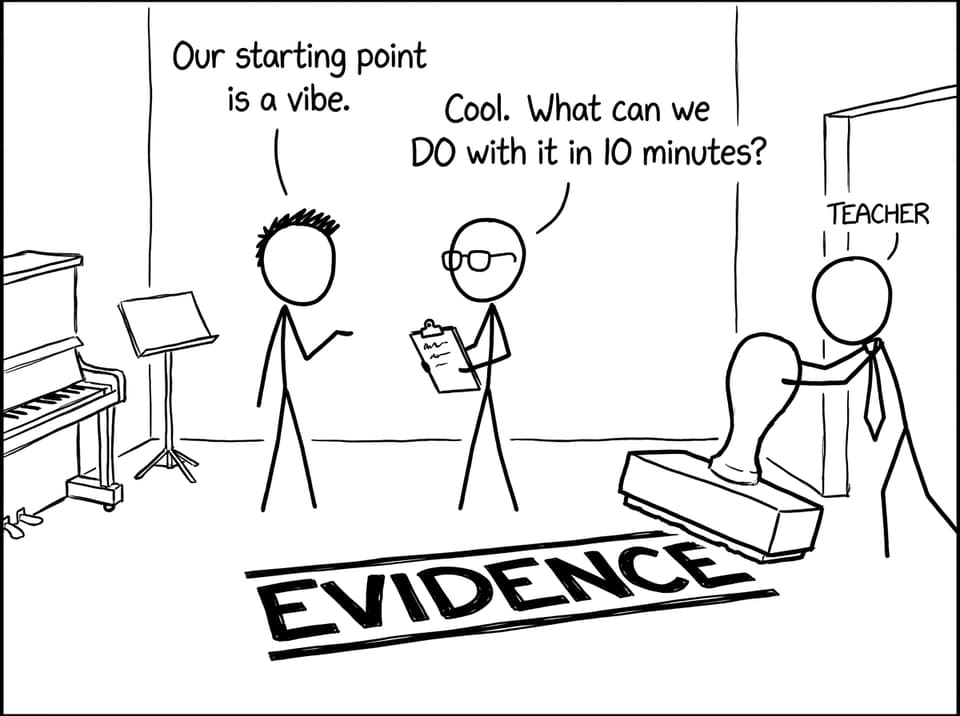
“A vibe” with no playable actions
-
A topic so broad you can’t make clear choices (for example, “identity” with no angle)
-
An idea one person loves and everyone else politely follows
How to explore starting points effectively (a rehearsal method)
The simplest way to improve your IB Theatre Collaborative Project is to stop asking, “Is this a good idea?” and start asking, “What does this starting point produce in the room?”
Run three fast experiments before you commit
Give yourselves one rehearsal where the only goal is testing.
Experiment 1: Physical translation (10 minutes)
Turn the starting point into movement rules: tempo shifts, levels, proximity, repetition, stillness. Don’t explain it. Just do it.
Experiment 2: Space and status (10 minutes)
Stage the starting point as a relationship: who holds power, who watches, who interrupts, who is excluded.
Experiment 3: Sound and rhythm (10 minutes)
Add a simple sound score. Even a repeated clap pattern can reveal structure and tension.
After each experiment, do a 3-minute debrief: what changed, what felt alive, what confused the audience (in a useful way)? Then write it down using a reflection structure like the one in How to Reflect on the Collaborative Project for Maximum Marks.
Connecting starting points to research without making it fake
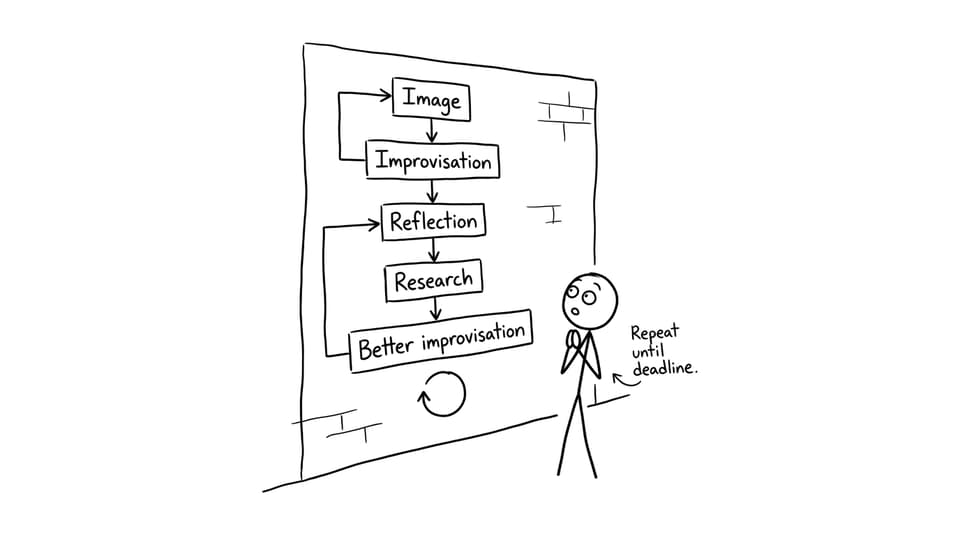
In IB Theatre, research should not arrive like a late apology. It should function like a tool.
A practical approach:
Choose a research lens, then test it
Pick one practitioner principle or one world theatre convention and run a rehearsal task that proves you understand it physically.
Example moves (adapt them):
-
If your starting point involves social tension, test distancing techniques and audience address.
-
If your starting point feels ritualistic, explore codified gesture, rhythm, and spatial patterns.
If you want a clean way to organize research so it stays usable in rehearsals, use Best Ways to Organize Your Research for the IB Theatre Research Presentation as a model.
Common mistakes (and the fixes that actually work)
These are the traps that show up again and again in IB Theatre Collaborative Project write-ups.
Mistake: Picking a starting point and locking it
Fix: Treat the starting point like a hypothesis. Your reflections should show revisions, not certainty.
Mistake: Research that stays theoretical
Fix: Every research note should point to a rehearsal task: “We will test X by changing Y.”
Mistake: No evidence trail
Fix: Build a routine: photo + 4 sentences after each session. RevisionDojo’s Flashcards are perfect for turning repeating reflection phrases (intention, impact, evaluation) into a quick writing habit.
For more pitfalls you can avoid early, see Common Mistakes in the Collaborative Project and How to Fix Them.
Conclusion: treat the starting point like a living thing
A starting point in IB Theatre isn’t your final message. It’s the first question you ask as an ensemble.
If you brainstorm widely, test physically, connect research to rehearsal tasks, and reflect with honesty, your starting point becomes a trail of evidence: intention, experimentation, discovery, refinement. That’s what examiners reward.
When you want that process to feel organized instead of chaotic, RevisionDojo gives you the full system: a Questionbank for key terminology, Study Notes for quick research foundations, Flashcards to build reflection language, AI Chat to troubleshoot ideas, Predicted Papers and Mock Exams to stay exam-ready, and a Coursework Library plus Tutors when you need expert guidance. For a wider workflow you can run weekly, keep Best Study Strategies for IB Theatre Students (SL & HL) bookmarked.