
Academic integrity sounds like a rule until the day you need it.
Picture this: it’s late, your IB deadline is tomorrow, and you’re staring at a paragraph that refuses to become “yours.” A friend offers to share their draft. An AI tool offers to generate one. The shortcut feels small, almost harmless. But that moment is doing something bigger than saving time; it’s teaching you what kind of person you become under pressure.
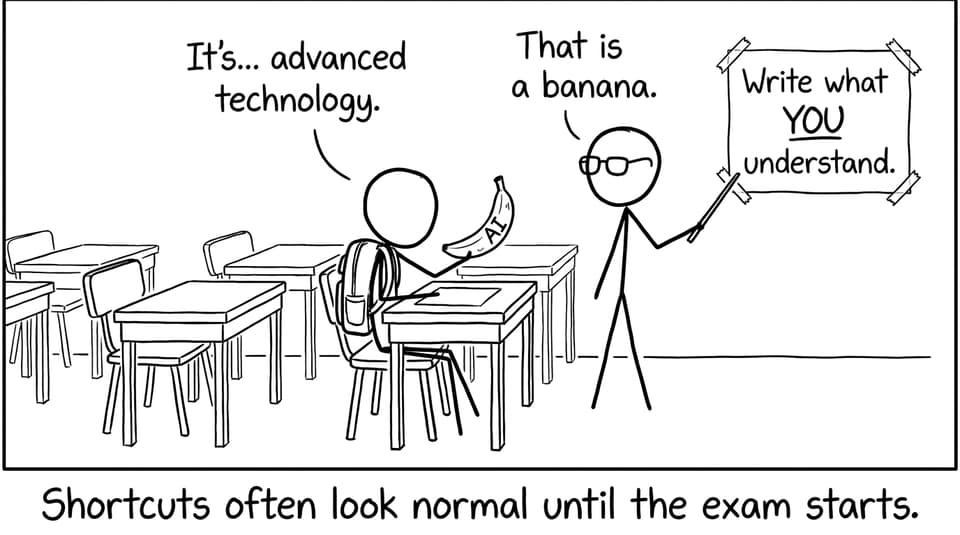
In the IB, academic integrity is not just “don’t cheat.” It’s a practical training ground for trust: trust in your work, trust from teachers, and trust from universities who rely on IB grades to mean what they say. And when exams arrive, integrity stops being a moral idea and becomes a performance advantage: you can only reproduce what you actually understand.
The IB academic integrity checklist (use this before every submission)
Keep this as a fast self-audit. It’s simple on purpose, because in the IB, most integrity mistakes happen when you’re tired, rushed, and trying to “just finish.”
-
Can I explain how I produced every key idea, step, and paragraph in my own words?
-
Did I track sources as I researched (not afterwards)?
-
Are quotations clearly marked, and are citations complete?
-
Did collaboration stay within the rules (discuss ideas, write separately)?
-
Did I use AI? If yes, am I being transparent and making sure the final work is genuinely mine?
-
Does my work sound like me, including my thinking, my structure, and my voice?
If you want a deeper breakdown of what misconduct looks like in real student situations, read IB Academic Misconduct Explained: How to Avoid Plagiarism and Collusion.
What academic integrity really means in the IB
The IB’s strongest students aren’t the ones who never feel tempted. They’re the ones who build a system that makes temptation less likely.
Academic integrity in the IB is best understood as three habits:
Ownership
You are responsible for what you submit. That includes what you copied, what you paraphrased, what you “borrowed,” and what you let an algorithm write. Ownership also means you can defend your work in conversation. If you can’t explain it, you don’t own it.
Transparency
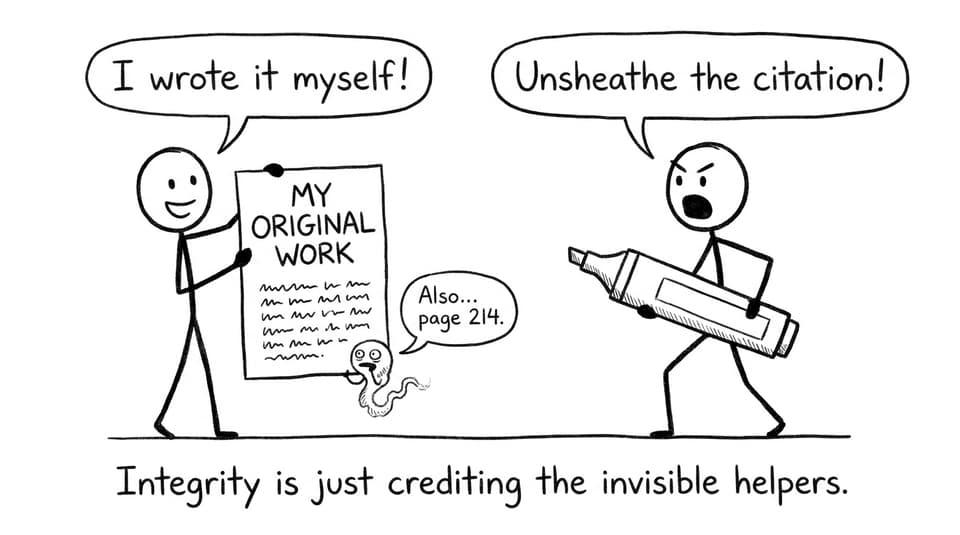
Transparency is boring, which is why it works. You keep a source trail. You show where ideas came from. You make it easy for someone else to verify your process. That habit is what university research expects by default.
Fairness
The IB is built on comparable assessment. If one student gets marks through shortcuts, the whole system becomes less meaningful. Fairness is not abstract; it’s what keeps your diploma trusted.
For a teacher-side view that still helps students, Teaching Academic Integrity as a Habit of Mind explains why integrity is more effective as culture than as fear.
Academic integrity and the IB Learner Profile (it’s more connected than it looks)
Most IB students can list Learner Profile traits. Fewer notice that integrity is the glue between them.
-
Principled becomes real when you cite what shaped your thinking.
-
Reflective becomes practical when you can name what you did, why you did it, and what you’d change next time.
-
Communicators gain credibility when their words are truly theirs.
In other words: integrity is not an extra task beside your IB work. It is the way your IB work becomes believable.
Why the IB cares so much (and why you should, too)
The IB has global credibility because universities can trust that an IB grade represents a student’s ability.
Integrity protects three things at once:
-
Your results: marks should reflect your skills, not your access to shortcuts.
-
Your school: patterns of misconduct can damage trust in an entire cohort.
-
The IB itself: a qualification only matters if people believe it measures something real.
And there’s a quieter reason: the IB is preparing you to enter communities (university departments, labs, workplaces) where trust is the default currency. When trust breaks, opportunities shrink.
The long game: how IB integrity becomes university readiness
University is less forgiving not because professors are harsher, but because independence is assumed.
If you practice integrity in the IB, you walk into university already fluent in:
-
Citation and academic writing norms (which turns research from panic into process)
-
Time management (because shortcuts often start as scheduling failures)
-
Defending your thinking in tutorials, vivas, and seminars
-
Building a reputation for reliability, and that reputation leads to references, research roles, and mentorship
A good place to see how this independence is built inside the IB is the Extended Essay journey. If yours still feels overwhelming, Mastering IB Extended Essays: How to Research, Write, and Revise is a calm, step-by-step path.
Common integrity traps IB students fall into (even good students)
Integrity issues rarely start with “I want to cheat.” They start with “I don’t have time.”
Accidental plagiarism
You read ten sources, take messy notes, then later can’t remember which phrasing came from where. This is why source logging early matters.
Collusion disguised as teamwork
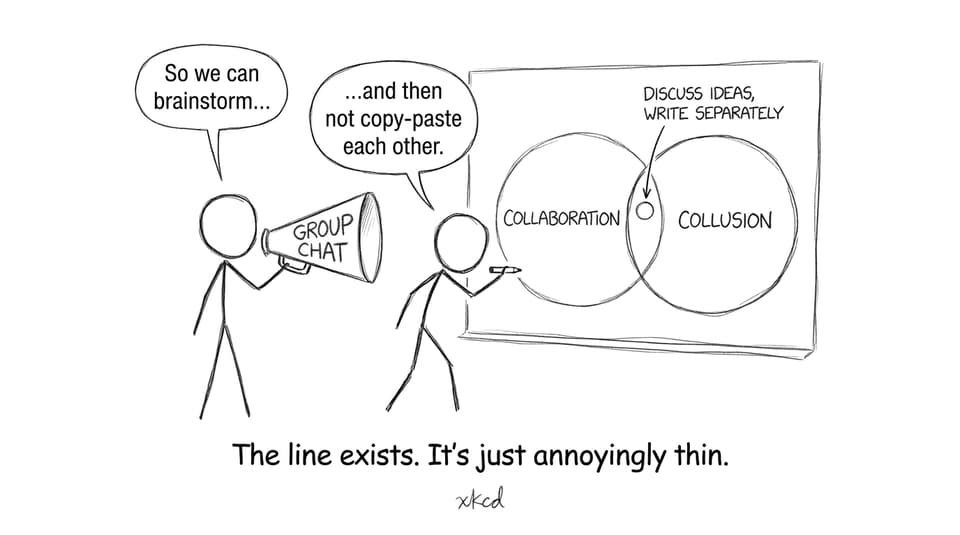
Discussing ideas is often allowed. Submitting shared language, shared structure, or shared analysis often is not. When in doubt: collaborate in conversation, separate in writing.
AI misuse
Using AI to explain a concept, quiz you, or help plan revision can support learning. Using AI to produce assessed writing that you submit as “your work” breaks the basic IB expectation of authenticity. The safest rule: AI can be your coach, not your ghostwriter.
Self-plagiarism
Reusing your own previous work can still be a problem if it violates submission rules or presents old material as new. Ask before you recycle.
How to build an IB study routine that makes integrity easy
The best integrity strategy is to make honest work the path of least resistance.
Here is a simple workflow that many IB students use on RevisionDojo:
Learn cleanly (so you don’t need to borrow)
Use Study Notes to get the idea straight, then write a 3-sentence explanation from memory. If you can’t, you don’t understand it yet.
Practice honestly under pressure
Do targeted drills in the Questionbank and then run timed sets so you can prove what you know. That “prove it” mindset is what the IB rewards on exam day.
Lock in memory with daily recall
Flashcards are integrity-friendly because they build your own retrieval strength. No one can take a timed exam for you, and flashcards are how you prepare for that reality.
Get feedback without copying
Use AI Chat to diagnose confusion, not to generate finished responses. For coursework, use Grading tools to see what criteria reward and where your draft is thin. If you need a human second opinion, Tutors help you improve your thinking without replacing it.
If you want a full routine, You’re Not Lazy: Your IB Study Method Is Broken lays out a repeatable system that reduces last-minute panic (which is where integrity usually collapses).
How RevisionDojo supports academic integrity (without making you feel policed)
The best IB platforms don’t just warn you about rules. They design your habits.
RevisionDojo is built around learning that holds up under exam conditions:
-
Questionbank practice that forces genuine understanding
-
Study Notes that clarify concepts quickly so you can write in your own words
-
Flashcards that make recall automatic
-
AI Chat that helps you unblock confusion fast (without outsourcing your thinking)
-
Grading tools that show you how to improve your own draft, criterion by criterion
-
Predicted Papers and Mock Exams that let you rehearse honestly under time pressure
-
Coursework Library that shows what good structure looks like, so you can build your own
-
Tutors when you need a real person to challenge your reasoning
For an integrity-specific guide to using the platform responsibly, see How RevisionDojo Helps You Maintain Academic Integrity While Studying.
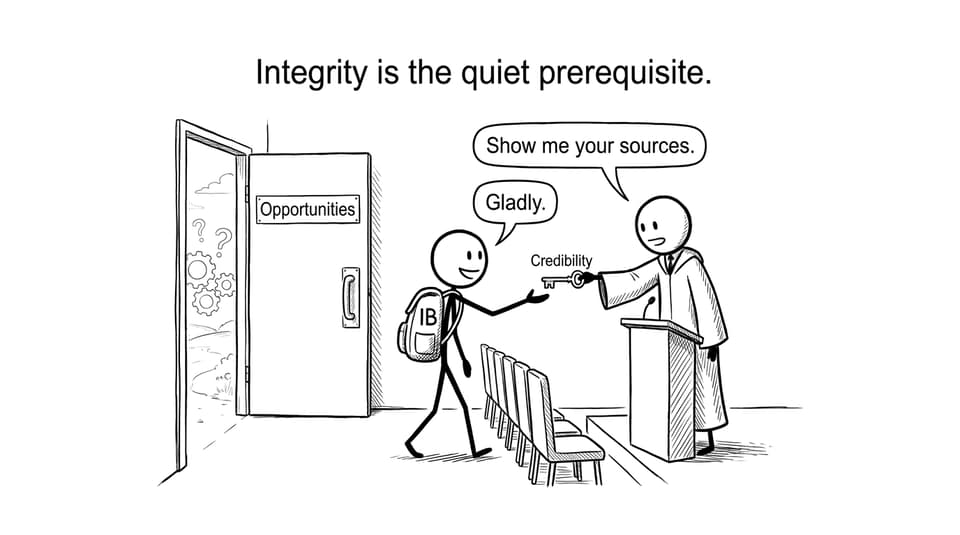
Closing: the IB is teaching you something bigger than content
In the IB, academic integrity can feel like a set of constraints. But it’s really a design choice about your future: do you want your success to be something you can repeat, in any room, under any pressure?
Choose integrity because it protects your diploma. Choose integrity because it makes your study more effective. Choose integrity because university and life both run on credibility.
If you want an IB routine that makes honest learning simpler, start with RevisionDojo: build understanding with Study Notes, train with the Questionbank, reinforce with Flashcards, practise with Predicted Papers and Mock Exams, and use AI Chat, Grading tools, the Coursework Library, and Tutors to improve without shortcuts.