


In the middle of a rehearsal, you try something brave. A sudden stillness. A line delivered too early. A chair moved to the “wrong” place.
It works. For a second, the room changes.
Then the quieter panic arrives: How do I explain this in academic language? In IB Theatre, that moment matters twice. First as art. Then as evidence.
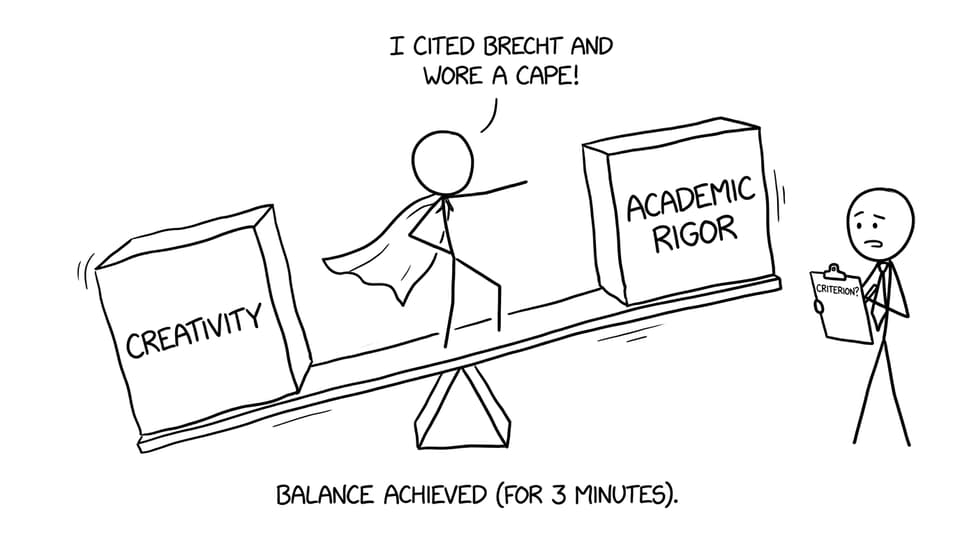
This is the hidden challenge of IB Theatre: you are graded for imagination, but you earn the top marks by showing that your imagination is intentional, researched, tested, and reflected on. The good news is that creativity and academic rigor aren’t rivals. They’re scene partners. When you give each one a job, your work becomes both freer and sharper.
Quick balance checklist for IB Theatre
Use this as a weekly reset when your work starts drifting too far into “pure vibes” or “pure essay.”
-
Write a one-sentence artistic intention before rehearsal.
-
Anchor each major choice to one practitioner, style, or world theatre tradition.
-
Record tests, not just outcomes (what you tried, what changed, what you learned).
-
Add audience impact notes after every run.
-
End each week with a short “so what?” reflection tied to criteria language.
If you need a bigger course map to keep everything aligned, revisit Dive into the World of IB Theatre: An In-Depth Syllabus Overview.
Why this balance is the core skill in IB Theatre
Most students don’t lose marks in IB Theatre because they lack talent. They lose marks because their evidence doesn’t match their ambition.
Examiners reward work that shows:
-
Creative clarity: a coherent theatrical vision, not random experimentation.
-
Theoretical grounding: practitioner ideas and context shaping choices.
-
Process intelligence: you test, adapt, and can explain why.
-
Critical reflection: honest evaluation, not a highlight reel.
If you’re aiming for the top band, the standards are spelled out clearly in How to Score a Level 7 in IB Theatre: Complete Guide.
Start with research that triggers rehearsal, not research that delays it
A common trap in IB Theatre is treating research like permission. You keep reading until you feel “ready,” and the practical work becomes rushed.
Try a better loop:
Choose one “research engine” per week
Pick one practitioner concept or convention that generates action. For example:
-
Brecht: alienation techniques you can test in staging and address.
-
Grotowski: constraints that make you inventive with space and objects.
-
A world theatre tradition: a physical convention you can embody.
Turn research into a rehearsal experiment within 24 hours
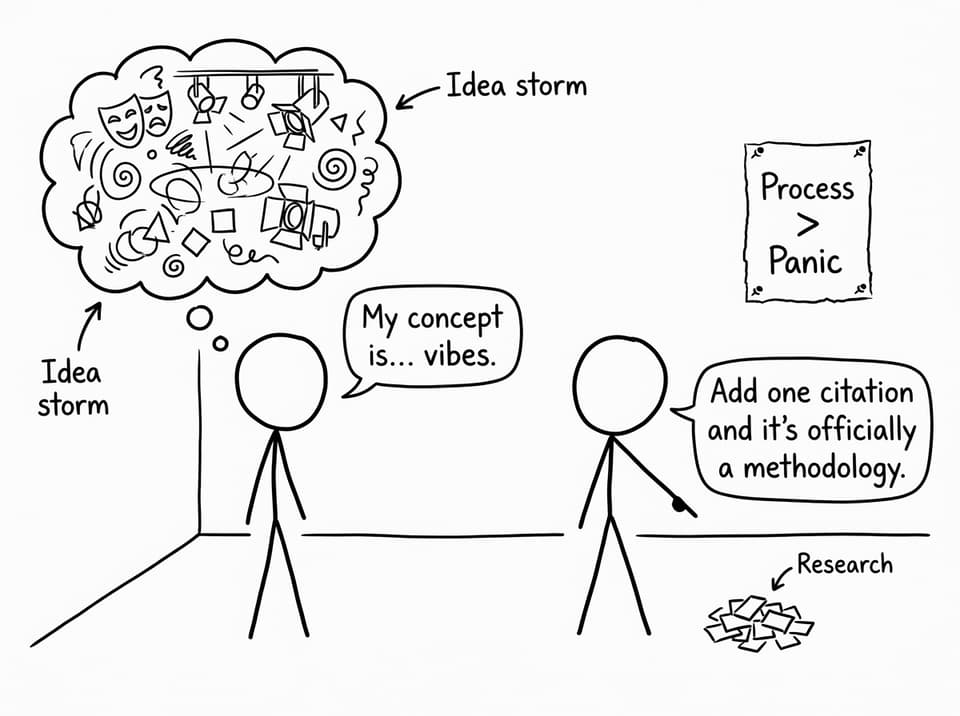
Write one question that forces practice: What happens if we remove emotional realism from this scene and foreground social commentary? Then rehearse it.
If your research presentation notes feel messy, use Best Ways to Organize Your Research for the IB Theatre Research Presentation to structure your material so it stays usable.
Document like a theatre-maker, reflect like an examiner
Your portfolio work in IB Theatre is not a diary. It’s an argument: my choices were deliberate, tested, and meaningful.
Use a simple 4-part reflection template after each session:
-
Intention: What were you trying to communicate?
-
Action: What did you specifically do (blocking, design, vocal choice, structure)?
-
Evidence: What changed in the room (energy, clarity, ensemble timing, audience read)?
-
Next step: What will you keep, cut, or refine, and why?
This keeps your writing analytical without strangling your creativity. It also prevents the classic “we rehearsed and it went well” problem.
To strengthen the physical side of your evidence, revisit How to Apply Physical Exploration in World Theatre Studies. It’s one of the fastest ways to turn theory into something examiners can see.
Use theory as a lens, not a cage
Academic rigor in IB Theatre does not mean imitation. It means adaptation with reasoning.
A useful line to include in your process writing is:
“Inspired by X, I adapted Y to suit our context by changing Z.”
That sentence signals three things at once: knowledge, creativity, and independence.
If you’re unsure whether your work is “academic enough,” check your expectations against Is It Hard to Get a 7 in IB Theatre? An Honest Look. It’s a good reality check without killing momentum.
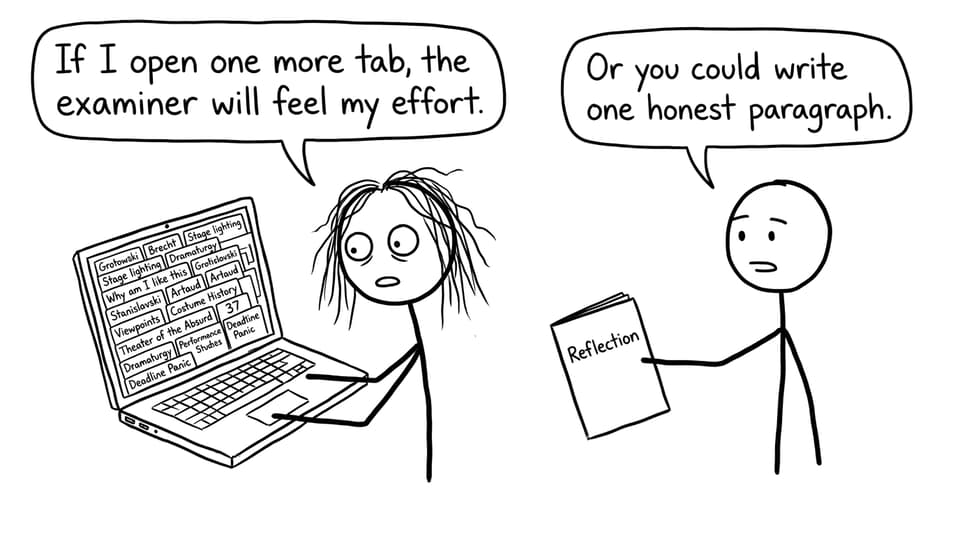
A RevisionDojo workflow that keeps IB Theatre balanced
When exam season approaches, IB Theatre can feel hard to “revise” because so much of it lives in process. The fix is to revise the thinking habits, not just content.
RevisionDojo is built for that kind of loop:
-
Use Study Notes to tighten practitioner knowledge and theatre vocabulary.
-
Use AI Chat when you need quick clarification on a concept or a reflection angle.
-
Use Grading tools like the IB Theatre EE Grader to translate criteria into actionable edits.
-
Use the Coursework Library and Tutors when you need deeper feedback on clarity, structure, and justification.
And when you want ongoing subject-specific guidance, browse all IB Theatre posts and plug the best ideas into your own routine.
Closing: make your creativity provable
The best IB Theatre work feels alive because it’s built twice: once in instinct, and once in reflection. When you research in order to rehearse, document in order to improve, and write in order to clarify meaning, academic rigor stops being a burden. It becomes the spotlight that helps the examiner see what you were doing all along.
If you want a system that keeps creativity and criteria in the same room, use RevisionDojo to tighten your theory with Study Notes, test your understanding with guided feedback, and refine your submissions with AI Chat, Grading tools, the Coursework Library, and Tutors. Your artistry stays yours. Your evidence becomes undeniable.