


The number shows up like a pop quiz you never studied for.
Someone says, “The average IB score in 2025 was about 30,” and suddenly your brain starts doing maths it didn’t ask to do: If I’m at 28, am I failing? If I’m at 33, am I safe?
But the average isn’t a judge. It’s a weather report.
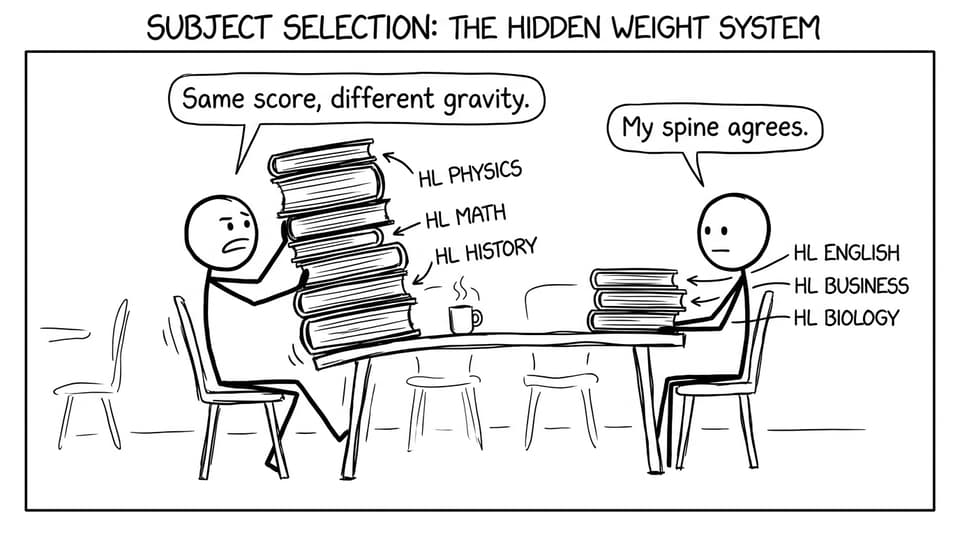
And if there’s one quiet truth that doesn’t get enough airtime in group chats, it’s this: Subject Selection shapes how “good” a score feels far more than the global average ever will. Your HL mix, your strengths, your language background, your school context, that’s the real story behind the number.
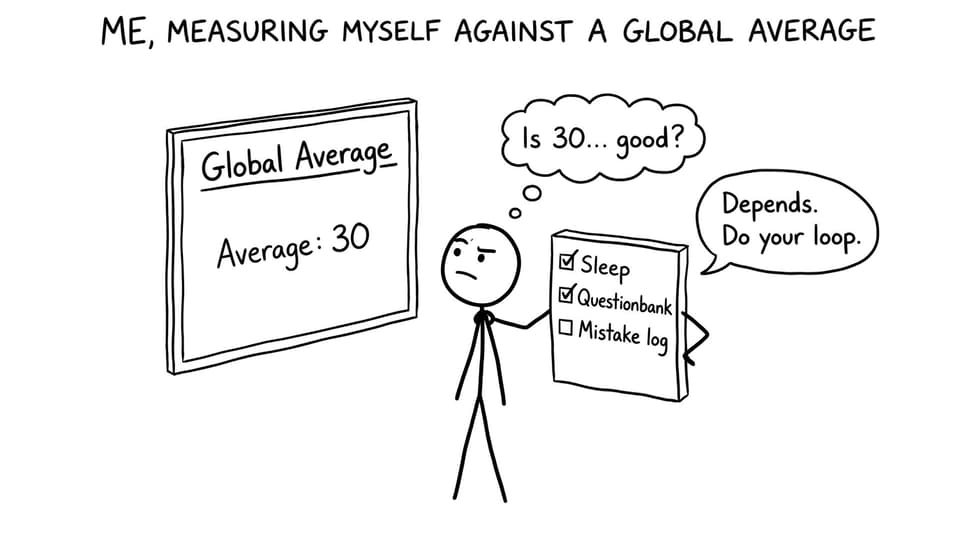
Quick checklist before you compare yourself to the average
Use this as a fast reset when the “30-point” statistic starts to mess with your head:
-
Know what the average IB score actually represents (and what it doesn’t)
-
Remember the May 2025 average was around 30 points globally
-
Factor in Subject Selection and HL load before judging any score
-
Compare yourself to your own trendline, not the world
-
Build a repeatable improvement loop: notes -> practice -> feedback -> retest
If you need a step-by-step structure, keep How to Study for IB Exams: Step-by-Step Guide bookmarked and boringly consistent.
What the average IB score really measures (and why it feels personal)
The average IB score is calculated by adding up total diploma points earned by all candidates and dividing by the number of candidates. That’s it.
It blends together:
-
students across many countries and school systems
-
every possible Subject Selection combination
-
different levels of resourcing and support
-
students sitting different languages and course histories
So the average is a wide snapshot, not a personal benchmark. It can tell you the programme is stable. It cannot tell you whether your 30 is heroic, disappointing, expected, or simply one stop on the way to 35.
A practical way to think about it: the “average” is what happens when you compress a huge, diverse world into a single line of text. Useful for headlines. Not great for self-esteem.
What was the average IB score in 2025?
In the May 2025 session, the global average IB score was around 30 points, broadly consistent with recent years.
That steadiness matters more than the exact decimal. It suggests the IB didn’t suddenly become “easier” or “impossible.” The diploma remained what it usually is: demanding, doable, and heavily dependent on preparation quality.
If you want to translate your practice marks into likely grades (instead of vibes), try the IB Grade Calculator. It’s a calmer way to plan than arguing with the concept of average.
Is 30 points actually “good”? It depends on Subject Selection
Students ask “Is 30 good?” because they want certainty. But “good” is contextual.
Here’s why Subject Selection changes the meaning of the same total score:
-
Different HL combinations create different workloads and different risk profiles
-
Some students are balancing heavy writing subjects; others are balancing heavy problem-solving subjects
-
Some subject combos demand constant coursework attention, which shifts revision time
A 30 earned with a punishing HL mix can reflect strong performance and resilience. A 30 earned with a lighter-fitting mix might still be perfectly fine, or might be below what you need for a specific university pathway.
If you’re still choosing your courses (or second-guessing them), start with The Complete IB Revision Guide: From Subject Selection to Final Exams and sanity-check your plan.
A simple “good score” framework that beats the average
Instead of “above average,” use three questions:
-
Requirement: What score do I need for my next step (university, scholarship, pass conditions)?
-
Trajectory: Am I trending upward in each subject, or flatlining?
-
Efficiency: Are my study hours turning into marks, or into anxiety?
That last question is where tools matter. RevisionDojo is built to make effort convert into evidence: Study Notes for fast clarity, Flashcards for daily recall, and the Questionbank for exam-style repetition with feedback.
To begin that practice loop, use the Questionbank feature page and build sets by topic, not by panic.
Why comparing yourself to the average is usually misleading
Comparison feels objective. It isn’t.
When you compare your score to the global average, you’re quietly pretending these variables don’t exist:
-
language fluency differences
-
school support differences
-
tutoring access differences
-
Subject Selection differences (especially at HL)
This is why the same number can be “good” in one student’s story and “not enough” in another’s.
If you want a healthier comparison, compare yourself to the marking logic, not to strangers. Read How IB Exams Are Marked (Use It to Your Advantage) and you’ll start seeing points as something you can build deliberately.
What matters more than the 2025 average: your feedback loop
Most students don’t lack intelligence. They lack a loop.
A reliable IB loop looks like this:
-
Learn one idea quickly with Study Notes
-
Lock it in with Flashcards (spaced repetition, not last-minute rereading)
-
Apply it with the IB Question Bank: How to Use It Effectively
-
Pressure-test timing with IB Predicted Papers by IB Examiners (Free) and Mock Exams
-
Get targeted help when you’re stuck using AI Chat, or go deeper with Tutors
And when coursework anxiety steals focus, it helps to have guardrails: RevisionDojo’s Grading tools and Coursework Library keep your drafts and criteria from becoming a background hum of stress.
If you want to tighten your answers for marks quickly, use Structure IB Answers to Maximize Marks.
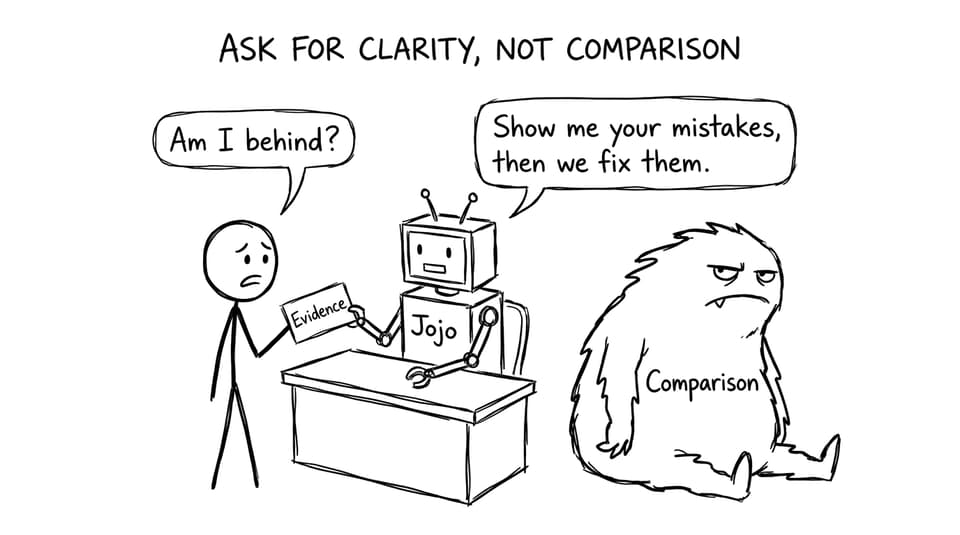
Conclusion: the average is a number, Subject Selection is a strategy
The average IB score in 2025 (around 30) is not a verdict on your future. It’s a summary of a massive, diverse cohort. What decides whether a score is “good” is your context: your goals, your trendline, and especially your Subject Selection.
So keep the average in the background where it belongs. Bring your process to the foreground.
If you want that process in one place, RevisionDojo is built for it: Study Notes, Flashcards, AI Chat, Questionbank, Grading tools, Predicted Papers, Mock Exams, a Coursework Library, and Tutors, all designed to turn uncertainty into a clear next step.