



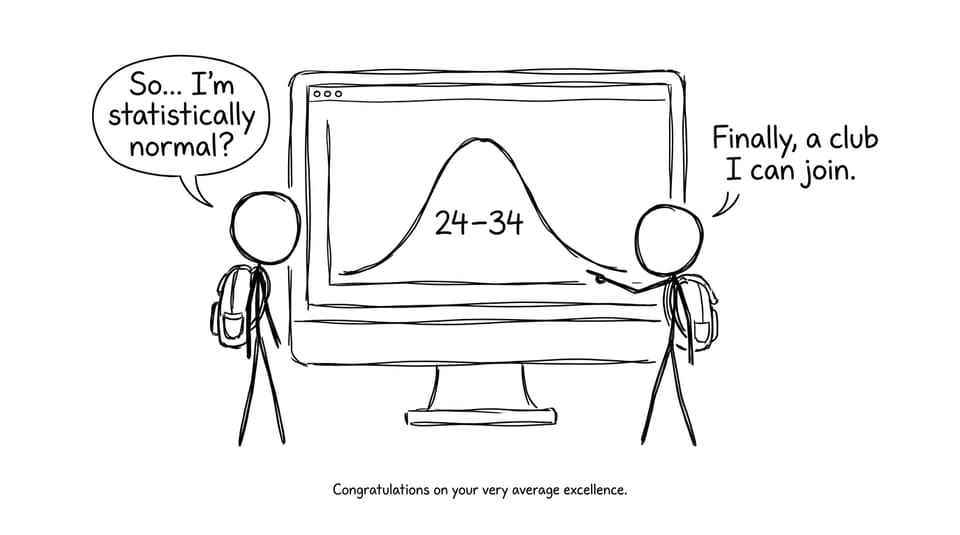
Most people don’t panic when they see a bell curve in a textbook.
They panic when they realize they’re living inside one.
On results day, the internet makes it feel like everyone is either celebrating a 40+ or quietly disappearing. But most IB students land in the 24-34 range. That’s not a secret category of “almost good.” It’s the most common outcome of a program designed to be broad, demanding, and consistent over two years.
And here’s the part that matters for your stress levels and your next steps: Subject Selection is one of the biggest reasons that range feels so crowded. Not because you “chose wrong,” but because the workload is real and the trade-offs are inevitable.
Quick reality checklist (read this before you spiral)
-
The IB is built to separate levels of mastery, not hand out top scores.
-
Six subjects mean six different grading stories happening at once.
-
Core points (TOK + EE) can only add up to 3, so they rarely “save” a total.
-
Your final score reflects Subject Selection + consistency + exam technique, not intelligence.
-
Small upgrades across multiple subjects compound faster than one heroic leap.
If you want a simple map of how the diploma is structured (and why it feels like juggling), start with How Many Subjects Do You Take in the IB?.
The IB is designed to produce a middle-heavy spread
The IB doesn’t work like a class where everyone can get an A if the teacher is generous.
It works like a global assessment system. Every subject is scored 1-7, and you take six of them. So even if you’re strong overall, you’re still exposed to variance: a tough paper, a confusing prompt, a topic you didn’t revise deeply enough, a weaker Internal Assessment, a bad day.
Add Higher Level difficulty, different assessment styles (essays vs data response vs problem-solving), and the fact that the core contributes only a few points, and you get the natural outcome: most totals cluster in the middle.
This is why 24-34 is not “average effort.” It’s the center of a hard system.
For a bigger overview that connects Subject Selection to revision strategy, see The Complete IB Revision Guide: From Subject Selection to Final Exams.
What 24-34 points actually says about your performance
A score in this band usually means something quietly impressive: you met a sustained challenge across subjects that don’t even reward the same skills.
In practical terms, many students in the 24-34 range have a profile like this:
-
A couple of subjects sitting at 5-6
-
One or two subjects that stayed stubbornly at 3-4
-
Core points that are 0-2 (common)
That’s not failure. That’s a realistic snapshot of a student balancing content load, deadlines, and exam technique.
It also means improvement is often closer than it feels. Moving one subject from a 4 to a 5 is “just” one point, but it can represent a repeatable shift: clearer structure, fewer command term mistakes, better timing.
Why the middle feels worse than it is
The middle range triggers disappointment for a psychological reason: we compare vertically, not widely.
You see the outliers because they’re loud. Schools promote their highest totals. Social media posts the extremes. And within a small cohort, the difference between a 30 and a 38 can look like a difference in talent, when it’s often a difference in Subject Selection, exam familiarity, and error correction.
A quieter truth: many 40+ scorers aren’t “built different.” They simply remove uncertainty earlier. They learn what top answers look like. They practice under time. They close loopholes.
RevisionDojo is essentially a tool for removing that uncertainty: targeted practice in the Questionbank, memory support via Flashcards, and realistic rehearsal through IB Predicted Papers.
Subject Selection: the invisible weight behind the score
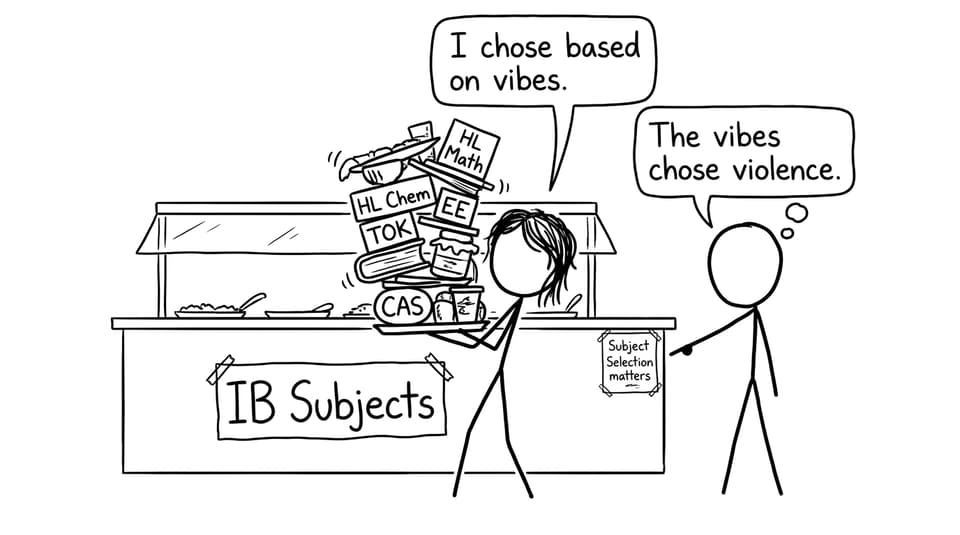
Two students can work equally hard and land at different totals because their Subject Selection creates different weekly costs.
Some combinations tax time in sneaky ways:
-
HL subjects that demand constant problem practice
-
Essay-heavy mixes that require sustained writing stamina
-
Languages that punish “almost” accuracy
-
A math level mismatch that turns revision into translation
None of this means you shouldn’t choose ambitious subjects. It means you should interpret your score with context.
If you’re still choosing (or advising someone who is), the most calming question isn’t “What’s easiest?” It’s: What can I stay consistent with for 18 months?
Helpful starting points:
-
Which Subjects Should I Take at IB if I Don’t Know What to Do in University Yet
-
Most Popular IB Subjects in 2025: What Students Are Choosing
Stop chasing extremes. Start stacking points.
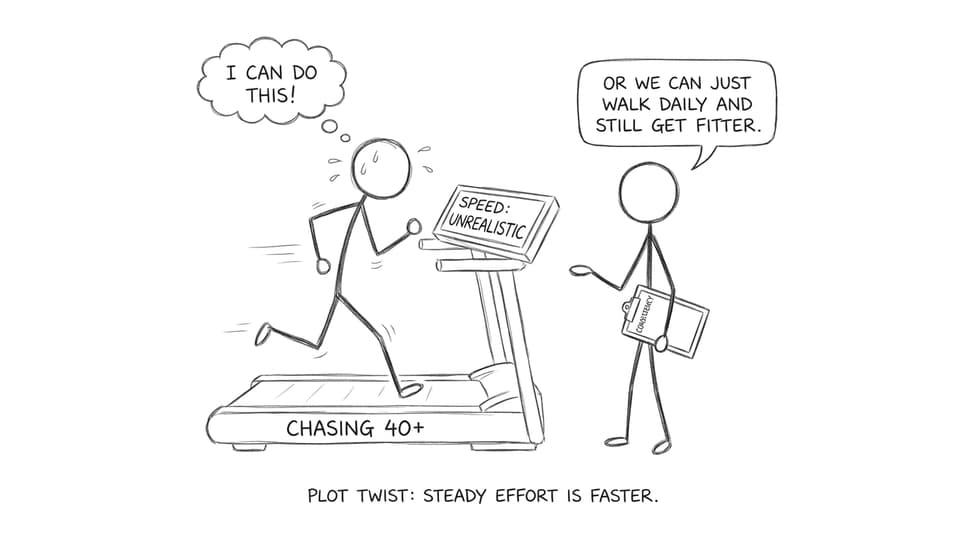
The funniest trap in the diploma is the “single big jump” fantasy.
A student decides they need a 40+, so they pour all energy into their best subject because it feels rewarding. Meanwhile, the weakest subject keeps leaking marks: terminology, structure, timing, small factual gaps.
But IB totals don’t care about pride. They reward coverage.
A better approach is boring in the best way:
-
Fix the most common mistakes first
-
Lift the lowest subject by one grade boundary
-
Turn core work into predictable points, not last-minute hope
If you need a sustainable routine, use How to Study for IB Exams Without Burning Out. If you want an all-in-one workflow, RevisionDojo App: The Smarter Way to Prep for IB Exams shows how Notes, Flashcards, Questionbank, AI Chat, and Mock Exams fit together.
How RevisionDojo helps you rise within the 24-34 band
Students in the middle usually don’t need motivation. They need a tighter feedback loop.
RevisionDojo is built for that loop:
-
Study Notes to reduce confusion fast and stop rewriting textbooks
-
Flashcards for daily recall when time is limited
-
Questionbank practice with instant feedback to train mark-winning habits
-
AI Chat when you’re stuck and don’t have an hour to lose
-
Predicted Papers and Mock Exams to rehearse timing and pressure
-
Grading tools and the IB Coursework Grader when written work is the bottleneck
-
The Coursework Library and Tutors when you need examples and human-level strategy
That combination matters because a 2-point gain rarely comes from “studying more.” It usually comes from studying with less guesswork.
Closing: let “normal” be your foundation, not your ceiling
Most IB students score between 24 and 34 because that’s what happens when a hard program meets real life: six subjects, limited time, and a grading system built to distinguish mastery.
But “normal” doesn’t mean “stuck.” With smarter Subject Selection decisions (when you still can) and better feedback loops (when exams are close), the middle range becomes a launchpad.
If you want that launchpad to feel structured, not chaotic, build your plan inside RevisionDojo: learn with Study Notes, remember with Flashcards, prove it with the Questionbank, rehearse with Predicted Papers and Mock Exams, and use AI Chat, Grading tools, the Coursework Library, and Tutors when you need support that actually changes your next attempt.