



There’s a moment every IB student recognizes: you open a paper, you understand the topic, you even know the vocabulary… and then your mind quietly asks, But what do they want from me, exactly? That moment is common in IB Languages, and it’s why German Ab Initio Paper 2 preparation needs more than “study harder.” It needs a repeatable system.
This 2025 guide is built for that system. You’ll learn what Paper 2 is actually testing, how the marking logic works, and how to practise in a way that turns confusion into predictable points. Along the way, you’ll see where RevisionDojo’s tools (Questionbank, Study Notes, Flashcards, AI Chat, Grading tools, Predicted Papers, Mock Exams, Coursework Library, Tutors) fit naturally into your weekly routine.
Quick checklist for Paper 2 preparation (the calm version)
If you’re short on time, use this as your weekly compass. It works across IB Languages, but it’s tuned for German Ab Initio.
-
Understand the Paper 2 structure and timing
-
Learn the rubric language (what earns marks, what loses them)
-
Build a “text-type reflex” for common formats (so you don’t waste minutes deciding)
-
Create theme vocabulary banks you can actually use in sentences
-
Lock in a small set of high-control grammar patterns
-
Practise under time pressure early (not just the week before)
-
Get feedback and rewrite strategically (one paragraph, not the whole piece)
If you want a wider course overview first, start with What Is IB German Ab Initio? Complete 2025 Guide.
What German Ab Initio Paper 2 is (and what it isn’t)
Paper 2 is not a trap designed to reward perfect German. In IB Languages, especially at ab initio level, the exam is built to reward clear communication under constraints. That means:
-
You show you can understand a prompt and respond appropriately.
-
You show control of basic structures.
-
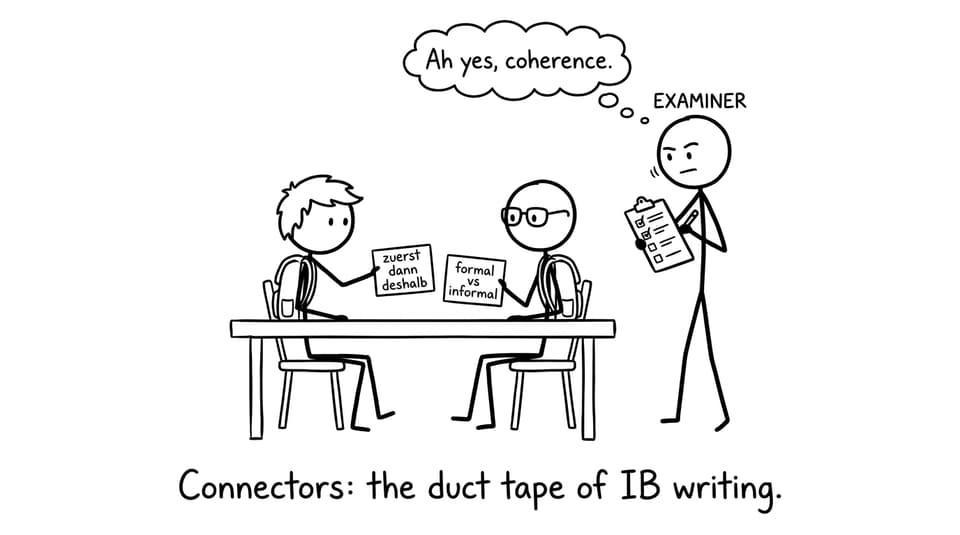
You show organization, coherence, and register (formal vs informal).
In the current assessment model, German Ab Initio includes writing, reading/listening, and the oral. For the full breakdown, see IB German Ab Initio Exam Format (2025 Guide).
Just as importantly, Paper 2 is not the place to gamble on advanced grammar you can’t control. One elegant, correct sentence beats three ambitious, broken ones.
The rubric mindset: how marks are really won
Most students lose marks in IB Languages for reasons that feel small in the moment: wrong register, missing a required point, unclear sequencing, or writing that “sounds German” only in their head.
A useful way to think about the rubric is to translate it into three questions you ask before you write:
-
Did I answer everything the task asked? (Message)
-
Does this sound like the correct text type for the audience? (Conceptual understanding/register)
-
Is my German accurate enough that the examiner never has to guess? (Language)
If you’re unsure which criteria your class is using or how they’re described, pair this article with What Assessment Criteria Are Used in IB German Ab Initio? (2025 Guide).
The Paper 2 practice loop that actually changes your score
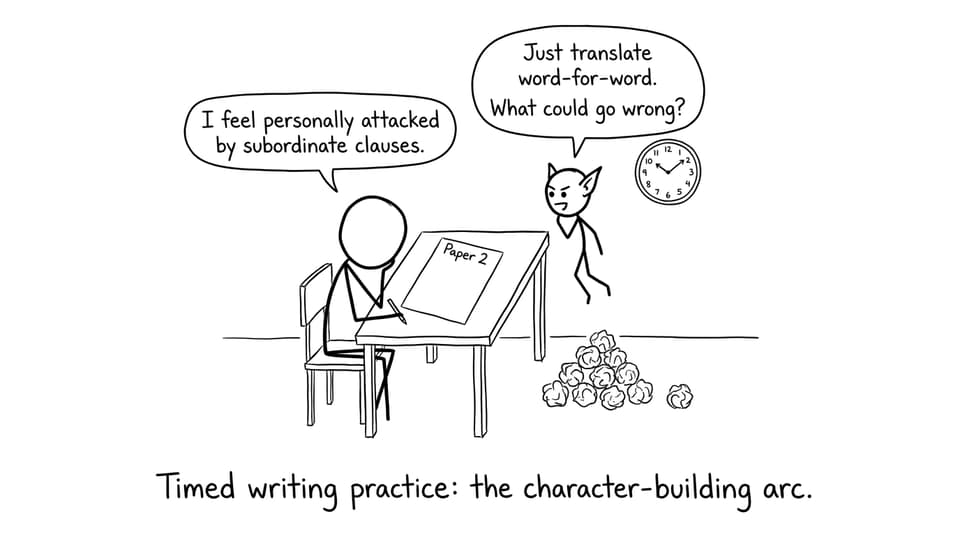
Here’s the story most students live: they write a practice response, get it back covered in corrections, feel bad for 48 hours, and then avoid writing again.
A better loop (the one RevisionDojo is designed for) is smaller, faster, and kinder:
Draft smaller, mark faster, repeat sooner
-
Write one timed response (or even 20 minutes of it).
-
Mark it against the criteria (not against your self-esteem).
-
Pick 3 repeatable fixes, like:
-
“I will include audience signals in the first two lines.”
-
“I will use 6 connectors.”
-
“I will write 3 subordinate clauses correctly.”
-
-
Rewrite only one paragraph implementing those fixes.
-
Retake another prompt within 72 hours.
This is exactly where RevisionDojo’s workflow shines: Study Notes for clarity, Flashcards for recall, Questionbank for targeted drills, AI Chat for quick explanations, and Grading tools for structured feedback.
To set up your general RevisionDojo routine, bookmark RevisionDojo for IB.
Text types: the easiest marks in IB Languages
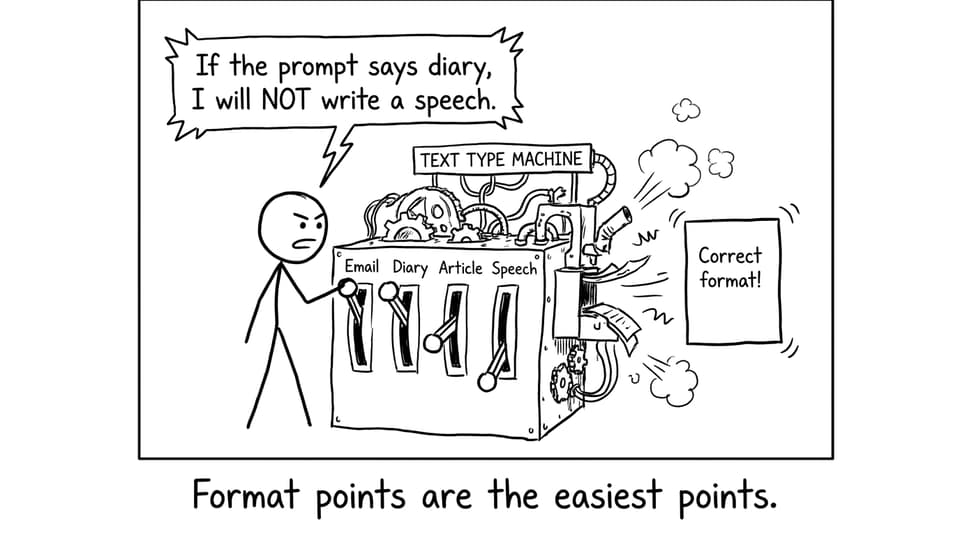
One of the most reliable ways to gain marks in IB Languages is to make the examiner instantly recognize your format. When the text type is obvious, everything else becomes easier: tone, structure, and vocabulary choices fall into place.
Build a one-page “format template” for the most common text types:
Email / letter (informal)
-
Greeting to a friend
-
2-3 short body paragraphs
-
Friendly closing
-
Simple, personal tone
Formal letter / request
-
Proper greeting (more formal)
-
Clear purpose in the first lines
-
Polite requests and modal verbs
-
Formal closing
Blog / diary
-
A date/title line can help
-
A personal voice
-
Reflection and opinion phrases
If you want to strengthen your writing fundamentals alongside Paper 2, see How Can I Prepare for IB German Ab Initio Paper 1? (2025 Guide). The text-type habits carry over.
Vocabulary that moves the needle (theme-based, sentence-ready)
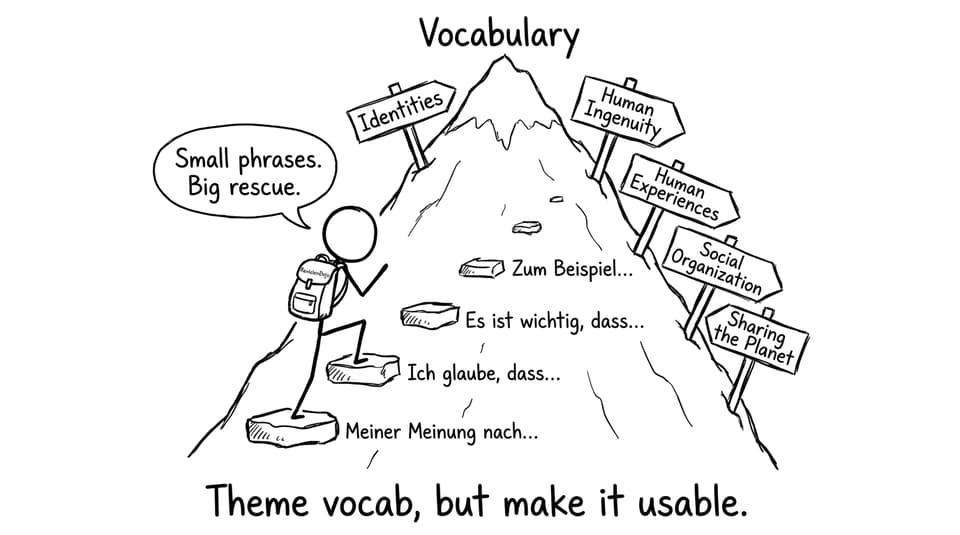
The IB themes are not decoration. In IB Languages, they’re the map examiners use to choose contexts and prompts. Your vocabulary should follow that map.
Use the five themes as your filing cabinet:
-
Identities (family, lifestyle, health)
-
Experiences (travel, routines, celebrations)
-
Human ingenuity (technology, media, creativity)
-
Social organization (school, work, community)
-
Sharing the planet (environment, global issues)
The trick is to store vocabulary as usable chunks, not isolated words. For example:
-
Meiner Meinung nach… (opinion)
-
Ich interessiere mich für… (interests)
-
Es ist wichtig, dass… (importance + subordinate clause)
-
Einerseits… andererseits… (balanced argument)
To study within the official theme structure, explore IB German Ab Initio Core Themes.
And if you’re wondering how vocabulary is assessed across the course, keep How Do IB German Ab Initio Exams Test Vocabulary? (2025 Guide) open during your next revision session.
Grammar: choose “high-control” structures
German rewards precision. But ab initio success comes from choosing grammar you can control under time pressure. In IB Languages, control beats complexity.
Prioritize:
-
Present tense + perfect tense basics
-
Modal verbs (können, müssen, wollen)
-
Word order with time-manner-place
-
A few subordinate clause starters (weil, dass, obwohl)
-
Connectors that create logical flow (zuerst, dann, danach, außerdem, jedoch, deshalb)
When you practise, aim for a ratio: 80% sentences you are confident are correct, 20% stretch sentences.
For a broader resource plan (grammar + vocab + skills), see What Study Resources Are Best for IB German Ab Initio?.
Timing and planning: a simple Paper 2 routine
A reliable Paper 2 routine prevents panic. Use this structure:
-
5 minutes: choose prompt, identify audience, list required bullet points
-
8 minutes: outline 3 paragraphs and write your “connector spine” (zuerst, dann, außerdem, jedoch, deshalb, schließlich)
-
40-45 minutes: write
-
5-7 minutes: check verbs, articles, capitalization (nouns), and whether you answered every bullet
To practise comprehension skills in parallel, use the German hubs:
And for your all-topic drill sessions, build a habit with Questionbank | RevisionDojo.
Common mistakes (and the one-line fixes)
These are the “quiet” mistakes that cost marks in IB Languages:
-
Wrong text type -> Decide format first, then write.
-
Missing a bullet point -> Turn bullets into mini-subheadings in your plan.
-
Register mismatch -> Write one line that signals relationship (friend vs principal).
-
Over-translating from English -> Write shorter sentences with German word order you trust.
-
No proofreading time -> Stop writing 6 minutes early, always.
Closing: make IB Languages feel predictable
Preparing for German Ab Initio Paper 2 in 2025 isn’t about becoming a different student overnight. It’s about building a small system that keeps working when motivation dips: text-type reflex, theme vocabulary you can actually use, high-control grammar, and timed practice that turns nerves into information.
If you want that system in one place, RevisionDojo is built for the full IB Languages workflow: Study Notes to learn, Flashcards to remember, Questionbank to practise, AI Chat to unblock confusion, Grading tools to sharpen structure, plus Predicted Papers and Mock Exams when you’re ready to simulate pressure on purpose. Start with the German ab initio IB Resources hub and build your next week of practice around one small, repeatable loop.