



A quiet advantage most IB German students miss
Two students walk into their IB German Ab Initio exam with the same vocabulary list. One leaves feeling like the paper was fair. The other feels like the examiner was “out to get them.” The difference usually isn’t talent. It’s clarity about the rules.
In IB Languages, marks don’t come from sounding like a native speaker. They come from meeting assessment criteria that are deliberately beginner-friendly: communicate a message, keep it understandable, and show control of the language you actually know. This 2025 guide breaks down what examiners are looking for in Paper 1, Paper 2, and the Individual Oral, and how to train for those criteria without wasting revision time.
If you also want the bigger picture, keep this open alongside IB German Ab Initio Exam Format (2025 Guide).
The fast checklist: what gets rewarded in IB Languages
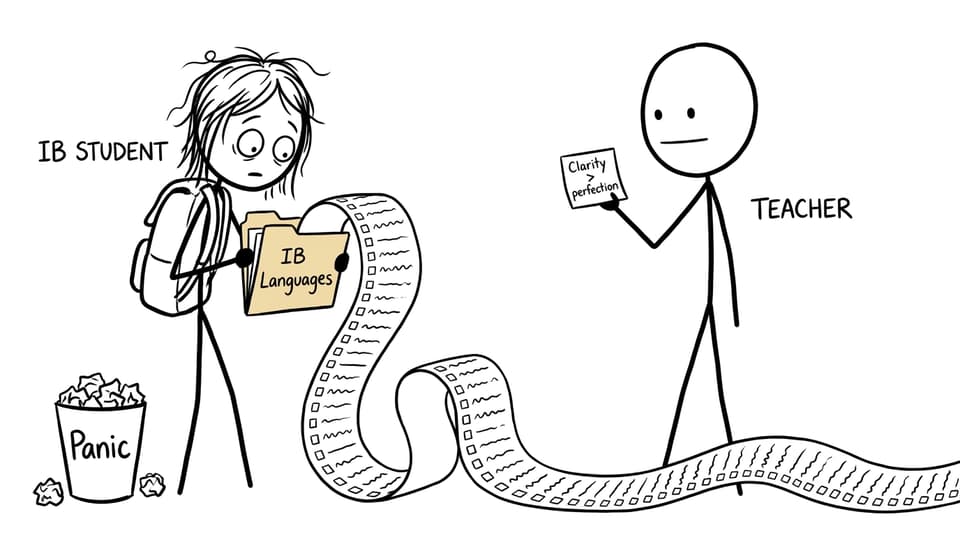
Before we go component-by-component, here’s a simple checklist you can apply to almost everything in IB Languages (especially Ab Initio):
-
Did I answer the task? (Not what I wanted the task to be.)
-
Is my message easy to follow? (Even with mistakes.)
-
Is my language appropriate for the situation? (Formal vs informal, correct text type.)
-
Did I use a safe range of vocabulary and grammar accurately? (Simple, controlled sentences often beat risky complexity.)
-
Can an examiner tell what I mean on the first read/listen?
RevisionDojo is built around this logic: learn the skill, practise it, get feedback, repeat. The German ab initio - IB Resources hub connects Study Notes, Flashcards, AI Chat, Grading tools, and the Questionbank so you can train directly for the criteria.
Paper 1 (Writing): the criteria that decide your score
Paper 1 is 25% of your final grade. You write one task (200-250 words), usually in a specific text type (email, blog, diary entry, short article). If you want a format refresher, see How Is IB German Ab Initio Graded? (2025 Guide).
Content: “Did you actually do the job?”
Examiners look for relevance and completeness.
-
Did you cover every bullet or prompt requirement?
-
Are your ideas connected to the scenario?
-
Do you include enough specific detail (who, where, when, why) to make it real?
A reliable strategy in IB Languages writing is to turn each prompt point into 2-3 sentences. It’s boring in the best way: it keeps you on task.
Language: “Can you control what you attempt?”
This is where many students misread the exam. Paper 1 doesn’t punish you for not using advanced grammar. It rewards you for using your grammar accurately.
-
Use high-frequency verbs correctly.
-
Keep word order stable in the sentence types you know.
-
Add variety carefully (time phrases, connectives, opinions).
If grammar feels like the thing that collapses under pressure, build a short list of “safe structures” and drill them. A practical starting point is What Grammar Topics Are Most Important in IB German Ab Initio (2025 Guide).
Message and clarity: “Is it understandable without re-reading?”
In IB Languages, clarity is a superpower. You can make mistakes and still score well if the examiner understands you quickly.
-
Shorter sentences are often clearer.
-
Repeating key nouns is better than confusing pronouns.
-
Simple linking phrases reduce confusion (first, then, because, however).
Text type conventions: “Does it look like what it’s supposed to be?”
A diary entry that reads like a formal complaint letter loses easy marks.
-
Use the expected layout (greeting, sign-off, headings, date, etc.).
-
Match the register: du and friendly tone for informal tasks, Sie and polite phrases for formal ones.
To practise the way you’ll be assessed, run weekly writing cycles on RevisionDojo: draft, submit to Grading tools, then turn the feedback into Flashcards you review for 5 minutes a day.
Paper 2 (Reading and Listening): mark-based, but still predictable
Paper 2 is 50% of your final grade. It includes reading comprehension + listening comprehension. Unlike Paper 1 and the oral, Paper 2 is generally mark-based (you earn points per correct answer rather than being judged against a rubric for style).
The trap is thinking that means “I must understand everything.” In IB Languages, Paper 2 rewards strategic comprehension: locating main ideas, matching details, and interpreting context.
What Paper 2 really tests
-
Gist: Can you identify the overall topic and purpose?
-
Details: Can you find specific information like times, dates, prices, places, reasons?
-
Inference: Can you read tone or intention from context?
-
Question discipline: Can you answer what is asked, not what you assume?
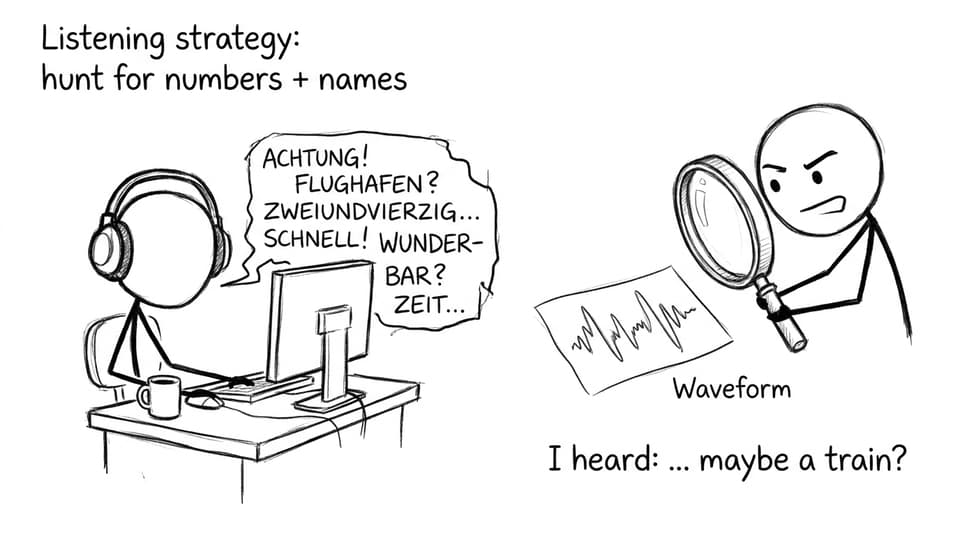
A good training plan is to practise by theme and skill, not randomly. RevisionDojo’s IB German ab initio Exercises help you drill listening and reading in manageable sets, and the Questionbank lets you repeat weak patterns until they stop being weak.
Individual Oral: where the criteria are quietly kind
The Individual Oral is 25% of your final grade. You’ll speak about a visual stimulus and then discuss related ideas. Students often fear this component because speaking feels exposed. But in IB Languages Ab Initio, the criteria reward something very human: can you keep meaning moving forward?
Language: range + accuracy at your level
You don’t need fancy vocabulary. You need usable vocabulary.
-
Describe what you see.
-
Add opinions with reasons.
-
Use time markers and basic comparison.
Message: coherent ideas with simple justification
Examiners want to hear a clear line of thought.
-
What is happening?
-
Why is it relevant to one of the themes?
-
What do you think about it and why?
Interactive skills: can you respond naturally?
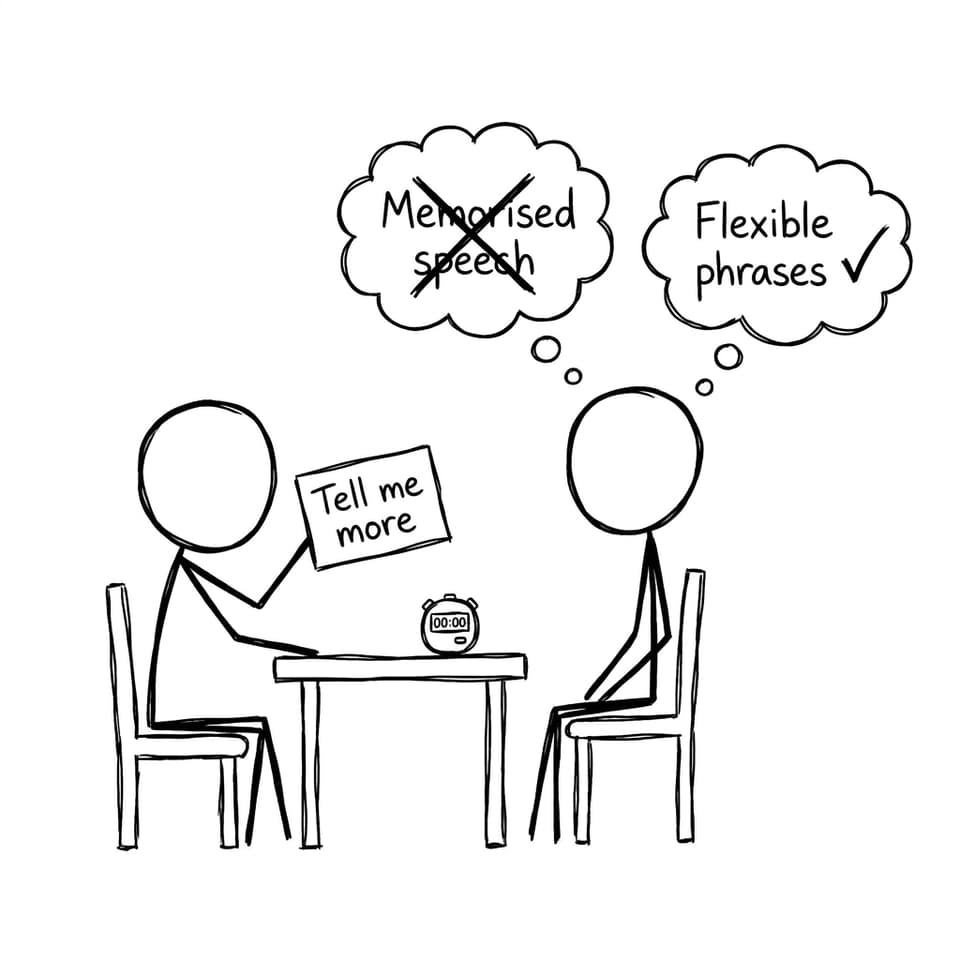
This is where memorisation often backfires. If you deliver a perfect pre-written speech and then freeze when the examiner changes direction, you lose the easiest marks.
Train “flexible phrases” instead: clarification, stalling, agreeing, disagreeing politely.
Cultural awareness: small, relevant links
You’re not expected to deliver a cultural studies lecture. But if you can naturally reference a German-speaking context (food habits, school life, travel, sustainability, media), it strengthens your response.
For curated guidance and examples of what strong IB work looks like, explore the IB German ab initio Exemplars in RevisionDojo’s Coursework Library.
How to use criteria as a weekly revision plan
Criteria only help if you train them. Here’s a simple weekly loop aligned with IB Languages assessment:
-
Mon-Tue: Learn one theme chunk using Study Notes and AI Chat support via RevisionDojo for IB.
-
Wed: Do a targeted set in the Questionbank (reading/listening), review mistakes.
-
Thu: Write one Paper 1 response, get feedback using Grading tools, and turn recurring errors into Flashcards.
-
Fri: Practise a 4-minute oral with a timer. Use feedback from a teacher or RevisionDojo Tutors if you need a human diagnosis.
If your motivation drops mid-term, it helps to remember you’re building a system, not chasing a mood. The article How to Study for IB Mocks (Without Burning Out) maps this mindset well.
Final thought: learn the rules, then play calmly
If you remember one thing, make it this: IB Languages assessment criteria are not asking you to be perfect. They’re asking you to be understandable on purpose. Paper 1 rewards clear task completion and correct text type. Paper 2 rewards strategic comprehension. The Individual Oral rewards meaning, interaction, and flexible language.
When you revise with those criteria in mind, studying becomes less emotional and more measurable. Open the German ab initio - IB Resources hub, practise with the Questionbank, build Flashcards, use AI Chat, and get criterion-aligned feedback through Grading tools, Mock Exams, Predicted Papers, and RevisionDojo Tutors. That’s how you turn the marking criteria from a mystery into an advantage when it matters most.