Introduction
The night before a deadline, most IB Visual Arts students do the same thing: they stare at their most polished piece and hope it will speak for them. It won’t. Not fully.
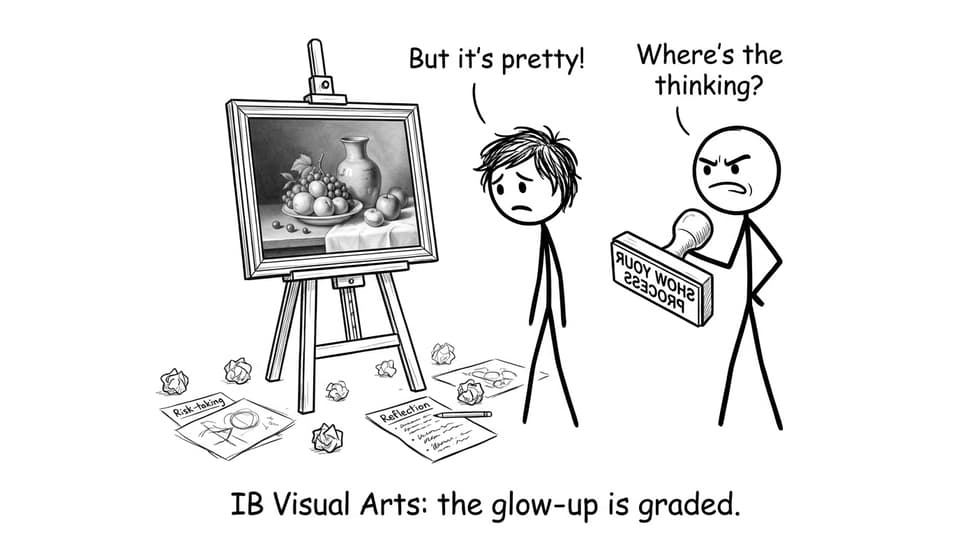
Because examiners aren’t grading “pretty.” They’re grading evidence. Evidence that you can think visually, take risks, learn from what didn’t work, and shape a clear artistic intention across your IB Visual Arts components.
If that sounds intimidating, it’s also freeing. You don’t need to be a prodigy. You need to be readable, intentional, and reflective.
The examiner’s checklist (the quiet rules)
Use this quick filter before you export another page or mount another work. Strong IB Visual Arts submissions usually show:
-
Growth over time (experiments that actually change what you do next)
-
Conceptual depth (ideas, not just aesthetics)
-
Varied exploration (media, scale, techniques, approaches)
-
Cultural and contextual awareness (artists, traditions, time periods, reasons)
-
Reflection that proves intent (short, specific, and honest)
If you want the criteria in plain language, keep IB Visual Arts Assessment Criteria Explained Simply open while you work.
What examiners value most in IB Visual Arts
Growth and experimentation (not perfection)
The best IB Visual Arts portfolios don’t hide the messy pages. They frame them. Examiners reward risk-taking because risk leaves a trail: tests, adjustments, failures, and new decisions.
A practical way to prove growth is to document a “before/after” chain: attempt 1 (problem) -> research -> attempt 2 (revision) -> final choice. If you need concrete ways to show this, borrow techniques from How to Show Experimentation in Your IB Visual Arts Process Portfolio.
Concept + coherence
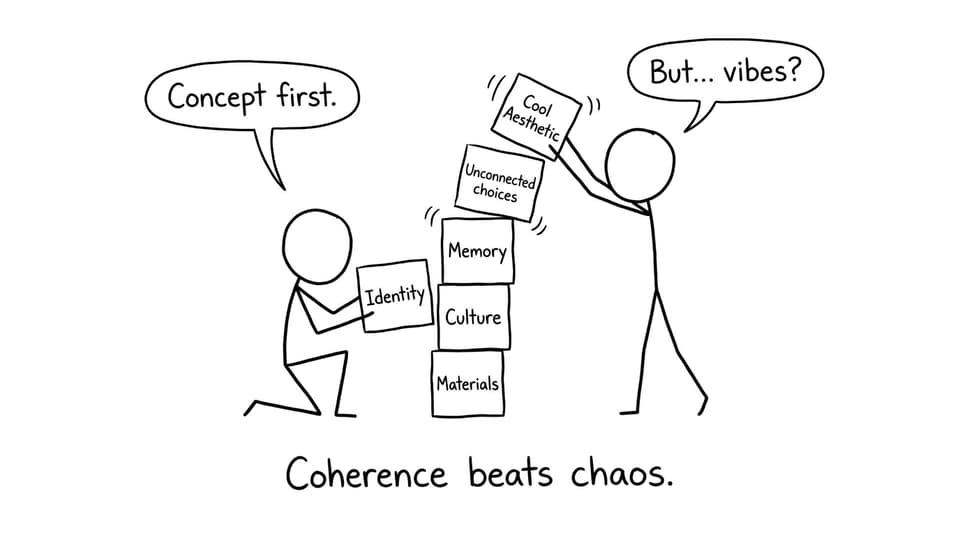
Coherence is what turns separate works into a body of work. In IB Visual Arts, that coherence comes from a clear idea you keep returning to, even as the outcomes shift.
Choosing a theme that can stretch across multiple mediums helps. A strong starting point is Best IB Visual Arts Themes for Process Portfolios or, if you’re thinking ahead to display, Best Themes for IB Visual Arts Exhibition.
How to meet expectations in each component
Exhibition: curate like you mean it
Examiners want to see selection with purpose: why these works, why this order, why this experience for the viewer. Treat your exhibition as an argument, not a gallery dump.
To sharpen your choices, use The Exhibition in IB Visual Arts: What You Need to Know, then polish the details with IB Visual Arts Exhibition Setup Tips for High Marks and How to Prepare Your IB Visual Arts Exhibition Space.
Your written statement matters too. Follow How to Write the IB Visual Arts Curatorial Rationale and make sure it sounds like you: specific decisions, specific reasons, specific learning.
Process portfolio: show the thinking, not the timeline
A strong IB Visual Arts process portfolio is not a diary. It’s a case file.
Keep pages examiner-friendly:
-
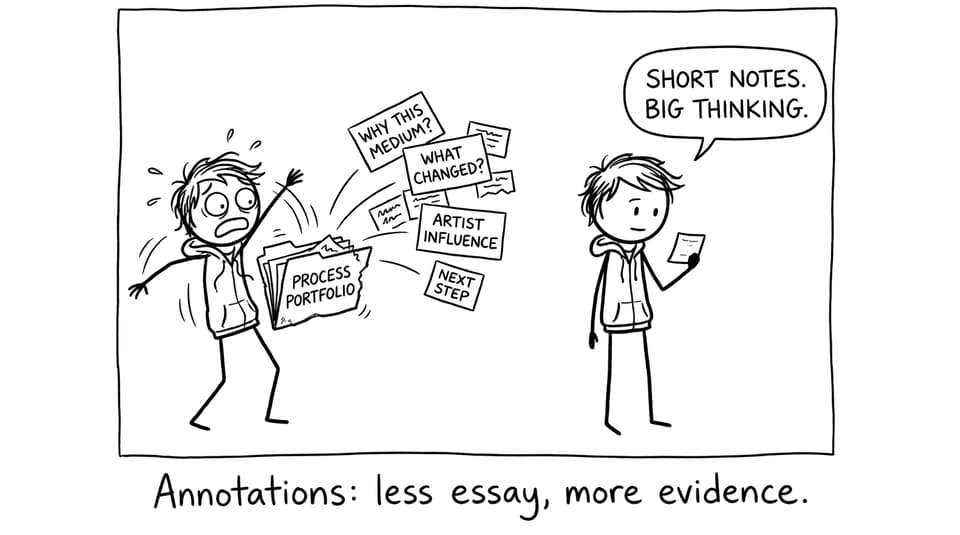
Pair visuals with short annotations (what you tried, what changed, what you’ll do next)
-
Show artist influence and how you adapted it
-
Make explicit links from experiments to final exhibition decisions
If you’re stuck on structure, copy the clarity of How to Structure Your IB Visual Arts Process Portfolio. For writing, use How to Write Reflections in Your IB Visual Arts Portfolio.
Comparative study: analysis plus context (and a personal link)
In IB Visual Arts, the comparative study isn’t about proving you know famous facts. It’s about proving you can see. You’re rewarded for formal analysis, cultural context, and clear comparisons that go beyond description.
Use a step-by-step method from How to Prepare for the IB Visual Arts Comparative Study. Then tighten your cultural paragraphs with How to Integrate Cultural Context into Your IB Visual Arts Comparative Study. If you want to avoid common traps, check Common Comparative Study Mistakes and How to Fix Them in IB Visual Arts.
Common missteps that cost marks
Most lost marks in IB Visual Arts come from avoidable gaps:
-
Showing only finished work, with little experimentation evidence
-
Writing reflections that stay vague (“I liked it”) instead of analytical
-
Researching artists without connecting them to your decisions
-
A theme that sounds deep but doesn’t actually guide choices
-
Weak links between process portfolio development and exhibition selection
How RevisionDojo helps you work like an examiner
When you’re tired, you need feedback that’s structured. RevisionDojo is built for that.
Use the Coursework Library for strong models (see IB Visual Arts Examples). Then pressure-test your own work with rubric-aligned tools like the IB Visual Arts Process Portfolio Grader. If you need quick clarifications while writing, AI Chat can help you turn messy thoughts into precise reflection language.
And when motivation dips, a small routine helps: a few targeted Flashcards, a short burst in the Questionbank, and then one concrete portfolio improvement. It’s not glamorous, but it compounds.
Conclusion
Meeting examiner expectations in IB Visual Arts is less about impressing someone with talent and more about making your growth impossible to miss. Show the experiments. Show the changes. Show the reasons.
If you want a clearer path, use RevisionDojo to study strong models, get rubric-aligned feedback, and build a steady workflow with Study Notes, Flashcards, AI Chat, grading tools, and support from Tutors when you need a second set of eyes. Your work already has a voice. Your job now is to make it legible to the examiner in IB Visual Arts.

