


In IB Visual Arts, the difference between “I tried” and “I experimented” is usually one thing: proof.
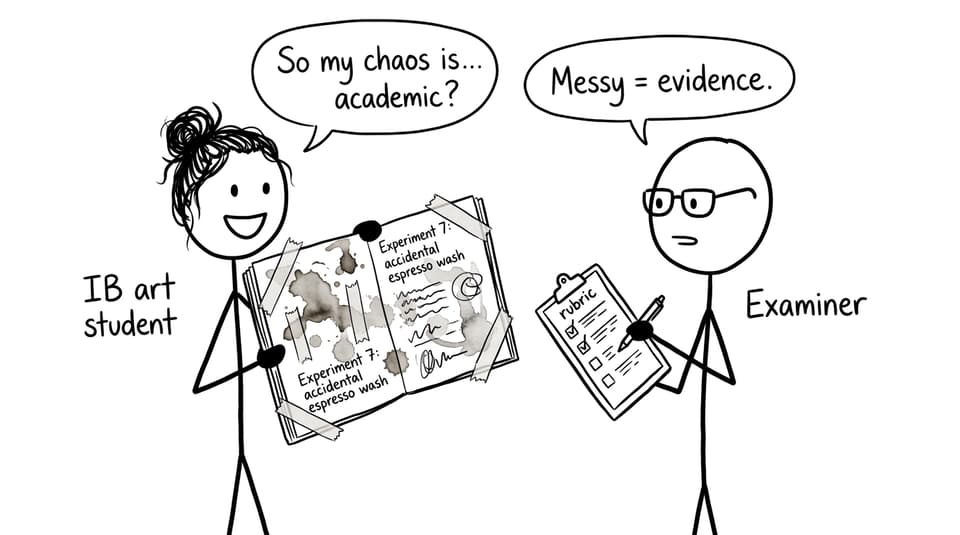
Most students create experiments. Fewer show them in a way an examiner can instantly understand. And that’s the quiet tragedy of the process portfolio: you can take real creative risks, then accidentally edit them out by only sharing the neat parts.
The process portfolio is not a highlight reel. It’s your thinking made visible. If you can make your experimentation easy to spot, you make your marks easier to earn.
Quick checklist: what “experimentation” looks like in IB Visual Arts
Use this mini-check before you export another screen:
-
You show multiple attempts, not one outcome
-
You compare materials, tools, or methods on the same idea
-
You include what went wrong and what you changed
-
You connect at least some experiments to artist research
-
Your notes explain why you made decisions (not just what you did)
If you want a bigger picture of how the screens fit together, this guide on how to structure your IB Visual Arts process portfolio helps you build a flow an examiner can follow.
Think like a scientist: make experimentation easy to verify
A useful mindset for IB Visual Arts is to treat each experiment like a micro-test.
Not “I painted a background.”
But: “I tested three grounds (gesso, raw paper, tea-stained paper) to see which made dry brush marks feel more fragile, because my theme is memory.”
That sentence contains method, comparison, intention, and theme. It also signals the assessment criteria without sounding robotic. If you’re unsure what examiners reward, keep IB Visual Arts assessment criteria explained simply open while you annotate.
Use the “3 versions” rule to prove experimentation
One reliable way to show experimentation in IB Visual Arts is to create three visible variants:
-
Version A: your first instinct
-
Version B: a deliberate change (new medium, different surface, altered composition)
-
Version C: a risk (scale shift, distortion, constraint, or unexpected tool)
Even if Version C fails, it often becomes your best portfolio evidence.
How to show experimentation in your IB Visual Arts screens
Experimentation isn’t one trick. It’s a pattern: try, observe, adjust, repeat. Here are the methods that make that pattern obvious.
Document “failures” like you’re collecting clues
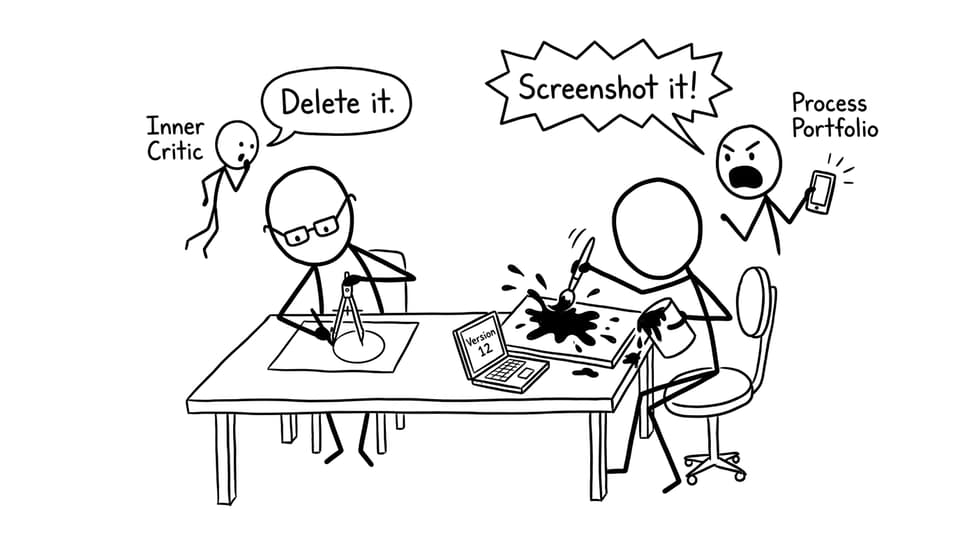
In IB Visual Arts, a collapsed sculpture, muddy colour mix, or overworked charcoal drawing is not embarrassing. It’s evidence of risk-taking.
Add two short annotations:
-
What happened (specific, not dramatic)
-
What you’ll change next time (even more specific)
If you want examples of how strong portfolios frame growth, look at IB Visual Arts portfolio examples that scored a 7.
Compare media on the same idea (not random experiments)
Examiners can spot “I used acrylic because I had acrylic.” Instead, run a controlled comparison:
-
One subject, three media (ink, collage, digital)
-
One technique, three surfaces (newspaper, canvas, acetate)
-
One composition, three lighting setups (photography studies)
This kind of experimentation is clearer, faster to mark, and more convincing.
Show scale changes to reveal meaning
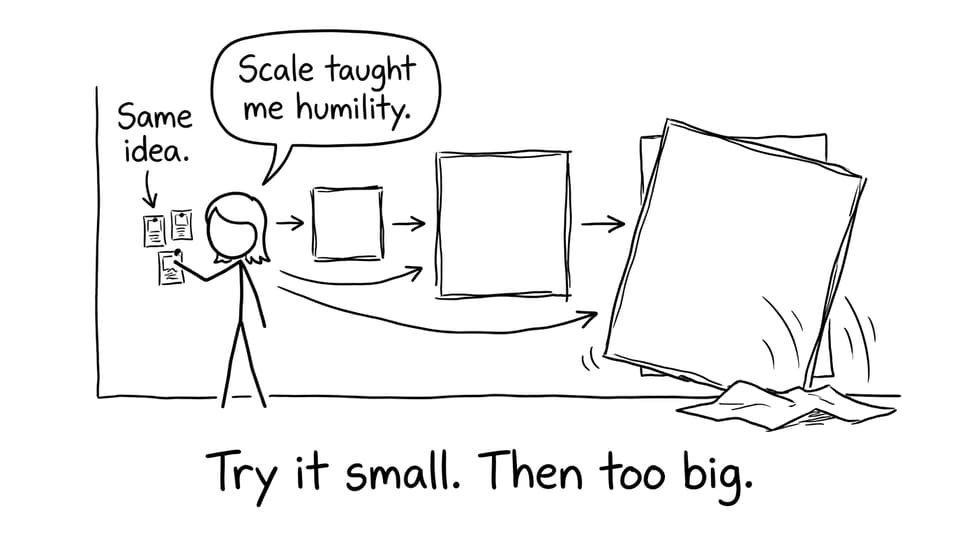
Scale isn’t just “bigger.” It changes how a viewer feels.
Try thumbnail studies, then a mid-size test, then one “too big” attempt. Write what scale did to your line quality, detail, and emotional impact.
Use artist research as a reason to experiment
The strongest IB Visual Arts screens show research that causes a change.
A simple structure:
-
Artist technique you noticed
-
Your imitation study (small, honest, quick)
-
Your adaptation (how you made it yours)
If your research feels descriptive, this step-by-step guide on how to analyze artists in IB Visual Arts helps you move from “about” to “because.”
Make your annotations do more work (with less text)
Good reflection in IB Visual Arts is short, concrete, and slightly brave.
Try this sentence frame:
“I tested ___ by changing ___, because ___. Next I will ___ to improve ___.”
You can keep annotations tight and still sound insightful. If you want support polishing your wording against the rubric, RevisionDojo’s IB Visual Arts Process Portfolio Grader can help you see what an examiner would likely reward.
Bring it home: make experimentation the easiest thing to notice
A strong IB Visual Arts process portfolio doesn’t hide the messy middle. It curates it.
So keep the “wrong” versions. Photograph the stages. Save the screenshots. Label the tests. Then write the kind of reflection that tells the truth: what you tried, what it changed, what you learned.
When you want an all-in-one system to support that workflow, RevisionDojo is built for it: use the Coursework Library for models (IB Visual Arts Examples), the Grading tools to align your screens with criteria, and Tutors when you need a human eye on your choices. Add Flashcards for artist terminology, and the Questionbank for exam-style practice in your other subjects so studio time stays protected.
Experimentation is already in your work. Your job now is to make it impossible to miss in IB Visual Arts.


