


If you have ever looked at your Comparative Study screens and thought, “I’ve described everything… so why does it still feel thin?” you are not alone. In IB Visual Arts, the difference between a decent comparison and a persuasive one is often cultural context: the quiet forces that shaped what an artist could say, how they said it, and who they expected to listen.
Cultural context is not a separate slide you tack on at the end. In IB Visual Arts, it is the reason your formal analysis matters. A color choice becomes political. A material becomes local. A composition becomes a response to an audience.
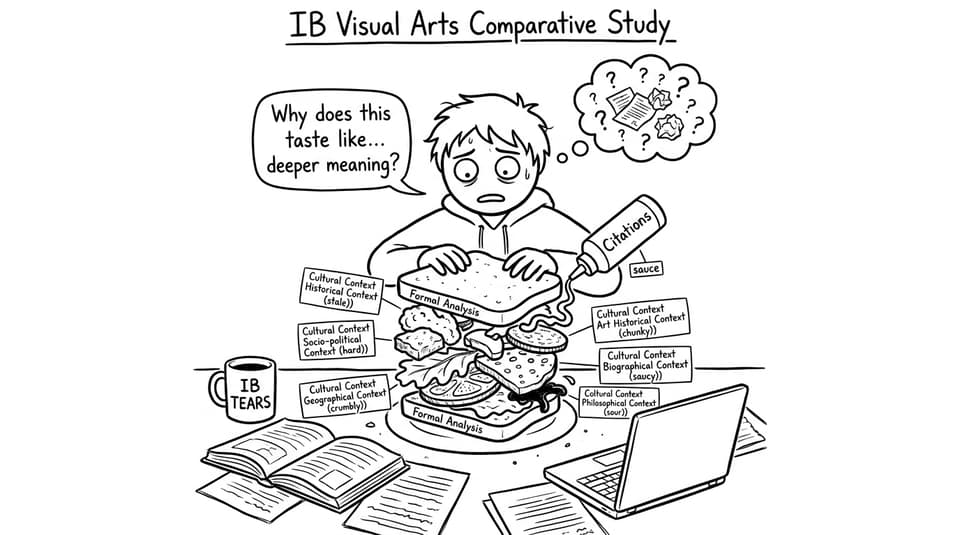
A quick checklist for cultural context (use this before you write)
Before you add another paragraph, run this fast check for each artwork in your IB Visual Arts Comparative Study:
-
What place, community, or tradition is the work in conversation with?
-
What historical moment shaped its message or reception?
-
What symbols, materials, or methods carry cultural meaning?
-
Who was the intended audience (and who was excluded)?
-
How does this context change your interpretation and comparison?
If you want a structure for your full Comparative Study, keep How to Prepare for the IB Visual Arts Comparative Study open while you plan.
What “cultural context” actually means in IB Visual Arts
In IB Visual Arts, cultural context is the background that gives an artwork its stakes. It can include:
-
History: war, migration, industrial change, colonization, censorship, reform
-
Social life: class, gender roles, religion, education, public taste
-
Identity: nationality, ethnicity, diaspora experience, language, politics of visibility
-
Art systems: patronage, museums, markets, propaganda, craft traditions
A useful way to think about it: context explains why this artwork looks like this, not just what it looks like.
For more guidance on what examiners reward across all components, see IB Visual Arts Assessment Criteria Explained Simply.
How to integrate cultural context without turning it into a history essay
Anchor context to one visible detail
Pick one feature you can point to (a motif, a material, a technique) and attach context to it. This keeps you analytical, not narrative.
Example sentence frames you can reuse in IB Visual Arts:
-
“The use of ____ reflects ____ because ____.”
-
“In the context of ____, this choice of ____ can be read as ____.”
-
“For the intended audience of ____, ____ would signal ____.”
Build a “context pair” for comparisons
When comparing works, avoid listing two separate histories. Instead, compare two context forces.
Try:
-
audience vs audience
-
tradition vs tradition
-
political pressure vs political pressure
-
material availability vs material availability
If you are still choosing works, How to Pick Artworks for Your IB Visual Arts Comparative Study helps you select pieces that naturally create strong contextual contrasts.
Use a micro-timeline (three dates only)
One date for the artwork, one for a key event, one for a related movement or turning point. This is enough to show awareness without drowning your writing.
Cite like an art student, not a Wikipedia copier
In IB Visual Arts, citations are not decoration. Use sources to support specific claims about meaning, reception, or symbolism. If you want models of what strong academic tone looks like, browse IB Visual Arts Examples.
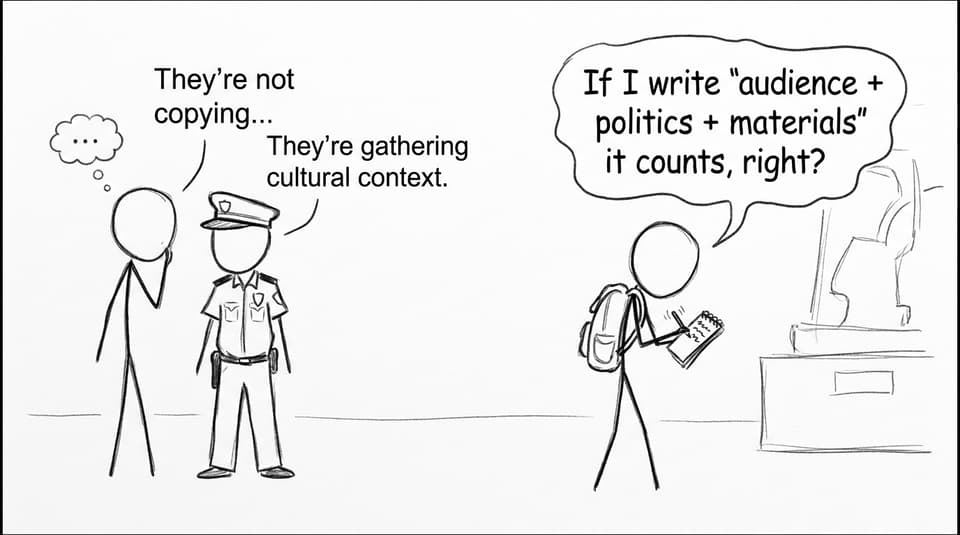
A concrete example you can adapt
Imagine a theme like water as meaning.
-
Hokusai’s The Great Wave (1831) sits inside ukiyo-e traditions, where stylization, line, and reproducibility matter. Cultural context here changes “water” from scenery into something closer to philosophy: nature’s scale, human fragility, and the visual language of a specific print culture.
-
Monet’s Water Lilies (early 1900s) sits inside Western Impressionism and modernity, where perception and light become the subject. Cultural context shifts “water” into optics, leisure, and a changing relationship between nature and modern life.
Notice what makes this IB Visual Arts writing work: you are not just telling the reader facts. You are showing how context reshapes interpretation, which makes your comparison feel earned.
For more sample approaches and screen-by-screen expectations, use IB Art Comparative Study Examples: A Guide to Crafting a Strong Visual Arts Analysis.
Common mistakes (and the quick fix)
-
Mistake: context is a separate paragraph that never returns.
- Fix: attach context to a formal choice every time.
-
Mistake: biography replaces analysis.
- Fix: ask “So what changes in the artwork because of this?”
-
Mistake: big cultural claims with no specifics.
- Fix: name one symbol, one practice, one audience response.
You can spot more high-frequency pitfalls in Most Common Mistakes in IB Visual Arts: Pitfalls to Avoid.
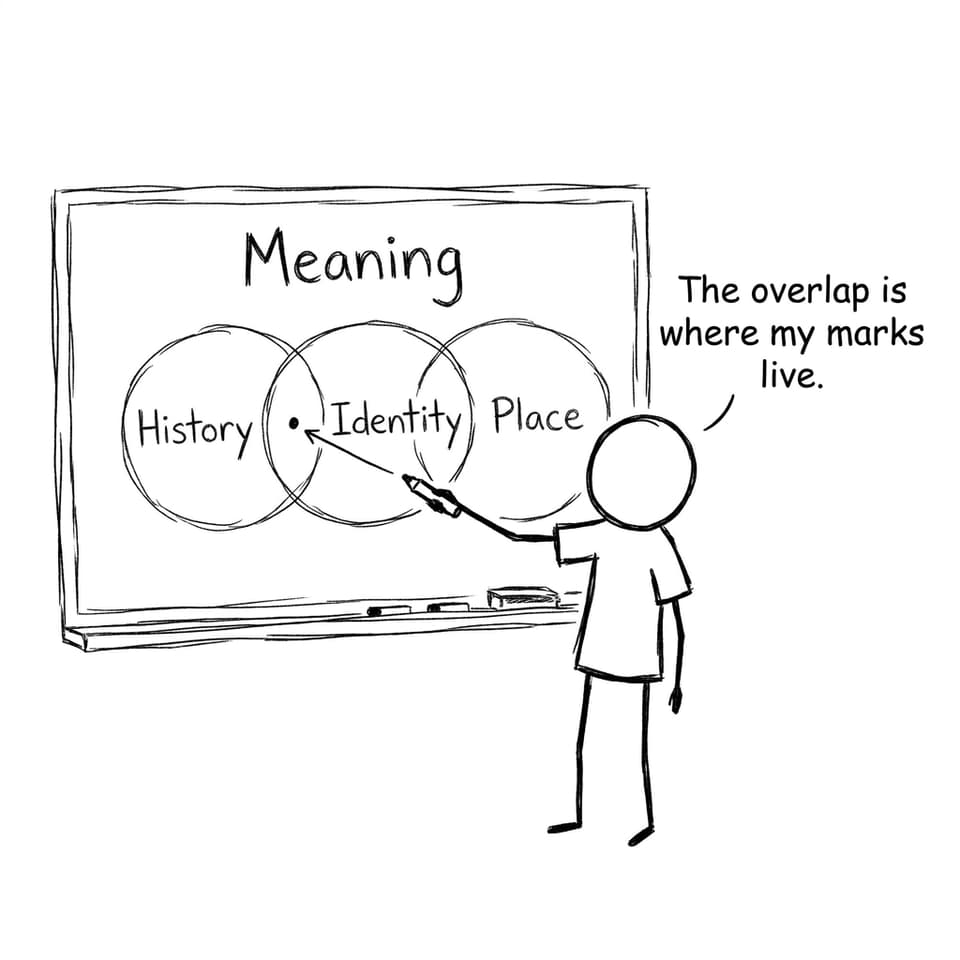
Bringing it home: context should change your own practice
One of the most undervalued moves in IB Visual Arts is reflecting on how cultural research reshaped what you make. Mention a technique you tested, a material choice you reconsidered, or a symbol you used more carefully after learning its origins. If you are building those reflections into your Process Portfolio, How to Structure Your IB Visual Arts Process Portfolio shows a clean way to document influence.
When you are ready to tighten everything up, RevisionDojo helps you move from “interesting ideas” to examiner-ready execution: Study Notes for clarity, Flashcards for key terms, AI Chat for questioning, the Coursework Library for models, Grading tools for rubric-aligned feedback, and Mock Exams and Predicted Papers for calm, timed practice.
In the end, cultural context is not extra work. In IB Visual Arts, it is the missing connection between what you see and what you can convincingly say. Build that bridge, and your Comparative Study starts sounding like someone who belongs in the gallery, not just someone visiting it.