


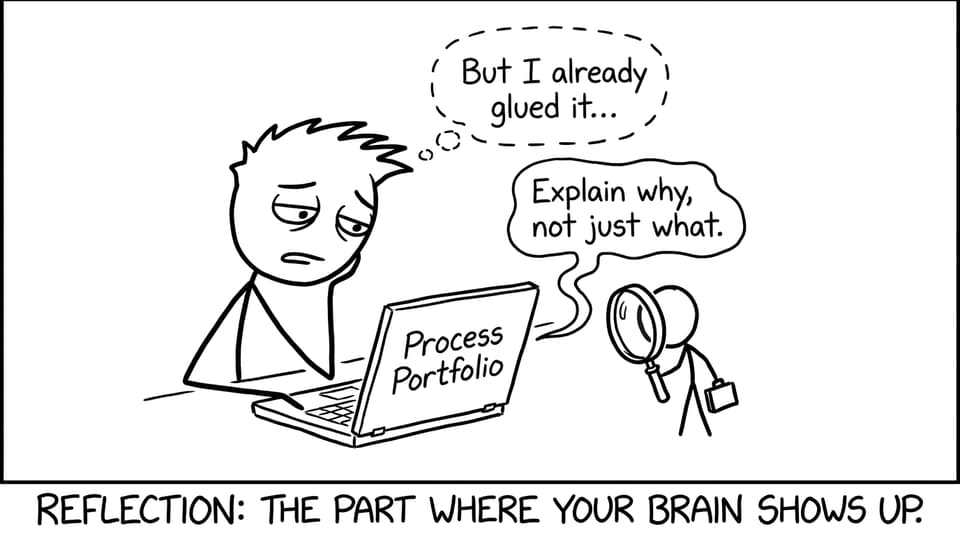
Reflection is the quiet part of IB Visual Arts that often decides whether your portfolio feels like a story or a scrapbook. Anyone can show a final image. Not everyone can show the thinking that made it inevitable.
Examiners are looking for evidence that you noticed what happened when you experimented: why you chose a medium, what you changed after a failed test, and how an artist reference pushed your work somewhere new. In other words, your reflections translate your visual decisions into a readable process.
A quick checklist for strong IB Visual Arts reflections
Use this before you write a single sentence in your IB Visual Arts portfolio:
-
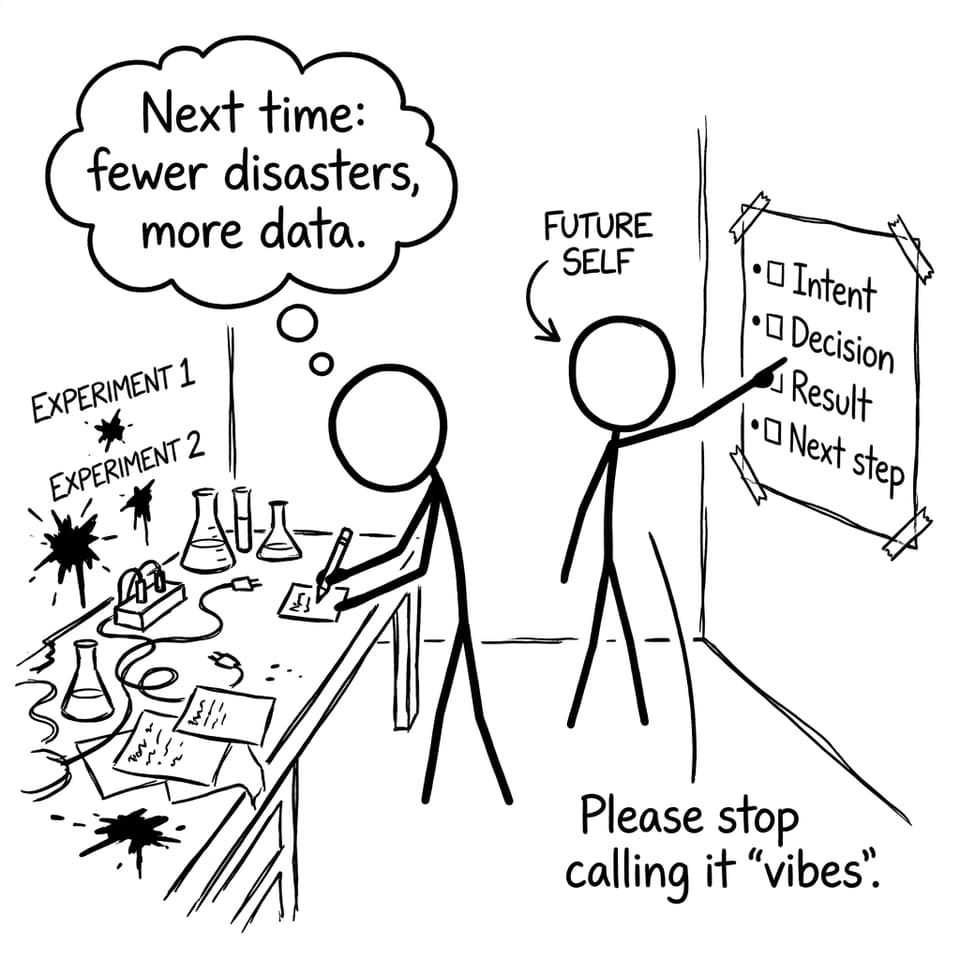
Intent: What were you trying to find out or communicate?
-
Decision: What specific choice did you make (composition, colour, material, method)?
-
Result: What actually happened (be concrete, not emotional-only)?
-
Evaluation: Why did it succeed or fall short?
-
Next step: What will you test next, based on this?
If you want the bigger picture of how reflections fit the component, keep open: What Examiners Look for in the IB Visual Arts Process Portfolio.
What to write in an IB Visual Arts reflection (without waffle)
Start with intent, not description
A common weak line is: “I used acrylic paint and made a portrait.” That tells us what your hands did, not what your mind was testing.
Try: “In this IB Visual Arts study, I tested whether a limited palette could make the subject feel more isolated, so I removed mid-tones and pushed contrast.” Intent gives your page direction.
Name the problem you hit, then show your workaround
Examiners trust students who can diagnose their own work. Mention the friction: muddy colour mixing, weak focal point, collage edges that look accidental.
Then show your adjustment: “I switched to glazing to control saturation,” or “I photographed the piece under side light to check texture readability.” This is where your portfolio becomes evidence.
For portfolio structure help, see: What to Include in an IB Visual Arts Portfolio.
Using influences the examiner can actually follow
Connect artist research to a change you made
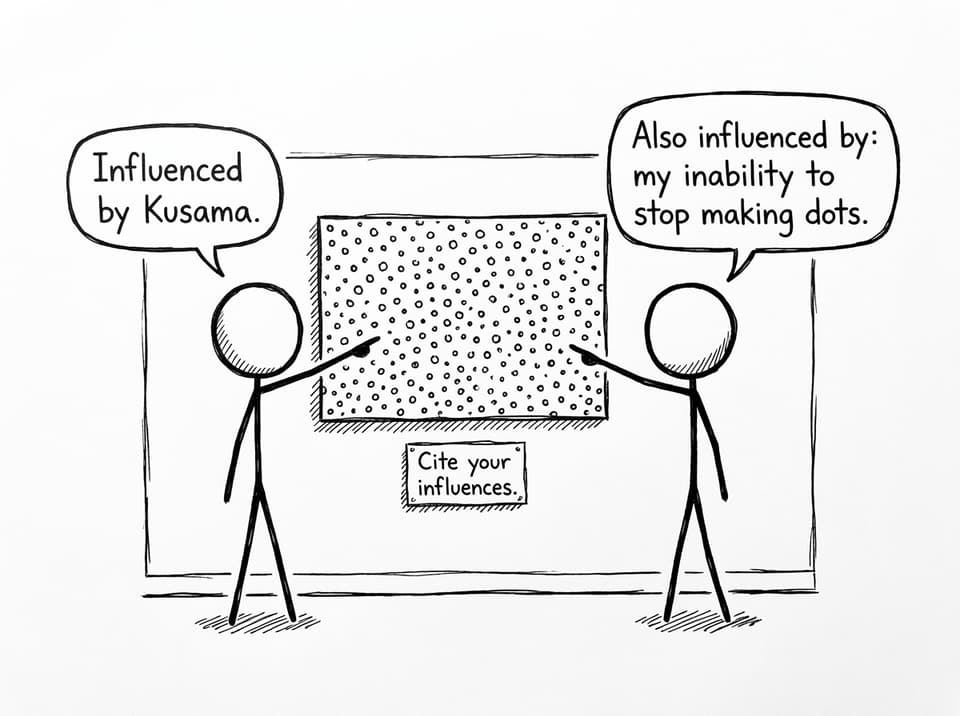
In IB Visual Arts, “inspired by” is only useful if it leads to a decision. Instead of listing an artist, write the transfer:
-
What you noticed (technique, symbolism, process, context)
-
What you borrowed (one controllable feature)
-
What you changed to make it yours (scale, material, concept, audience)
If you’re building coherence, this helps: How to Connect Personal Voice in Your IB Visual Arts Portfolio and Best IB Visual Arts Themes for Process Portfolios.
A reflection template you can reuse in 4 sentences
When deadlines squeeze, a repeatable structure saves you.
-
I intended to… (test/communicate/question)
-
I chose to… (specific method/material/compositional move) because…
-
This resulted in… (observable outcome) which suggests…
-
Next, I will… (one focused experiment) to improve…
For broader reflection strategy across Group 6, read: The Role of Reflection in IB Group 6 Assessment.
Common mistakes that weaken IB Visual Arts reflections
-
Writing feelings without causes: “I liked it” with no reason.
-
Describing steps but not decisions.
-
Hiding failures instead of extracting learning.
-
Forgetting the “next test,” so your process stops on the page.
If your sketchbook is where your raw thinking lives, you’ll like: Best Sketchbook Ideas for the IB Visual Arts Portfolio.
Conclusion: make IB Visual Arts reflection your advantage
The portfolio isn’t graded for being busy. It’s graded for being understandable. When your IB Visual Arts reflections show intent, decision-making, evaluation, and a clear next step, your work reads like a deliberate journey instead of a lucky streak.
If you want support that feels structured (not overwhelming), RevisionDojo is built for this: use the IB Visual Arts Process Portfolio Grader to check alignment with criteria, explore IB Visual Arts Exemplars for benchmark quality, and practise the habits behind strong reflection using RevisionDojo’s Study Notes, Flashcards, AI Chat, Questionbank, Grading tools, Predicted Papers, Mock Exams, Coursework Library, and Tutors. Your art shows what you can make. Your reflection shows how you think. In IB Visual Arts, that combination is the difference.


