
You walk into the exam room with a head full of characters and connectors. You sit down, flip the page… and suddenly time becomes a physical thing you can feel slipping away.
That feeling is why time management is one of the most score-changing skills in IB Languages, especially in IB Chinese B. It’s not that students don’t know Chinese. It’s that they spend ten extra minutes polishing one paragraph, reread the same listening question four times, or describe every detail in the oral until the examiner’s stopwatch quietly ends the conversation.
This guide gives you clear pacing strategies for Paper 1, Paper 2, and the Individual Oralplus a practice routine you can actually stick to. If you’re aiming for calm, controlled performance in IB Languages, this is the part that turns ability into marks.
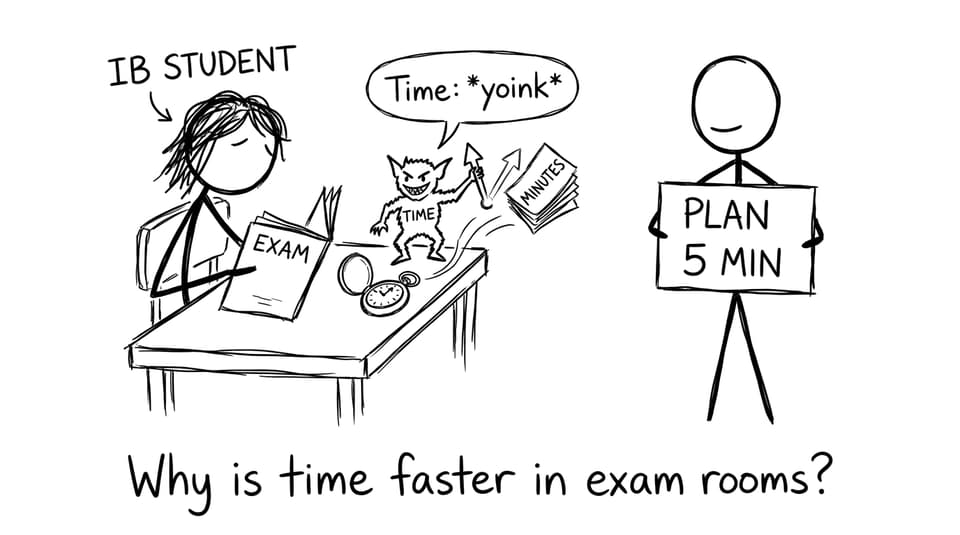
A quick pacing checklist (save this)
Use this as your default plan in IB Chinese B. Adjust slightly to your personal speed, but keep the structure.
-
Paper 1 (Writing)
-
5 minutes plan
-
80% of time writing
-
5-10 minutes proofreading
-
-
Paper 2 (Listening + Reading)
-
3-5 minutes skim the whole paper
-
Keep moving: flag and return
-
10-15 minutes to review answers at the end
-
-
Individual Oral
-
Brief description
-
Fast transition to analysis and theme connections
-
Use short “thinking bridges” (fillers) to stay fluent without stalling
-
To build this into muscle memory, use RevisionDojo’s Mock Exams and Predicted Papers as timed simulations, then check weak areas with the Study Notes and drill accuracy using the Questionbank.
Helpful next reads: Best Time Management Techniques for IB Students in 2025 and Time-Controlled IB Tests: Build Speed and Accuracy.
Paper 1 timing (Writing): your score lives in the last 10 minutes
Paper 1 is where many IB Languages students lose easy marks because they treat time like a suggestion.
Exam length
-
SL: 1 hour 15 minutes (250-400 characters)
-
HL: 1 hour 30 minutes (450-600 characters)
A strong pacing rule: the earlier you “buy” structure, the less you “pay” in panic later.
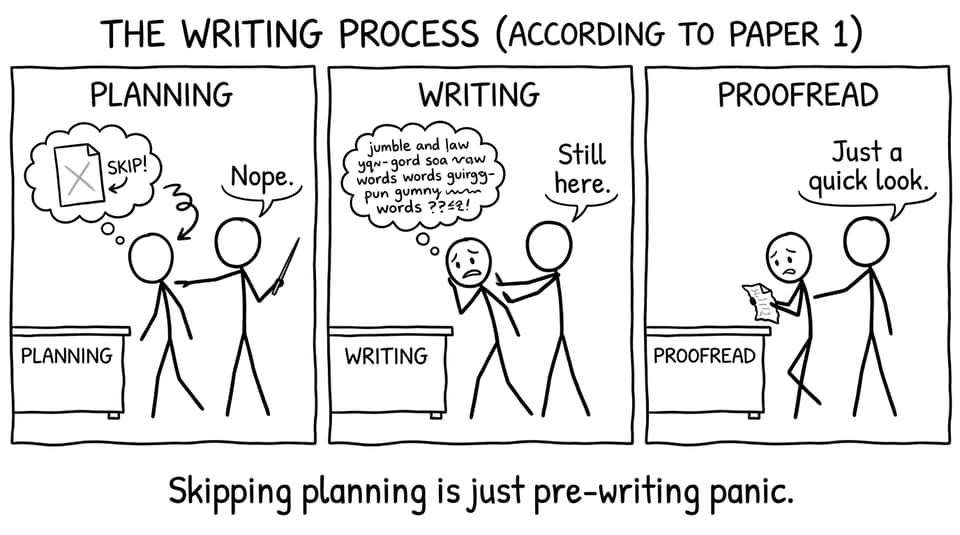
A reliable Paper 1 split
-
5 minutes: plan
-
choose your prompt fast
-
jot 3 main points + 1 example each
-
list 6-10 high-quality connectors you’ll use naturally
-
-
Most of the time: write
-
intro (clear direction)
-
2-3 body paragraphs (development, examples)
-
conclusion (close the loop)
-
-
5-10 minutes: proofread
-
fix characters you know are wrong
-
check measure words, particles, and tense consistency
-
ensure text-type conventions are present
-
Two Paper 1 habits that save time in IB Languages
Write with “text type autopilot.” If the prompt asks for a blog, letter, speech, or report, formatting decisions should not cost you thinking time. Build a reusable template for each common text type.
RevisionDojo helps here: use IB Chinese B Writing: Mastering Different Text Types to create quick templates, then practice them under a timer.
Use connectors as signposts, not decorations. Connectors aren’t just “nice Chinese.” They prevent you from wandering, which prevents rewrites.
Build a small connector set you can deploy automatically with How to Use Connectors Effectively in IB Chinese B Paper 1.
If you want the assessment lens, keep this open while practising: Notes for Paper 1 writing criteria.
Paper 2 timing (Listening + Reading): stop translating, start hunting
Paper 2 often punishes a very smart habit: trying to understand everything. In IB Languages, “complete understanding” is not the goal. “Answer the question correctly” is.
The Paper 2 approach that protects your clock
Skim first (3-5 minutes).
You’re looking for structure:
-
what types of questions are repeated?
-
which sections are heavy on details?
-
which parts look faster (matching, true/false, gist)?
Answer in passes.
-
Pass 1: easy marks immediately (confidence + momentum)
-
Pass 2: medium questions with clear evidence
-
Pass 3: harder questions you flagged
This is especially useful when your brain gets “sticky” on one line of audio or one paragraph of reading.
For broader pacing habits that transfer across IB Languages subjects, see Best Time Management Hacks for IB Students.
Listening timing: treat each play like a different job
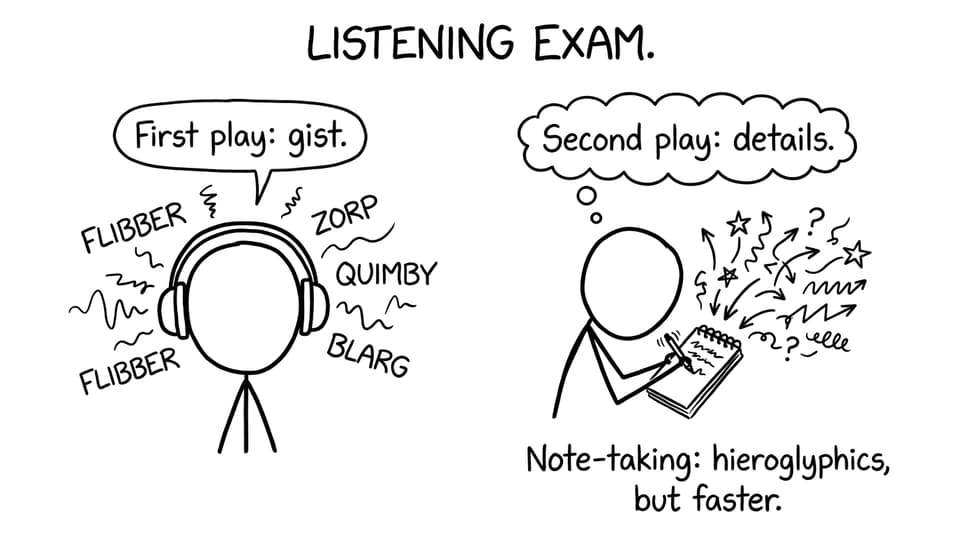
Listening feels unfair because it keeps moving whether you’re ready or not. The solution is to assign a purpose to each play.
-
First play: gist
-
Who? Where? What is happening?
-
What is the speaker’s attitude?
-
-
Second play: details
-
Numbers, reasons, comparisons, outcomes
-
Confirm what you suspected on play one
-
Notes should be fast and ugly. Use symbols, arrows, and abbreviations. You are not writing a transcript.
Reading timing: skim, scan, then prove it
A time-saving pattern for IB Languages reading sections:
-
Skim the passage first (20-40 seconds)
- identify topic, tone, and paragraph purpose
-
Scan for the question’s keywords
- match names, places, dates, or topic words
-
Prove your answer with a line
- if you can’t point to evidence, flag it and move on
The biggest time trap is rereading the same paragraph hoping it will “click.” If it doesn’t click fast, it often means you need to change strategy: look at the question again, then scan for a different keyword.
Individual Oral timing: description is comfortable, analysis scores
The oral is where time management becomes emotional. Description feels safe because it’s obvious. Analysis feels risky because it requires judgement.
But in IB Languages, the oral rewards the student who transitions quickly:
-
Start with brief description (set the scene)
-
Move to message and meaning (what does it suggest? why does it matter?)
-
Link to the theme (make it IB, not just Chinese)
-
Use examples (personal experience, school, community, global context)
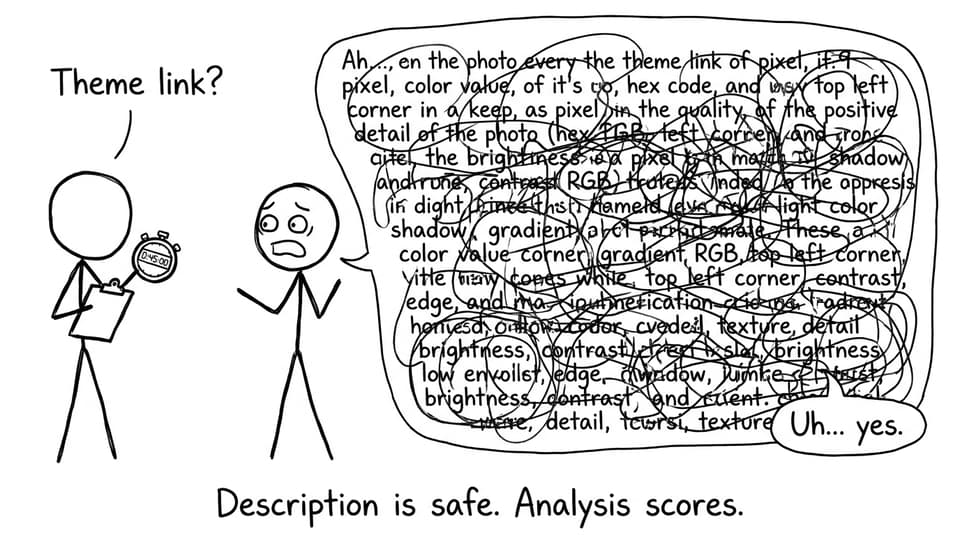
If you catch yourself narrating too long, use a pre-planned pivot sentence like:
-
“这张图片让我想到…因为…”
-
“从更大的角度来看,这反映了…”
Then keep talking. In the oral, silence is expensive.
Train time management like a skill (not a wish)
You don’t “become faster” by wanting it. You become faster by repeating the same conditions until they feel normal.
A simple weekly routine:
-
2 timed Paper 1 drills (one text type each)
-
1 timed Paper 2 mixed drill (short listening + short reading)
-
2 oral mini-sprints (2 minutes stimulus + 2 minutes theme link)
Then review with intention:
-
Use RevisionDojo AI Chat to ask, “What’s the fastest way to improve coherence in this paragraph?”
-
Use the Grading tools to spot recurring language errors quickly.
-
Turn your repeated mistakes into Flashcards.
-
Use the Coursework Library to see what strong expression looks like across themes.
-
If you’re stuck, RevisionDojo Tutors can pinpoint the one habit costing you the most time.
For scheduling support alongside Chinese B, see How to Balance IB Chinese B with Other IB Subjects and IB Chinese B Study Timetable: A Step-by-Step Plan.
Closing: make time your teammate
When IB Chinese B goes badly, it often looks like a language problem. When you look closer, it’s usually a clock problem.
Build a pacing plan. Rehearse it until it feels boring. Then walk into the exam knowing you can finish, check, and breathe. That’s how strong students separate themselves in IB Languages.
If you want an all-in-one system for IB Languages prep, RevisionDojo is built for it: Questionbank drills for speed, Study Notes for clarity, Flashcards for retention, AI Chat for feedback, Grading tools for faster improvement, plus Predicted Papers and Mock Exams to make your timing automatic. Use the timer, trust the structure, and let the marks follow.