
The calendar doesn’t feel like paper in the IB. It feels like a moving treadmill.
One minute you’re making a neat plan for your subjects. Then CAS reflections appear. TOK deadlines slide in. And the IB Extended Essay sits in the background like a tab you can’t close. If you’re preparing for exams, time management stops being a nice skill and becomes the difference between steady progress and constant catch-up.
This guide is built for that exact season: practical, repeatable time management hacks that protect your energy while keeping the IB Extended Essay and exam prep moving forward.
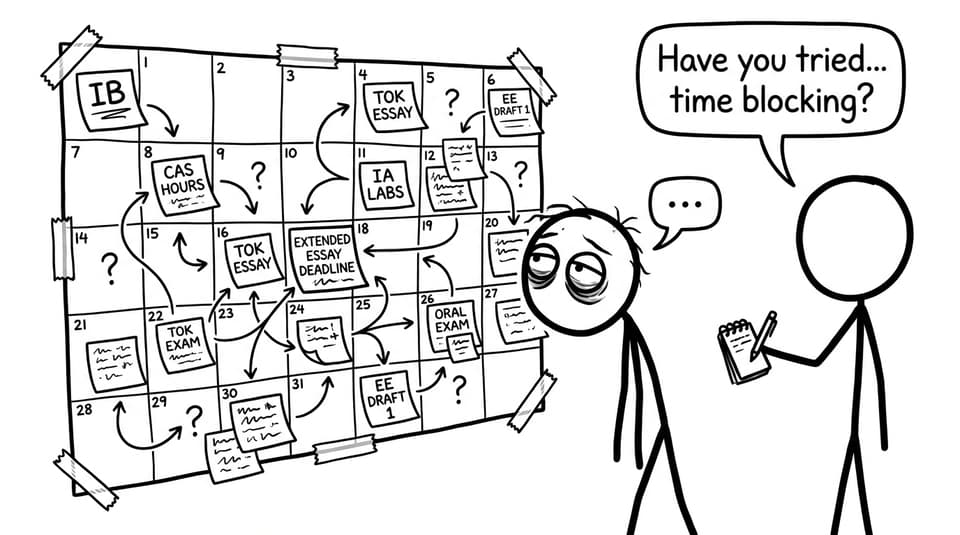
Quick start: the IB time management checklist
If you want a simple reset, use this list before you change anything else:
-
Put every deadline in one calendar (school + personal + IB core).
-
Choose a weekly “review ritual” (15 minutes, same day, same time).
-
Study in time boxes (25-50 minutes), not open-ended marathons.
-
Break every big task into the next tiny action.
-
Use active recall (questions + flashcards) as your default revision method.
-
Protect sleep with a hard stop time.
-
Add buffer time so your plan can survive real life.
If you want a deeper framework for building a routine, pair this post with Time Management Strategies for IB Students and How to Stay Sane During IB Exam Season.
Make the IB Extended Essay a “daily pebble,” not a weekly boulder
Most students don’t struggle with the IB Extended Essay because they’re lazy. They struggle because they treat it like a weekend-only project. That sounds reasonable, until one weekend disappears (tests, family plans, exhaustion) and your progress drops to zero.
Try this instead: schedule the IB Extended Essay as a small daily pebble.
-
20 minutes per day on weekdays (yes, even during exam prep).
-
One longer session on the weekend (60-90 minutes).
-
One specific outcome each time: “write one paragraph,” “add two sources,” “fix one argument,” not “work on EE.”
If you need a structured roadmap, IB Extended Essay Guides are designed to turn the IB Extended Essay into clear milestones, not a foggy mountain.
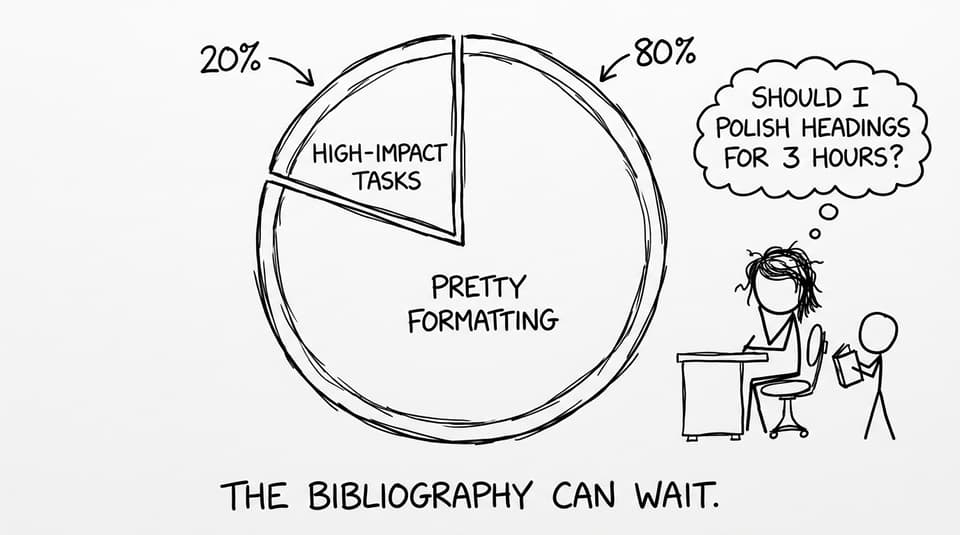
Use the 80/20 rule to stop donating hours to low-impact tasks
In the IB, effort is unlimited. Grades are not. The 80/20 rule is the reminder that a small set of actions drives most of your results.
For exam prep, the high-impact 20% usually looks like:
-
Timed practice (even short timed sections).
-
Reviewing mistakes and turning them into rules.
-
Repeating weak topics until they stop bleeding marks.
Low-impact tasks often look like:
-
Rewriting notes for aesthetic comfort.
-
Perfect formatting before your argument is clear.
-
“Studying everything” instead of the topics you actually miss.
This applies to the IB Extended Essay too: argument clarity and method beat beautiful headings.
Time block like you’re protecting something valuable (because you are)
A to-do list is polite. Time blocking is honest.
When you time block, you stop negotiating with yourself all day. You decide once, then you follow the plan.
A simple exam-season template that still leaves space for the IB Extended Essay:
-
Block A (45 min): one subject topic + practice questions
-
Block B (25 min): flashcards (light, daily, non-negotiable)
-
Block C (30 min): IB Extended Essay micro-task
-
Block D (15 min): review mistakes, plan tomorrow
To build this routine into a system, RevisionDojo helps you keep each block focused: learn quickly with Study Notes, drill with exam-style practice in the Questionbank, and keep recall warm with Flashcards.
For a broader strategy, see Time Management in IB: Tools and Techniques That Actually Work.
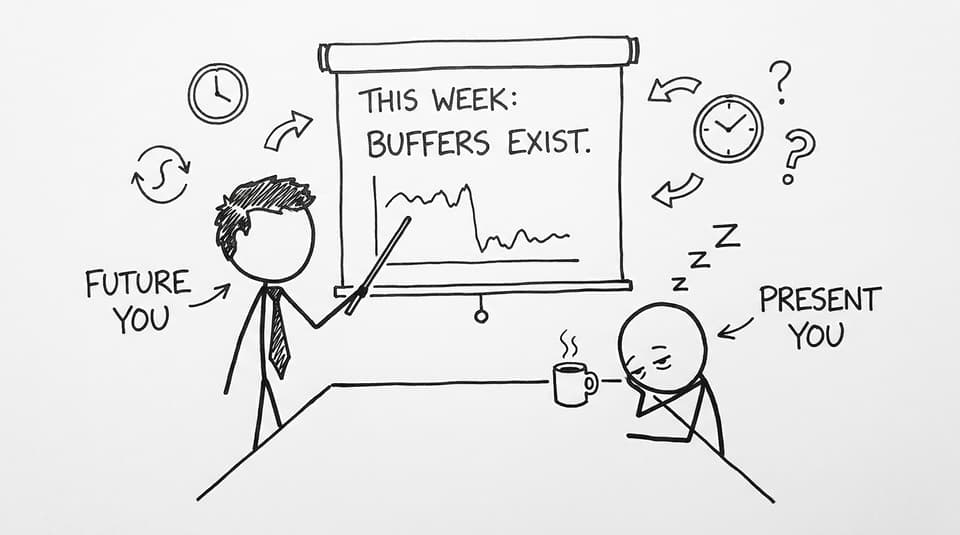
Weekly review: a 15-minute meeting with “future you”
The weekly review is boring in the way brushing your teeth is boring. It prevents pain.
Once per week:
-
Look at deadlines for each subject and the IB Extended Essay.
-
Choose your top 3 outcomes for the week (not 12).
-
Add 2 buffer blocks for surprises.
-
Decide your one “catch-up” window before you need it.
Students who do this stop living in reaction mode.
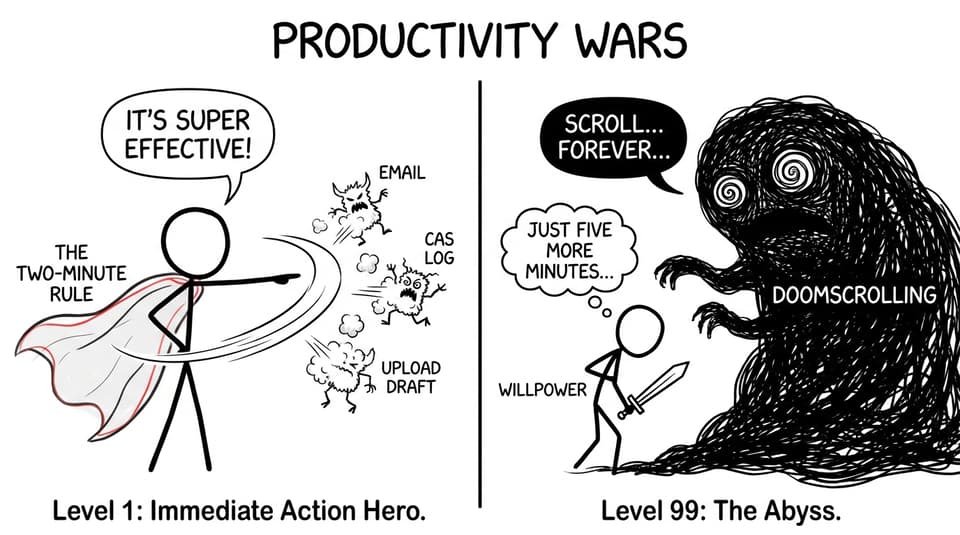
The two-minute rule: close tiny loops before they multiply
If a task takes under two minutes, do it now.
In the IB, tiny tasks don’t stay tiny. A quick email becomes five reminders. A CAS entry becomes a missing month. A small citation fix becomes a formatting panic.
Use the two-minute rule especially for IB Extended Essay maintenance tasks:
-
Add a source to your bibliography immediately.
-
Save a quote with page number now, not “later.”
-
Write one sentence in your reflection while it’s fresh.
Use RevisionDojo to reduce the “what do I do next?” problem
Time management breaks when every session starts with confusion.
RevisionDojo is built to reduce that friction for exam prep and core work. In one place, you can:
-
Practice efficiently with the Questionbank (target weak topics, get fast feedback).
-
Clarify quickly with AI Chat when you’re stuck.
-
Lock memory with Flashcards (spaced repetition without manual planning).
-
Study faster with syllabus-aligned Study Notes.
-
Build stamina using Mock Exams and Predicted Papers.
-
Speed up drafting with Grading tools and exemplars in the Coursework Library.
-
Get personalized help from Tutors when your plan needs a human brain.
If you want an end-to-end workflow, RevisionDojo App: The Smarter Way to Prep for IB Exams shows how to combine these tools into a weekly rhythm.
Closing: your schedule is a strategy, not a punishment
The IB isn’t impossible. It’s just crowded.
When you use time blocking, weekly reviews, and outcome-based mini-tasks, you stop feeling like everything is happening to you. The IB Extended Essay becomes a steady habit. Exam prep becomes a loop you can repeat. And stress drops, not because the workload vanishes, but because your plan finally matches reality.
If you want a system that makes those habits easier to run, build your routine inside RevisionDojo: Study Notes to learn quickly, Flashcards to remember, Questionbank practice to improve, AI Chat and Grading tools to shorten feedback loops, plus Predicted Papers, Mock Exams, the Coursework Library, and Tutors when you need extra support.