
Time is the sneakiest topic in the IB.
Not because it’s complicated, but because it’s invisible until it’s gone.
You can understand the whole unit, walk into a paper feeling ready, and still watch marks leak away in slow motion: a perfect first answer, a stubborn question you refuse to leave, a “quick check” that becomes five minutes. Time-controlled IB tests fix that. They turn pacing from a vague hope into a trained skill, so speed and accuracy stop fighting each other.
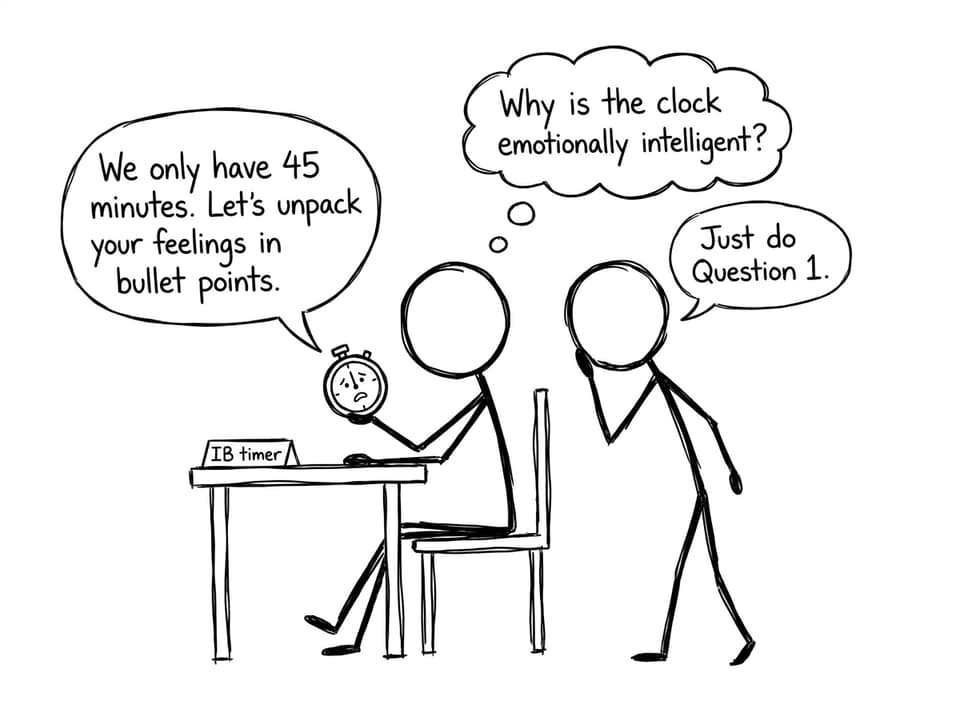
The time-controlled IB test checklist
Use this quick checklist before every time-controlled IB test, whether you’re doing Math, Biology, Economics, or English:
-
Choose a paper or section (not “the whole subject”)
-
Set official timing (or slightly tighter for drills)
-
Sit in silence: no notes, no pausing, no multitasking
-
Track time per question (roughly, not obsessively)
-
Review with ruthless honesty: where did time buy marks, and where did it just buy stress?
If you need a structured place to run this loop, RevisionDojo is built for IB practice that behaves like the real thing: Questionbank, Study Notes, Flashcards, AI Chat, Grading tools, Predicted Papers, Mock Exams, a Coursework Library, and Tutors.
Why time control is the real bridge between practice and mastery in IB
Most students practice content. High scorers practice decisions.
A time-controlled IB test forces decisions you can avoid in untimed sessions: when to skip, when to commit, how much working is “enough,” and when you’re polishing a sentence that isn’t earning marks. The skill isn’t speed alone. It’s speed with standards.
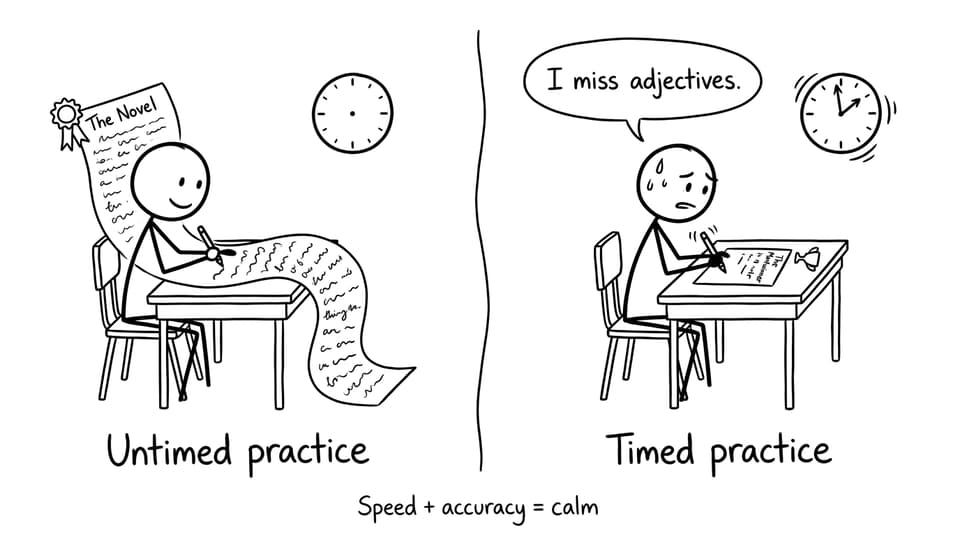
Timed practice also exposes the truth about your revision. Not what you know, but what you can access quickly. That’s why time control tends to improve accuracy: it reduces the panicked guessing that happens when the clock surprises you.
For a broader framework that supports this kind of training, keep the RevisionDojo loop in mind from Active Recall for IB: The Only Method You Need.
Two training modes: full time-controlled IB tests and speed drills
Full time-controlled IB tests (real conditions)
These are your “stamina and realism” sessions. Treat them like rehearsals.
On RevisionDojo, you can build this with the Questionbank for targeted sections, or run longer simulations using IB Predicted Papers. The point is consistency: same silence, same timer, same expectations.
After the attempt, don’t just mark right vs wrong. Ask: Which questions were worth my time? That question is how IB pacing becomes strategic.
Speed drills (slightly faster than exam pace)
Speed drills are short, controlled discomfort.
Pick a small set (10-25 minutes) and aim to complete it around 10-20% faster than normal pace. Not by rushing randomly, but by removing time sinks: rewriting definitions, over-explaining, re-checking the same step twice.
Then return to normal timing. When you do, the exam pace feels calmer, almost roomy.
If you want an example of how to build a repeatable routine when time is tight, see Is 1 Month Enough to Study for IB Exams?.
The review loop that makes time-controlled IB tests work
A time-controlled IB test only helps if the review is sharper than the attempt.
Here’s a simple loop that fits real student life:
Find your “time leaks”
Time leaks are patterns, not single mistakes. Common ones:
-
Getting stuck because the first line isn’t obvious
-
Overwriting (especially in humanities)
-
Under-structuring (writing fast but not earning marks)
-
Rechecking too early instead of finishing the section
When you notice a leak, convert it into a rule. Example: “If I’m not moving in 60 seconds, I skip and return.”
Patch only what matters
Use Study Notes as a quick patch, not a comfort blanket. RevisionDojo’s notes are designed for fast clarity, so you can return to questions quickly. (That “return” is where speed and accuracy compound.)
A good companion read is Digital IB Study Notes You Can Access Anywhere.
Re-test within 48 hours
Re-test the exact weakness while it’s still fresh. Use the Questionbank to filter by the topic or question type you just missed.
If you’re building your setup from scratch, this guide helps: IB Question Bank: Thousands of Practice Questions.
Get feedback that changes your next attempt
For essays and longer responses, speed without feedback becomes sloppy confidence. RevisionDojo’s AI Chat and Grading tools help you compare your structure to what IB-style mark logic rewards.
When anxiety gets loud during timed sessions, this is useful: How to Beat IB Exam Anxiety (Without Burning Out).

A simple weekly plan for time-controlled IB tests
Keep it boring. Boring is scalable.
-
Early week: one timed section (25-45 min) + review
-
Midweek: one speed drill (15-25 min) + write 3 pacing rules
-
Late week: a longer timed sitting using Custom IB Mock Exams: Build Practice Tests by Topic
-
Weekend: fix the slowest topics using Questionbank + Flashcards (spaced repetition keeps speed from fading)
If you want to forecast progress from timed data (instead of feelings), use Predict Your IB Score Before Exams (Without Guessing).
Conclusion: make the clock your training partner
In the IB, time control isn’t a personality trait. It’s a repeatable skill.
Run time-controlled IB tests consistently, add occasional speed drills, and review like an analyst. Then use RevisionDojo to make the loop frictionless: clarify with Study Notes, retain with Flashcards, drill with the Questionbank, get unstuck with AI Chat, tighten responses with Grading tools, and simulate the real thing using Predicted Papers and Mock Exams.
When the clock becomes familiar, you don’t just work faster. You think cleaner. And that’s where speed and accuracy finally meet.