
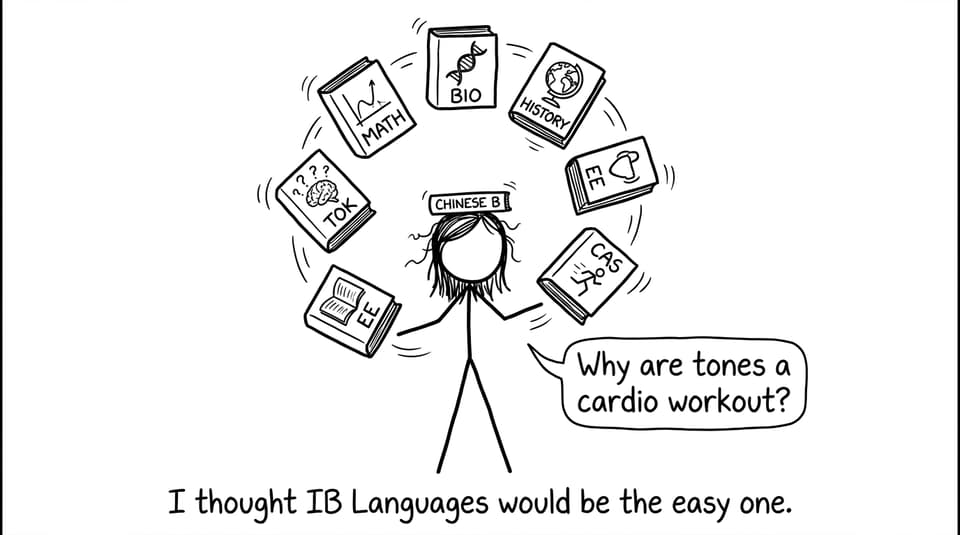
Balancing IB Languages can feel like trying to carry water in your hands between classes: you’re moving fast, you’re doing your best, and somehow the most important things still leak out.
Chinese B is often the subject that exposes this. Not because it’s “harder” than your HL sciences or essay-heavy humanities, but because language learning is honest. It doesn’t reward heroic last-minute effort the way some topics sometimes do. It rewards the quiet kind of consistency.
This guide shows how to balance Chinese B with the rest of the Diploma without burning out. The goal isn’t to make every subject equal. The goal is to make your schedule sustainable, so your Chinese stays warm, your HLs stay under control, and exam season doesn’t become a panic story you tell later.
A quick balance checklist (save this)
If you only do eight things, do these:
-
Keep IB Languages “always on”: 10-20 minutes most days.
-
Tie Chinese B themes to what you’re already studying in other subjects.
-
Split practice by skill: reading, listening, writing, speaking.
-
Use short timed drills, not occasional marathons.
-
Decide early whether HL or SL fits your overall workload.
-
Protect one full rest block each week (real rest, not “guilty scrolling”).
-
Use feedback loops: attempt, check, fix, repeat.
-
Start exam-style work early enough that it feels normal.
Why Chinese B is different (and why that matters for IB Languages)
Most IB students plan time as if all subjects behave the same. They don’t.
Chinese B asks you to maintain four skills simultaneously. If you ignore speaking for two weeks, it shows. If you stop listening practice until the month before exams, your brain feels like it’s hearing the language through a wall.
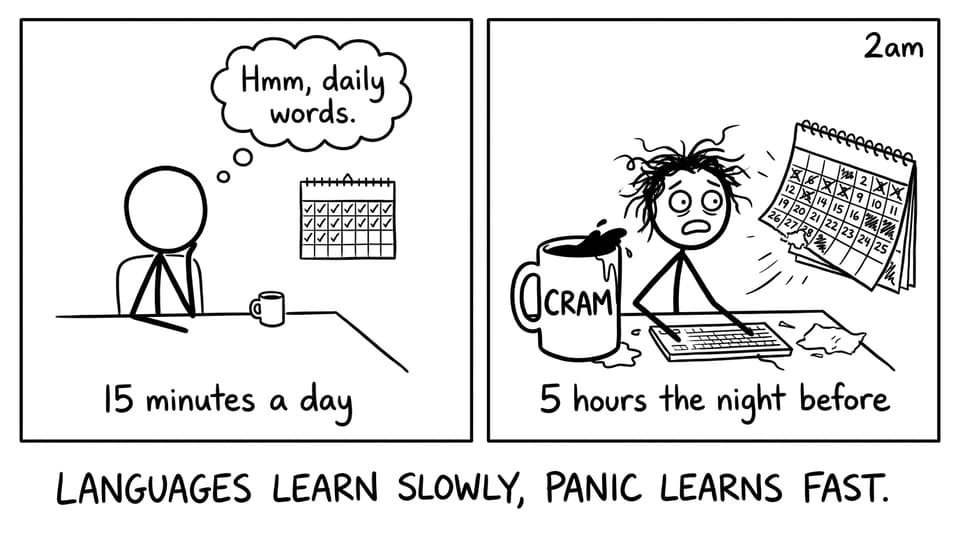
That’s why IB Languages need a “low-friction” routine: small sessions that happen even on busy days. The win is not a perfect timetable. The win is a routine you don’t break.
A good starting point is building everything around one hub. The IB Chinese B resources page on RevisionDojo is designed exactly for that: Questionbank practice, vocabulary work, and exam-building tools in one place.
Build a weekly rhythm you can actually keep
Here’s a structure that works even when your other subjects spike.
The 6-day “warm language” plan
-
Day 1 (15 min): vocab + 1 short reading
-
Day 2 (20 min): listening + transcript review
-
Day 3 (20-30 min): one writing plan + one paragraph
-
Day 4 (15 min): speaking (record yourself) + error list
-
Day 5 (25 min): mixed skills drill (reading then listening)
-
Day 6 (45-60 min): one timed exam-style block
-
Day 7: off, or a light cultural activity that feels fun
That “timed block” can be as simple as training the exact exam behaviors you need: reading quickly, deciding under time pressure, writing with the correct register. RevisionDojo’s Exam builder and Questionbank make it easier to keep those sessions realistic without spending half your time searching for materials.
Balance HL and SL like a strategist, not a hero
A lot of “balance problems” are actually “level choice problems.” If you’re taking demanding HLs (Math AA, Physics, Chemistry, History, etc.), Chinese B HL may still be possible, but it stops being a casual add-on.
Ask yourself two honest questions:
-
Do I enjoy languages enough to practice even when I’m tired?
-
Do I have enough schedule space for heavier reading/writing demands?
If the answer is “not really,” SL can be a smart, rational decision. Balancing IB Languages isn’t about proving something. It’s about keeping your total points high.
Use theme integration to save hours (the secret weapon)
The fastest way to study is to make one subject feed another.
Chinese B is built around themes. When you align those themes with what you’re already doing elsewhere, you reduce the “context switching” that drains energy.
A simple way to start is to review the theme breakdown in The Five Core Themes of IB Chinese B Explained, then map each theme to another subject:
-
Sharing the Planet: Biology ecosystems, Geography case studies, ESS debates
-
Human Ingenuity: Physics tech applications, Design Tech design cycles, Digital Society issues
-
Social Organization: Economics policy, History governance, Global Politics power structures
-
Identities and Experiences: perfect for oral anecdotes and personal examples
This is also where IB Languages become easier to “keep warm.” You’re not inventing topics from scratch; you’re translating the ideas you already understand.
Make Chinese B part of your day (without stealing study time)
The students who look “naturally good” at languages usually do something boring: they touch the language often.
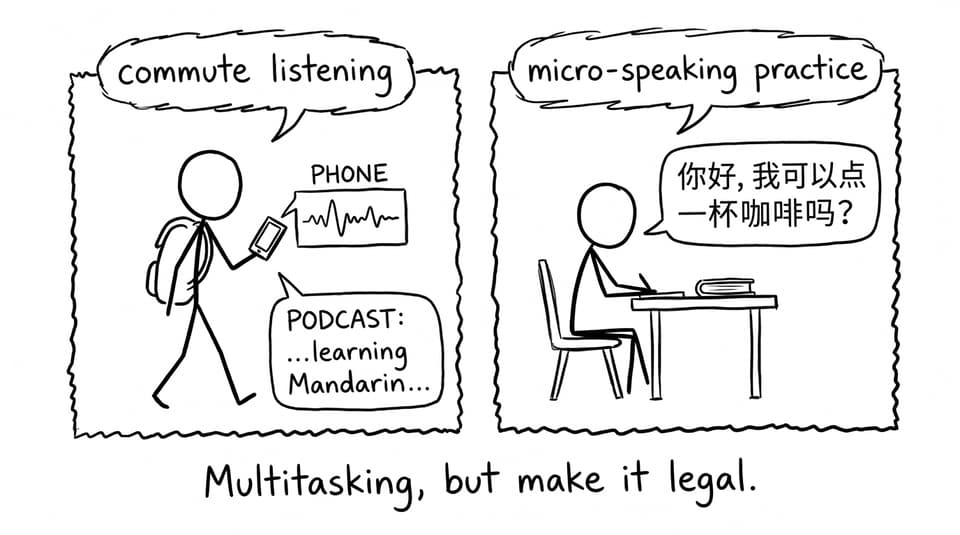
Try stacking micro-practice onto routines you already have:
-
Commute: listening practice (one short audio, one replay)
-
Lunch break: 5 flashcards + 2 example sentences
-
After homework: 3-minute speaking recording
-
Before bed: read one short paragraph and summarize it aloud
RevisionDojo’s Flashcards feature is built for this exact style of learning: quick sessions, spaced repetition, and vocabulary that stays available when exam questions demand it.
Keep your Chinese B practice exam-shaped
Balancing is easier when your practice matches the assessment. Otherwise, you spend time “studying” but don’t gain points.
Use these exam-aligned guides to shape your weekly work:
-
For the full structure and long-range plan: How to Revise Effectively for IB Chinese B Exams
-
For writing conventions and register control: How to Prepare for IB Chinese B Paper 1 (Writing Exam Guide)
-
For faster comprehension under time pressure: Reading Strategies for IB Chinese B Paper 2
When you pair those strategies with RevisionDojo tools, including Questionbank for targeted drills, AI Chat for quick explanations, Grading tools for writing feedback, and Mock Exams plus Predicted Papers for realistic pressure, your Chinese B stops feeling like a constant unknown.
If you also need the “all subjects, one system” approach, the broader study workflow in RevisionDojo App: The Smarter Way to Prep for IB Exams is a helpful reset.
Common mistakes that quietly break balance
Treating Chinese like a subject you can pause
With IB Languages, pauses are expensive. Even three short sessions a week will protect your fluency better than one weekend marathon.
Over-investing in your favorite skill
Many students read well, so they only read. Then the oral feels terrifying. Balance the four skills even when one feels uncomfortable.
Using “resources” instead of using practice
More tabs isn’t more learning. Choose a small stack (notes, flashcards, practice questions, feedback) and repeat it.
Closing: balance is a system, not a personality trait
The students who “balance everything” aren’t calmer by nature. They just stop relying on motivation and start relying on systems.
Keep IB Languages warm with small daily practice. Make Chinese B themes support other subjects. Use one weekly timed block to stay exam-ready. Then let RevisionDojo do what it’s built to do: bring your Study Notes, Flashcards, Questionbank, AI Chat, Grading tools, Coursework Library, Tutors, Mock Exams, and Predicted Papers into one loop you can repeat until exams feel familiar.
When balance works, you don’t feel like you’re doing everything. You feel like you’re doing the right things, often enough.