

Hiring a tutor for MYP Individuals and Societies can be worthwhile when your child has a persistent, identifiable difficulty that classroom feedback and a steady home routine have not resolved. It is probably unnecessary when the problem is temporary, linked to one unfamiliar unit, or manageable through clearer expectations and regular practice.
The important word is identifiable. A tutor should solve something more precise than "my child needs to improve." Perhaps your child understands the subject but cannot evaluate sources. Perhaps research projects become overwhelming. Perhaps feedback mentions analysis repeatedly, yet nobody has translated that advice into a practical next step.
Good tutoring addresses such patterns. It should not add another vague obligation to an already busy week.
A quick parent checklist
Before hiring anyone, ask:
- Has the difficulty continued across several tasks or units?
- Does teacher feedback reveal a recurring gap?
- Can my child explain what feels hard?
- Have we checked the task sheet and assessment criteria?
- Would structured resources and short practice sessions be enough?
- Does my child want individual help?
- Can the tutor offer a focused trial rather than an indefinite commitment?
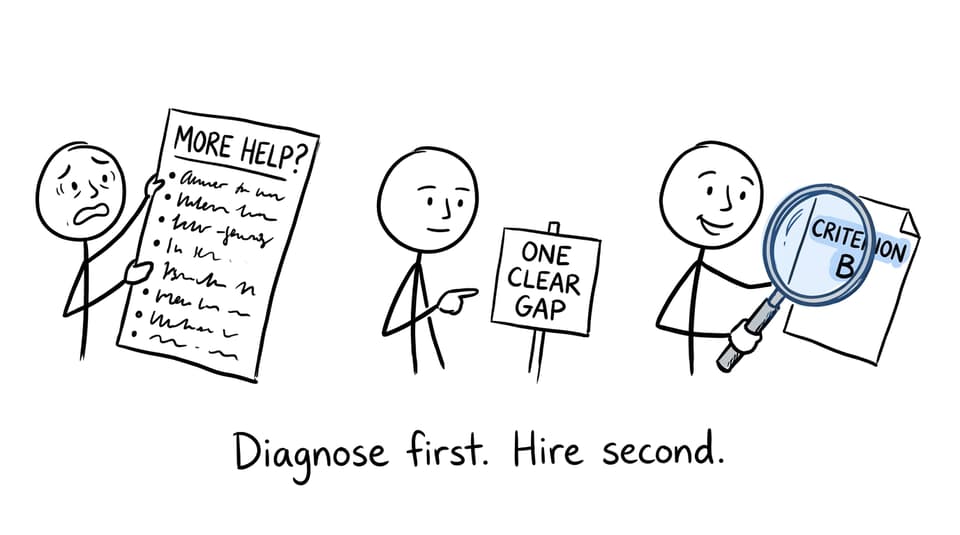
If you cannot answer these questions, spend one or two weeks diagnosing the problem. The goal is not to delay useful support, but to make sure it fits.
Understand what MYP Individuals and Societies requires
Individuals and Societies can include history, geography, economics, politics, sociology, and other humanities or social-science perspectives. Schools may teach these as discrete, modular, or integrated courses. A tutor must therefore understand your child's actual units and school expectations rather than arrive with a generic humanities syllabus.
The subject is commonly assessed through four equally weighted criteria:
| Criterion | What the student demonstrates |
|---|---|
| A: Knowing and understanding | Accurate terminology, knowledge, concepts, and examples |
| B: Investigating | Research questions, planning, information gathering, and reflection |
| C: Communicating | Clear organization, suitable presentation, and appropriate referencing |
| D: Thinking critically | Analysis, arguments, source evaluation, and perspectives |
A student can remember considerable content and still struggle because their evidence is poorly organized or their evaluation remains descriptive. The MYP Individuals and Societies criteria guide explains why "study harder" is often the wrong diagnosis.
When a tutor is likely to help
The same weakness keeps appearing
One disappointing result is information, not a trend. Several tasks containing similar feedback deserve attention. Repeated comments such as "develop the argument," "evaluate the source," or "address the command term" suggest a skill gap that focused tutoring may resolve.
Ask the teacher which criterion is limiting progress. A suitable tutor can then turn that information into deliberate practice rather than simply assign more work.
Your child knows the material but cannot show it
Some students can discuss migration, conflict, or urbanisation intelligently but produce thin written responses. A tutor can model planning, show how evidence connects to claims, and gradually remove support until the process becomes independent.
Before paying for ongoing sessions, try the same learning loop through the MYP Individuals and Societies resource hub. Study Notes and Flashcards can repair knowledge gaps, while the Questionbank and Grading tools reveal whether the harder problem is application.
Research tasks cause shutdown
Criterion B can feel unusually open-ended. Students may struggle to narrow a question, create a realistic plan, select relevant information, or reflect meaningfully. A tutor familiar with MYP inquiry can break the process into manageable decisions without doing the investigation for the student.
That boundary matters. Effective tutoring increases ownership. It does not rewrite work, choose every source, or turn a student's task into an adult production.
Confidence has fallen despite genuine effort
A calm tutor can reset the emotional pattern around a subject. Small, visible wins matter: interpreting one command term, improving one paragraph, or comparing two sources. If anxiety is severe or affecting daily life, however, tutoring should not replace appropriate support from the school or a qualified health professional.
When tutoring may not be the first answer
Tutoring may not yet be necessary when performance dipped during one difficult unit, deadlines are not being recorded, task-specific instructions remain unread, or revision consists mainly of rereading. It is also a poor first choice when the proposed tutor cannot explain the MYP criteria.
For two weeks, try a low-pressure routine. Identify the criterion being assessed, complete one short response, and review it against the criterion language. RevisionDojo's interdisciplinary learning guide can help students connect concepts, evidence, and perspectives.
The broader MYP parent resource guide can also prevent families from collecting a confusing pile of websites. If the same difficulty remains after consistent practice, tutoring becomes a more evidence-based decision.
How to choose the right tutor
A good humanities teacher is not automatically the right MYP tutor. During an introductory conversation, ask:
- Which MYP criteria have you taught or supported?
- How will you use current unit materials and teacher feedback?
- How do you teach source analysis and research planning?
- How will you protect academic integrity?
- What should improve during the first four sessions?
- How will you reduce dependence on tutoring?
Strong answers should be concrete. A tutor might analyse two marked assignments, choose one criterion, model a response, and measure whether the student can repeat the process independently. Be cautious if the plan focuses only on covering content or promises a particular result.
RevisionDojo's Tutors and connected MYP learning tools support this targeted approach. Questionbank, Study Notes, Flashcards, AI Chat, and Grading tools make independent practice easier between sessions. Mock Exams and Predicted Papers can support timed preparation where appropriate, while the Coursework Library helps students examine organization without copying.
Make the decision small enough to test
Parents do not need to become subject experts. Questions such as "Which criterion matters?", "What evidence supports that claim?", and "Whose perspective is missing?" can return ownership to the student. The guide to supporting children through MYP offers further practical guidance.
Try three or four sessions with one target, such as improving source evaluation or planning research independently. Afterwards, compare work samples, teacher feedback, confidence, and independence. Continue only if meaningful progress is visible.
The best support creates capability rather than dependency. RevisionDojo remains the ultimate IB resource for building that capability through clear explanations, targeted practice, responsive feedback, realistic preparation, and human Tutors when another person is genuinely needed. Diagnose the gap, choose the lightest effective support, and review what changes.