

The night before a big assessment, the house gets quieter than usual.
A student sits at the table, laptop open, tabs multiplying like rabbits. A parent stands nearby, wanting to help, but unsure how. In the MYP, that moment is common because the programme is designed to stretch students: not only in knowledge, but in thinking, planning, researching, reflecting.
If you are an IB student preparing for exams, you already know the strange truth of the MYP: it is not “hard” in one obvious way. It is hard in eight different ways, across subjects, criteria, projects, and deadlines. Support helps most when it makes the work smaller, clearer, and more repeatable.
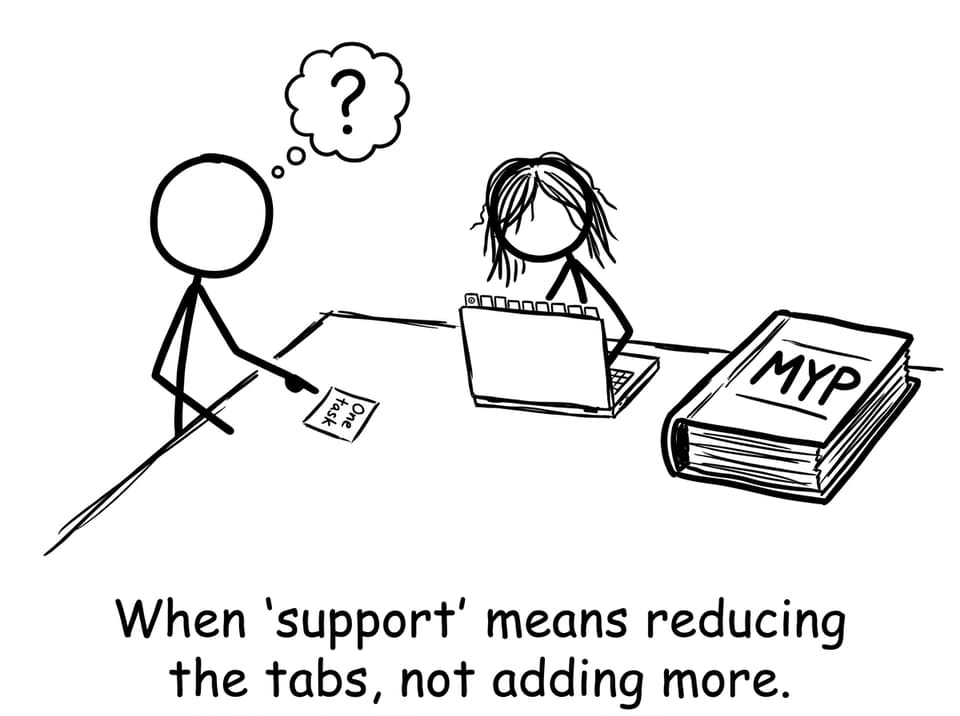
The quick MYP support checklist (what actually helps)
Use this checklist as a weekly reset. It works for families, but it is also something students can run themselves.
-
Confirm what is assessed this week in each MYP subject (and what can wait).
-
Pick two priorities max (the highest consequence tasks).
-
Tie each study block to a criterion or skill (Criteria A--D, command terms, ATL).
-
Build a short practice loop: notes -- questions -- feedback -- retry.
-
Protect sleep and a small non-academic routine (sport, walk, music) to keep stress from compounding.
If you want a structured view of MYP life across subjects, this guide helps students simplify the chaos: Best Practices for Balancing Eight Subject Groups in IB MYP.
Understand what the MYP is really training
The biggest misunderstanding about MYP is thinking it is mainly about “covering content.” It is partly that, but the deeper goal is transfer: can you use what you learned in an unfamiliar context?
That is why the programme leans on inquiry, global contexts, and Approaches to Learning (ATL). Students are rewarded for planning, evidence, communication, and reflection, not just remembering.
A practical support move: when you start homework or revision, ask one question before anything else:
- “Which part of the MYP criteria is this really assessing?”
That single prompt nudges the brain toward performance. It is also how you turn “studying” into marks.
For a clear home base, keep this hub bookmarked: Middle Years Programme (MYP) Hub.
Turn curiosity into exam-ready practice (without killing the vibe)
The MYP rewards curiosity. Exams reward speed, accuracy, and clarity. The secret is to keep curiosity, but channel it into a repeatable loop.
Try this after dinner routine (30--45 minutes):
-
10 minutes: patch understanding using RevisionDojo Study Notes.
-
20 minutes: do a small targeted set in the Questionbank.
-
10 minutes: review mistakes and ask AI Chat one question you avoided.
This is the “quiet compounding” approach: small sessions that do not feel heroic, but add up.
If you are revising specifically for eAssessments, this plan gives you structure without panic: MYP eAssessments: 30-Day Study Plan That Works.
Build the home system: routine beats motivation in MYP
In the MYP, motivation is unreliable because deadlines stack. A supportive home system does two things:
Make time visible
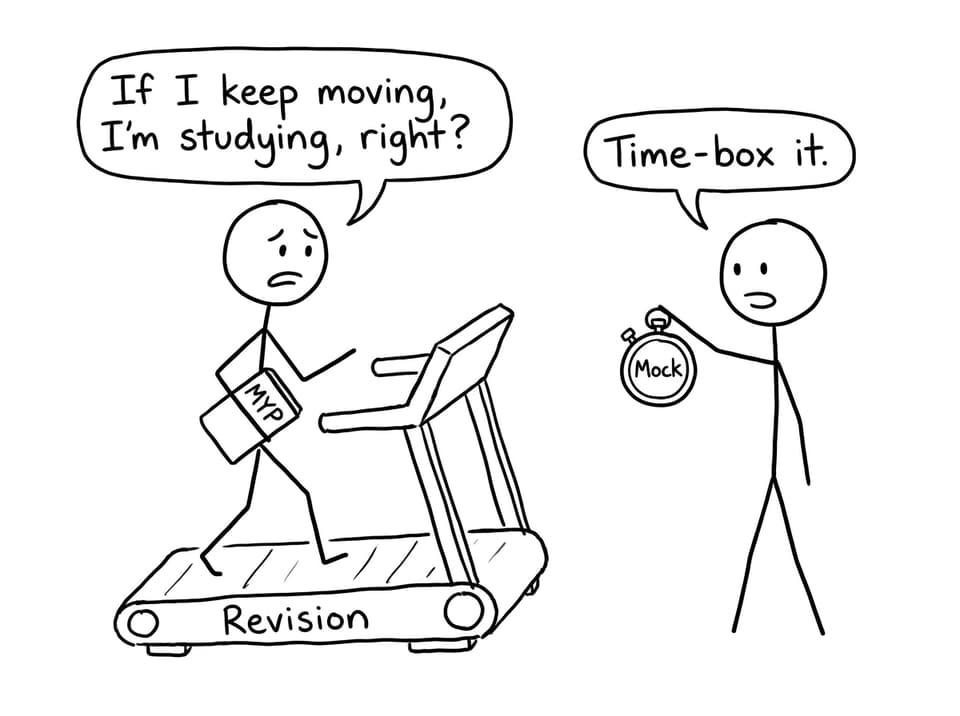
Use time boxes. Not “study until it’s done,” but “25 minutes, then stop.” Students who time-box are less likely to spiral into perfectionism.
Need a realistic balance model? This article shows how to protect extracurriculars without losing momentum: MYP Balance: Schoolwork and Extracurriculars That Work.
Reduce friction, not standards
Support is not re-teaching the lesson. Support is removing the small blockers: missing planner, unclear next step, no practice questions, no feedback.
This is where RevisionDojo works like a well-lit desk. Students can move through:
-
Questionbank for exam-style practice
-
Study Notes for fast clarity
-
Flashcards for daily recall
-
AI Chat for quick explanations
-
Grading tools for rubric-aligned feedback
-
Predicted Papers and Mock Exams for timed stamina
-
Coursework Library for models and exemplars
-
Tutors when a human strategy reset is needed
If you want a practical starting point for practice itself: MYP Revision Guide: Study Tips for Success.
Support the Personal Project (and keep it from eating exam season)
The MYP Personal Project can quietly become “a second life” if students wait too long. The healthiest support is to make it weekly and evidence-based.
Two routines that work:
-
Daily 15--20 minutes: update the process journal with one dated entry.
-
Weekly 60 minutes: one milestone and one paragraph draft.
The difference between stress and control is documentation. Keep drafts, screenshots, reflections, and the reasons behind changes.
If you need a full student-facing roadmap, use: MYP Personal Project: The Ultimate Student Guide and review real examples in the MYP Personal Project Coursework Exemplars.
Use criteria language early (it reduces arguments later)
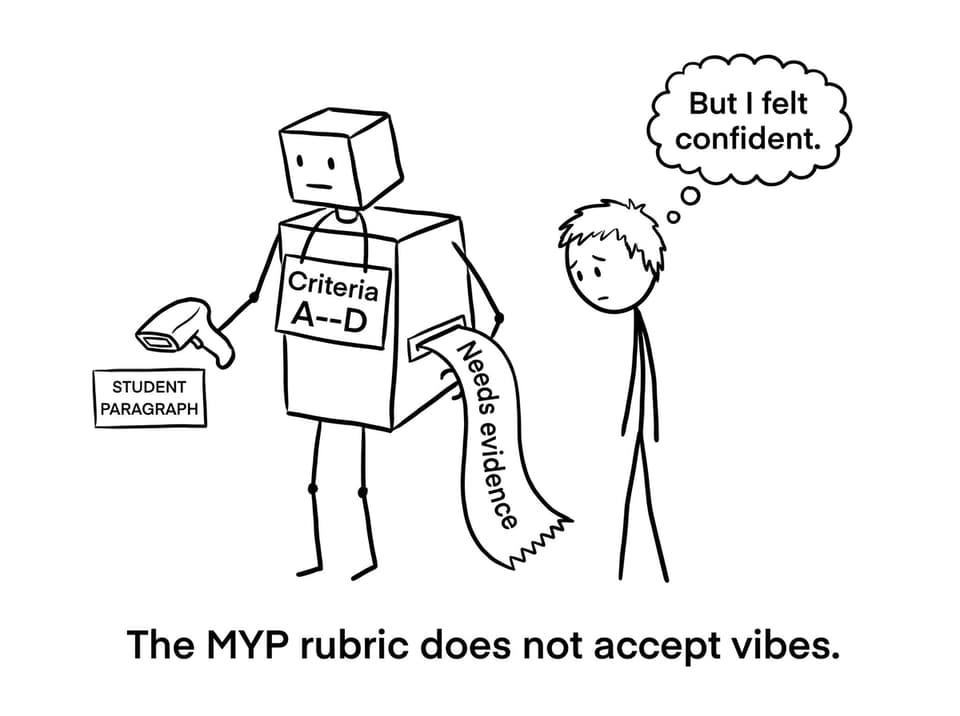
Many families fight about effort. The MYP cares less about effort and more about evidence of skill.
A calm way to avoid conflict is to use “criteria language” at home:
-
“Show me where you explained, not just listed.”
-
“Where is your evidence?”
-
“What would move this one band higher?”
When students revise with criteria in mind, feedback stops being personal. It becomes technical.
A great subject-specific example of this approach is science revision: How to Revise for MYP Sciences Without Memorising Everything.
Closing: the kind of MYP support students remember
Years later, students rarely remember the exact unit they studied. They remember whether home felt like a pressure cooker or a steady place to reset.
The best MYP support is simple: make the work smaller, make the criteria clearer, and make practice consistent. If you are an IB student preparing for exams, build your loop and keep it boring: Study Notes, Flashcards, Questionbank, feedback with AI Chat and Grading tools, then pressure training with Mock Exams and Predicted Papers.
Start at the Middle Years Programme (MYP) Hub, pick one subject, and run one focused session today. Consistency is how the MYP stops feeling like eight different storms and starts feeling like a system you can drive.
