


A flashcard should be a small test, not a small page of notes. For MYP Individuals and Societies, that test must go beyond recalling a date or definition. It should help you explain causes, connect evidence to concepts, compare perspectives, interpret sources, and make supported judgements.
You can create a useful first deck today. Choose one narrow topic, make 12 focused cards, test them without notes, and turn your mistakes into tomorrow's review list. The goal is not to own the largest deck. It is to build one that reveals what you can actually use.
Your same-day flashcard checklist
Use this 45-minute process:
- 5 minutes: Choose one narrow topic from your current school unit.
- 10 minutes: Collect accurate information from class materials and trusted notes.
- 15 minutes: Create 12 cards using several of the card types below.
- 5 minutes: Test every card without looking at the answer.
- 10 minutes: Answer one short application or source-based question.
- Mark missed cards for tomorrow and uncertain cards for review in two or three days.
Start with the unit your teacher is currently teaching. MYP schools may organize Individuals and Societies through integrated humanities or disciplines such as history, geography, economics, and politics. Your class materials should therefore determine what belongs in your deck. The MYP Individuals and Societies revision notes can help clarify ideas and fill genuine gaps.
Build flashcards for MYP Individuals and Societies
Choose a micro-topic
“Globalization” is too large for one deck. “How globalization affects employment in one named location” is manageable. Likewise, replace “World War I” with “long-term causes of World War I,” or replace “population” with “push and pull factors affecting rural-to-urban migration.”
Before making cards, record the topic, key concept, related concept, global context, and relevant case study. This keeps the deck aligned with concept-driven learning rather than isolated trivia. RevisionDojo's guide to MYP global contexts and conceptual learning explains these connections.
Gather reliable material
Use your teacher's unit outline, class notes, assigned sources, and textbook first. Extract only information that helps you define terminology, explain relationships, recall case-study evidence, compare perspectives, interpret sources, or evaluate an investigation.
Accuracy matters because repetition strengthens whatever is written on the card, including mistakes. If two resources disagree, ask your teacher or use RevisionDojo's AI Chat to clarify the issue. Verify the final answer against your course materials before saving it.
Write one precise prompt per card
Vague prompts produce vague thinking. Avoid fronts such as “Everything about migration.” Give each card one clear task and enough context to judge the answer.
Use MYP-style command terms where appropriate:
- Define: What is forced migration?
- Describe: Describe one pattern shown by this population map.
- Explain: Why can rapid urbanization increase pressure on housing?
- Compare: How do economic and environmental push factors differ?
- Analyse: How did two causes interact to produce this event?
- Evaluate: Which source is more useful for this inquiry, and why?
The MYP Individuals and Societies skills guide explores the research, communication, conceptual, and critical-thinking skills your cards should support.
Mix six useful card types
A deck made entirely of definitions prepares you to recognize vocabulary, but not to construct an explanation. Build variety deliberately.
| Card type | Example prompt | What belongs on the back |
|---|---|---|
| Definition | What is cultural diffusion? | A concise definition and clear example |
| Cause and consequence | How can drought contribute to migration? | A short causal chain using because and therefore |
| Evidence | What evidence supports this claim about urbanization? | One precise statistic, policy, event, or observed pattern |
| Concept connection | How does this case study demonstrate change? | A direct link between evidence and the concept |
| Perspective | How might residents and developers view this project differently? | Their interests and reasons for disagreement |
| Source evaluation | What is one value and limitation of this source? | A contextual judgement linked to the inquiry |
This mixture reflects the subject's emphasis on collecting and analysing information, testing ideas, interpreting evidence, and investigating historical, geographical, political, social, economic, and cultural factors. Facts are foundations. Inquiry and analysis give them purpose.
Keep answers short but sufficient
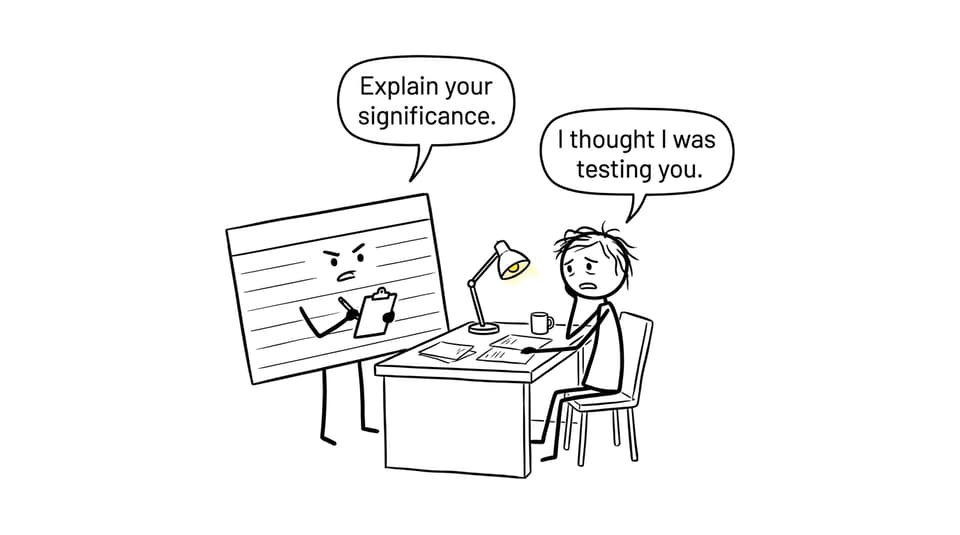
A useful back contains the smallest complete answer you would accept. Most should fit within one to four lines. If an answer contains four separate ideas, divide it into several cards.
For example, “Why did industrialization encourage urbanization?” could be answered with: “Factories concentrated paid employment in towns and cities. Workers moved from rural areas seeking wages, increasing urban populations.” A separate card can ask how that relationship appeared in a taught case study.
Source analysis needs similar care. A source is not simply reliable or unreliable; its value depends on the inquiry. Put a short extract, graph, map, or source reference on the front, then ask about message, audience, purpose, context, value, or limitation. The guide to analysing MYP History sources shows how these elements contribute to a judgement.
Review the cards without fooling yourself
Recognition feels comfortable because an answer looks familiar. Retrieval is harder because you must produce it before checking. Read the front, hide the back, and say or write your complete response. Then grade it honestly:
| Your result | Next review |
|---|---|
| Incorrect, incomplete, or guessed | Tomorrow |
| Correct but hesitant | In 2-3 days |
| Correct and clear | In one week |
| Correct across several reviews | In 2-4 weeks |
These intervals are practical starting points, not fixed rules. Shorten them before an assessment or for ideas that repeatedly disappear. Extend them when retrieval remains accurate. Do not spend most of your time reviewing easy cards; the difficult pile shows you what to study next.
Connect recall to written practice
Flashcards supply ingredients. They do not prove that you can cook the meal.
After a short review, answer one question from the MYP Individuals and Societies Questionbank and resource hub. Check whether you followed the command term, selected relevant evidence, explained relationships, and reached a justified conclusion where required.
Turn recurring mistakes into new cards. If you described when asked to analyse, create a command-term card. If your paragraph lacked evidence, add a case-study evidence card. The guide to common MYP Geography and History response errors can help identify these patterns.
A durable revision loop is simple: clarify an idea with Study Notes, retrieve it with Flashcards, apply it through the Questionbank, check it with Grading tools, ask AI Chat about one remaining misconception, and rewrite independently. Mock Exams can later build timing and stamina. The Coursework Library and Tutors provide additional models and human guidance when a misunderstanding persists.
Start with 12 cards today
Create two definition cards, two cause-and-consequence cards, two evidence cards, two concept cards, two perspective cards, and two source or data cards. Test them immediately, then return first to the cards that resisted you. For a broader schedule, use the MYP revision guide.
Good flashcards for MYP Individuals and Societies do not reduce the subject to memorization. They make essential knowledge easier to retrieve so your attention can move toward interpretation, argument, evidence, and judgement. RevisionDojo holds that process together through Study Notes, Flashcards, the Questionbank, AI Chat, Grading tools, and focused support. A deck becomes valuable not when it is finished, but when it leads you toward a better answer.