

Why MYP Geography and History feel easy--right up until marking
There’s a quiet confidence that creeps in during MYP Geography and History. You know the story. You remember the case study. You can describe the trend on the graph. In the moment, your response feels solid.
Then the task comes back.
And the feedback stings because it’s vague: “More analysis.” “Link to the question.” “Evaluation needed.” The frustrating truth is that MYP Individuals & Societies isn’t mainly a memory test. It’s a thinking-on-paper test: explanation, interpretation, and judgement, shaped by criteria and command terms.
This post breaks down the most common errors in MYP Geography and History responses, and the fastest ways to fix them before exams.
A quick MYP checklist before you write
Use this as a 30-second reset in any MYP Geography or History assessment:
-
Underline the command term (describe, explain, analyse, evaluate).
-
Write a one-sentence answer (your stance) before you write anything else.
-
Choose two pieces of evidence only (you can add more later if needed).
-
Build paragraphs as: Point -> Evidence -> Explain -> Link back.
-
End with a judgement that uses criteria language (significance, reliability, limitations, impact).
If you want a bigger picture of how MYP revision should look, borrow structure from the MYP Revision Guide and keep it practical.
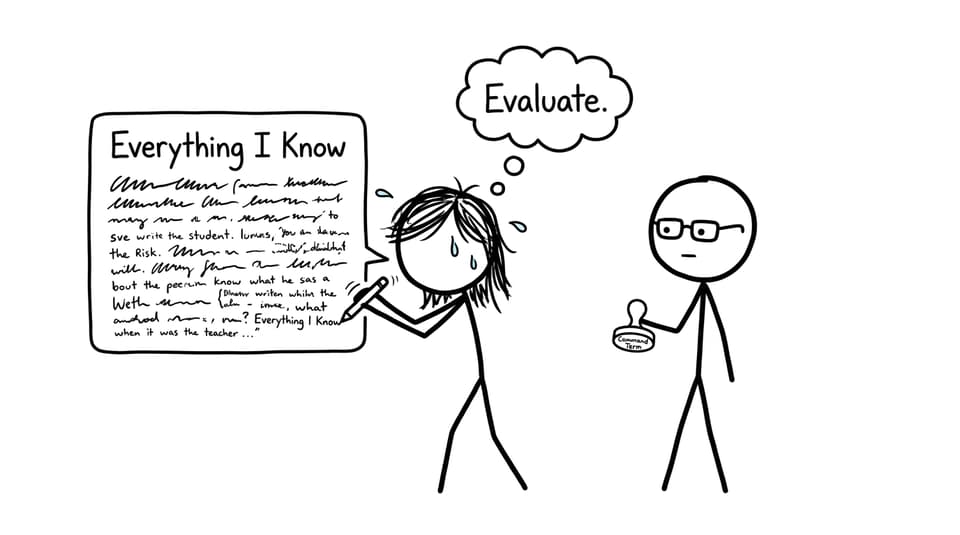
Error: writing everything you know instead of answering the MYP question
The most common MYP Geography and History mistake is the “knowledge dump.” Students pour everything related to the topic onto the page, hoping the right bits will impress the examiner.
But in MYP, marks reward selection.
A high-scoring response reads like it has a destination. Every sentence earns its space by pushing the answer forward. If a detail doesn’t directly support the question, it’s not helping--even if it’s true.
A simple fix: draft a one-line thesis (even for short answers). Then check each paragraph: Does this prove my thesis, or is it just interesting?
For more structure help, the ideas in How to Structure High-Scoring MYP Individuals & Societies Essays apply directly to MYP Geography and History.
Error: describing instead of explaining (the “what” trap)
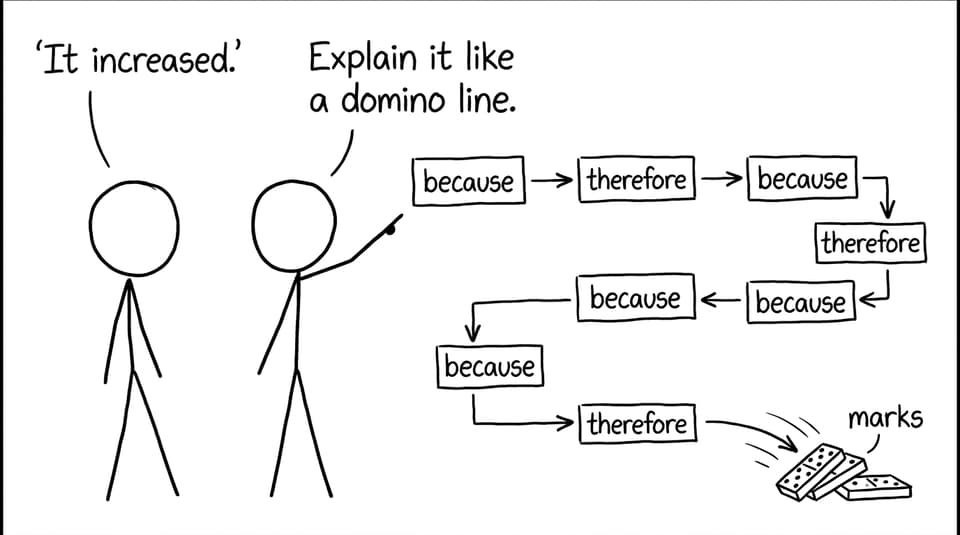
Many MYP responses sound confident but stay descriptive:
-
“Migration increased.”
-
“The state introduced reforms.”
Description is what happened. Explanation is why it happened and what changed because of it.
In MYP Geography and History, the marks usually live in cause and consequence. Train yourself to add two invisible words after every factual sentence: because and therefore.
- “Migration increased because… therefore it led to…”
That single habit forces analysis without needing fancy vocabulary.
Error: weak case study use in MYP Geography and History
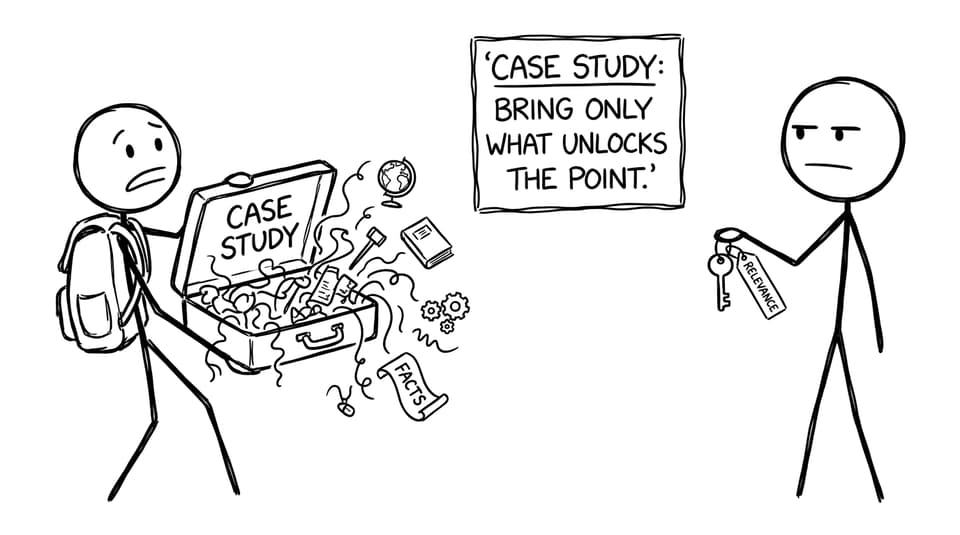
Case studies are supposed to be evidence, not a mini-documentary.
Common MYP case study problems:
-
Over-narrating the event
-
Including impressive-but-irrelevant specifics
-
Naming a place or conflict without explaining significance
A case study only earns marks when it does a job: it supports a point or strengthens a judgement. If the question is about effectiveness, your evidence must show effectiveness (or failure), not just background.
If you need sharper content to pull from, build a small “evidence bank” from RevisionDojo’s Study Notes and Flashcards in the MYP Individuals & Societies hub. Keep it lean: two examples per theme, deeply understood.
Error: ignoring MYP command terms (and accidentally capping your mark)
Command terms are quiet instructions. In MYP, they set the ceiling.
-
Describe = what you see/what happened
-
Explain = causes and consequences
-
Analyse = break into parts, show relationships, patterns, significance
-
Evaluate = weigh evidence, consider limitations, reach a justified judgement
If the question says evaluate and you only explain, you can be accurate and still be limited to a mid-band response.
A strong routine is to write the command term at the top of your answer and translate it into a checklist. You can even ask RevisionDojo’s AI Chat to convert any MYP question into “what the examiner needs to see” before you practise.
Error: unclear structure and paragraphing (communication matters in MYP)
In MYP Geography and History, messy structure hides good thinking.
Watch for:
-
Paragraphs with multiple ideas
-
Evidence dropped in without explanation
-
Jumping between time periods or factors without signposting
Clarity is not style. It’s a scoring advantage.
A reliable pattern:
-
Topic sentence that answers the question
-
Evidence (specific)
-
Explanation (because/therefore)
-
Link back to the question
To practise this quickly, use the RevisionDojo Questionbank and do short timed sets where you’re only allowed one paragraph per point. The Questionbank feature page is built for that kind of repetition with feedback.
Error: weak evaluation and judgement (especially in MYP History)
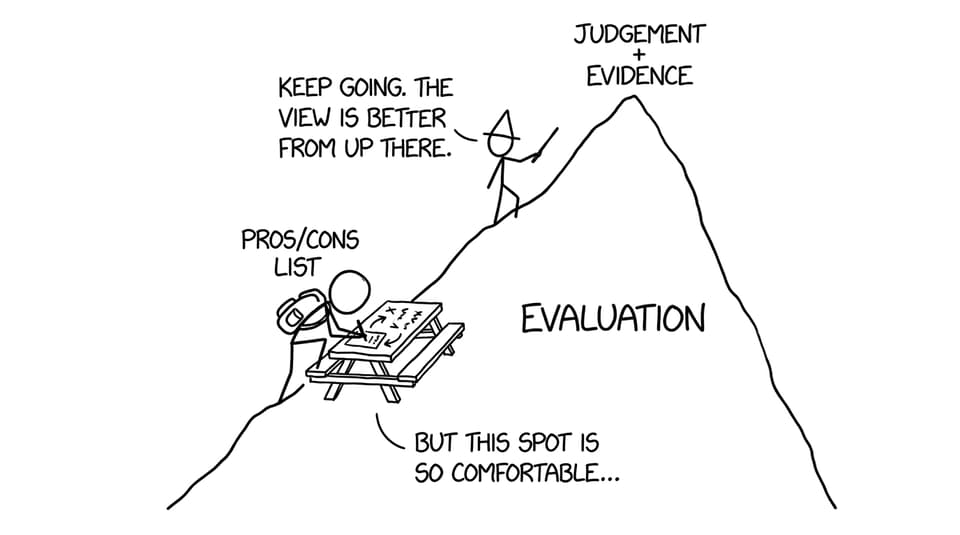
Evaluation is where many MYP students hesitate. They list pros and cons, then stop. Or they present two perspectives and refuse to choose.
But judgement is the point.
A strong MYP evaluation:
-
Weighs evidence (which factor mattered more, and why)
-
Acknowledges limitations (what the evidence can’t prove)
-
Ends with a clear conclusion that matches the command term
If you’re unsure what “good evaluation” looks like, practise with topics in the MYP History resources and get feedback using RevisionDojo’s Grading tools. It’s much easier to build judgement when you can see what the criteria reward.
Error: reading feedback but not converting it into a repeatable rule
Most students receive feedback in MYP Geography and History. Fewer students use it.
The difference is an “error rule.” After each task, turn one teacher comment into a rule you can apply next time:
-
“Too descriptive” -> “Every paragraph must contain because + therefore.”
-
“Needs more evaluation” -> “My last sentence must weigh two factors and choose one.”
-
“Link to question” -> “Every topic sentence repeats the key words from the question.”
This is where RevisionDojo’s loop helps: Mock Exams for pressure practice, AI Chat for targeted explanations, and Flashcards to keep your evidence ready without cramming.
The calm way to improve your MYP responses fast
Most MYP Geography and History marks aren’t lost because students don’t know enough. They’re lost because students answer around the question, describe instead of explain, and avoid judgement.
Make the next step simple: open the MYP hub, practise targeted Individuals & Societies questions in the Questionbank, tighten your evidence using Study Notes and Flashcards, then use AI Chat or Grading tools to turn feedback into one repeatable rule.
That’s how MYP responses stop sounding “smart” and start scoring like it.