
If you’re an IB student, you know the feeling: you learned the word, used it once, and then it vanished right before a writing task or oral practice. It’s not laziness. It’s normal forgetting, on schedule. The good news is that vocabulary is one of the few study areas where small, consistent systems beat big, heroic study sessions.
Below are effective ways to review vocabulary that fit real IB exam prep: short bursts, high recall, and practice that looks like the assessment.
The quick IB vocabulary review checklist
-
Review little and often (5-10 minutes daily beats one long session).
-
Use IB-aligned Flashcards with spaced repetition.
-
Learn words in context (sentence, theme, text type).
-
Test yourself with active recall, not rereading.
-
Reuse new words in speaking and writing within 48 hours.
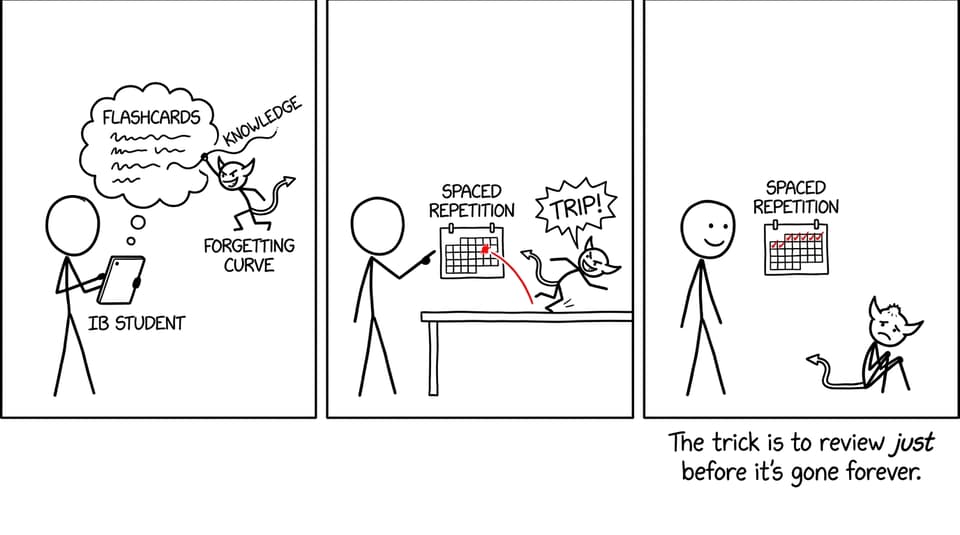
A strong place to start is RevisionDojo’s IB Flashcards with Spaced Repetition (SRS), which schedules reviews for when you’re about to forget.
Spaced repetition: the most reliable IB vocabulary review method
Spaced repetition works because it respects how memory fades. You don’t review when you feel motivated; you review when your brain is on the edge of forgetting.
For IB languages (Ab Initio or Language B), use spaced repetition to build themed banks: identities, experiences, social organization, and so on. If you want a course-specific example, this post on Spaced Repetition for IB: Scientific Study Method makes the timing logic simple.
Practical tip: keep cards “one idea per card.” Instead of “travel vocab list,” make “book a ticket,” “miss a train,” “complain politely.” That’s IB-useful vocabulary.
Contextual learning: stop collecting words, start collecting sentences
In IB, vocabulary is rarely rewarded as a list. It’s rewarded as control: the right word in the right register for the right task.
So learn words inside mini-contexts:
-
A sentence that matches a Paper 1 text type.
-
A phrase that helps you extend an answer in an oral.
-
A connector that upgrades coherence.
If you’re taking Ab Initio, you can anchor this to the course structure explained in What is Ab Initio in the IB Program?. And if you’re building theme-based vocabulary, see Top Strategies for Learning an Ab Initio Language in IB.
Active recall: turn vocabulary into marks
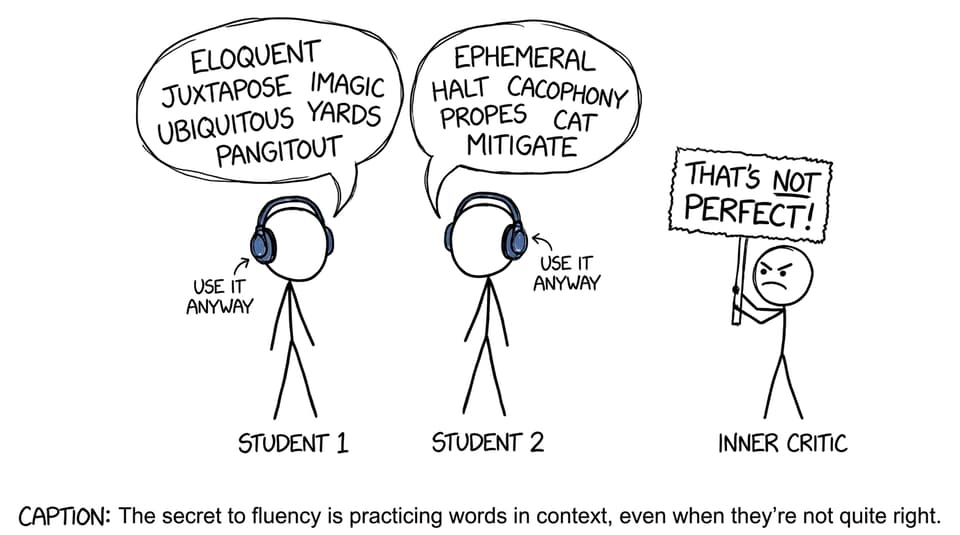
Active recall means you pull the word from memory, not recognize it on a page. That’s closer to what IB exams demand.
Two fast drills:
-
Cover and produce: cover the translation and write the word in a sentence.
-
Prompt and extend: give yourself a theme prompt (e.g., “school rules”) and force 5 target words into 4 lines.
To make recall feel more exam-like, pair your word review with practice prompts from a Questionbank. Even if the questions are skills-based, you can deliberately “spend” your new vocabulary in the answers.
Mnemonics and visualization: make it weird on purpose
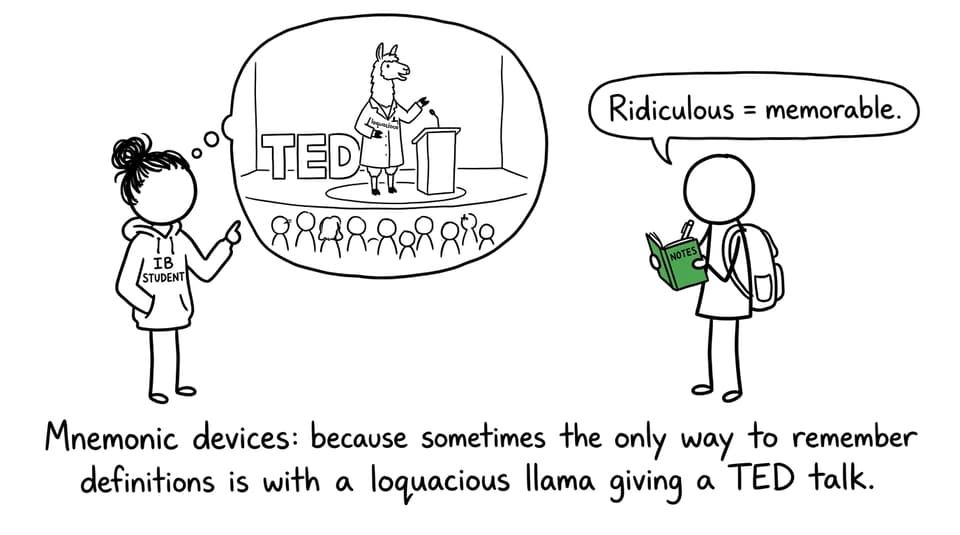
Your brain remembers what’s emotional, vivid, or ridiculous. That’s why mnemonics work.
-
Link the sound of the word to a funny image.
-
Exaggerate the scene.
-
Keep it personal (your memory beats a generic mnemonic).
The trick for IB students: after the silly hook, immediately add one clean exam sentence. Funny gets it into your head; the sentence gets it into your writing.
Make vocabulary social (and therefore harder to forget)
Words stick when they leave your notebook.
Find a study partner and run 8-minute speaking sprints: each person must use 10 target words naturally. If you need help setting that up, How to Find a Study Partner for Your Ab Initio Language Learning gives a practical approach.
And when you’re overwhelmed, RevisionDojo’s AI Chat can generate example sentences, rephrase your writing in the right register, and quiz you on tricky sets. Then you can lock it in with Flashcards, check progress, and scale up with Mock Exams and Predicted Papers as exams approach.
Closing: turn IB vocabulary review into a system
The secret to vocabulary isn’t talent. It’s friction removal. When your IB vocabulary review is automatic, flashcards scheduled, words learned in context, recall practiced under light pressure, your language starts showing up on command.
If you want one place to run the whole loop, RevisionDojo brings together Study Notes, Flashcards, Questionbank, AI Chat, Grading tools, Mock Exams, Predicted Papers, a Coursework Library, and Tutors so your vocabulary practice becomes exam-ready, not just “studied.” Start small today: 10 minutes, one deck, one theme, and let it compound.