
Spaced repetition for IB: Scientific Study Method
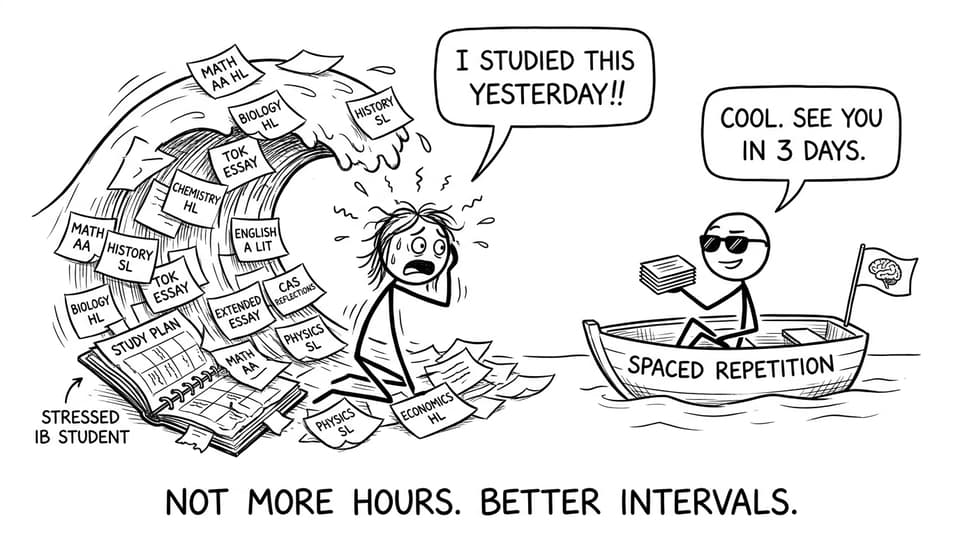
There’s a particular kind of panic that only IB students know: opening a notebook in March and realizing you did understand this in October… but your brain has treated it like a temporary file.
Spaced repetition for IB is the quiet antidote to that panic. Not because it makes you “study harder,” but because it respects how memory actually works: you forget, then you remember again, and every return visit makes the pathway easier to find under exam pressure.
Spaced repetition for IB: the fast checklist
If you want a simple rule-set before we go deeper, here’s the core spaced repetition for IB routine:
-
Learn a topic once with clarity (not perfection).
-
Turn it into questions (flashcards or quick prompts).
-
Review in short bursts at increasing intervals.
-
Let weak areas come back more often.
-
Prove recall with exam-style practice, not rereading.
On RevisionDojo, that loop naturally maps to Study Notes (clarity) + Flashcards (spaced repetition) + Questionbank (application) inside one ecosystem.
Why spaced repetition works so well for IB memory
The IB is cumulative by design. Year 1 content doesn’t politely stay in Year 1; it reappears in final exams, coursework discussions, and those “integration” questions that reward long-term understanding.
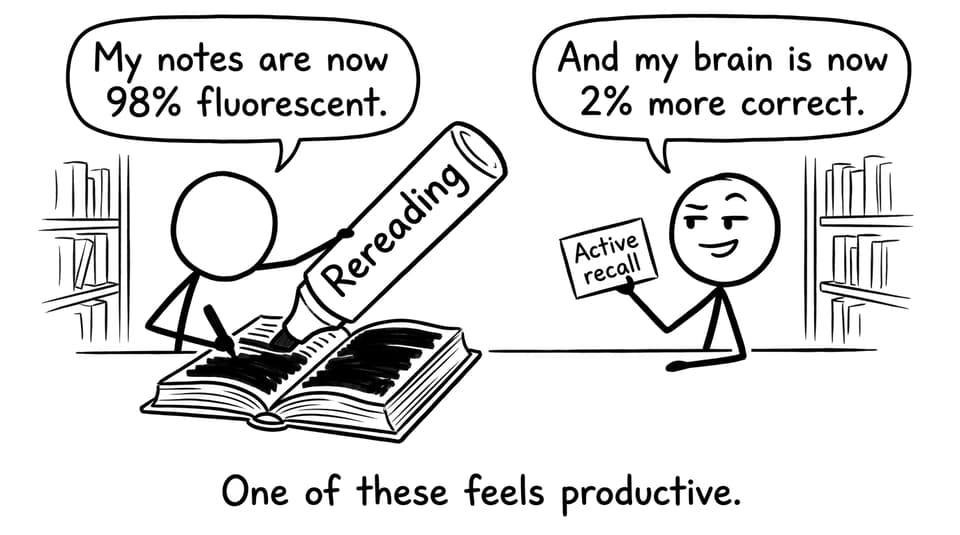
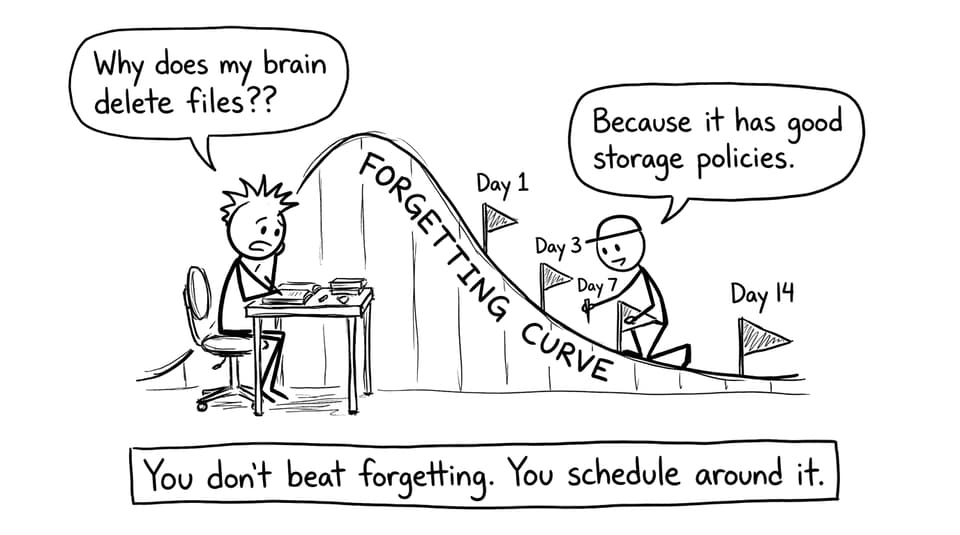
Spaced repetition works because it leans on a simple truth: memory strengthens when you retrieve information right as it’s starting to fade. Each review is a small workout. Your brain rebuilds the same idea with less effort the next time.
That’s why rereading can feel comforting but still fail you. Familiarity is not recall. In IB exams, you need retrieval on demand.
How to run spaced repetition for IB in real life (without burning out)
Most IB students don’t fail because they never study. They fail because they keep restarting: relearning the same topics, rebuilding the same notes, rewatching the same explanations.
Here’s a sustainable cadence you can actually keep:
Build cards the same day you learn
After you finish a lesson or a chapter, create a tiny set of recall prompts immediately. If you use RevisionDojo, you can lean on its flashcard workflow via the Flashcards feature or go straight to IB Flashcards with Spaced Repetition (SRS).
Keep cards “one idea per card.” A definition, a formula trigger, a process step, a quote with a use-case.
Review daily, but keep it small
Spaced repetition for IB works best as a low-friction daily habit. Seven minutes is not a joke; it’s a strategy. Small sessions protect consistency, and consistency is what compounds.
If you want a practical mobile routine, see Mobile IB Flashcards: Study Cards on Your Phone.
Turn mistakes into future flashcards
Your highest-value flashcards often come from the exact moment you get something wrong. After a practice set, convert the error into a new card: “What did I assume?” “Which condition changes the method?” “What’s the definition the markscheme expects?”
This is where the loop tightens with the Questionbank and guides like Comprehensive IB Question Bank: Thousands of Practice Questions.
A simple weekly spaced repetition plan for IB exams
Try this weekly structure during exam season (and scale down earlier in the year):
-
Day 1 (Learn): read one topic using Study Notes, then create flashcards.
-
Day 2 (Review 1): quick spaced repetition session.
-
Day 4 (Review 2): revisit and clean up weak cards.
-
Day 6 (Apply): drill the same topic with the Questionbank; ask clarifying questions in AI Chat.
-
Day 7 (Simulate): one timed block using a mock-style session and review patterns.
If you want help building the bigger system around this, the RevisionDojo app guide for IB exam prep lays out a full loop (learn, remember, apply, simulate).
How RevisionDojo supports spaced repetition for IB
Spaced repetition for IB is easy in theory and annoying in practice because scheduling takes effort. RevisionDojo removes that friction and keeps everything connected:
-
Study Notes give you syllabus-aligned clarity before you memorize.
-
Flashcards run spaced repetition so your reviews happen at the right time.
-
Questionbank gives exam-style practice so recall becomes performance.
-
AI Chat helps when a card reveals a real misunderstanding.
-
Grading tools help you see what examiners reward in extended responses.
-
Mock Exams and Predicted Papers add timed pressure so your retrieval holds up.
-
Coursework Library and Tutors support the weeks when coursework and revision collide.
You can also explore the broader ecosystem via RevisionDojo for IB.
Closing: make IB recall feel inevitable
The secret advantage in IB isn’t superhuman motivation. It’s building a system where forgetting triggers the next review automatically, and every week leaves you slightly more prepared than the last.
Spaced repetition for IB turns revision into compounding progress: less relearning, fewer surprises, and faster recall when the timer starts. If you want that system in one place, start with RevisionDojo’s Flashcards, reinforce with Study Notes, and validate your progress with the Questionbank.