
If you’ve ever sat in your first IB language class and realised your classmates can already form sentences while you’re still negotiating the alphabet, you’ve felt the quiet panic that makes people rethink their subject choices.
That’s exactly why IB Language ab initio exists.
It’s the course for students who are genuinely starting from the beginning (or close to it). Not “I watched a few videos last summer” beginners. Real beginners. And if you treat IB Language ab initio like a steady two-year skill build instead of a last-minute scramble, it can become one of the most confidence-building parts of your Diploma.
What is IB Language ab initio?
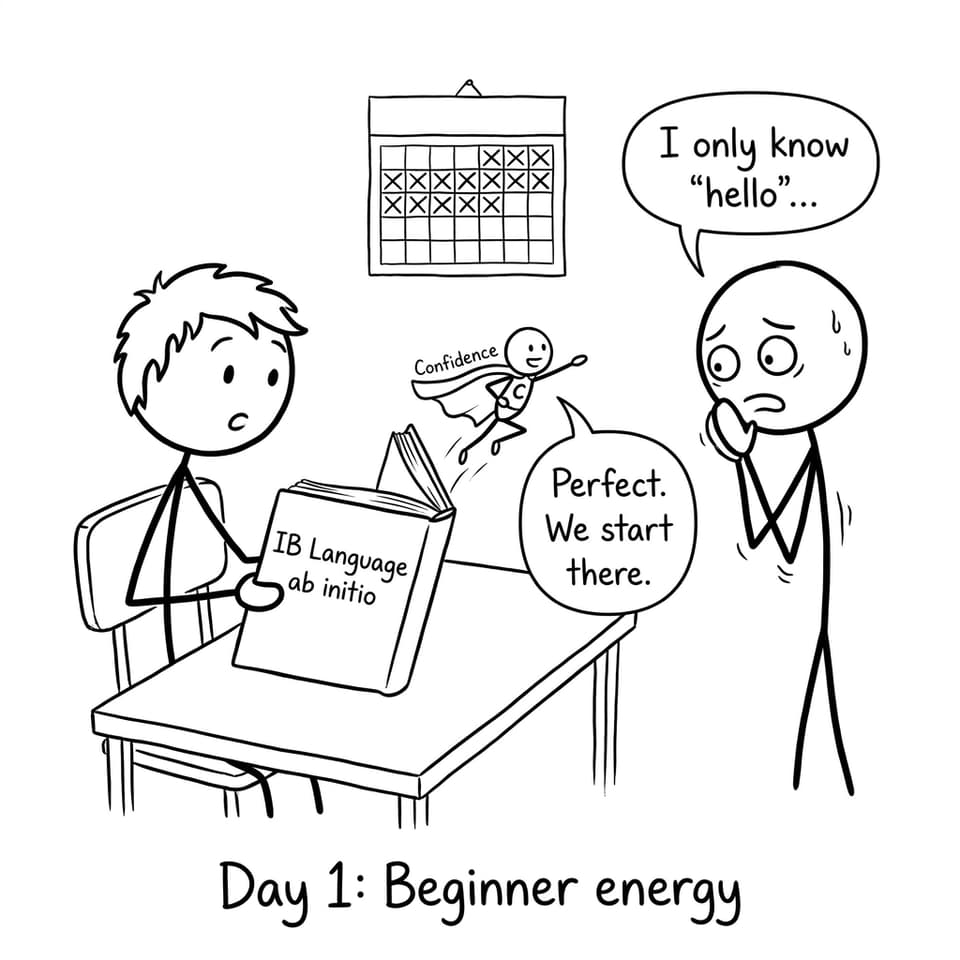
IB Language ab initio is a Standard Level (SL) language acquisition course designed for students with little to no prior experience in the target language. The phrase ab initio literally means “from the beginning,” and the course is built around practical communication: understanding and producing language you’d actually use in everyday contexts.
Unlike courses that assume you already have a foundation, IB Language ab initio is meant to help you build one carefully: core vocabulary, essential grammar, and basic cultural understanding.
If you want a deeper breakdown of how the course is structured and what tends to be assessed, keep this open as a reference: IB Language ab initio Coursework: Structure, Marks & Tips.
A quick checklist: is IB Language ab initio right for you?
Use this as a fast reality-check before you commit.
-
You’re a near-beginner in the language (not fluent at home, not years of study).
-
You want a course focused on communication first, perfection later.
-
You’re comfortable practising all week in small sessions.
-
You’d rather build fundamentals than jump into advanced text analysis.
If you’re unsure whether you should be in Language B instead, this comparison helps you decide without guesswork: Is Language B Harder Than Ab Initio? A Clear Comparison for IB Students.
What you actually study: the five themes
A helpful way to think about IB Language ab initio is that you don’t just learn “the language.” You learn the language through themes that keep returning in different contexts.
You’ll keep meeting vocabulary and ideas connected to:
-
Identities (who you are, relationships, daily life)
-
Experiences (routines, leisure, holidays)
-
Human ingenuity (technology, creativity, media)
-
Social organization (education, community, social issues)
-
Sharing the planet (environment, global challenges)
RevisionDojo’s language resources are designed around these same themes so your revision stays aligned with what the course rewards. If you want a practical weekly approach, read: Top Strategies for Learning an Ab Initio Language in IB.
How to revise for IB Language ab initio (without burning out)
Here’s the counterintuitive truth: IB Language ab initio improves fastest with short, repeatable loops. Not heroic study marathons.
Build the four skills with tiny daily reps
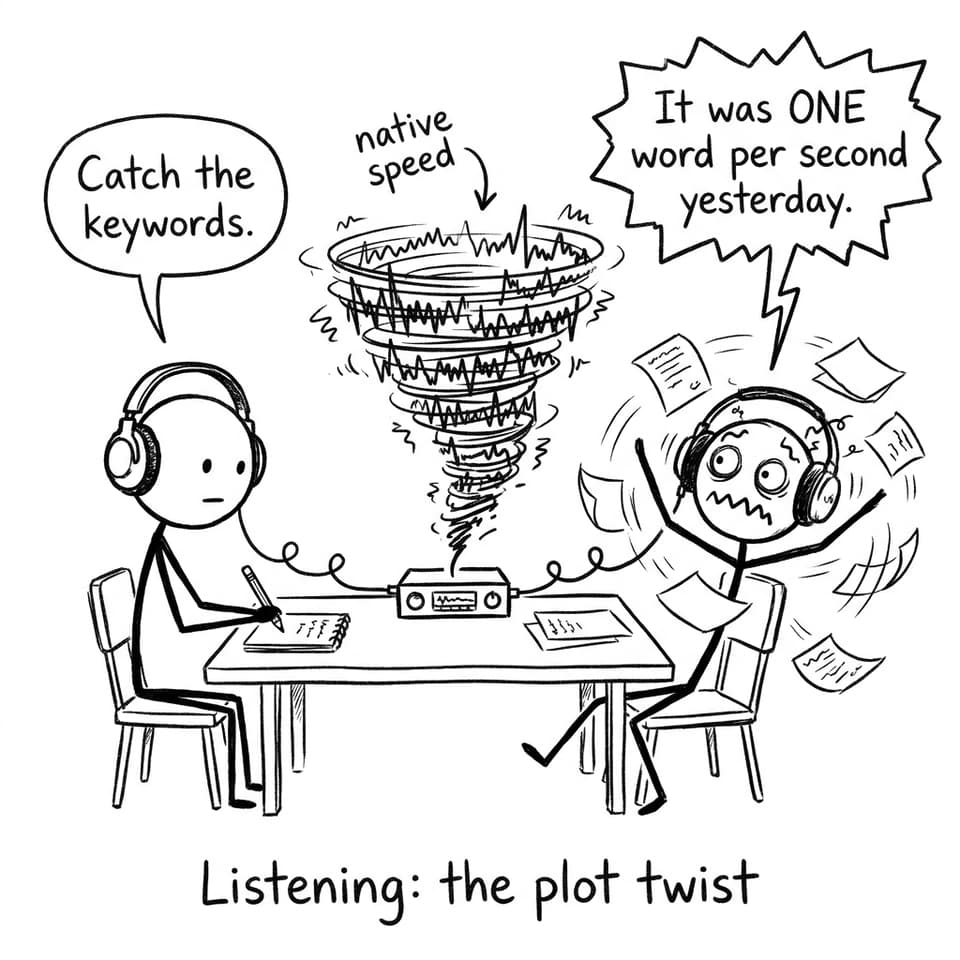
To do well in IB Language ab initio, you need balanced practice across listening, speaking, reading, and writing. Your brain learns a language by repeated retrieval: the moment you try to say something, fail, and try again.
A simple routine that works:
-
10 minutes vocab review (spaced repetition)
-
10 minutes listening for gist
-
10 minutes writing a short response using the theme vocabulary
-
2 minutes speaking out loud (even to yourself)
If you want a broader Language Acquisition routine that still applies well to IB Language ab initio, use: IB Language Acquisition: How to Effectively Revise for Language B Exams.
Use tools that match IB tasks
Generic language apps can help, but they rarely train the exact skills the IB assesses. RevisionDojo is built for IB students, which is why its features map naturally onto IB Language ab initio needs:
-
Flashcards for theme vocabulary and connector phrases
-
Study Notes for clean grammar explanations and text-type reminders
-
Questionbank to practise exam-style comprehension and writing prompts
-
AI Chat to generate mini-dialogues, feedback, and speaking drills
-
Grading tools to self-assess drafts with rubric-like clarity
-
Mock Exams to practise timing and decision-making under pressure
-
Predicted Papers to focus your revision on realistic exam demands
-
Coursework Library for models and structure inspiration
-
Tutors when you want targeted correction and fast progress
For a full “survival plan” that turns all of that into habits, see: Succeeding in an AB Initio Class: Your Ultimate Survival Guide.
Closing: treat “from the beginning” as a strategy
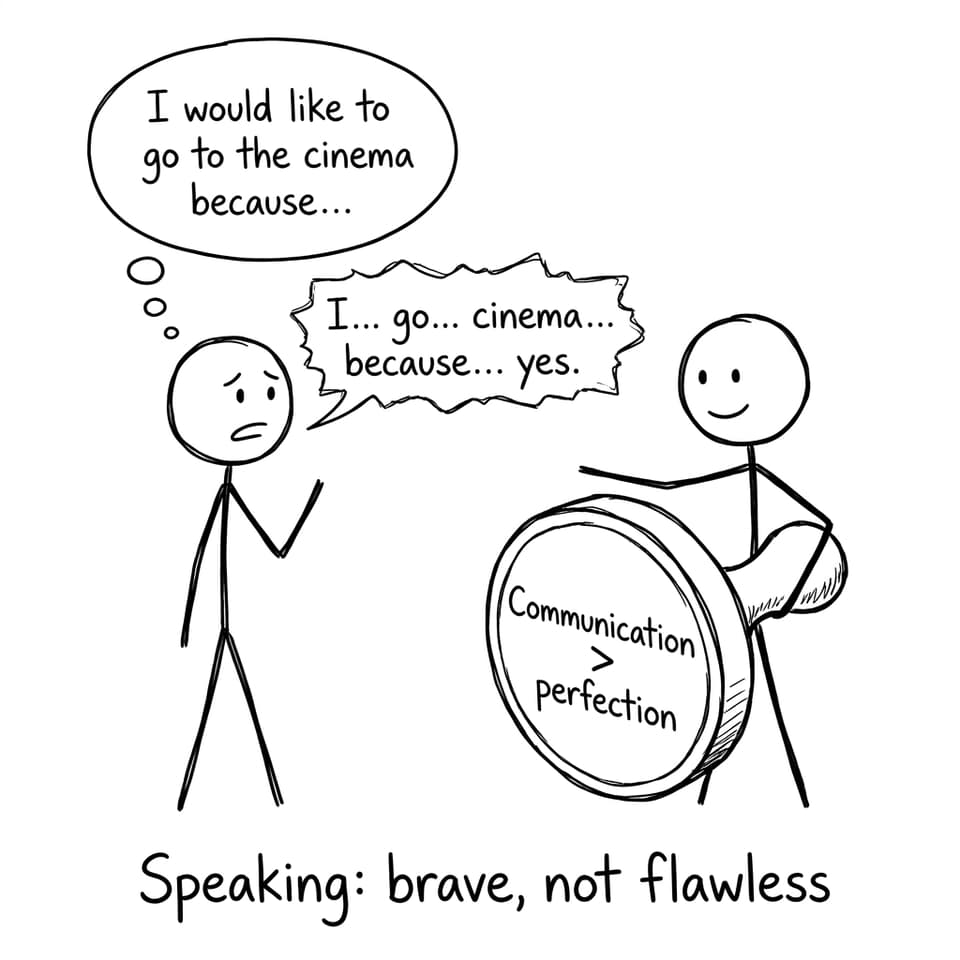
The best part of IB Language ab initio is that it gives you permission to be a beginner while still taking your progress seriously. You don’t need perfect grammar to communicate. You need repetition, structure, and the calm confidence to keep going when your sentences come out messy.
If you want your revision to match what the IB actually rewards, make RevisionDojo your home base for IB Language ab initio: build theme vocabulary with Flashcards, practise with the Questionbank, tighten writing with Study Notes and Grading tools, and rehearse exam timing with Mock Exams and Predicted Papers. Start small, stay consistent, and let the course do what it was designed to do, helping you grow from the beginning.