
An Extended Essay often feels hardest before the writing begins. You may have an interesting topic and a growing folder of sources, but no clear sense of what belongs where.
A strong EE structure turns that uncertainty into a plan. For the IB Extended Essay model with first assessment in May 2027, your essay should develop a focused research question through a logical sequence of evidence, analysis and evaluation. The exact body structure depends on your subject and method, but most essays need a title page, contents page, introduction, analytical body, conclusion and bibliography.
Structure is not decoration added after the research. It is the shape of your reasoning.
Your EE structure at a glance
Use this checklist as a planning blueprint rather than a rigid template:
- Title page: Present the required identifying information, including your research question.
- Contents page: Show where each section begins.
- Introduction: Establish context, significance, scope, method and the research question.
- Body: Develop a sustained argument using subject-appropriate evidence and methods.
- Conclusion: Answer the research question, then acknowledge limitations and implications.
- Bibliography: Record every source using one consistent citation system.
- Appendices: Include only genuinely supplementary material when appropriate.
The maximum length remains 4,000 words under the official Extended Essay guide for first assessment in 2027. Citations, references and the reflection and progress form are among the elements excluded from that count. Confirm submission details with your school because local deadlines may be considerably earlier than the final IB deadline.
Start with the correct 2027 pathway
The model offers two formal pathways. Your choice affects the knowledge, methods and perspectives your essay must integrate.
A subject-focused Extended Essay investigates a topic through one DP subject. A history essay should use historical evidence and disciplinary methods, while a biology essay needs a biological investigation rather than a general discussion about health.
An interdisciplinary Extended Essay combines two DP subjects. It is not enough to write one section in one subject and another in the second. Their concepts or methods must work together to answer a question that neither discipline could address as effectively alone. This pathway replaces the former World Studies route and uses prescribed frameworks.
Before outlining, read the key IB Extended Essay changes for 2027. Choosing your pathway early prevents a well-written essay from becoming structurally confused because its disciplinary identity is unclear.
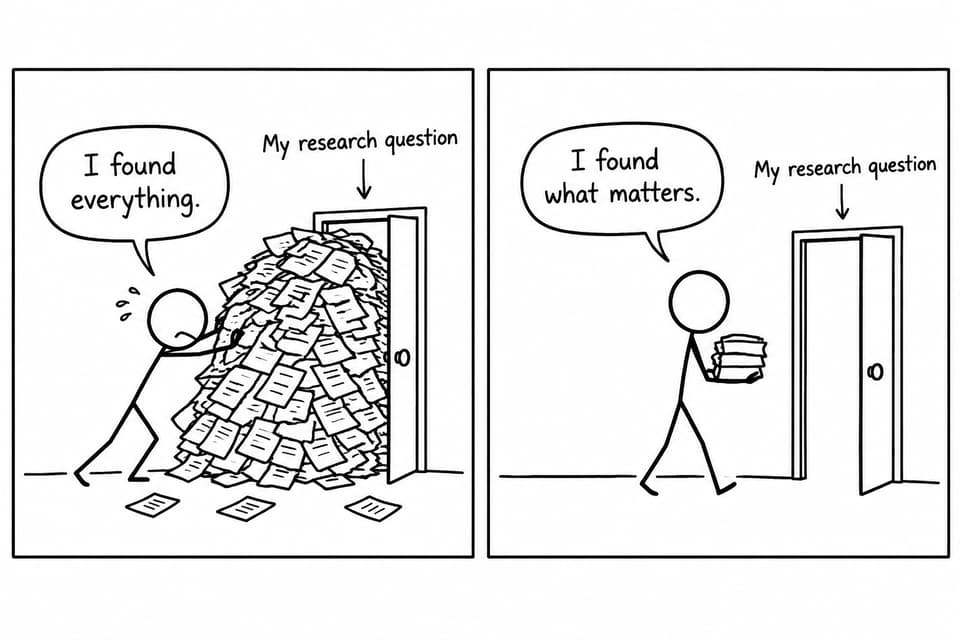
Build the essay around one research question
Your EE research question is the load-bearing wall. Every major section should help answer it.
A weak question is usually too broad, mainly descriptive or impossible to investigate with the available evidence. A strong question establishes boundaries and invites analysis.
| Weak example | Stronger example | Why the revision works |
|---|---|---|
| How does advertising affect people? | To what extent did Nike's 2018 Dream Crazy campaign influence its brand positioning in the United States? | It identifies a campaign, outcome and market. |
| What caused the Cold War? | To what extent did the Berlin Blockade intensify political division between the United States and Soviet Union from 1948-1949? | It replaces an enormous topic with an evaluative historical problem. |
| Is water pollution bad for plants? | How does increasing nitrate concentration affect the mean growth rate of Lemna minor under controlled light conditions? | It identifies variables, an organism and an experimental context. |
These are illustrations, not ready-made questions. Your final wording must fit your pathway, evidence and subject guidance. Use the eight-part guide to developing an Extended Essay research question to test whether your idea is focused, analytical and feasible.
Revision is normal. Your question may narrow when sources expose missing data, an unmanageable variable or a more interesting tension. What matters is that the essay and final question match. The guide to revising an EE research question during research explains how to refine it without restarting unnecessarily.
Write an introduction that makes a promise
An introduction should tell the reader what will be investigated, why it matters and how the investigation will proceed. It should not become a miniature textbook chapter.
A practical introduction can move through five tasks:
- Establish the specific academic context.
- State the research question clearly and exactly.
- Explain why investigating it is worthwhile.
- Define essential scope, terms or boundaries.
- Introduce the method, source base or analytical approach.
If your essay examines a novel, several paragraphs retelling the plot would delay the investigation. A stronger opening identifies the literary feature being analysed, explains its interpretive significance and states how selected passages will be examined.
A science introduction should define the variables, scientific rationale and boundaries without promising certainty that the method cannot deliver. Use the 2027 EE introduction format to turn these tasks into a workable opening.
Draft the introduction early, but rewrite it after the body. Research changes what an essay can honestly promise.
Organize the body by argumentative jobs
Students sometimes arrange body paragraphs in the order they found their sources. That produces a research diary, not an argument.
Instead, give each section an argumentative job. One section might establish a pattern, another test an alternative explanation and a third evaluate limitations. Headings should describe those jobs clearly. Labels such as “Analysis” or “Main Body” reveal little about the reasoning underneath.
A useful paragraph pattern is:
- Make a claim that advances your answer.
- Introduce relevant evidence or data.
- Analyse how the evidence supports, complicates or weakens the claim.
- Evaluate the source, method or alternative interpretation where relevant.
- Connect the finding to the research question.
This pattern is flexible. A mathematics essay may progress through definitions, assumptions, derivations and model comparisons. An experimental science essay may use method, results, analysis and evaluation sections. A literature essay may organize itself around techniques, patterns or interpretations. Subject conventions should shape the format.
Whatever approach you choose, each section should leave the reader closer to an answer.
Plan before drafting full paragraphs
An outline becomes useful when it contains reasoning rather than headings alone. Under each proposed section, record:
- The section's main claim
- The evidence required
- The analysis you expect to perform
- Its relationship to the research question
Then ask: if this section disappeared, would the answer become weaker? If not, it may be background, repetition or an interesting detour.
Do not divide 4,000 words equally. A working plan might reserve roughly 10-15% for the introduction, 70-80% for the body and 10-15% for the conclusion. These are planning ranges, not IB requirements. Method-heavy subjects may need a different balance.
RevisionDojo's Coursework Library can help you inspect how complete investigations are organized, while Study Notes can clarify concepts that support your argument. Treat examples as structural evidence, never as text to imitate. For broader planning support, follow the research, writing and revision workflow for an IB Extended Essay.
Make evidence and analysis visible
Evidence does not speak for itself. A quotation, graph or result becomes meaningful only when you explain its relationship to the question.
Compare these approaches:
Weak: “Sales increased after the campaign, showing that it was successful.”
Stronger: “The increase coincided with the campaign, supporting an association with stronger market performance. However, the data cannot isolate the campaign from seasonal demand, pricing decisions or wider market growth.”
The stronger version makes a narrower claim and acknowledges what the evidence cannot establish. This is evaluation, not hesitation.
Keep a source table recording each citation, central claim, relevant evidence, limitations and intended section. RevisionDojo Flashcards can help you retain essential theories or definitions, while grading tools can identify explanations that need greater precision. Neither replaces your judgment or your supervisor's guidance.
End by answering, not repeating
Your conclusion should answer the research question in language justified by your analysis. Do not introduce a new source, theory or dataset.
A sound conclusion normally:
- Gives a direct overall answer
- Synthesizes the most important findings
- Explains important limitations or uncertainty
- Identifies implications or worthwhile further investigation
Synthesis means showing how the findings fit together, not copying earlier claims. If sections point in different directions, explain why and state which evidence deserves greater weight.
The strength of a conclusion depends on calibration. “This proves” is often too absolute. “This suggests,” “within the defined conditions” or “to a considerable extent” may represent the evidence more honestly.
Check the presentation and research process
Once the argument works, audit the document as a reader would encounter it. Check that the title page contains the required information, the contents page matches the final headings and page numbers, and citations follow one consistent style. Every cited source should be traceable in the bibliography.
Use appendices cautiously. Essential analysis belongs in the essay because examiners are not expected to rely on supplementary material to understand your argument.
The 2027 model continues to treat reflection as part of the Extended Essay process. Maintain a researcher's reflection space with dated decisions, obstacles, methodological changes and reasons for revising the question. Authentic reflection is easier when you preserve evidence of your thinking rather than reconstructing months of work at the end.
Turn the outline into a manageable first step
The best EE structure does not make research predictable. It makes uncertainty manageable. Your research question sets the destination, each section performs a clear job, and every piece of evidence earns its place by moving the answer forward.
Keep the 2027 Extended Essay structure blueprint beside your outline. RevisionDojo also brings together the Coursework Library, Study Notes, Flashcards, AI Chat, grading tools and Tutors, with Questionbank practice, Predicted Papers and Mock Exams supporting your other IB subjects.
If you are choosing between several questions, save each draft and bring it into Jojo, the AI tutor for IB. Ask for feedback on scope, ambiguity and feasibility, then discuss the strongest version with your supervisor. The useful outcome is not an AI-written question. It is a clearer record of your decisions and a question you can defend.