
If you have ever opened your Extended Essay folder and felt a weird mix of ambition and dread, you are not alone. The EE is one of the few school tasks that can make you feel like a real researcher at 4pm and a confused archaeologist at 4am, digging through sources you swear you read.
Now the ground is moving again. The IB has revised the Extended Essay guide for first assessment in May 2027. And while most students will not wake up thrilled about rubric updates, these changes matter because the EE is not marked by vibes. It is marked by criteria. If the criteria shift, your strategy should too.
This guide breaks down what is changing in the EE for 2027, what it means for your planning and drafting, and how to adapt your workflow so you are not rewriting the same paragraph three times for the wrong reason.
Along the way, you will also see how RevisionDojo helps you run the EE like a project (not a panic): with a Coursework Library, Grading tools, AI Chat, Study Notes, Flashcards, Questionbank practice for your subjects, and Tutors when you want a human second set of eyes.
EE 2027 changes at a glance (save this checklist)
Here is the fast overview of what is changing in the EE for first assessment May 2027:
- Total marks drop from 34 to 30.
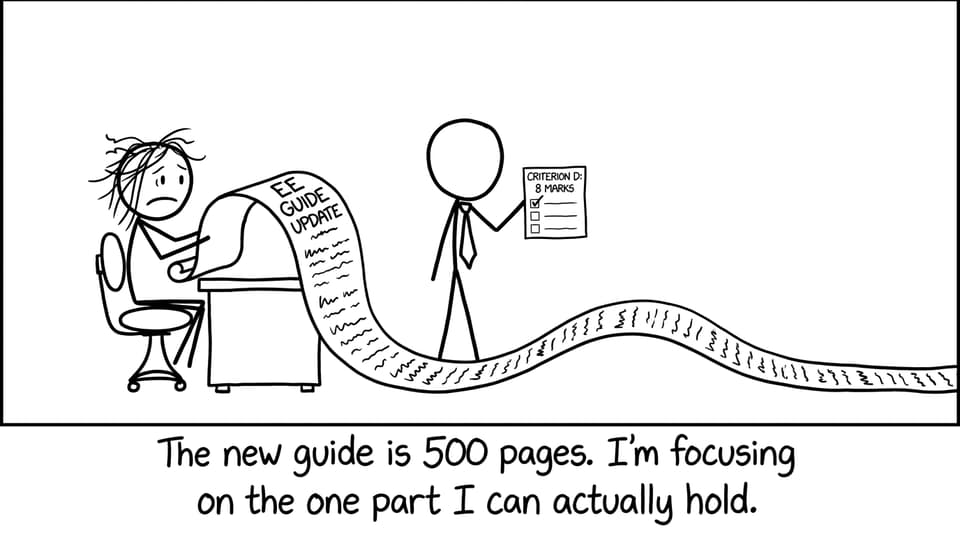
- The separate Presentation criterion is removed and its elements are folded into Criterion A (Framework for the essay).
- Criterion D (Discussion and evaluation) is now worth 8 marks, making it the highest-weighted criterion.
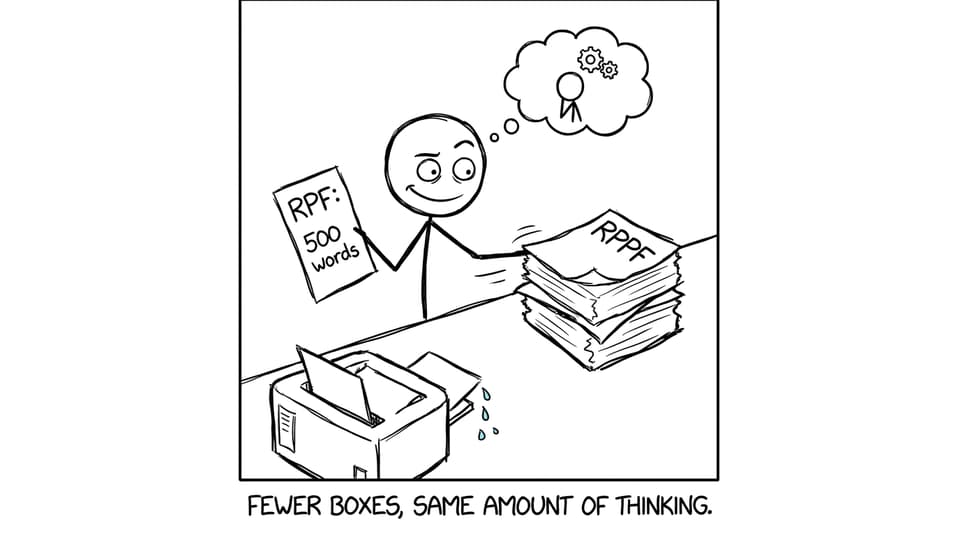
- The old RPPF is replaced by a streamlined RPF with a single 500-word reflective statement.
- Students choose between two formal pathways: Subject-Focused or Interdisciplinary.
- Subject-specific guidance is consolidated from individual subjects into subject groups.
- The former World Studies category is replaced by the Interdisciplinary Pathway, with five prescribed frameworks.
If you want a central hub for EE resources and examiner-style expectations, start with RevisionDojo’s EE Guides and browse all IB Extended Essay posts when you need a targeted answer.
The quiet reason these EE changes matter
Students often treat the EE like a one-time performance: pick a question, write 4,000 words, hope it works.
But the IB has always treated the EE like a process with evidence. That is why engagement and reflection existed. That is why method and reasoning sit at the center. The 2027 changes make this even clearer: the IB is shifting weight away from superficial compliance and toward the thinking that proves you can sustain an argument.
In other words, the EE is becoming slightly less about looking like a formal essay and more about behaving like a disciplined investigation.
RevisionDojo is built for that shift. The IB Coursework Grader and the EE feedback toolkit approach are basically designed to turn vague advice into criterion-level action.
EE total marks: from 34 to 30 (what actually changes for you)
A marks drop can feel like the IB is just rearranging numbers, but it changes how every section of your essay competes for attention.
When the EE is out of 30, each mark is a larger percentage of your final score. Small weaknesses are less “absorbed” by the rubric.
Practically, this should influence two habits:
- Draft earlier so you can run more revision cycles. When marks are tighter, your first draft is rarely close enough.
- Spend time where marks live. If a section is low-weighted, it should be correct and clear, but not the place you pour your last 12 hours.
If you want a reminder of how marks used to map to outcomes (useful for context, not for 2027 scoring), see IB Extended Essay grade boundaries guidance. Then mentally shift into “new rubric” mode for 2027.
Presentation criterion removed: what goes into Criterion A
The most misunderstood part of the old EE setup was that students treated presentation like decoration: spacing, headings, footnotes, a table of contents that looked impressive.
For 2027, the IB removes the separate Presentation criterion and folds those elements into Criterion A (Framework for the essay).
This does not mean presentation stops mattering. It means the IB wants presentation to be judged as part of whether your essay is built on a coherent framework.
How to adapt your EE structure
Treat framework as “can a reader follow my investigation without guessing?”
A strong Criterion A mindset looks like:
- Research question is explicit and researchable.
- Method is stated and then actually used.
- Sections exist because they serve the argument, not because they look academic.
- Citations and academic honesty practices are consistent.
If you are still planning your EE timeline, this practical post helps: How to plan your Extended Essay without stress. Even if it is written as a planning guide, the real value is learning to build a framework early rather than “formatting later.”
Criterion D becomes the highest-weighted: 8 marks for discussion and evaluation
This is the headline change for high scorers.
In many EEs, students do a decent job collecting information and explaining it, then run out of time for evaluation. They finish with a conclusion that sounds certain, because certainty is easier than nuance.
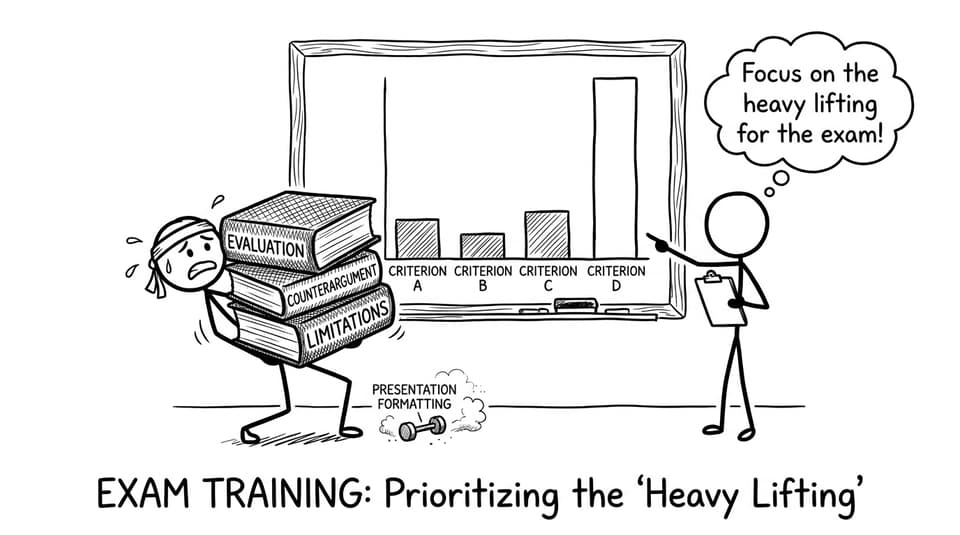
The 2027 guide flips that incentive. Criterion D (Discussion and evaluation) is worth 8 marks. That is the highest-weighted criterion. The IB is essentially paying you to think like a researcher: weigh evidence, address counterarguments, admit limits, and still defend a conclusion.
What “evaluation” looks like in a top EE
Evaluation is not just “limitations.” It is the logic that shows you understand what your evidence can and cannot prove.
To build a high-mark Criterion D section, aim for:
- Competing interpretations: If two sources disagree, do not hide it. Use it.
- Method limits: What biases exist in your data, selection, or lens?
- Scope control: What did you choose not to cover, and why was that reasonable?
- Implications: If your conclusion is true, what changes? What stays uncertain?
A useful drafting trick is to create a “Criterion D bank” while researching: every time you find a contradiction, a weak dataset, or a conceptual debate, paste it into a notes file. Later, that file becomes your evaluation section.
When you want rapid feedback on whether your discussion is still descriptive, use the Coursework Grader and then interrogate the feedback with RevisionDojo’s AI Chat: ask “What would a stronger evaluation paragraph look like in my subject?” and “Where am I making claims without weighing alternatives?”
RPPF replaced by RPF: one 500-word reflective statement
The old system asked students to complete the RPPF across reflection sessions. Many students filled it in like admin.
The new approach is simpler on paper and harder in spirit: a single RPF with one 500-word reflective statement. Less box-ticking. More signal.
How to write a 500-word reflection that actually earns marks
A good reflective statement is not a diary. It is a short argument about your growth as a researcher.
A reliable structure:
- Decision: What did you change (RQ, method, case study, approach)?
- Reason: Why did you change it? What did you notice that forced the change?
- Outcome: What improved because of that change?
- Next step: If you had more time, what would you test or refine?
If reflection has always felt vague, read How reflection strengthens your IB Extended Essay and use the more practical prompt list in How to reflect on challenges in your IB IA or EE.
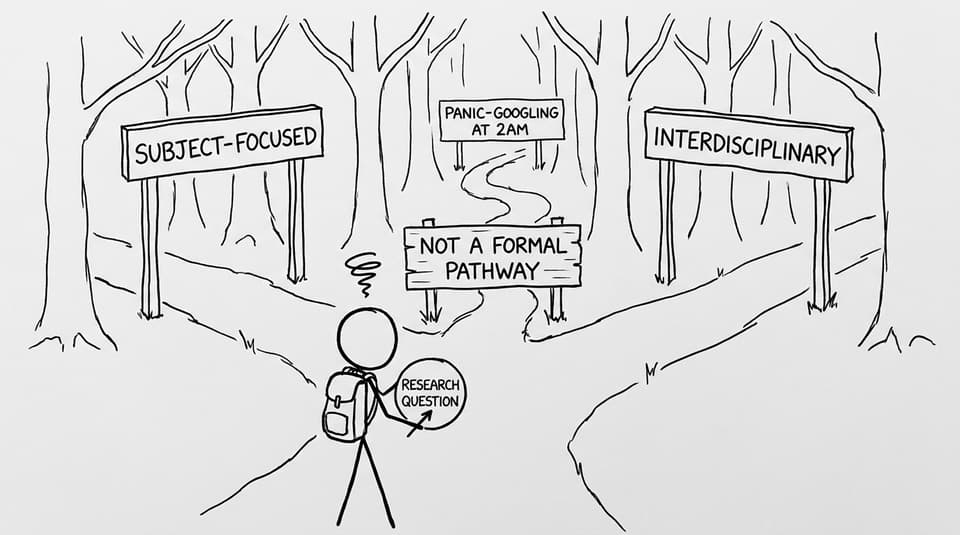
Two pathways: Subject-Focused vs Interdisciplinary
The 2027 EE introduces two formal pathways:
- Subject-Focused pathway: a classic EE anchored in one subject.
- Interdisciplinary pathway: replaces the old World Studies category, built around five prescribed frameworks.
This is less about giving you extra freedom and more about clarifying what kind of thinking you are claiming to do.
How to choose the right pathway for your EE
Choose Subject-Focused if:
- Your best ideas live inside one subject’s method (a lab approach, a historical investigation, a literary analysis).
- You can phrase your research question in one discipline’s language without forcing it.
Choose Interdisciplinary if:
- Your question genuinely needs two lenses to be answered honestly.
- You can explain what each discipline contributes, and how you will integrate them.
A warning that saves pain: interdisciplinary does not mean “two topics.” It means one question that demands integration.
If you are unsure whether your plan is still coherent, use RevisionDojo’s AI Chat to stress-test the question: ask it to list the assumptions of each discipline and identify where your method is unclear.
Subject guidance consolidated into subject groups (why this helps)
Previously, students sometimes got trapped hunting for tiny differences in individual subject documentation.
Now, subject-specific guidance has been consolidated from individual subjects into subject groups. This should reduce confusion, especially for students who sit between adjacent subjects and are not sure which conventions matter (for example, the difference between an Economics-flavored argument and a Global Politics-flavored one).
The trade-off: you cannot rely on hyper-specific “rule hunting.” You must show method and reasoning clearly in your writing.
This is where examples matter. Use RevisionDojo’s Coursework Library to see how strong students build structure and voice:
When you read exemplars, do not copy content. Copy architecture: how they define terms, how they frame evaluation, how they handle counterarguments.
How to adjust your EE workflow for 2027 (a practical plan)
Here is a simple, exam-student-friendly workflow that matches the new EE incentives.
Build a Criterion D-first outline
Before you draft, write:
- 3 claims you expect to make
- 3 ways those claims could be wrong
- 3 sources that could challenge you
Then outline your body so your evaluation is not an add-on.
Use faster feedback loops
A 2027-proof EE is usually the result of iteration.
- Draft a section.
- Run it through the IB Coursework Grader.
- Ask AI Chat one precise question about the biggest weakness.
- Rewrite only the part that moves marks.
Protect your exam study time while doing the EE
Most IB students do not struggle because they are lazy. They struggle because the EE expands until it eats everything.
Build boundaries: keep one or two weekly blocks for the EE, and keep your daily exam prep loop alive with RevisionDojo’s Questionbank, Study Notes, and Flashcards. When you need a reset, use the rhythm in How to study for IB mocks without burning out.
Closing: treat the EE like a system, not a storm
The IB did not revise the EE for 2027 to make your life harder. It revised it to reward the work that already produces strong essays: clear frameworks, real evaluation, and honest reflection.
So the best response is not anxiety. It is alignment.
Build your EE around the new incentives: let Criterion D shape your outline, let the 500-word RPF reflection be the proof of your decisions, and choose the pathway that fits your question instead of your ego.
When you want the process to feel calmer, use RevisionDojo as your home base: the Coursework Library for exemplars, Grading tools for criterion feedback, AI Chat for fast clarification, and Tutors for deeper guidance. Your EE is still your work. RevisionDojo just helps you make it sharper, sooner, with fewer wasted drafts.
And near the end, when you are tired and tempted to polish headings instead of strengthening evaluation, remember what changed in 2027: the EE now pays you most for thinking well.