

How to Write the EE Introduction (2027 Format)
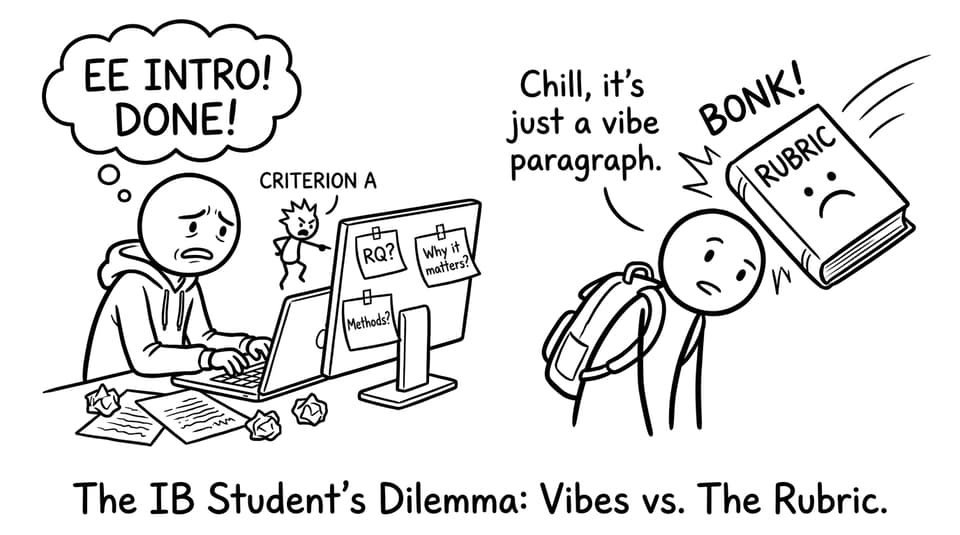
The night most IB students start their EE introduction, something predictable happens: you open a blank document, type a dramatic first sentence, then realize you have no idea what the introduction is actually supposed to do.
In the older mindset, the introduction felt like “setting the scene.” In the 2027 format reality, your EE introduction is closer to a contract. You promise the examiner three things, early and clearly: your research question, why it matters, and how you will answer it. That trio feeds directly into Criterion A (Focus and Method). And because your opening also sets up the line of argument that gets judged in Criterion C, a vague or fluffy start can quietly drain marks across multiple criteria.
So let’s write an EE introduction that does what top-band introductions do: it makes the examiner relax. They see a focused question, a meaningful reason to ask it, and a method that fits.
If you want extra support while drafting, keep the relevant RevisionDojo guides open in another tab: 7 Key Steps to Write a Strong Extended Essay Introduction and the Extended Essay assessment criteria breakdown.
EE Introduction Checklist (2027 Format)
Before we go deeper, here’s a practical checklist you can paste at the top of your document and tick off.
- Research question (RQ) stated clearly, near the end of the introduction
- Subject context: only the background the reader needs to understand the RQ
- Significance: why this RQ is worth asking (academic debate, real-world relevance, or interpretive value)
- Method preview: what sources/data you used and what you did with them
- Key terms and scope defined (time period, texts, location, sample size, variables)
- Line of argument previewed (your “claim-shaped roadmap,” not a table of contents)
This is the spine of a high-scoring EE introduction, and it maps cleanly onto Criterion A while supporting Criterion C.
What’s Changed for the EE Introduction in the 2027 Format
The quiet shift that catches students off guard is this: structural conventions are no longer “someone else’s criterion problem.” They live inside Criterion A alongside your research question and methods. That means your introduction isn’t just a warm-up. It’s evidence.
A strong EE introduction shows the examiner:
- You have a focused investigation (not a theme with vibes).
- You have an appropriate method (not “I will talk about…”).
- You understand what kind of knowledge your subject expects (experiment, textual analysis, economic modeling, historical evaluation, etc.).
If you’re still refining your RQ, start here: How to craft the perfect IB Extended Essay research question and then sanity-check it with The importance of research question revision during the EE process.
The One Job Your EE Introduction Must Do
Think of the EE introduction as a bridge between curiosity and proof.
Curiosity says: This topic feels interesting.
Proof says: This question is answerable, meaningful, and I have a method that can realistically answer it within 4,000 words.
When an examiner reads your EE introduction, they should be able to answer these questions without guessing:
- What exactly are you asking?
- Why does the question matter in this subject?
- What sources or data will you use?
- What approach will you apply to those sources or data?
- What direction will your argument take?
That is Criterion A clarity. And clarity compounds.
Step-by-Step: Writing an EE Introduction That Hits Criterion A
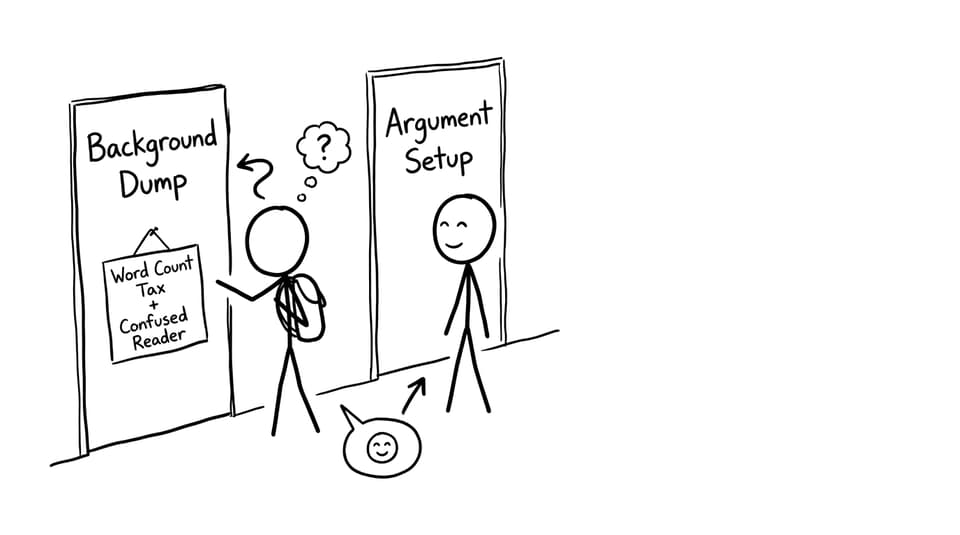
Start with context, but pay a “word tax” on every sentence
Your EE introduction needs background, but only the kind that earns its keep.
A useful test: if a sentence doesn’t help the reader understand your RQ, your method, or the significance, it’s probably a background dump.
Good context looks like:
- A key debate in the field
- A precise historical moment
- A brief definition of a central concept
- A short description of the system or text you will analyze
Weak context looks like:
- A Wikipedia-style history of the entire topic
- A biography of the author when you’re analyzing one technique
- A generic “since the beginning of time” opener
If you need a broader map of EE sections (so you know what not to cram into the intro), use How to structure an Extended Essay.
State your EE research question like you mean it
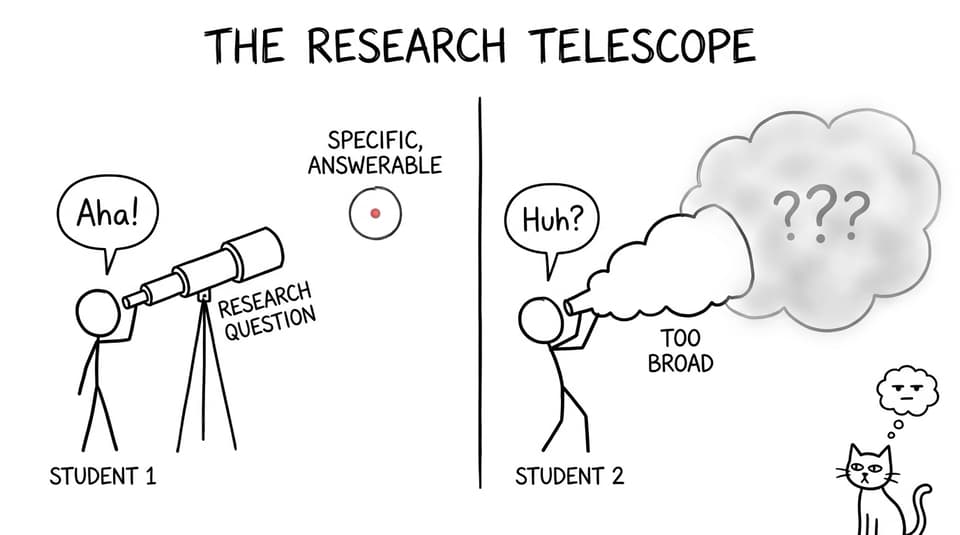
Your EE lives or dies on the precision of the RQ.
Put your RQ near the end of the introduction, make it unmistakable, and keep it focused enough to answer well. In most subjects, your RQ should invite analysis rather than description.
A practical pattern is:
- To what extent (evaluation)
- How (mechanism/technique)
- In what ways (comparative analysis)
- How effectively (judgment with criteria)
Then tighten scope using boundaries: time period, geography, texts, dataset, or variables.
If you’re unsure whether your RQ is too broad, RevisionDojo’s EE ecosystem is built for that moment: the IB Extended Essay Guides hub helps you see what “focused” looks like by subject.
Explain the significance (the “so what?” that earns marks)
Significance in an EE introduction is not self-promotion. It’s positioning.
You’re telling the examiner: This RQ matters because it connects to something bigger than my personal interest. Depending on your subject, significance can be:
- Filling a gap or tension in existing interpretations
- Testing whether a common assumption holds under a specific case
- Comparing two frameworks to see which explains outcomes better
- Investigating a real-world issue with measurable stakes
The simplest way to write this section is a three-sentence ladder:
- What’s commonly believed or commonly argued in the field
- What’s uncertain, contested, or under-explained
- How your EE will contribute by investigating a precise case
This is also where you quietly strengthen Criterion C, because significance often hints at your stance and the direction of your argument.
Preview your research methods (in plain, examiner-friendly language)
This is the part students underwrite because it feels “obvious.” But under the 2027 format expectations, your introduction should make method visible.
Method preview doesn’t mean a full methodology chapter. It means the examiner can see:
- What you used (primary/secondary sources, datasets, experiments, models, interviews where permitted)
- What you did with what you used (analysis approach)
- Why that approach fits your RQ and subject conventions
Examples of method phrasing you can adapt:
- “This EE analyzes [primary sources/texts] through [framework/lens] to evaluate…”
- “Data was collected from [source], then processed using [statistical test/model] to determine…”
- “The investigation compares [case A] and [case B] using [criteria] to assess…”
If your bigger EE process feels messy, use a structured plan: How to survive the IB Extended Essay research process and Tools to organize your EE research.
How Your EE Introduction Sets Up Criterion C (Line of Argument)
Criterion C rewards analysis and a coherent line of argument. Your EE introduction is where you plant the flag that your essay will not become a collection of disconnected observations.
A useful distinction:
- A roadmap says: “First I will talk about X, then Y, then Z.”
- A line of argument preview says: “By examining X and Y, this EE argues Z.”
Even if your conclusion will be nuanced, you can still signal a direction.
If you want a clear description of what “line of argument” means in examiner language, read: Criterion C: Analysis and line of argument.
A Practical EE Introduction Template (Copy, Then Customize)
Use this as a starting structure. Keep it tight. Most EE introductions land well around 250-400 words, depending on subject.
Paragraph 1: Context (tight + relevant)
- 2-4 sentences of background that frames the problem
- Define 1-2 key terms if needed
Paragraph 2: Significance (your “so what”)
- What debate/gap/problem makes this question worth asking?
- Why this specific case/text/dataset?
Paragraph 3: Research question + method preview + argument direction
- State the EE research question clearly
- Briefly preview sources/data and analytical method
- Give a 1-2 sentence line-of-argument preview
Common EE Introduction Mistakes (and the Fix)
Mistake: The “everything I know” opening
What it looks like: a long history lesson that delays the RQ.
Fix: write the RQ earlier, then keep only the context the RQ requires.
Mistake: A method that sounds like a plan to read things
What it looks like: “I will use many sources to discuss…”
Fix: name the method. Compare, evaluate, model, test, analyze language, apply a framework.
Mistake: No clear stance, just a topic
What it looks like: “This essay explores…” without direction.
Fix: add a claim-shaped preview: “This EE argues that…” or “This investigation suggests that…”
Mistake: Misalignment between RQ and method
What it looks like: an RQ that demands data, but you only have opinions; or an RQ about effect, but no measurable variable.
Fix: revise the RQ or revise the method until they match. That’s literally Criterion A.
If you ever feel tempted to brute-force your way through drafting, read How to write an EE in one day for a reality check and a rescue plan.
How RevisionDojo Helps You Draft a Higher-Scoring EE Introduction
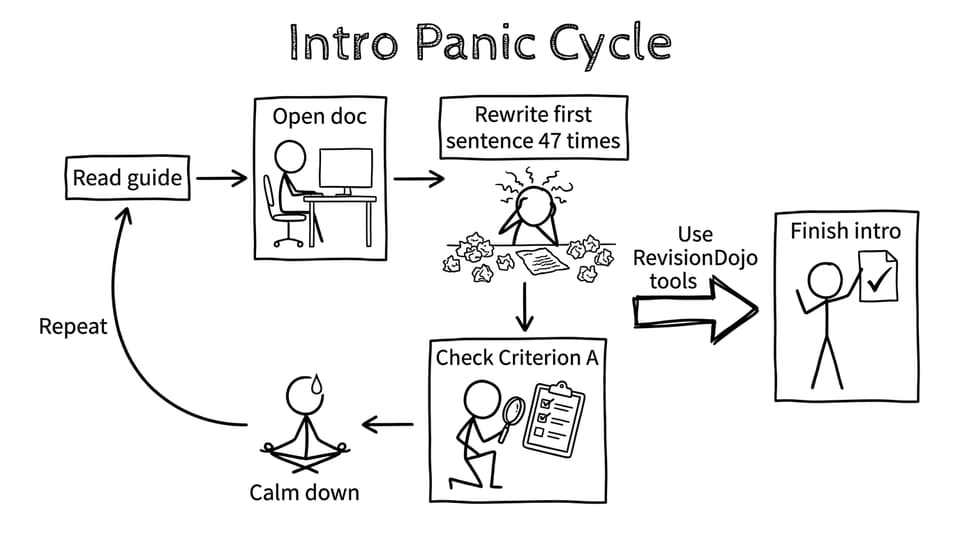
Most students don’t struggle because they’re not smart enough. They struggle because the EE is long, independent, and criterion-driven, and they try to revise it with vibes.
RevisionDojo is built to make the criteria actionable:
- Study Notes + Flashcards to strengthen subject knowledge quickly, so your EE introduction context stays accurate and sharp.
- AI Chat to stress-test whether your RQ is focused and whether your method actually answers it.
- Grading tools and criterion-aligned feedback to check whether your EE introduction is truly hitting Criterion A language.
- Coursework Library to see strong exemplars and understand what “focused and methodical” looks like in real submissions.
- Tutors if you want human, subject-specific coaching on refining the RQ, significance, and method clarity.
- Questionbank, Predicted Papers, Mock Exams to keep your exam preparation moving while the EE runs in the background, so one core requirement doesn’t swallow your whole year.
If you want a structured way to improve the whole project, not just the opening, bookmark: IB EE feedback tool: improve your Extended Essay score.
Closing: Write the EE Introduction Like It’s a Promise
A good EE introduction doesn’t try to impress with fancy phrasing. It earns trust with precision.
State your research question clearly. Explain why it matters in your subject. Preview methods that actually answer it. Then give the examiner a glimpse of the argument you’re building, so Criterion C has something solid to grow from.
If you want to draft faster and revise smarter, use RevisionDojo to pressure-test your EE research question, tighten your method description, and check alignment with the criteria. Your EE introduction is the first page the examiner meets. Make it the page that makes them think, “Yes. This student knows what they’re doing.”
Near the end of your final revision, read your EE introduction again and ask: does it still match what the essay actually does? If not, update it. In the 2027 format, that alignment is marks.