
Sometimes the most dangerous sentence in the IB is also the most romantic:
“I’m genuinely curious about this topic.”
Curiosity is a gift. But when it comes to your EE, curiosity without grounding can become a slow leak in your schedule, your confidence, and (quietly) your final grade. The question shows up every year: Can I write my EE in a subject I’m not studying? And the honest answer is: sometimes, but it’s usually riskier than it sounds.
The official vibe of the guide is clear: it strongly recommends doing your EE in a subject you are currently studying in the Diploma Programme. For course students (not the full diploma), the subject should be one you already have background in. And for interdisciplinary essays, it’s strongly recommended you study at least one of the two subjects.
That guidance isn’t trying to limit you. It’s trying to protect you from the hidden cost of starting a 4,000-word research project while also secretly trying to teach yourself the subject underneath it.
The short answer (and the safer default)
Here’s the practical rule that helps most IB students preparing for exams:
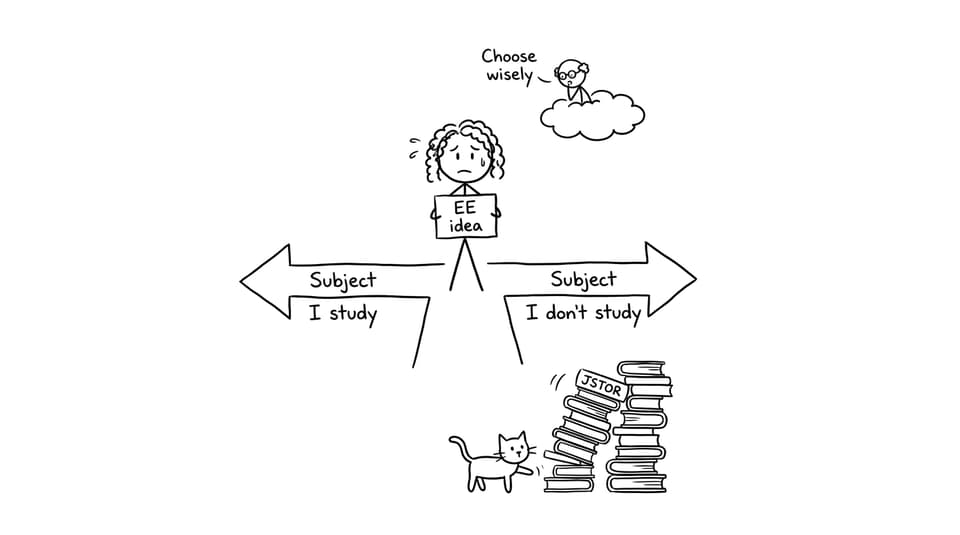
- Yes, it may be allowed to write an EE in a subject you’re not studying (depending on your school, supervision availability, and the subject’s IB requirements).
- But it is strongly recommended that you write your EE in a DP subject you’re currently studying.
- If you’re a course student, pick a subject you have background in.
- If your EE is interdisciplinary, it’s strongly recommended you’re studying at least one of the two subjects.
If you want to go deeper into how the EE is assessed and what “good” looks like across subjects, start with IB Extended Essay Guide: Structure, Research Question, ... and browse All IB Extended Essay Posts.
Why students want an EE outside their subjects (and why it backfires)
Most students don’t ask this because they want an easy route. They ask because they care.
Maybe you’ve been reading about criminal psychology while taking Biology and English. Or you’ve been building apps after school and suddenly Computer Science feels like your real language, even if it’s not on your timetable. You think: If the EE is about independent research, shouldn’t I be allowed to follow what I actually like?
You should. But the EE isn’t just “an essay about something you like.” It’s an assessed research project inside a subject framework. That framework includes:
- expected methods (how you gather and analyse evidence)
- expected vocabulary (how you talk like the discipline)
- expected argument style (what counts as a strong claim)
- expected source standards (what counts as credible)
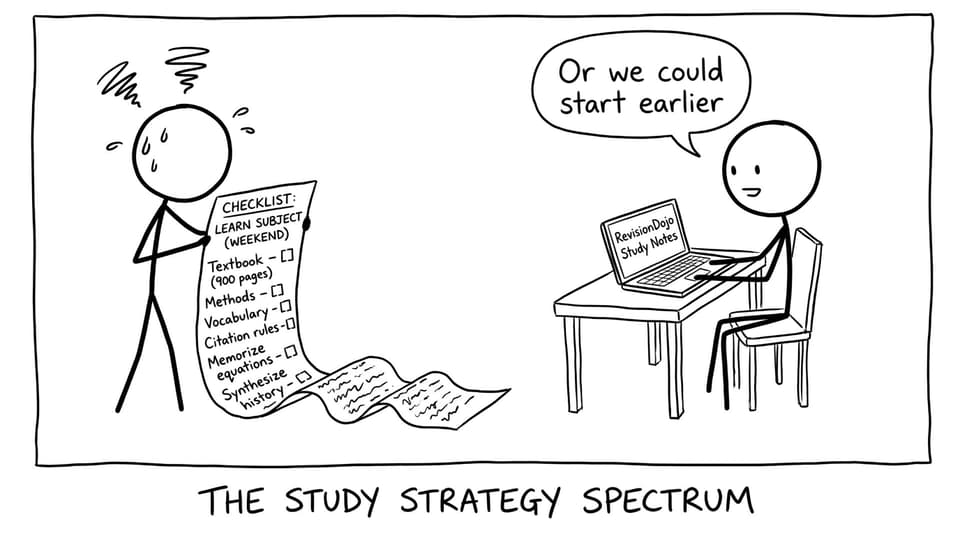
When you choose an EE subject you’re not studying, you’re often signing up for two projects:
- learn the subject
- write the essay
That’s why this choice tends to hurt exam prep. Your EE expands to fill the time you need for Paper 1, Paper 2, data response, and timed writing.
What “allowed” really depends on
Schools vary, but these are the usual gates you must pass if you want an EE outside your current subjects:
Supervision availability
You need a supervisor who is qualified and willing. If your school can’t provide one, the idea usually ends there.
Subject eligibility and category fit
The IB has subject-specific expectations for what counts as a valid EE. Even when your topic is interesting, it might not fit the discipline in an assessable way.
Academic honesty and feasibility
If you’re improvising methods and sources, you can accidentally drift into:
- overly descriptive writing
- weak evaluation
- questionable sources
- unclear methodology
If you want a reality-check on what goes wrong most often, read Mistakes to Avoid in IB Extended Essays.
The real risk: you lose marks quietly
The scary part of a risky EE topic is that it doesn’t always fail loudly.
You can write 4,000 coherent words and still underperform because the essay doesn’t behave like the subject expects. Examiners reward disciplined thinking inside the chosen discipline: clear research question, appropriate method, sustained analysis, credible evidence, and reflection on the research process.
If you want to understand the standard you’re aiming for, it helps to look at band expectations. This article is useful context: IB Extended Essay 2025 Grade Boundaries Guide.
When writing an EE outside your subjects can make sense
There are cases where it can work. Usually, they share one of these traits:
You have genuine background already
Maybe you studied the subject before DP, you’ve done competitions, you’ve taken external courses, or you’ve been reading deeply for years. Then the subject isn’t “new,” it’s just “not on your schedule.”
Your school can supervise well
A strong supervisor reduces risk by steering you back toward subject-appropriate method and scope.
The topic is narrowly framed
A good EE question is tight. If your question is narrow enough, the learning curve becomes manageable.
To see how to build that kind of question, use Mastering IB Extended Essays: How to Research, Write, ... and How to Survive the IB Extended Essay Research Process.
A decision checklist (use this before you commit)
If you’re still tempted to write an EE in a subject you’re not studying, run this checklist honestly:
- Can my school provide a qualified supervisor?
- Do I already have background in the subject (not just interest)?
- Can I explain the subject method in three sentences?
- Can I find 20-30 credible sources appropriate to the discipline?
- Is my research question answerable without learning the entire syllabus first?
- Can I complete it without sacrificing exam revision time?
If two or more answers are “no,” your best move is usually to pivot: keep the curiosity, change the container.
Interdisciplinary EEs: the smartest compromise
Interdisciplinary ideas are often where students try to “sneak” into a new subject. And that can be a smart instinct.
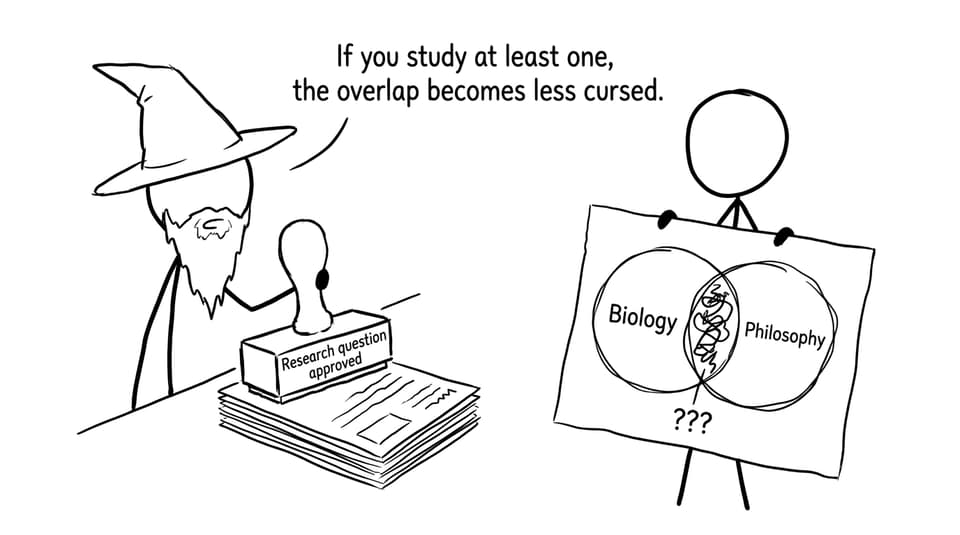
But remember the guidance: for interdisciplinary essays, it’s strongly recommended you study at least one of the two subjects. The reason is simple: you need at least one home base.
A practical way to do this:
- Choose one subject you study as the anchor.
- Use the second subject as a lens, tool, or comparison.
That keeps your EE academically credible while still letting you explore what you care about.
How to protect your exam prep while writing the EE
IB students preparing for exams don’t fail because they’re lazy. They fail because everything becomes urgent at once.
A stable system separates coursework progress from exam performance so they don’t fight each other.
Here’s a calm workflow using RevisionDojo as the hub:
- Use the Coursework feature to keep your EE process organised and model your structure on strong examples.
- Browse IA/EE/TOK exemplars (examiner-verified) to see what top-band academic voice looks like in real student writing.
- Upload drafts to the IB Coursework Grader for criterion-aligned feedback you can act on quickly.
- When you get stuck, use RevisionDojo’s AI Chat to clarify method, structure, and phrasing choices (especially helpful when your EE topic is ambitious).
- Keep content knowledge from slipping by using Study Notes and Flashcards alongside your daily exam routine.
- Protect your exam skills with the Questionbank, Mock Exams, and Predicted Papers (this keeps your grades rising while the EE is still in progress). A good starting place is the Questionbank and IB Predicted Papers by IB Examiners (Free).
If you’re juggling everything and want a complete exam-prep loop, RevisionDojo App: The Smarter Way to Prep for IB Exams connects the pieces.
What to do if you already chose a subject you’re not studying
Don’t panic. Panic makes you double down on bad plans.
Instead, do a controlled evaluation:
Ask: is the subject actually the problem, or is the question too wide?
A lot of “wrong subject” stress is really “too big question” stress.
Get a model fast
Find an exemplar close to your category in IA/EE/TOK exemplars (examiner-verified). Compare:
- structure
- evidence use
- method
- tone
Get rubric-aligned feedback early
The earlier you use the IB Coursework Grader, the easier it is to fix the direction. Late feedback is emotionally expensive.
If needed, pivot without wasting work
You can often keep:
- your core topic
- your best sources
- your curiosity
But you shift the EE subject container to one you actually study, changing the research question and method to fit.
(And yes, sources can sometimes overlap between coursework components if your writing and argument remain original. This is explained clearly here: IA Sources for Your EE: What's Allowed in IB?.)
Closing: keep the curiosity, choose the right container
Your best EE is not the one that proves you can suffer through a new subject alone. It’s the one that shows you can think like a researcher: focused question, disciplined method, credible evidence, and honest reflection.
So yes, you might be able to write your EE in a subject you’re not studying. But the strongest default is the one the guide recommends: write your EE in a DP subject you currently study (or, for course students, one you already have background in), and for interdisciplinary work, make sure you study at least one of the two subjects.
If you want to make the whole process simpler, RevisionDojo is built to carry both sides of IB life: the EE and the exams. Use the Coursework Library and Coursework Grader to keep your EE on-criteria, then protect your grades with Study Notes, Flashcards, AI Chat, the Questionbank, Predicted Papers, and Mock Exams. And if you need a human to steady the plan, RevisionDojo Tutors can help you choose a question that’s ambitious enough to be interesting and narrow enough to be finished.