
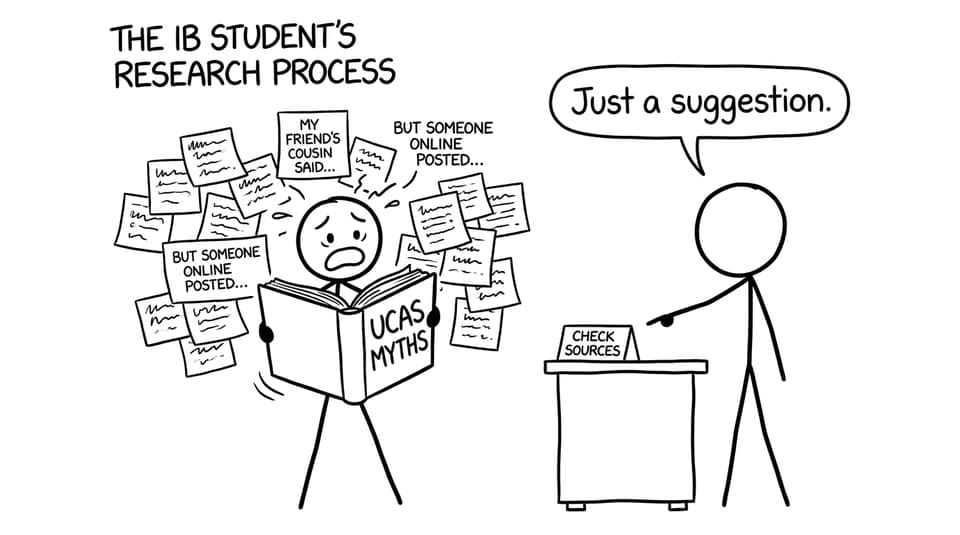
When you are deep in IB revision, your brain wants certainty. A timetable. A checklist. A markscheme.
Then UCAS shows up and does the opposite.
Someone in your year says, “My friend applied on the first day and got five offers in a week.” Another person insists personal statements are “just vibes.” By the time you get back to your HL essay, you are not just revising anymore; you are carrying a backpack full of rumours.
This is a calm reset. Below, we bust the most common UCAS myths IB students hear, and replace them with what actually helps: clarity, strategy, and a process you can trust.
Quick UCAS reality checklist (save this)
-
UCAS is selective, but not only for “perfect” applicants.
-
Universities do read your personal statement (especially when grades look similar).
-
Extracurriculars matter when they prove skills or academic interest.
-
UCAS has a limit on choices, so your shortlist must be deliberate.
-
Clearing is a legitimate pathway, not a punishment.
-
Speed of application does not guarantee speed of replies.
If you want the bigger picture of how UCAS works end-to-end, keep this guide open in another tab: What UCAS Is and How It Works: Step-by-Step Guide.
Myth: Only perfect predicted grades get offers in UCAS
It is tempting to believe UCAS is a simple points gate. In the IB, you are trained to respect rubrics and boundaries, so you naturally assume admissions works the same way.
Reality: strong predicted grades matter, but many decisions are holistic. Universities look at your academic fit, your reference, your personal statement, and whether you seem likely to thrive on that course. For competitive programmes, predicted grades can be the ticket to get looked at, not the full decision.
If you are anxious about predicted grades, the most useful move is to control what you can: tighten exam technique and reduce avoidable errors. RevisionDojo helps you do that with Questionbank practice, Study Notes for fast clarity, Flashcards for recall, and AI Chat when you get stuck mid-session.
For a calmer perspective when predictions feel personal, read: IB Predicted Grades Don’t Define You (Here’s What Does).
Myth: Universities do not read the UCAS personal statement
This myth survives because it is comforting. If nobody reads it, you can stop worrying.
Reality: admissions tutors do read personal statements, especially when thousands of applicants look identical on paper. On some courses, it is a key differentiator. On others, it is used more as a check for motivation and suitability. Either way, you should assume it will be read.
A good UCAS personal statement is not poetry. It is evidence. It shows you understand the subject, you have done relevant thinking or reading, and you can reflect on what you learned.
Start here for structure and common mistakes: How to Write a Standout Personal Statement for UCAS and then compare against real patterns in: UCAS Personal Statement Examples That Work.
Myth: Extracurriculars are either everything or nothing
IB students often get extreme advice. Either “do ten leadership roles” or “only grades matter.” Both create stress.
Reality: extracurriculars help when they support your academic story or demonstrate transferable skills. A single experience you can reflect on is more persuasive than a long list with no learning.
Think of extracurriculars like an IA conclusion: you do not get credit for volume, you get credit for insight. If you did a CAS project, what did you learn about teamwork, planning, or problem-solving? If you volunteered, what did you notice about people or systems? If you joined a club, what did you build or improve?
If you are applying to multiple related courses and wondering how to keep your story coherent, this is essential: How to Tailor Your Personal Statement for Different Courses.
Myth: UCAS lets you apply to unlimited universities
This one is simple, and still catches people out.
Reality: UCAS limits most applicants to five choices. For Medicine, Dentistry, and Veterinary Science, you can only apply to four courses in those subjects, plus a fifth option in a different subject area.
That limit changes how you should think. You are not “spraying and praying.” You are making five deliberate bets.
If you want the full breakdown of how choices, references, and statements fit together, use: UCAS Application Structure Explained: Choices, Personal Statements, References.
Myth: Clearing is only for students who failed
This is the myth that causes the most unnecessary shame.
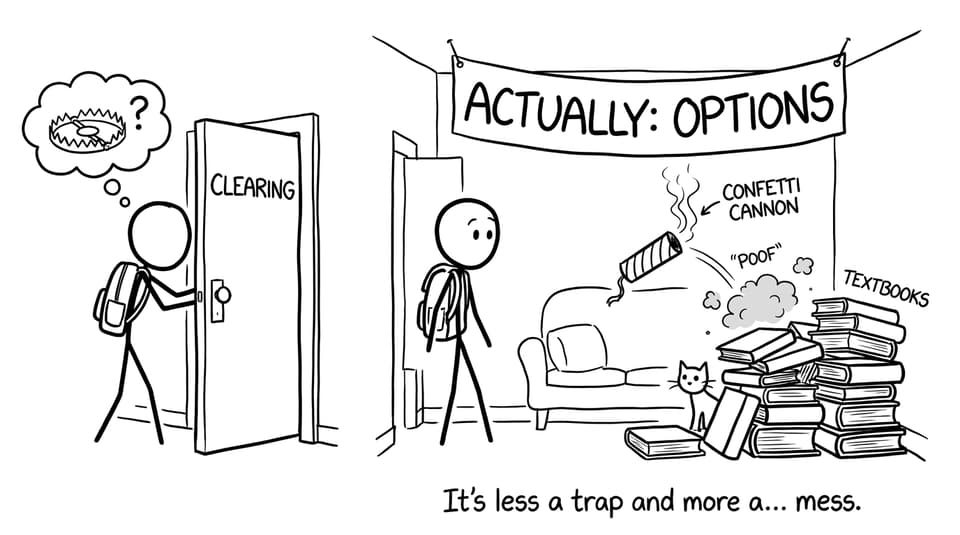
Reality: Clearing is a matching process. Universities use it to fill places. Students use it when plans change, when results surprise them (up or down), or when they find a course that fits better.
Clearing can be practical and calm if you prepare. Know your UCAS ID, keep a shortlist, and have a brief explanation of why you want the course.
Two helpful guides:
Myth: Apply earlier and UCAS replies come faster
You can submit a brilliant application and still wait.
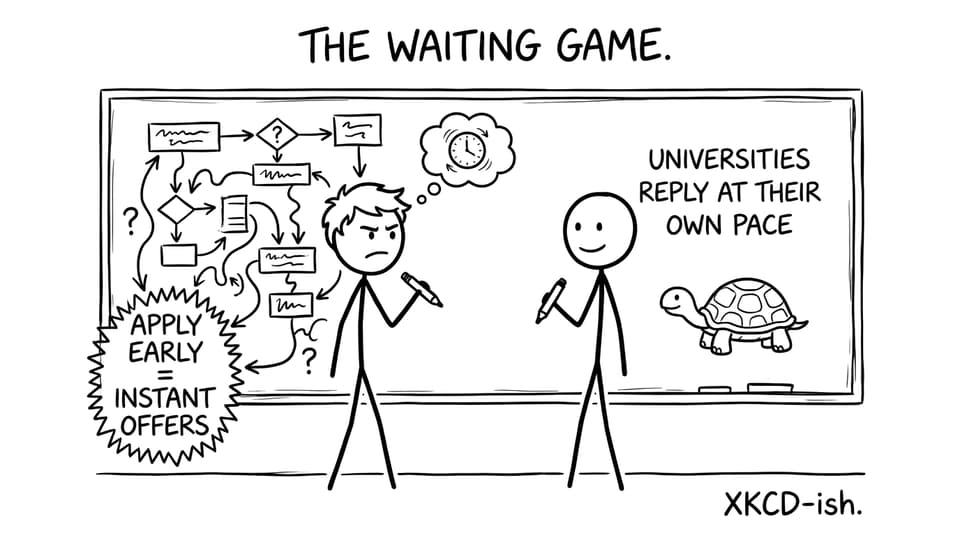
Reality: universities process applications at their own pace. Some make early offers. Others wait until closer to deadlines. Applying early can reduce your own stress and give you time to fix issues, but it does not guarantee quick decisions.
A smarter approach is to focus on quality: clean course choices, a strong personal statement, accurate details, and a timeline you understand.
To ground your planning, use: Understanding UCAS Deadlines: What You Need to Know.
Myth: Once you submit UCAS, nothing can change
Reality: some details can be updated after submission, and some course-choice changes are possible within certain rules and timelines. But the deeper truth is this: you should not rely on “fixing it later.” UCAS rewards calm preparation.
Use the same discipline you use in IB exam prep: iterate early, get feedback, and finalise with time to spare.
This is also where RevisionDojo fits naturally into the story. While UCAS is about the application, your offers will often depend on hitting IB conditions. That is why your revision loop matters: Questionbank for volume, Study Notes for speed, Flashcards for retention, Predicted Papers and Mock Exams for stamina, and Grading tools to understand what marks actually reward. If you want a human layer, Tutors can help you adjust strategy fast.
Conclusion: Let UCAS be quiet in your head
UCAS becomes stressful when it is filled with stories you did not choose. Myths turn other people’s timelines and opinions into your problem.
Replace them with a simple rule: focus on the parts you can control. Build a thoughtful shortlist, write a clear personal statement, track deadlines, and keep your IB revision strong so you can meet any conditions.
If you want one place to steady both sides of the journey, applications and results, use RevisionDojo to practise smarter: Questionbank, Study Notes, Flashcards, AI Chat, Grading tools, Predicted Papers, Mock Exams, Coursework Library, and Tutors. UCAS is the gateway, but your preparation is what helps you walk through it with confidence.