
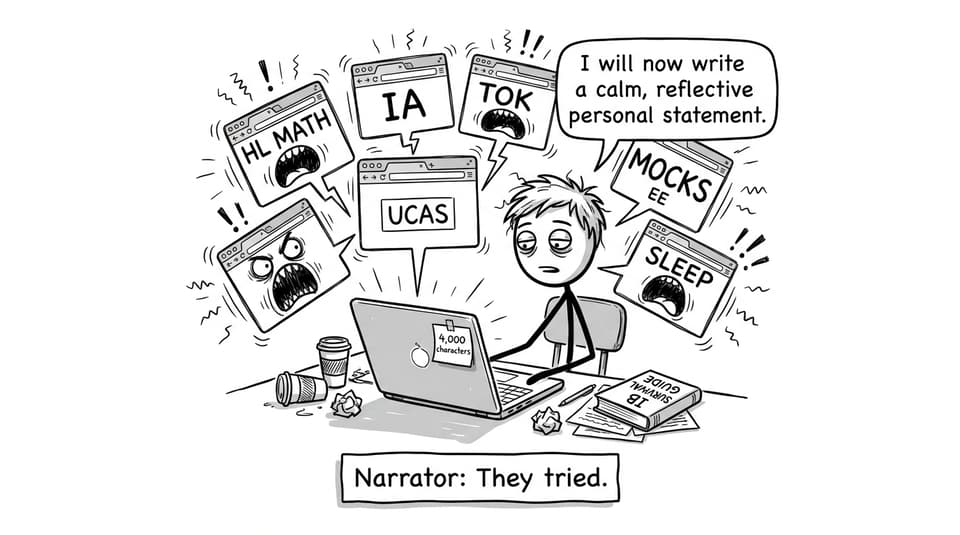
You can feel the moment it happens: you open the UCAS personal statement box, and suddenly every IB deadline starts talking at once. Your brain wants to write something “impressive.” Admissions tutors want something rarer: something true.
A UCAS statement that works isn’t a fireworks display. It’s a clear trail of evidence: this is the subject that holds my attention, and here’s what I did about it. If you’re revising for IB exams at the same time, that clarity matters even more, because you don’t have time for filler.
UCAS personal statement quick checklist (steal this)
Before you polish sentences, make sure your UCAS draft includes:
-
A specific opening moment (not a childhood dream)
-
2-3 academic “proof points” (EE, IAs, wider reading, competitions)
-
Extracurriculars only when they support the course
-
Reflection after each example (what changed in your thinking?)
-
A focused conclusion that links subject interest to next steps
If you want the bigger picture of how the whole application fits together, keep UCAS Application Structure Explained: Choices, Personal Statements, References open while you draft.
Example openings: what works (and why)
A weak UCAS opening often sounds like a slogan.
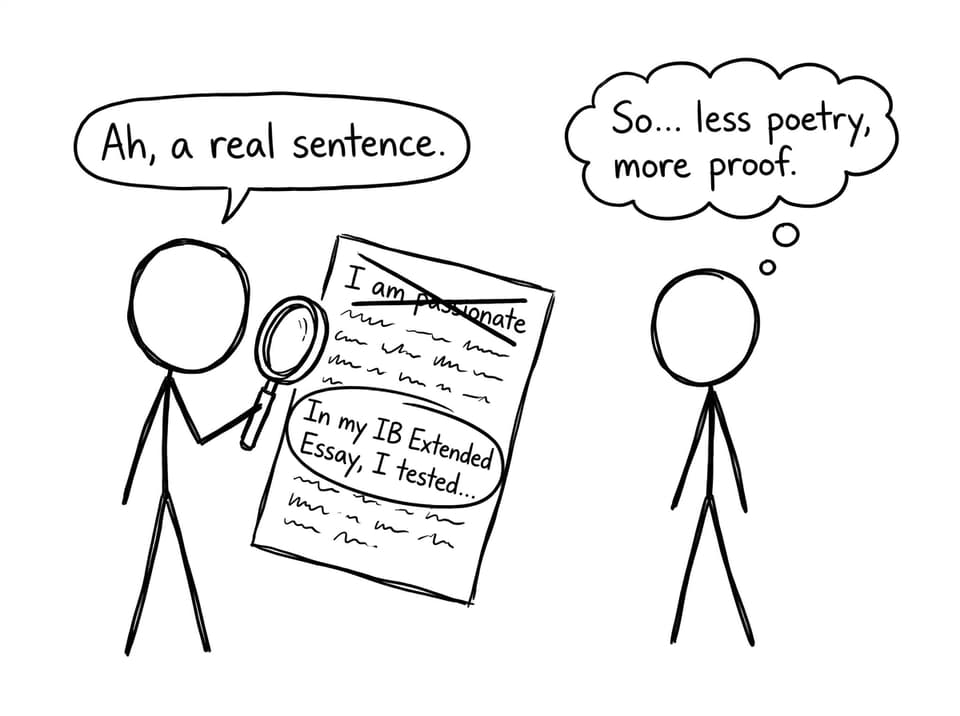
Generic opening: “I have always been passionate about Engineering.”
Stronger opening: “When my Physics IA produced data that didn’t match my model, I had to rebuild my assumptions from scratch, and that problem-solving loop made engineering feel less like a subject and more like a way of thinking.”
This works because it’s anchored in a real moment and shows you understand how the subject behaves. It also quietly signals you’re used to the IB habit of testing ideas.
For a step-by-step structure, see How to Write a Standout Personal Statement for UCAS.
Example academic depth: the “proof + reflection” pattern
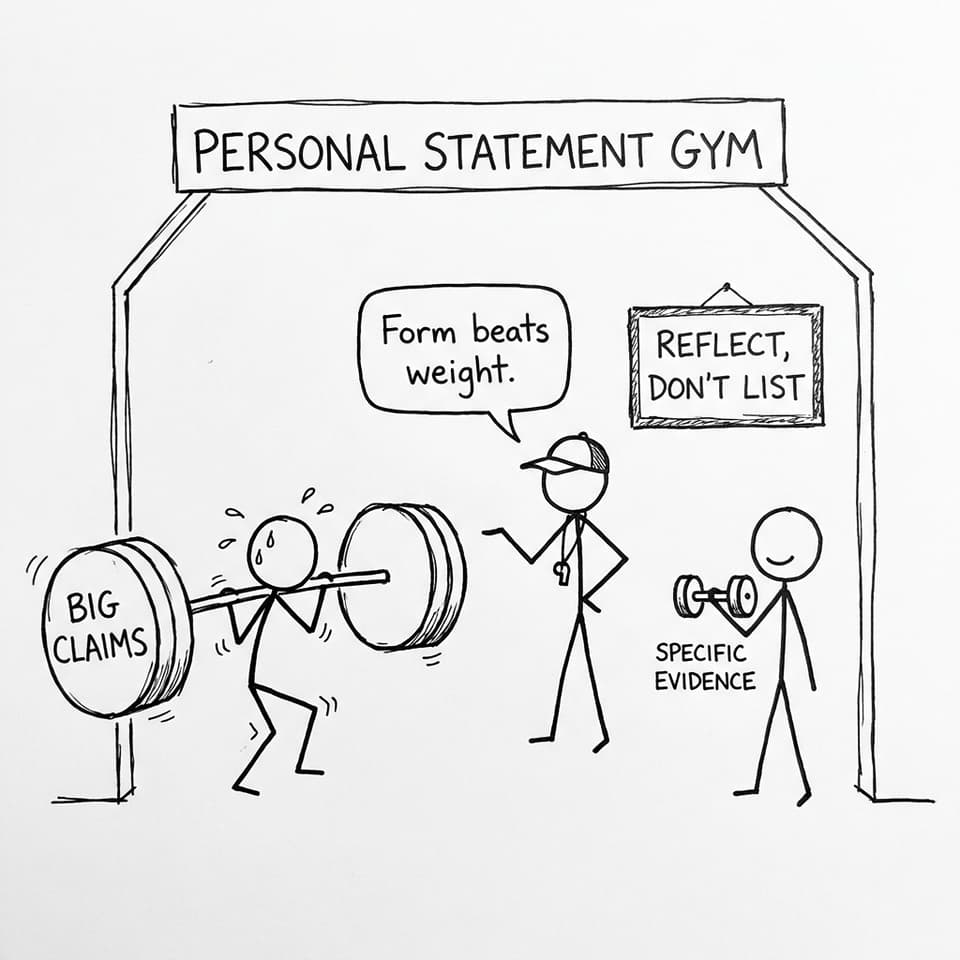
Admissions tutors read thousands of UCAS statements. The ones that stand out usually follow a simple rhythm:
Proof: What you did.
Reflection: What you learned and how it shaped your subject interest.
Weak academic depth: “I enjoy reading about psychology.”
Stronger academic depth: “While preparing my IB Biology revision, I kept returning to neuroplasticity research. I compared two studies with conflicting conclusions and realised I was more interested in methodology than headlines, which is why I want to study Psychology with a strong research focus.”
If your examples come from coursework, you can also sharpen your language using RevisionDojo’s Grading tools and AI Chat: paste a paragraph and ask, “Where is the reflection missing?” Then fix only what matters.
Example extracurriculars: linking without forcing it
UCAS doesn’t reward a long activity list. It rewards relevance.
Weak link: “I play football every weekend.”
Stronger link: “Captaining our football team taught me how to give feedback without friction. I used that same approach when we divided tasks for our Group 4 project, and I became more confident leading collaborative problem-solving, a skill I want to bring to Engineering design work.”
If you’re unsure what counts as a strong “transferable skill,” use How to Highlight Skills and Experience in UCAS Applications.
Example conclusion: calm, specific, forward-looking
A UCAS conclusion shouldn’t beg. It should close the loop.
Weak conclusion: “I hope to be accepted to study Medicine.”
Stronger conclusion: “Medicine appeals to me because it combines biological reasoning with responsibility under pressure. I want a course that pushes clinical thinking early, and I’m ready for that challenge because I’ve learned to work systematically through complex problems during the IB.”
For last-minute edits that don’t destroy your structure, read How to Update Your UCAS Personal Statement for Last-Minute Applications.
How RevisionDojo helps IB students write UCAS drafts faster
When you’re juggling exam prep, your statement needs a system.
RevisionDojo works like a single home base: Study Notes and Flashcards keep your subject content sharp; the Questionbank and Mock Exams build real exam confidence; AI Chat helps you turn messy thoughts into structured reflection; Grading tools improve clarity; Predicted Papers support timed practice; and the Coursework Library plus Tutors help you find strong models and feedback without guessing.
To build a stable study routine while you draft, use How to Study for IB Exams: Step-by-Step Guide and Balanced IB Study Schedule That Actually Works.
Final thought: your UCAS statement is a map, not a monument
A strong UCAS personal statement doesn’t try to prove you’re perfect. It shows you’re focused, reflective, and already practicing the habits the course demands.
If you want to write faster without losing quality, build your evidence from what you’re already doing for IB exams, then tighten it using RevisionDojo’s Study Notes, Flashcards, Questionbank practice, AI Chat feedback, and Grading tools. When you’re ready, explore more guidance in the UCAS tag hub, and turn your draft into something that sounds like you, on your best day.