
If you’re an IB student staring down exams, it’s easy to believe your whole future is balanced on one results screen. But UCAS Clearing exists for a quieter truth: one set of grades can change your route, not your destination.
UCAS Clearing can feel like a scramble because it moves fast and sounds official. In reality, it’s a structured process designed to match students with university places still available. If you understand the steps, you can act calmly, speak confidently, and keep your options open.
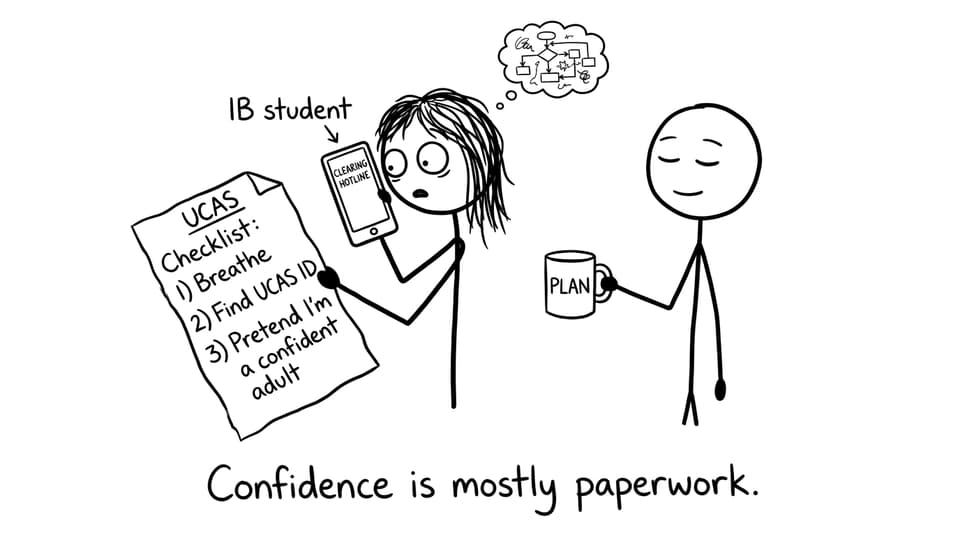
UCAS Clearing quick checklist (save this)
-
Check your UCAS Hub status (are you “in Clearing”?).
-
Make a shortlist of 5-10 realistic courses.
-
Gather your UCAS ID, Clearing number, and grades.
-
Prepare a 20-second “why this course” summary.
-
Call universities, then record every offer clearly.
-
Add your final choice in UCAS Hub and wait for confirmation.
For a bigger-picture view of the system you’re working inside, read What UCAS Is and How It Works.
Step 1: Confirm you’re eligible for UCAS Clearing
You can use UCAS Clearing if you’re applying after 30 June, you didn’t receive any offers, you declined all offers, or you missed the conditions of your firm/insurance choices. The simplest way to confirm is to log into UCAS Hub and check whether it says you’re in Clearing.
If you’re unsure how your choices affect your options, this helps: How to Switch Your UCAS Choice Without Losing Options.
Step 2: Research vacancies with a clear filter
UCAS vacancies change quickly, so your goal isn’t to find “the perfect course.” It’s to find several good options you would genuinely accept.
Use three filters:
-
Fit: your IB subjects, strengths, and interest.
-
Reality: entry requirements you can meet.
-
Life: location, accommodation, cost, and campus feel.
A smart clearing shortlist is wide enough to give you leverage but focused enough to keep decision-making fast.
Step 3: Prepare your call pack (before you dial)
Calls go better when you can answer quickly without rummaging through screenshots. Have ready:
-
Your UCAS ID and Clearing number (from UCAS Hub).
-
Your IB grades (and any relevant achievements).
-
A short, specific reason you want the course.
Treat the call like a mini interview: polite, direct, and enthusiastic. If you want a printable-style run-through, use UCAS Clearing Checklist 2025: What to Prepare Before You Call.
For nerves, it helps to rehearse calmness the same way you rehearse exam technique. This guide is designed for that moment: Exam Stress Management Tips for IB Candidates.
Step 4: Call universities and ask smart questions
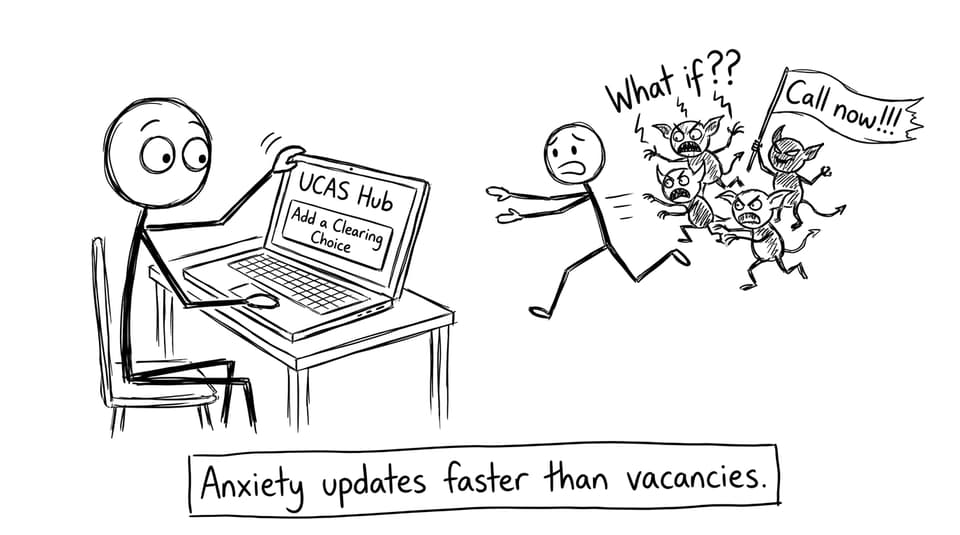
When you call a clearing hotline, start with your name, UCAS ID, the course name/code, and your grades. Then pause and let them guide the conversation.
Good questions to ask include:
-
Are my grades acceptable for this course?
-
Is there flexibility on specific subject requirements?
-
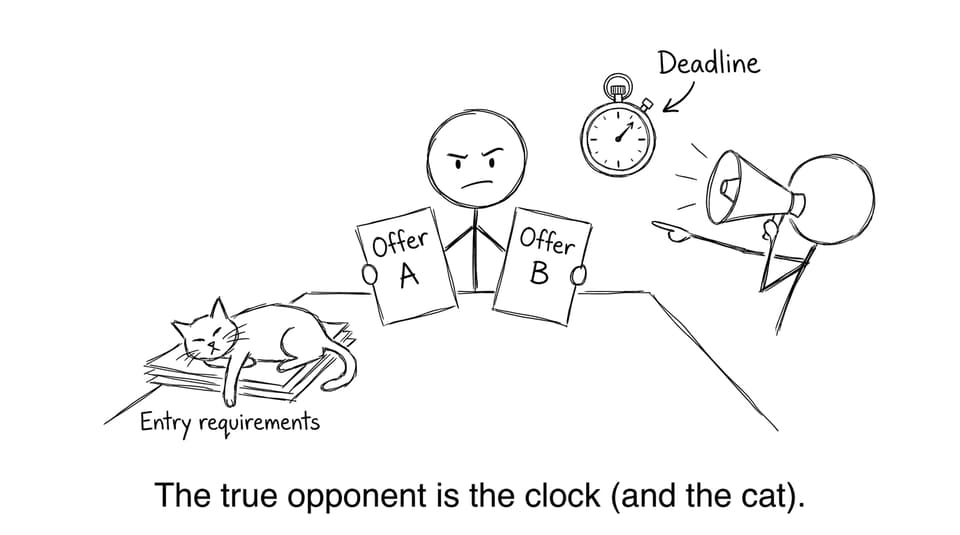
What is the deadline to accept if offered?
-
What happens next (email confirmation, portal update, further info)?
If you’re just under the requirements, you may still have room to negotiate. Use How to Negotiate Offers During UCAS Clearing Calls.
Step 5: Record and compare every UCAS Clearing offer
Write down each offer immediately. Include:
-
Course name and UCAS code
-
Required grades (and any conditions)
-
Caller name and department
-
Decision deadline and next step
This is where students lose time: not because they’re slow, but because they’re trying to remember details under pressure.
Step 6: Accept your place in UCAS Hub
Once you choose, you’ll add the course under “Add a Clearing Choice” in UCAS Hub. The university then confirms your place. When UCAS updates your application to show the confirmed offer, you have your next step locked in.
Common UCAS Clearing mistakes to avoid
-
Panic-calling without basics: you’ll sound unsure, even if you’re capable.
-
Accepting the first option automatically: comparison protects you.
-
Ignoring admin details: deadlines and conditions matter.
For broader application pitfalls (useful even if you’re already in Clearing), see Mistakes Students Make During UCAS Applications.
A final note for IB exam season
IB exams teach you something that UCAS Clearing rewards: focus under pressure. If results day pushes you into Clearing, your job is to replace spiralling with steps. Build a shortlist. Gather your details. Make the calls. Confirm in UCAS Hub.
And while you handle the admin, keep your academic foundation strong. RevisionDojo is built for IB students who want calm structure: targeted Questionbank practice, concise Study Notes, quick-recall Flashcards, and AI Chat when you’re stuck. When you need realism, use Mock Exams and Predicted Papers. When writing matters, lean on Grading tools and the Coursework Library. If you want a human plan, our Tutors can help you make the next move with confidence.
UCAS Clearing is a process. You don’t need perfect certainty. You need your next clear step, and then the one after that.