
A predicted grade can look like a small number carrying an unreasonable amount of weight. If it falls below a university requirement, a parent may naturally wonder whether the school can be challenged before an application is submitted.
The reassuring answer is yes, parents can usually ask the school to review how an IB predicted grade was reached. But there is no universal IB appeals process that gives parents the right to demand a higher university-facing prediction. The decision belongs primarily to the school, under its own prediction, review, and complaints policies. A review is most likely to matter when there is strong academic evidence, an administrative mistake, an overlooked circumstance, or a failure to follow the published process.
Simply needing another point for a preferred university is rarely enough. Predicted grades are intended to be realistic academic judgments, not negotiated targets.
The short answer for parents
If you are considering challenging IB predicted grades, begin with this checklist:
- Ask for the school's written predicted-grade policy and review deadline.
- Confirm whether the grade is provisional or already submitted.
- Let the student speak to the subject teacher first where appropriate.
- Request an explanation of the evidence used.
- Collect recent, comparable academic evidence rather than general claims about effort.
- Identify any procedural error or relevant circumstance that was not considered.
- Escalate calmly to the IB coordinator, head of department, or designated school leader.
- Keep university choices realistic while the review is underway.
- Separate this process from any later review of official IB exam results.
The central question is not, “Does my child deserve a higher prediction?” It is, “Does the available evidence show that the school's prediction is inaccurate or was reached through an unfair process?”
Who controls IB predicted grades?
The International Baccalaureate defines a predicted grade as a teacher's estimate of the grade a candidate is expected to achieve, based on evidence of the student's work and the teacher's knowledge of IB standards. Teachers are expected to predict as accurately as possible rather than intentionally under-predicting or over-predicting.
That definition explains why the school controls the judgment. Teachers and school leaders have access to assessed work, mock performance, Internal Assessment progress, classroom evidence, and the student's trajectory. The precise combination and weighting can vary because schools establish their own internal procedures.
Predicted grades may then be used in university applications. Their influence differs by institution and admissions system, but they are especially important where universities assess applicants before final results exist. RevisionDojo's guides explain how predictions affect conditional offers and how predicted grades work in early university applications.
A parent may request transparency and a fair review. A parent generally cannot substitute their own judgment for the teacher's professional assessment.
When a predicted-grade challenge has a reasonable basis
Not every disagreement is an appeal in the formal sense. Sometimes the first conversation reveals that the teacher used information the family had not seen. In other cases, it identifies a genuine problem.
New academic evidence was overlooked
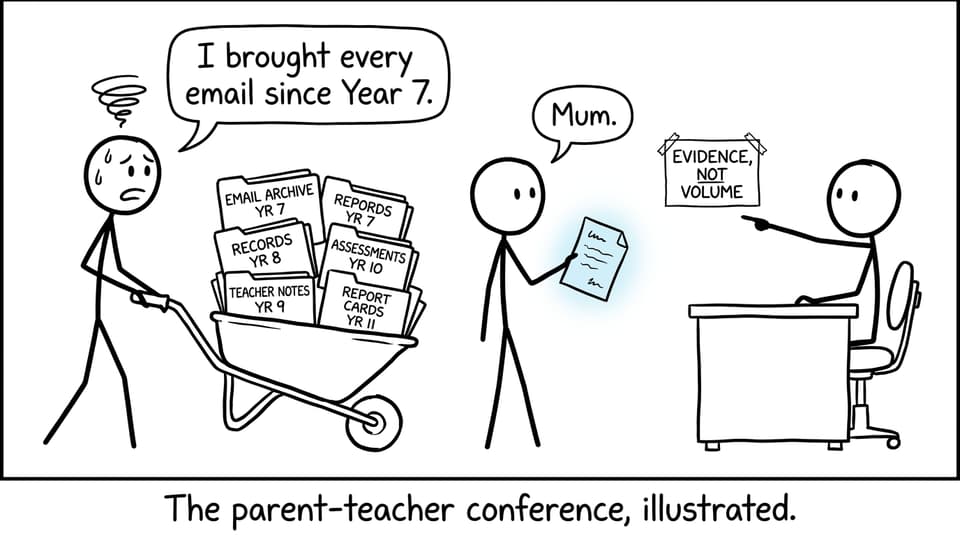
Recent supervised assessments may show sustained performance at the higher grade. Evidence is stronger when it resembles the conditions and skills used in IB assessment, has been marked consistently, and reflects more than one unusually good result.
A single homework assignment is unlikely to outweigh a broader pattern. Several recent assessments, improved coursework, and consistent performance may justify another look, depending on school policy and timing.
The school applied its policy incorrectly
A review is reasonable if the published method was not followed. Perhaps an assessment was entered incorrectly, an agreed reassessment was omitted, or different evidence was used from that specified in the policy.
This is often clearer than arguing over academic judgment. The family can identify the stated procedure, show what occurred, and ask the school to correct the discrepancy.
Relevant circumstances were not considered
Illness, bereavement, an access need, or another serious circumstance may have affected a key assessment. The important point is not merely that the event occurred, but that it was material, documented where appropriate, and previously unknown or insufficiently considered.
Policies differ, so families should ask what evidence the school accepts and whether the circumstance can influence a prediction. Privacy should be respected throughout.
There is a concern about bias or unequal treatment
A concern involving discrimination, bias, or inconsistent treatment should be raised through the school's appropriate safeguarding, equality, or complaints route. It should not be reduced to an argument over one mark. Record specific facts, communications, and policy differences rather than speculating about motives.
What usually does not persuade a school
Schools need predictions they can defend academically. Several common arguments therefore carry little weight on their own:
- “The university requires a 6.” A requirement explains why the grade matters, not why the prediction is wrong.
- “My child works extremely hard.” Effort matters educationally, but a prediction estimates likely assessed performance.
- “Another student received a higher prediction.” Families rarely possess the other student's complete evidence or circumstances.
- “A tutor believes the grade should be higher.” External feedback can be useful, but the school remains responsible for its prediction.
- “My child promises to improve.” Future improvement is possible, but the prediction must rest on evidence available within the school's process.
This can feel unforgiving. Yet a prediction inflated to unlock an application may simply move the problem forward. A conditional offer still has to be met through official results. Parents can compare the two roles in RevisionDojo's guide to predicted grades and final IB results.
How parents should request a review
Start with the student and teacher
Unless there is a safeguarding or wellbeing concern, the student should remain central. Ask them what feedback they received, what evidence they think was missed, and what outcome they want. This avoids turning an academic conversation into a confrontation happening around them.
The student can ask the teacher three precise questions:
- What evidence informed this prediction?
- What standard is not yet being demonstrated consistently?
- Does the school's policy allow further evidence before submission?
The answers may reveal a realistic route forward. They may also show that the grade is well supported.
Write a concise evidence-based request
If a review is still warranted, send a short message to the person named in the school's policy. State the grade being reviewed, the specific grounds, the supporting evidence, and the requested action. Avoid accusations and comparisons with unnamed students.
A useful request might ask the school to verify that two recent supervised assessments and documented circumstances were included. That is more actionable than asking staff to “recognize potential.”
Follow the school's escalation route
The next contact may be the head of department, IB coordinator, university counsellor, head of year, or senior leader. If the concern is procedural rather than academic, the formal complaints policy may apply.
Deadlines matter. A school may be willing to review a provisional forecast but unable to amend an application casually after submission. Ask what has already been sent, what can still be changed, and whether an updated academic development can be communicated to a university. Do not assume that every system or institution accepts post-submission changes.
Protect the university application at the same time
A grade review should not become the entire admissions strategy. While the school considers the request, compare the student's predicted profile with published course requirements, including any subject-specific Higher Level conditions.
Build a balanced list rather than relying on one threshold. RevisionDojo provides a broader explanation of minimum IB scores for universities and why universities may reject applicants based on predictions. Requirements and admissions practices can change, so confirm every condition on the university's official course page.
If an application has already been submitted, the student should speak with the school's university counsellor before contacting admissions. The counsellor can explain what information was transmitted and whether an update is possible or useful.
Predicted-grade reviews are not IB result appeals
This distinction matters. A prediction submitted for university admission is a school judgment made before official results. An Enquiry Upon Results concerns awarded IB grades after results are released and is handled through the school's IB coordinator under IB procedures.
One process asks whether a forecast was reached fairly. The other concerns assessment results already awarded. Calling both an “appeal” can lead families toward the wrong policy, wrong deadline, and wrong decision-maker.
For a clear comparison, see how predicted and final grades differ. A predicted grade also does not normally become part of the mathematical calculation of the student's final subject result.
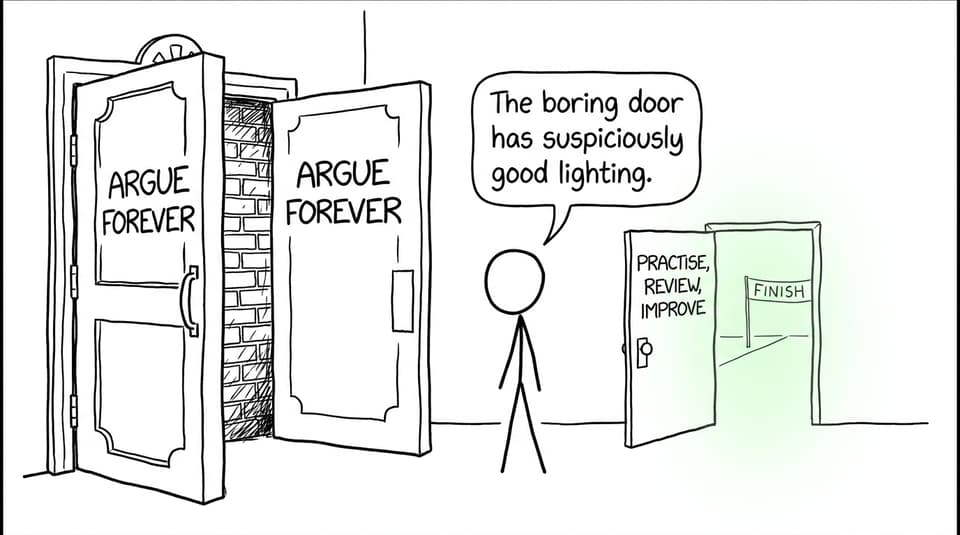
Shift from challenging the forecast to changing the evidence
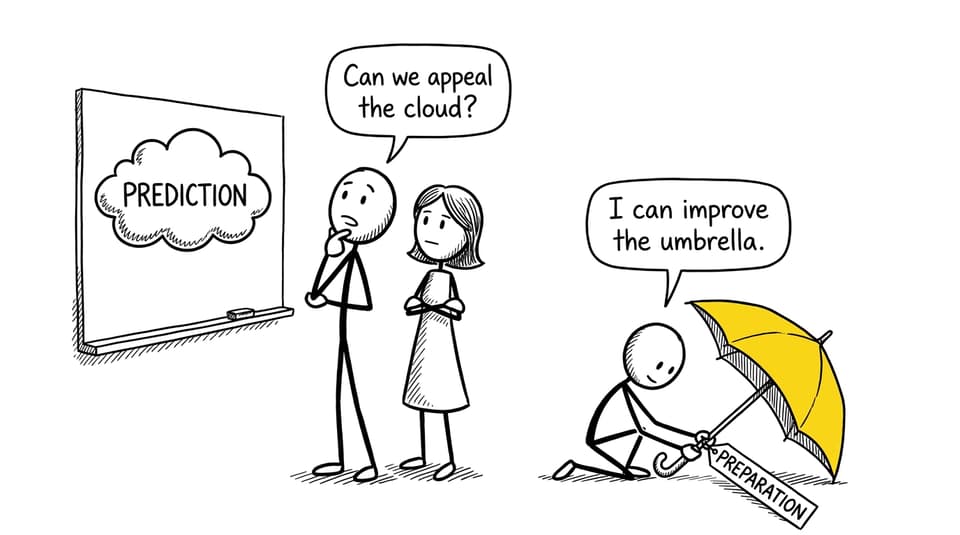
Predicted grades are difficult to change without persuasive evidence. Actual performance, however, remains open to influence through preparation.
This is where the family's energy often earns a better return. Instead of holding repeated meetings about one forecast, help the student identify the topics, command terms, timing problems, or assessment criteria costing them marks. RevisionDojo's final IB year planning guide shows how to distinguish work that strengthens current school evidence from preparation that raises final performance.
RevisionDojo's all-in-one IB resources support that process with Study Notes and Flashcards for understanding and recall, a Questionbank for targeted application, and AI Chat and Grading tools for feedback. Predicted Papers and Mock Exams help students practise under timed conditions, while the Coursework Library and Tutors offer additional support when a rubric or study plan remains unclear.
The aim is not to generate attractive practice scores. It is to create a repeatable loop: attempt, review, correct, and retest. Students can also use the IB grade calculator to translate practice performance into a clearer view of how close they may be to a target, while remembering that any estimate remains provisional.
A calm next step
Parents are right to ask questions when a prediction appears inconsistent with the evidence. The productive approach is to request the policy, identify precise grounds, submit relevant evidence, and allow the school to review its professional judgment.
But it is equally important to know when the process has reached its limit. A prediction is a forecast, not a verdict on the student's ability. The more reliable path is to turn concern into structured preparation and make the official performance stronger than the forecast.
Ask for fairness once, with evidence. Then help the student build what comes next.