If you have ever caught yourself searching “minimum IB score for university” at 1 a.m., you are not alone. There is a particular kind of stress that comes from knowing you can work hard, do everything “right,” and still feel unsure what number will unlock the next step. The truth is both comforting and annoying: the minimum IB score is real, but it is rarely a single number. It is a moving target shaped by country, course, and competition.
What this guide does is simple: it gives you realistic IB score ranges by region, explains what “minimum” actually means in admissions, and helps you turn uncertainty into a plan.
The IB scoring basics (so the requirements make sense)
The IB Diploma Programme is scored out of 45 points:
-
Six subjects, each graded 1 to 7 (maximum 42).
-
TOK + Extended Essay (EE) add up to 3 bonus points.
-
CAS is required for the diploma, but it is not graded.
Universities typically look at your total IB points and, very often, your Higher Level (HL) results. So a “36” can mean very different things depending on whether it includes the HL grades a course wants.
If you are trying to understand where you stand today, the quickest way to sanity-check your numbers is to use an estimator like the IB Grade Calculator.
Quick checklist: how to interpret a “minimum IB score”
Before you obsess over one number, run through this admissions checklist:
-
Are you looking at the university minimum, or the course/program minimum?
-
Does the offer specify total IB points and HL/SL subject grades?
-
Are you applying with predicted grades (common for the UK and many international applicants)?
-
Is the course high-demand (medicine, law, engineering), where the practical minimum is higher?
-
Do you have a realistic study system to raise your IB score before finals?
For the last point, a good start is the RevisionDojo for IB hub, where students build an improvement loop using Study Notes, Flashcards, Questionbank practice, AI Chat, Grading tools, Predicted Papers, and Mock Exams.
Minimum IB score requirements by region (typical ranges)
These ranges are not promises. They are a realistic “what you will often see” map, which helps you pick target schools and plan your revision effort.
United States: “minimum” is rarely written down
In the US, universities often do not publish a single minimum IB score. Instead, they evaluate rigor, grades, essays, and context. Still, common expectations look like this:
-
Highly selective universities: 40-45
-
Competitive universities: 36-40
-
Many selective programs: 30-35
US admissions also pay attention to the difficulty of your courses and how your HL choices relate to your intended major.
If you want your preparation to be measurable, build your practice around exam-style questions and feedback. The Questionbank is designed for this kind of targeted IB improvement.
United Kingdom: offers are explicit (and HL grades matter a lot)
The UK is where “minimum IB score” feels most literal, because offers are usually conditional and clearly stated.
-
Oxford/Cambridge often sit around 38-42, commonly with HL requirements like 7-7-6
-
Russell Group universities often land around 34-38
In other words: a total score alone is not enough. You need the right HL performance in the right subjects.
Canada: strong totals, with course competitiveness doing the deciding
Canada often publishes clear guidelines, and competitive programs generally expect solid totals.
-
Top universities commonly: 33-36
-
Less competitive programs may accept: 28-32
Europe and Australia: wide acceptance, but competitive courses climb fast
Across Europe and Australia, the IB is widely accepted. Typical entry ranges often look like:
-
Many programs: 30-36
-
Competitive programs (medicine, law, engineering): 37-42+
What is the passing score for the IB Diploma?
This part matters because some students confuse “passing the IB diploma” with “meeting a university minimum.” They are different.
To be awarded the IB diploma, you generally need:
-
24 points overall
-
Minimum points across HL and SL subjects
-
Completion of EE, TOK, and CAS requirements
A diploma pass can be enough for some pathways, foundation years, or less selective programs. But for many competitive universities, the admissions minimum is meaningfully higher than 24.
Why the “minimum IB score” isn’t the whole story
There is a quiet trap in chasing a single number: it can hide the real requirements.
HL grades can be the real gatekeeper
Many programs care more about your HL outcomes than your overall total. A course might accept 36 points, but only if your HLs hit specific grades.
Predicted grades shape your options (and your stress)
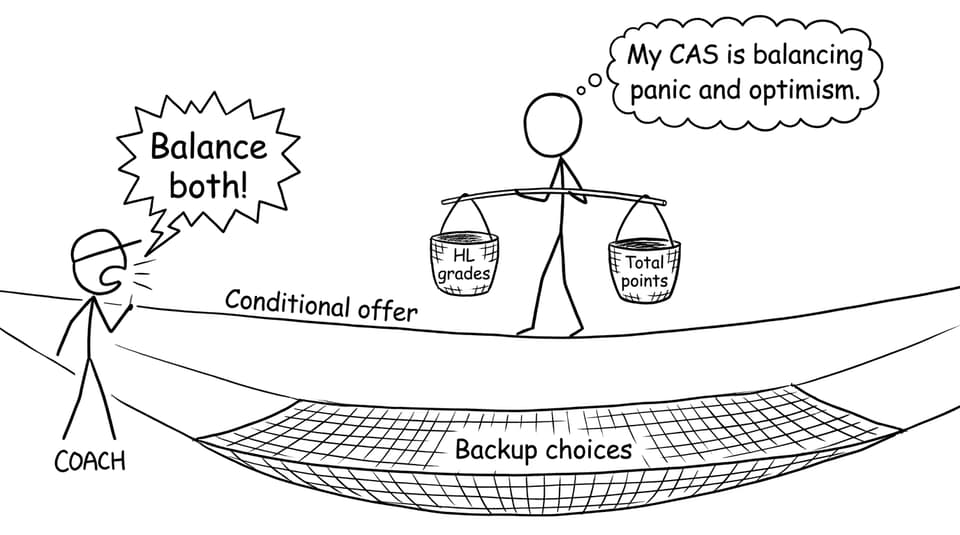
For many students, universities decide based on predicted IB grades first, then confirm later with final results. If your predicted is below a target, you are not “finished”; you just need evidence that you are improving.
A useful mindset reset is in IB Predicted Grades Don’t Define You (Here’s What Does), because it focuses on the only thing that reliably raises a predicted grade: a consistent practice-and-feedback loop.
Score conversions are imperfect
Some countries or schools convert IB grades into GPA equivalents or tariff points. These conversions help comparison, but they can be messy.
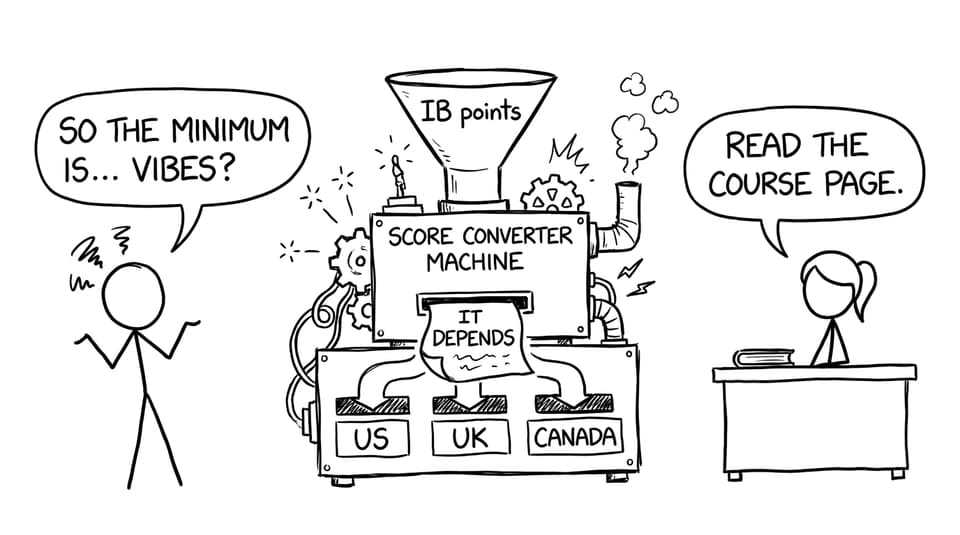
The practical move is always the same: read the course admissions page, then work backwards into the marks you need.
How to raise your IB score when you’re chasing a requirement
If your target university needs a higher IB score than your current trajectory, avoid “more hours” as the default answer. Most students don’t need more time. They need a tighter loop.
A simple system:
-
Patch understanding quickly with IB Subject Note Collections
-
Drill weaknesses using the Questionbank
-
Lock in memory with spaced repetition (Flashcards)
-
Rehearse timing with IB Predicted Papers and occasional Mock Exams
-
Use AI Chat and Grading tools to shorten feedback cycles
If you are close to exams and wondering about time, the pacing reality check in Is 1 Month Enough to Study for IB Exams? is worth reading.
Final thoughts: pick a target, then build the IB score to match it
The minimum IB score required for a university is less like a locked door and more like a set of expectations: totals, HL grades, and proof you can perform under exam conditions. Once you know the range your target courses want, you can stop doom-scrolling admissions pages and start building evidence.
If you want one place to run that evidence loop, RevisionDojo is built for it: Questionbank drills, Study Notes, Flashcards, AI Chat support, Grading tools, Predicted Papers, Mock Exams, a Coursework Library, and Tutors when you want human guidance. Start at RevisionDojo for IB, set a realistic target IB score, and make your next practice session small enough to repeat tomorrow.

