
Predicted grades can feel like a verdict.
One number, written months before you sit the real papers, somehow becomes the story your University application tells about you.
Then July arrives (or January, if you sit November), and the story changes again. Final results appear, official and immovable. Sometimes they match what your teachers expected. Sometimes they don’t. And that gap between predicted grades and final results is where a lot of IB stress lives.
This guide is for IB students preparing for exams who want the difference explained clearly, without drama. We’ll look at what predicted grades are, what final results include, why University admissions treat them differently, and how to build a revision loop that makes the final outcome feel less like a coin flip.
Quick checklist: predicted grades vs final results
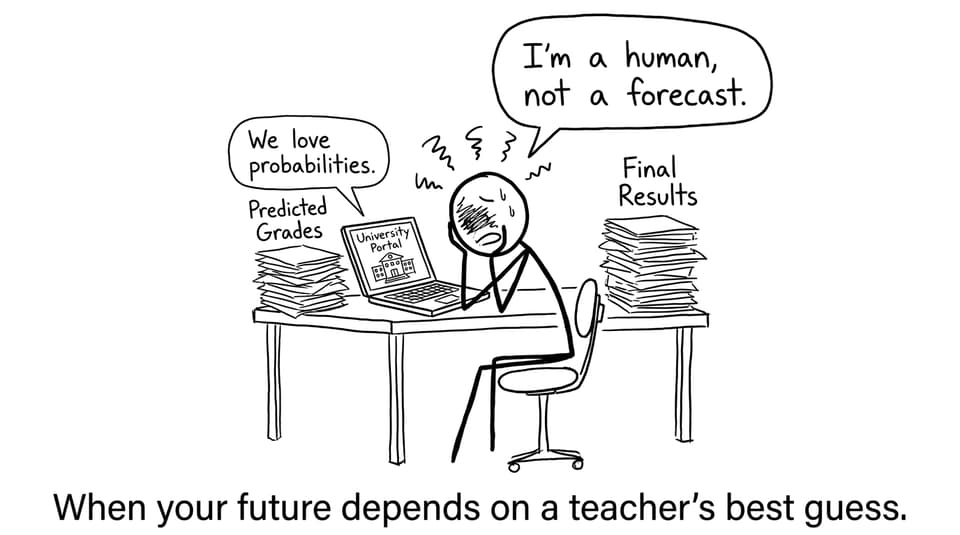
Use this as your mental reset when you hear teachers, friends, or family mixing the two up:
-
Predicted grades are teacher estimates used mainly for University applications.
-
Final results are the official IB outcomes based on exams and moderated assessment.
-
Predicted grades arrive before your final exams; final results arrive after everything is completed.
-
Predicted grades influence offers; final results determine whether you meet conditions and earn the diploma.
-
The best way to reduce the gap is to train with exam-shaped practice, feedback, and timed rehearsal.
If you want tools that make the “where am I right now?” question less emotional, the IB Grade Calculator can help you translate realistic practice marks into a more grounded estimate.
What are IB predicted grades (and why University cares)
IB predicted grades are evidence-based estimates your teachers submit to reflect what you’re likely to achieve in the final IB exams. They typically use a blend of signals:
-
performance on topic tests and mock exams
-
quality and consistency of classwork
-
progress and reliability on Internal Assessments (IAs)
-
how you handle exam-style questions under time pressure
-
professional judgment about your trajectory
The reason University admissions teams care is practical: predicted grades arrive when decisions must be made. In many systems, your application is assessed before your official grades exist, so predicted grades become the proxy for your academic “current best estimate.”
That’s also why predicted grades can feel so personal. They’re not only a score; they’re a message about how much your school believes you can deliver.
If you’re in the middle of this stress, it can help to read IB Predicted Grades Don’t Define You (Here’s What Does). It reframes predictions as data, not identity, which is the mindset that actually improves performance.
What are final IB results (what’s actually included)
Final results are the official grades awarded by the IB after you complete all required components. That includes:
-
externally assessed written exams (May or November session)
-
Internal Assessments (IAs), which are moderated externally
-
Extended Essay (EE) and Theory of Knowledge (TOK) combined core points
-
CAS completion as a diploma requirement (no grade, but required)
Final results are released after the whole machine has finished: exams sat, scripts marked, boundaries set, moderation applied, and the diploma requirements checked.
This is why final results matter differently to University admissions. A predicted grade can open a door; final results decide whether you walk through it.
The key differences between predicted grades and final results
Timing and decision pressure
Predicted grades exist because the calendar forces them to. Your University application timeline often overlaps with the period when you are still learning content, drafting coursework, and only beginning serious exam preparation.
Final results, by contrast, are what you get after you’ve had the full runway: revision time, feedback cycles, and multiple chances to train timing.
Purpose: offers vs outcomes
Predicted grades mainly support admissions decisions: offers, interviews, scholarships, and placement into competitive programs.
Final results are the official record: your diploma score, your subject grades, and whether you met the conditions of your University offer.
Flexibility vs finality
A predicted grade is a professional estimate. It can be revised in some schools if new evidence appears before submission deadlines.
Final results are fixed unless you pursue a formal remark pathway (where available). They are not “negotiable” in the everyday sense.
Accuracy: why they sometimes miss
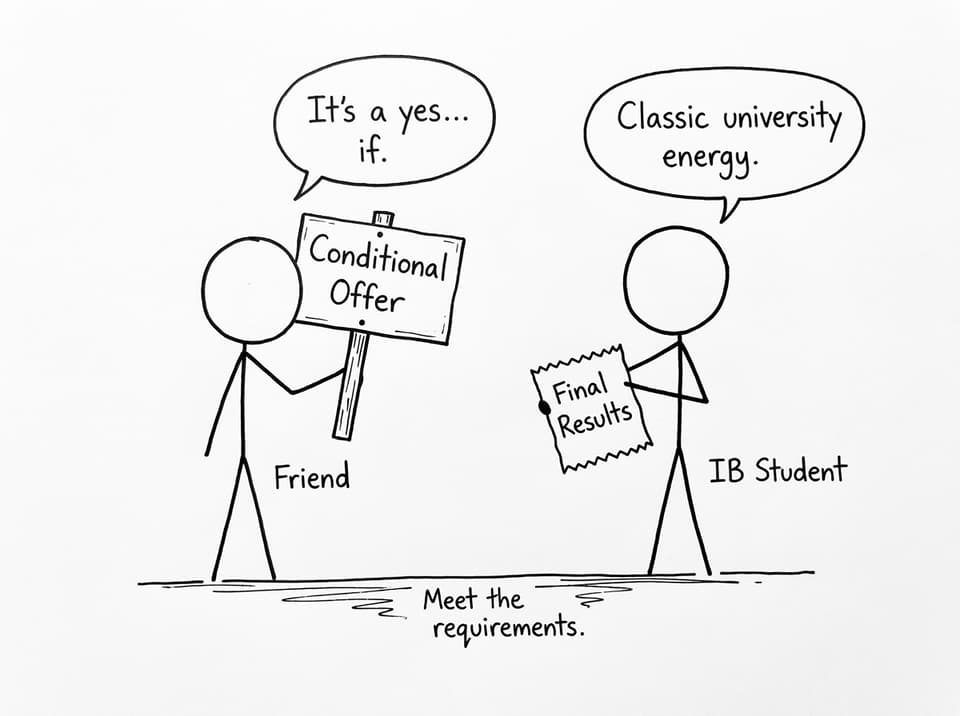
Even great teachers can’t perfectly predict what happens under real exam conditions. Students change.
-
Some students improve sharply when they switch from passive revision to exam practice.
-
Some students underperform due to anxiety, timing issues, or shallow understanding.
-
Coursework moderation can nudge marks up or down.
If your predicted grades are lower than you hoped, IB Predicted Grades Missed? What to Do Next lays out a calm plan for building new evidence and protecting your final performance.
How this impacts University offers (and what “conditional” really means)
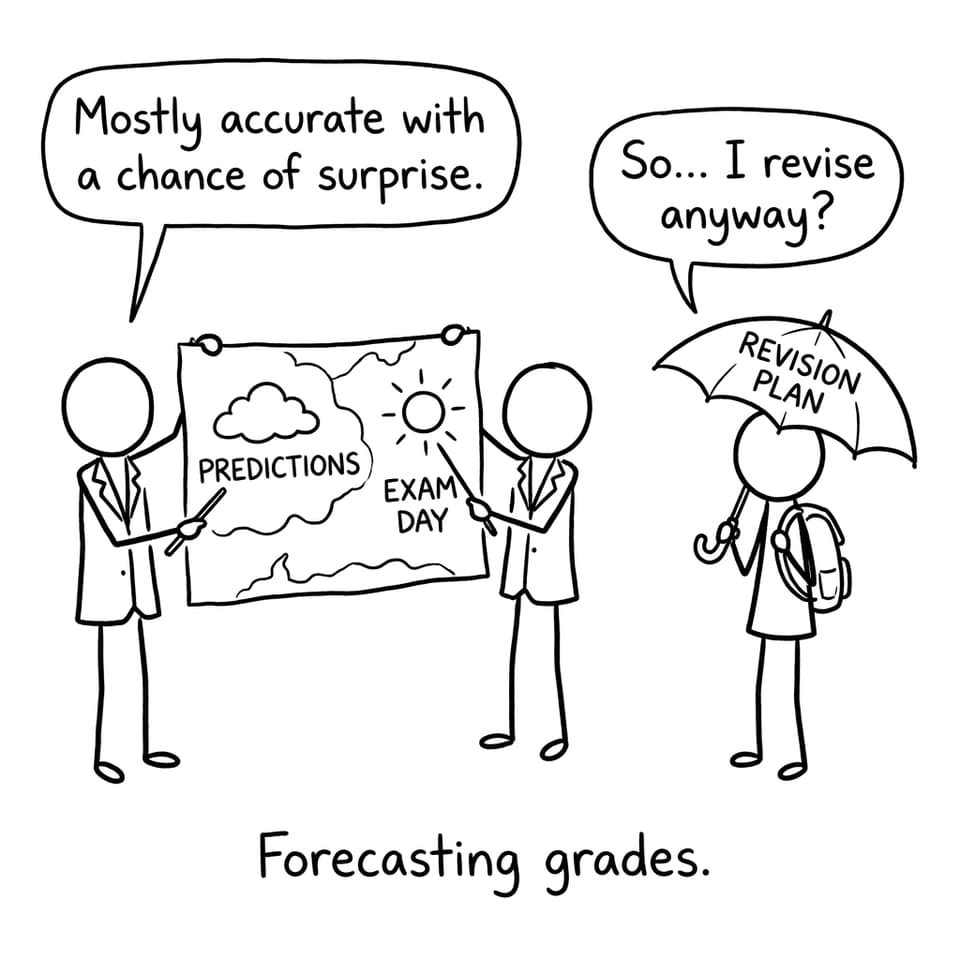
Many University offers for IB students are conditional. That means the admissions decision is “yes, if…” and the “if” is usually a set of final result requirements.
Here’s what that looks like in real life:
-
Your predicted grades help you earn the offer.
-
Your final results decide whether you keep the offer.
-
If you miss the conditions, outcomes vary: some universities allow flexibility, some don’t, and some renegotiate based on course capacity.
This is why you should treat predicted grades like a snapshot, not a prophecy. Your job is to make your final results more predictable by improving the inputs: targeted practice, feedback, and timed rehearsal.
If you want to understand how predictions are used earlier in the cycle, see IB Predicted Grades for Early University Applications.
How to close the gap: a student-friendly strategy that works
The students who beat their predicted grades usually don’t “suddenly become smarter.” They become more specific.
They stop revising like it’s a reading contest, and they start training the exact skills the IB marks.
Here’s a repeatable loop (and it’s the loop RevisionDojo is built around):
Build clarity fast, then move on
Use RevisionDojo’s all-in-one platform as your home base, but keep your first step small: pick one weak topic and get clarity quickly with Study Notes.
Then switch immediately to active work.
Train recall daily
Flashcards aren’t glamorous, but they’re honest. A short daily session compounds.
Use Flashcards to lock in definitions, processes, formulas, and essay-ready phrases. Keep sessions short and consistent.
Build marks with targeted exam-style practice
Predicted grades are often pulled down by the same few repeat mistakes: misreading command terms, weak structure, or losing easy marks under pressure.
A Questionbank helps you attack those patterns directly. Use the Questionbank to filter by topic and difficulty, then practise until your mistakes become predictable (and therefore fixable).
Get feedback without waiting for a teacher
This is where RevisionDojo’s AI Chat and Grading tools matter. When you’re stuck, you don’t need motivation. You need diagnosis.
Ask AI Chat to explain why a mark scheme rewards a specific point, or to identify what your answer is missing. Use grading tools for rubric-aligned feedback on written work, and pull examples from the Coursework Library when you need to see what “good” looks like.
Rehearse exam pressure, not just content
Timed practice is where predicted grades become final results.
-
Use IB Predicted Papers by IB Examiners for realistic full-paper practice.
-
Pair that with mock-style routines described in Best IB Mock Exam Platform: Why Students Pick RevisionDojo.
And if you want a deeper explanation of what predicted practice papers are actually for, read IB Predicted vs Specimen Papers: What They Mean.
When your practice looks like the real exam, your results stop being a surprise.
Closing: make University outcomes less mysterious
It’s tempting to treat predicted grades like a prophecy because they arrive early and everyone reacts loudly. But in the IB, the more useful view is quieter: predicted grades are a snapshot of evidence today, while final results are what happens when you train for the real conditions.
If you’re aiming for a specific University outcome, your best move is to build a system that keeps producing proof: Study Notes for clarity, Flashcards for daily recall, Questionbank practice for marks, AI Chat and grading tools for fast diagnosis, Predicted Papers and Mock Exams for realism, plus the Coursework Library and Tutors when you need deeper support.
When you’re ready to turn “I hope” into “I know,” start with RevisionDojo’s IB Grade Calculator, then build your next two weeks around what it reveals.